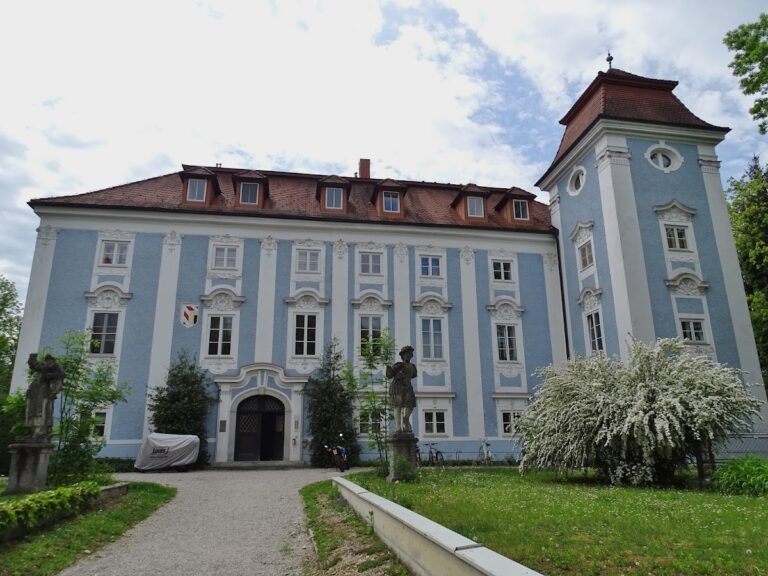
Etzelsdorf Castle: A Renaissance Manor in Austria
Site at a Glance
- Rating
- 4.8
- Popularity
- Very Low
- Country
- Austria
- Primary era
- Early Modern
- Eras represented
- Medieval, Early Modern
- Civilizations
- Duchy of Austria, Habsburg, Holy Roman Empire
- Site type
- Domestic
- Remains
- Castle
On this page14 sections
History
Etzelsdorf Castle is a seventeenth-century Renaissance castle in Austria, at the western edge of Pichl bei Wels in Upper Austria. It replaced an older fortified seat whose origins reach back to the twelfth century and remains associated with the estate’s long sequence of noble owners, later private families, and a chapel founded in 1996.
Medieval origins and changing ownership
The first recorded keeper of Etzelsdorf was Niklas Eczelstorfferer, who held the office in the fourteenth century. He also served as keeper of Tollet Castle and, in 1377, of Pernstein. In 1379, he and his son-in-law Hans Jörger witnessed a donation to Lambach Abbey, a Benedictine monastery in Upper Austria.
Through marriage, the estate passed to Kaspar Jörger. It belonged to the Struz family from 1430 and was again associated with a Jörger in 1558. After a prolonged inheritance dispute, Erasmus von Gera acquired it in 1563. Engel von Wagrain became its owner in 1590.
Destruction and Renaissance rebuilding
The predecessor seat probably burned around 1551. In 1558, it was described as an abandoned fortified site with a double moat, although the moats no longer held water. Josef Krenner purchased the predecessor of the present castle in 1600. The Seeauer family later held the property and sold it in 1625 to the Schmidtauer family of Oberwallsee.
The castle was plundered and burned during the Peasants’ War in 1626, one of a series of Central European uprisings by rural communities. Christoph Schmidtauer, who died in 1722, then had the old castle demolished and rebuilt in its present form. Later owners included Carl Anton Schmidtauer, Josef Franz Schmidtauer in 1805, Karl Schmidtauer in 1832, and Rosa von Schmidtauer in 1894.
Twentieth-century history
Etzelsdorf passed to the noblewoman Anna von Unkrechtsberg in 1901. After her death in 1929, she left the castle and surrounding properties to her long-serving cook, Josefa Pühringer. Because of her advanced age, Pühringer transferred the estate to her daughter Maria Nöbauer, who died in 1966.
Maria’s husband, Ignaz Nöbauer, became wealthy through a lottery win. After Maria reported him for sexual misconduct involving minors following the arrival of German troops, he was sent to Mauthausen concentration camp in 1939. Mauthausen was a Nazi concentration-camp complex in Austria. Nöbauer survived as a prisoner functionary, an inmate assigned administrative or supervisory duties within the camp system. Former prisoners apparently made several unsuccessful attempts to find him after his release.
The wartime children’s home
In summer 1944, the National Socialist People’s Welfare organization established a home at Etzelsdorf Castle for children born to women deported to Germany as forced laborers. This state-controlled welfare institution operated facilities for such children during the Second World War. Thirty-nine children of forced laborers were housed at Pichl until the end of 1946.
At least 13 children died in autumn 1944 because of inadequate care and nutrition. The children were not spoken to, many were tied in their beds, and some two-year-olds could not walk when they were liberated. After 1945, some were returned to their mothers, although mistaken identities occurred because the children had not been addressed by name and name bands were not customary. The remaining children were taken to the Czech border in autumn 1946, after which their fate is unknown.
Later ownership and remembrance
After Maria Nöbauer’s death, the estate was divided among 13 heirs and passed to a Linz business family in 1970. Owner Hans Herbert Jeitschko vowed to establish a chapel if the castle could be renovated. The castle chapel was built in 1996 and is owned by Ingrid Jeitschko. The Jeitschko family remains the owner, and the castle is privately inhabited.
A memorial to the 13 infants who died at Etzelsdorf in 1944 was dedicated on 2 November 2005. It stands at the base of the northwestern tower of the parish church in Pichl and preserves the children’s names in remembrance of those who had been buried without names.
Remains
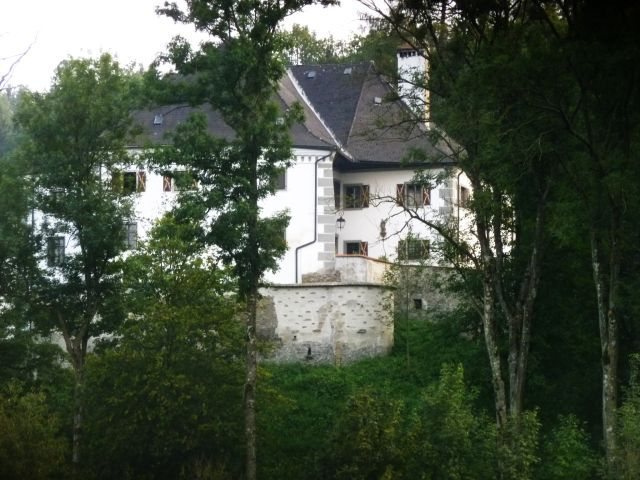
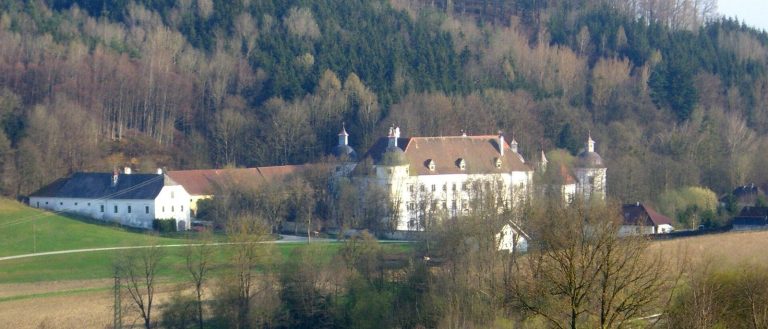
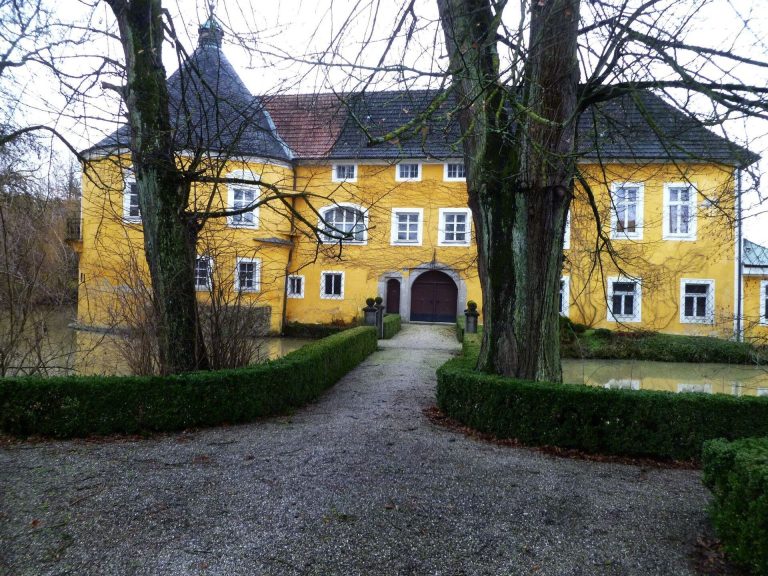
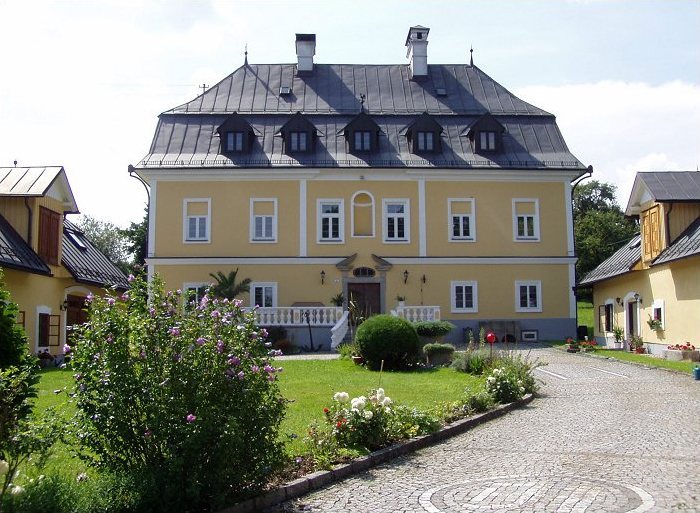
Etzelsdorf Castle is a two-storey Renaissance building arranged with two freestanding service buildings around a horseshoe-shaped courtyard. Its predecessor stood behind the present castle and the Innbachtal road, where its surviving earthworks and island remain part of the physical history of the estate.
Present castle and courtyard
Main castle
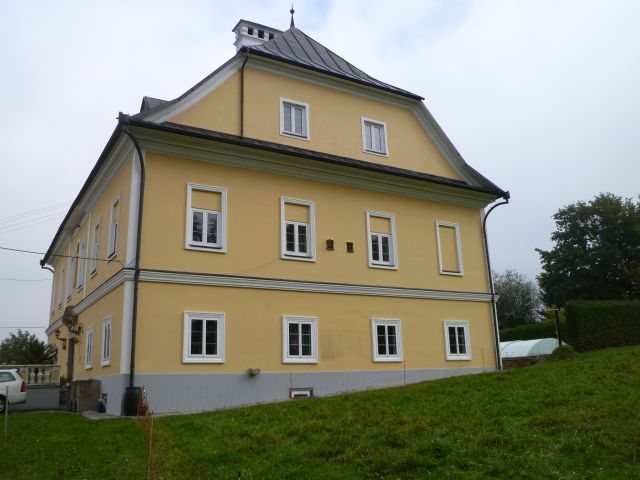
The main building has a broad, projecting clipped-hipped roof and an otherwise plain facade. A stucco band runs beneath the roofline, while the rear first-floor windows retain wrought-iron external guards. The entrance leads into a stone-paved hall. Rooms on the ground floor open from this hall, and a corridor stair leads to the upper floor.
Service buildings
Two freestanding service buildings flank the main castle and enclose the courtyard, producing the site’s horseshoe-shaped plan. Their position gives the surviving complex a clearly defined central court around the Renaissance residence.
Predecessor seat
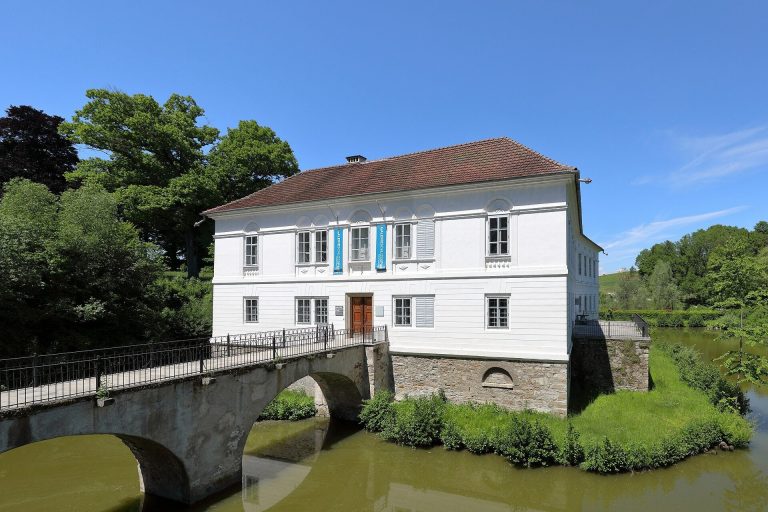
The earlier fortified seat is represented by a circular island covered with deciduous trees in the middle of a round pond. An embankment enclosed the island, and a moat with running water surrounded it. This island and water system preserve the outline of the older defensive site behind the present castle.
Chapel and memorial
Castle chapel
The castle chapel was built in 1996 as a consequence of Hans Herbert Jeitschko’s renovation vow. It forms part of the modern history of the estate and is owned by Ingrid Jeitschko.
Memorial at Pichl parish church
The 2005 memorial consists of a floor-mounted plaque and 24 chromium-nickel-steel ropes extending from it to the lower tower window. The names of the 13 children, who had been buried without names, run around the plaque’s edge. Entitled “Autumn Crocuses,” the plaque also carries an engraved poem by H. Maike Opaska about remembrance, loss, and renewal.