Espoo Manor: A Former Royal Estate in Finland
Site at a Glance
- Popularity
- Medium
- Country
- Finland
- Primary era
- Early Modern
- Eras represented
- Early Modern, Modern
- Civilizations
- Grand Duchy of Finland, Russian, Swedish
- Site type
- Domestic
- Remains
- Manor House
On this page10 sections
History
Royal foundation and administration
Espoo Manor is a historic estate in Espoo, Finland, established by King Gustav Vasa of Sweden in 1556 as a royal manor, an estate administered for the crown, and a model farm. The foundation followed growing tensions on Sweden’s eastern border, where open conflict had begun in 1555. The estate brought together land belonging to Espåby and Mankby. Under an agreement reached at Espoo parish’s summer court on 27 August 1556, local peasants received replacement fields elsewhere. The new estate began with 30 hectares of arable land and 1,200 hectares of forest.
In 1555, Gustav Vasa appointed Anders Korppi, then bailiff of Helsinki County, to manage the matter. A bailiff was an official responsible for estate or county affairs. Peder Mandel served as the manor’s bailiff from 1557 to 1558, followed by Truls Persson from 1559 to 1563. When Espoo moved from Raasepori County to Porvoo County in 1564, the manor no longer had its own bailiff. After an administrative change in 1572, it became a bailiff district, with Rasmus Jönsson in office from 1572 to 1575. County bailiffs from Raasepori then administered it for the rest of the century.
Changing ownership and rebuilding
Before the Ramsay family acquired the estate, its owners included Jacob De la Gardie and Gustav Horn. Count Fabian Wrede commissioned the first known main building in the mid-seventeenth century. After the Great Wrath, the Russian occupation of Finland during the Great Northern War from 1713 to 1721, the house and agricultural operations were abandoned.
Governor Anders Henrik Ramsay bought the manor in 1756, beginning a period of renewed prosperity and development. His daughter Sofia Lovisa Ramsay inherited the estate in 1787. She and her cousin and husband, Otto Wilhelm Ramsay, undertook a building project around the turn of the nineteenth century. Financial difficulties followed in the early 1800s, and ownership changed several times through inheritance and sale during that century.
Several crofts, or small tenant farms associated with an estate, belonged to the manor, including Erkulla, Norkulla, and Tunfall. Ramsay brothers from the estate are mentioned in Johan Ludvig Runeberg’s The Tales of Ensign Stål, a poem cycle about the Finnish War.
Twentieth-century changes and preservation
In the early twentieth century, Esbogård Aktiebolag was formed to divide the estate’s land into parcels. August Ramsay acquired all the company’s shares in 1914 and chose to preserve the property as a large estate and manor. The family’s ownership had begun with Anders Henrik Ramsay’s acquisition in 1756. Espoonkartano, a district of Espoo, takes its name from the manor. The estate is protected by law as a nationally significant built cultural environment.
The manor’s former barn was converted into a stable, and Espoo Riding Stable operated there from 1987 to 2016.
Remains
Estate layout
The manor forms part of an extensive landscape complex of buildings and agricultural sites. The grounds include manor buildings, crofts, Holken, a Karelianist villa associated with Karelianism, a Finnish cultural movement inspired by Karelia, and Sperrings, a secondary manor site separate from the main estate center. Sperrings has a lantern roof, a raised roof structure set above the main roof. The wider complex also contains production buildings, farmyards, and workers’ dwellings.
Main building and wings
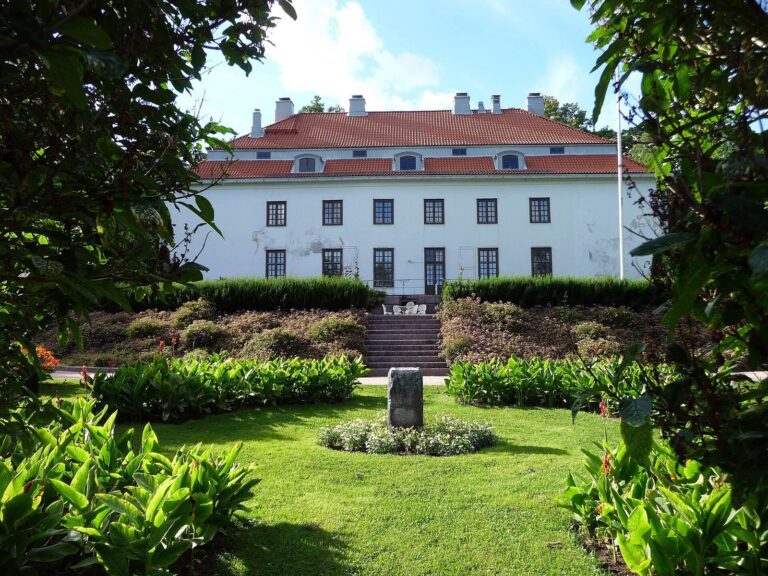
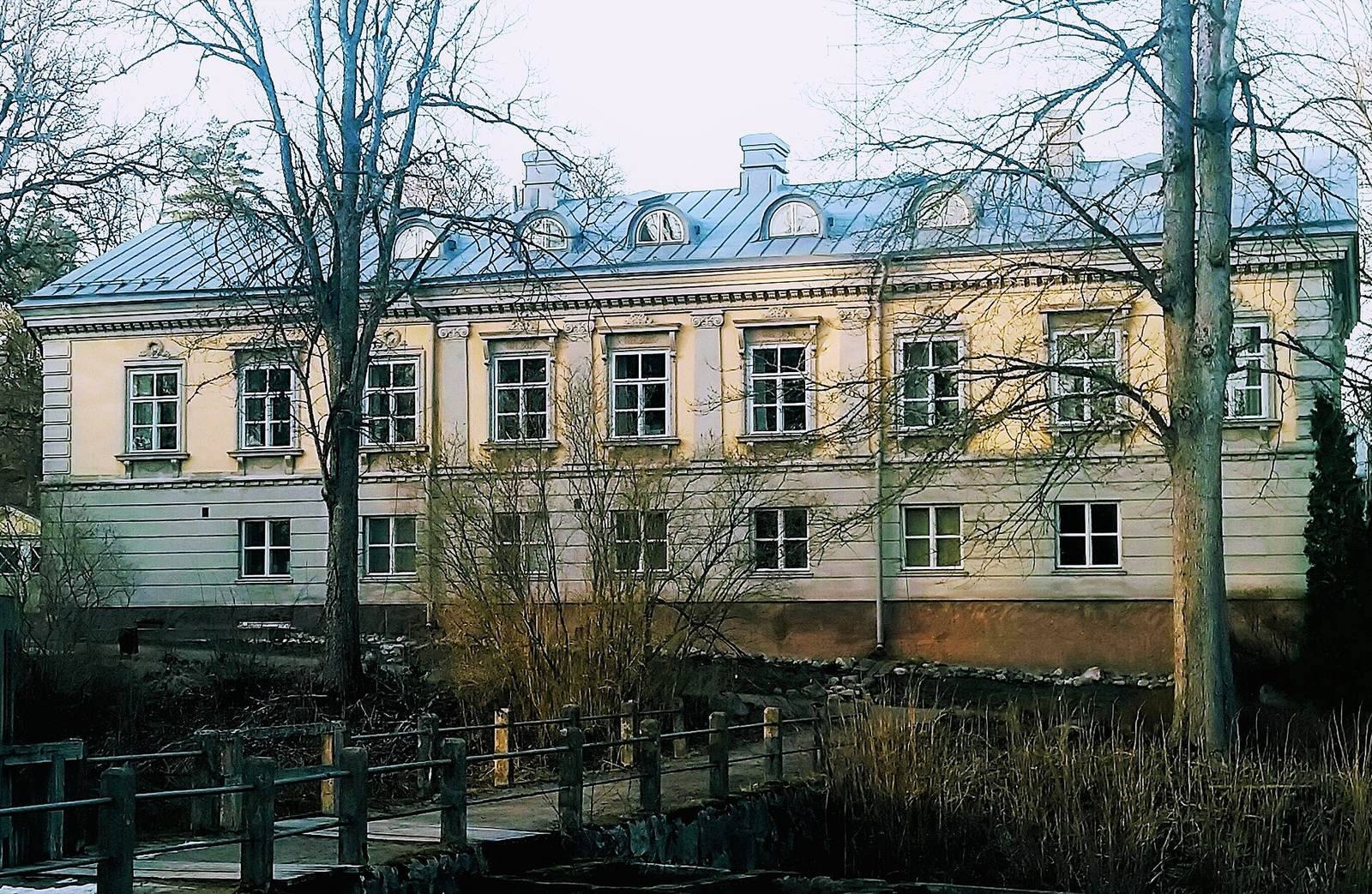
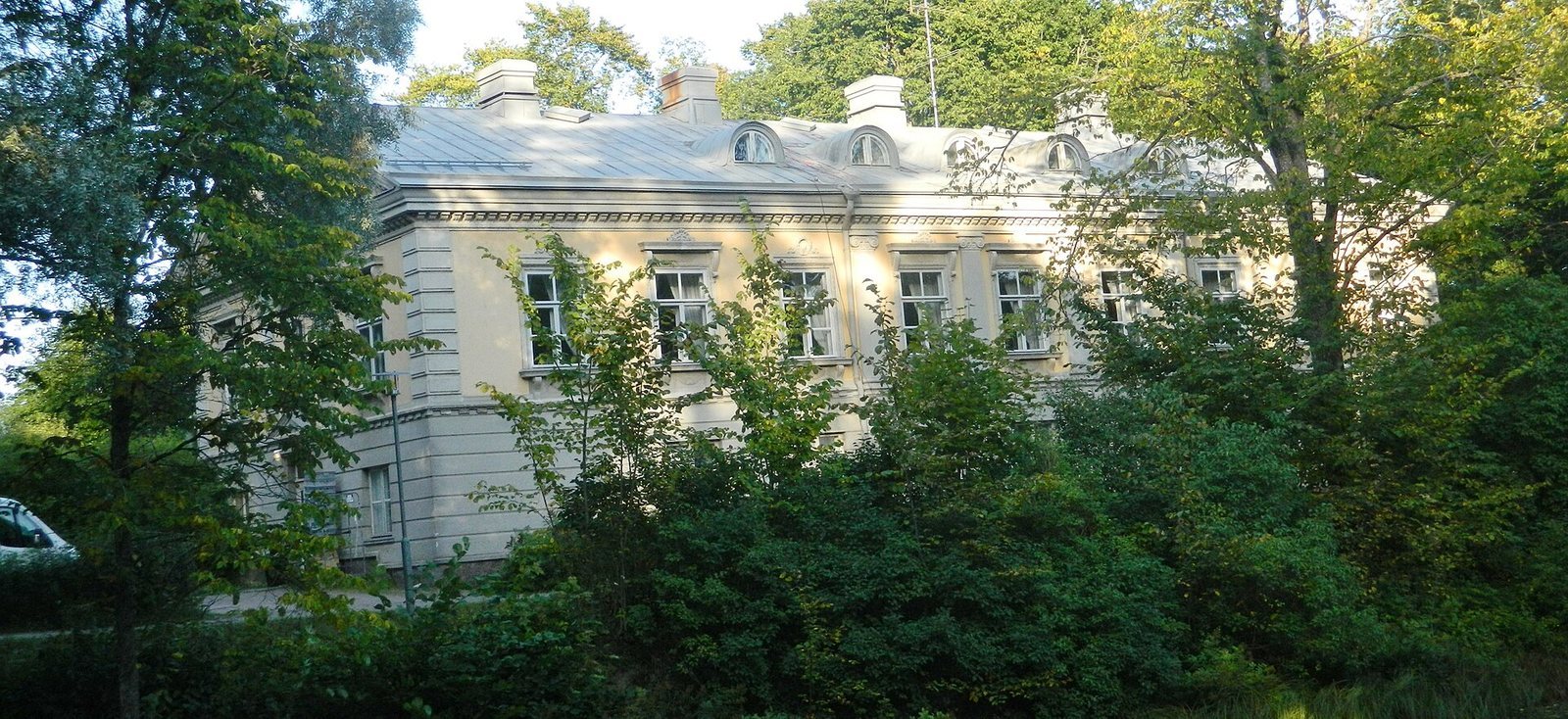
A late-eighteenth-century building scheme called for a two-storey stone main building flanked by symmetrical wings. The wings were completed in 1797 and 1801. The west wing was later extended, and the manor’s classical exterior was remodeled between 1908 and 1910. In 1915, the main building was enlarged and renovated to its present form, with a columned porch, plastered surfaces, and decoration.
Bridges and water-related structures
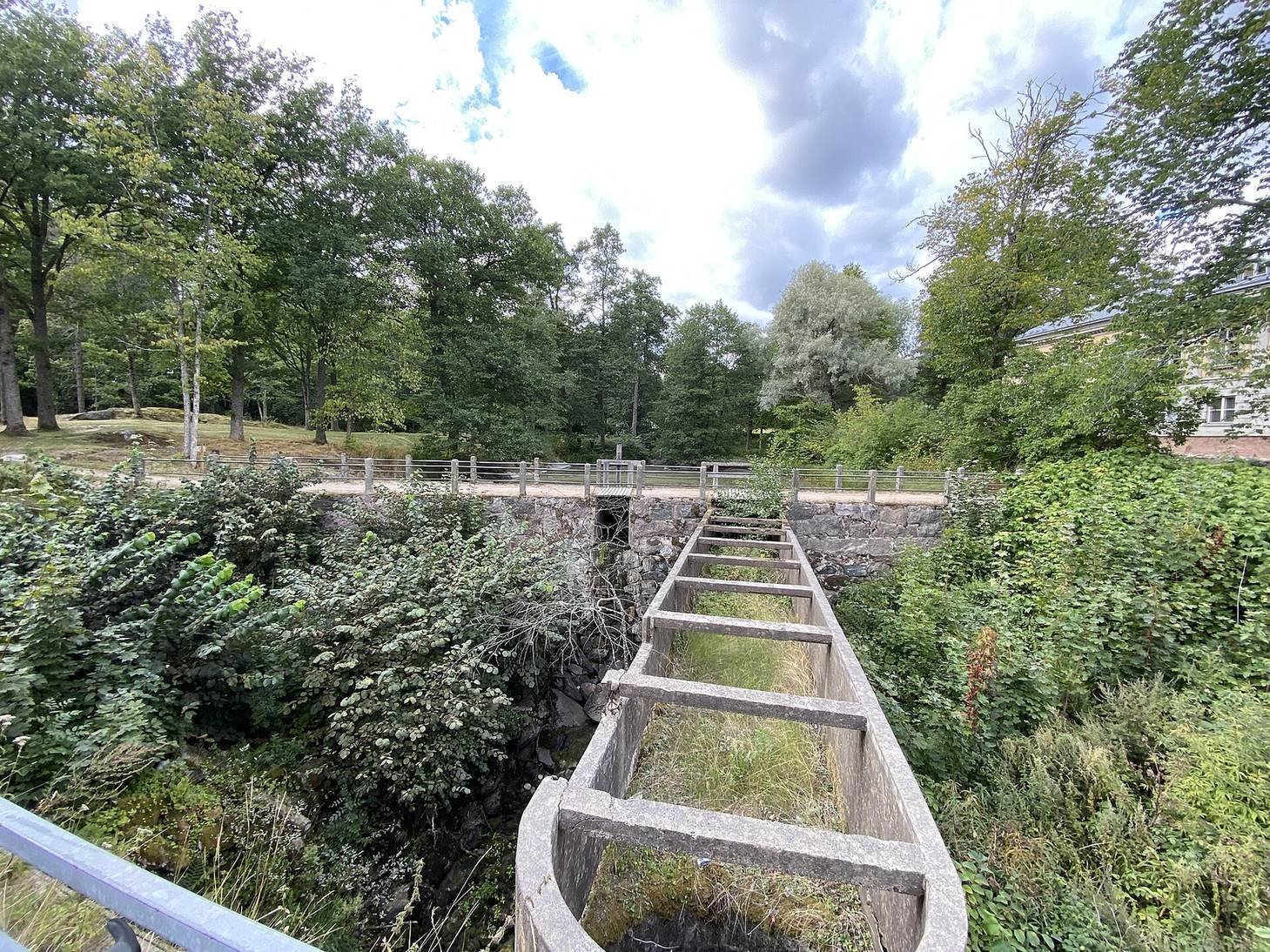
Qvarnbron and Sågbron are stone arch bridges built around 1775 and are Finland’s oldest stone bridges still in use. A stone-built mill dating to 1777 also survives. South of Kvarnforsen, dam and lock structures stand beside the ruins of a sawmill dating from the early twentieth century.
Farmyards and associated buildings
The older farmyard lies southeast of the manor and includes the old stable, a circular sawmill, a smithy, and two workers’ houses. Ladugårdsbacken, the newer farmyard west of the manor, dates from the 1910s and 1920s and contains a large brick barn, later converted into a stable. East of the manor, beside the Great Coastal Road, stands Finns Inn, a former inn dating to the 1860s.
Park
The park was laid out as a French garden, a formal design arranged in geometric patterns, in a style prevalent in the early twentieth century. It was expanded and restored in 1921, then modernized in the mid-1940s.