Ermita de Valverde: A Historic Marian Sanctuary in Madrid


Site at a Glance
- Rating
- 4.6
- Popularity
- Low
- Country
- Spain
- Primary era
- Early Modern
- External website
- Open
- Eras represented
- Medieval, Early Modern
- Civilizations
- Crown of Castile, Spanish
- Site type
- Religious
- Remains
- Sanctuary
On this page14 sections
History
Ermita de Valverde is a historic Marian sanctuary in Madrid, Spain, whose origins are linked to the discovery of an image of the Virgin of Valverde in 1242 and whose present chapel was rebuilt between 1716 and 1720. Located in the Fuencarral-El Pardo district, the sanctuary developed from a local place of devotion into a large religious and residential complex.
The discovery and first chapel
According to tradition, shepherds from Fuencarral found an image of the Virgin in 1242 at a place called Cuesta del Cuervo. Villagers repeatedly carried it to the church in Fuencarral, but the image was said to return each night to the place where it had been found. This story led the inhabitants to regard the site as sacred and encouraged the construction of a chapel there.
In 1429, the people of Fuencarral began building an ermita, or small religious chapel, approximately two kilometres from the village. Tradition also relates that a healing spring appeared during the work and ceased to flow once the building was completed. An octagonal well inside the chapel preserves the memory of the spring and the supposed discovery of the image. The story of the apparition, the repeated movement of the image, the construction of the chapel, and the spring was preserved in a printed codex of 1798 that copied an earlier text.
Royal patronage and Dominican foundation
In 1588, Philip II, king of Spain from 1556 to 1598, ordered the image to be carried in procession to Madrid. The procession sought divine help for the expedition against England that year, traditionally associated with the Spanish Armada. Philip II accompanied the image when it returned to Valverde.
In 1595, the council of Fuencarral asked the king to become patron of the chapel and offered land amounting to fifty fanegas, together with monetary donations, on the condition that he establish a monastery beside it. Philip II accepted the patronage. In 1596, the Crown transferred responsibility for the chapel, its estate, and the monastery to be founded there to Juan Ruiz de Velasco, the king’s secretary, and his wife, Isabel Nevares de Santoyo. They managed the property without owning it and were charged with maintaining the religious buildings.
The proposed convent was entrusted to the Recollect friars of the Order of Saint Dominic, commonly known as the Dominicans. In 1597, Albert of Austria, a Habsburg archduke and archbishop of Toledo, authorized the foundation. Francisco de Mora, a Spanish architect associated with the architectural tradition of Juan de Herrera, was responsible for the construction. After a natural son of Juan Ruiz de Velasco died without descendants in 1641, the Dominicans became the de facto patrons of the chapel and its extensive estate.
Devotional donations gradually enlarged the estate to approximately 200 hectares. Its holdings included land around the sanctuary and properties as far away as Guadalajara and La Granja. The monastery took the name Jesús María de Valverde, linking the religious community to the sanctuary and its Marian devotion.
The eighteenth-century transformation
In 1723, the Navarrese financier Juan Bautista de Iturralde y Gamio received permission to build a residence for short stays beside the sanctuary. After he received the title of Marquis of Murillo in 1739, the residence became known as the palace of the Marquises of Murillo. During the first half of the eighteenth century, the Iturralde family financed a broad transformation of the complex.
The work included the rebuilding of the chapel between 1716 and 1720, as well as the addition or construction of a monumental gateway, a chapter house, a sacristy, a bell tower, new chapels, and a richly ornamented Churrigueresque altarpiece. Churrigueresque was an exuberant Spanish Baroque style especially associated with elaborate architectural decoration. The Iturraldes were buried in the sacristy, and their patronage also brought religious ornaments, liturgical vestments, and carved images to the sanctuary.
War, suppression, and disputed ownership
The sanctuary suffered during the Peninsular War, the conflict in which Spain and its allies fought Napoleonic France. French troops occupied the convent in 1808 and removed vestments and furnishings when they withdrew toward Madrid after the Battle of Bailén. The convents were suppressed in 1809, the monks left Valverde, and the former convent passed to the state before being sold to Federico Crossat, a paymaster of the French armies.
Crossat kept the church in use for worship and planned to turn the sanctuary into a mansion while retaining its buildings. Guerrilla groups nevertheless attacked and looted the complex because it belonged to a Frenchman. After Ferdinand VII returned to power, ownership reverted to the Dominicans.
The confiscation of church property accelerated the decline of the complex. The expulsion of the Dominicans in 1836 began a legal dispute between the inhabitants of Fuencarral and the descendants of the Velasco family. In 1863, Fuencarral was recognized as the owner, but in 1873 the sanctuary and its lands were returned to descendants of the former patrons after a petition by Rafael Reinoso, the husband of Dolores Muñoz, Marchioness of Pico de Velasco.
Reinoso attempted to demolish the chapel in 1885, but Fuencarral’s municipal government opposed the action. The litigation continued, and in 1918 the Territorial Court of Madrid confirmed the reversion of patronage to the Reinoso family. These ownership disputes shaped the sanctuary’s history well into the twentieth century.
Twentieth-century damage and civic protection
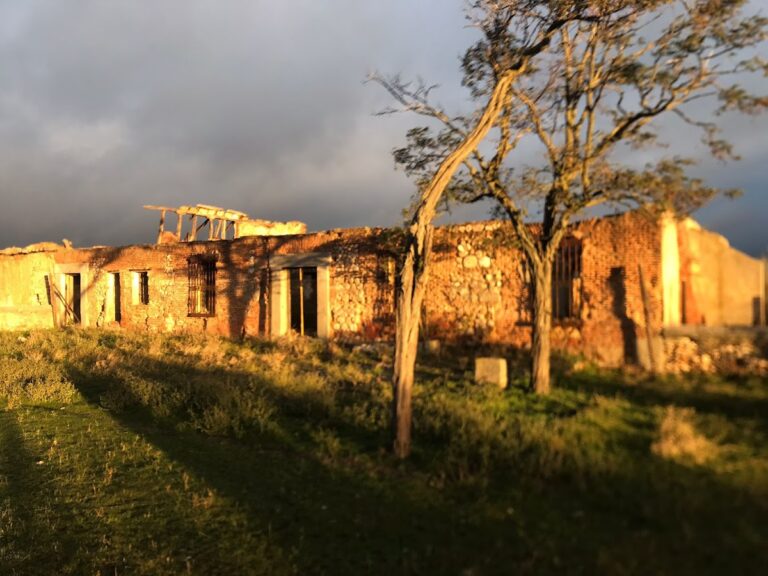
During the Spanish Civil War, a unit of the International Brigades shelled the sanctuary’s tower and brought it down. In 1950, Fuencarral was annexed to Madrid. At the end of the 1950s, the sanctuary was converted into a military health-service barracks, a change that accelerated the deterioration of the complex.
Proceedings to designate the buildings as a historic-artistic monument began in 1977, although the declaration was not completed at that time. Local opposition prevented repeated attempts by the owners to demolish parts of the complex. On 4 April 1990, Ángel Suquía, archbishop of Madrid, canonically established the Brotherhood of Our Lady of Valverde. Founded by faithful from Fuencarral, the brotherhood pursued religious aims and sought to transfer the sanctuary into public ownership.
In 2000, an urban-planning operation connected with the development of Montecarmelo made the sanctuary grounds municipal property. The former owners exchanged the land for plots in Montecarmelo and Las Tablas, and the sanctuary with its surrounding grounds became public-service land. Madrid City Council restored the severely deteriorated monumental complex in 2004. The former monastery was adapted for public facilities, while the chapel and the Chapel of Our Lady of the Guide retained their religious functions.
In 2013, the chapel was designated a diocesan Marian sanctuary, meaning a shrine dedicated to the Virgin Mary under diocesan authority. On 7 July 2021, the Sanctuary of Our Lady of Valverde was declared an Asset of Cultural Interest in the category of Monument, a formal Spanish designation protecting places recognized for historical or architectural importance.
The sanctuary remains associated with an annual festival beginning on 25 April and lasting nine days. On that date, the image of the Virgin of Valverde is carried in procession to the parish church of San Miguel in Fuencarral. It returns to the sanctuary on 3 May.
Remains
Enclosure and principal buildings
The complex occupies approximately 30,000 square metres and contains the Ermita de Valverde, the Chapel of Our Lady of the Guide, the former Dominican monastery, and the former palace of the Marquises of Murillo. Its entrance enclosure is approached through a monumental gateway built of granite. Five semicircular arches structure the front, with wrought-iron grilles closing the openings. The central arch functions as the entrance, while the others serve as windows. Above them, a pediment contains a niche with a religious sculpture, and seven stone pinnacles crown the gateway.
The religious buildings
Ermita de Valverde
The rebuilt ermita has a single nave, a transept, and several lateral chapels. Its main entrance lintel carries the date 1720, linking the visible building to the rebuilding undertaken between 1716 and 1720. An octagonal well stands in the central passage. Its exterior is faced with marble and its interior is lined with brick. An inscription above the well identifies the place with the traditional appearance of the miraculous image on a broom plant on 25 April 1242.
Chapel of Our Lady of the Rosary
The Chapel of Our Lady of the Rosary dates from the eighteenth century and contains separate altars dedicated to the Virgin and to Christ of the Good Death. The monastery also includes an octagonal chapel for Our Lady of the Rosary and a chapel dedicated to Our Lady of the Guide. The Chapel of Our Lady of the Guide, together with the ermita, continues to serve religious purposes.
Monastery and palace
Former Dominican monastery
The former monastery now accommodates public facilities. A municipal youth centre occupies the first floor. The ground floor and cloister contain a nature-interpretation classroom devoted to the Upper Manzanares Basin and Monte del Pardo, together with a cafeteria. An auditorium occupies the basement. These uses preserve the building as part of the wider complex while adapting its interior to civic functions.
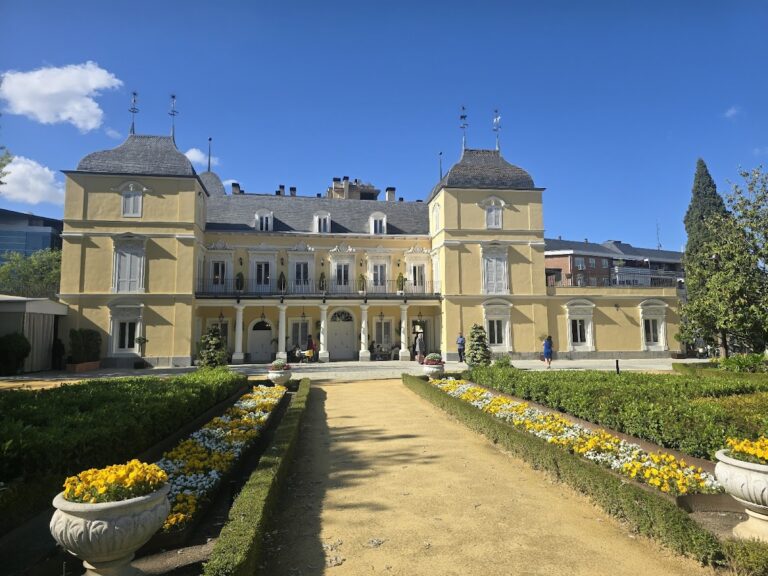
Palace of the Marquises of Murillo
The former palace is a four-level building with a semi-basement, two principal floors, and an attic beneath the roof. It has a Baztan-style character, a garden, and a passage that gives direct access to the church. The Iturralde family possessed a tribune in the church from which they could attend services. The former residence now houses offices.