Ermita de San Miguel de Villatuerta: A Medieval Monastery and Hermitage in Spain
Site at a Glance
- Rating
- 4.5
- Popularity
- Very Low
- Country
- Spain
- Primary era
- Medieval
- Eras represented
- Medieval
- Civilizations
- Kingdom of Navarre
- Site type
- Religious
- Remains
- Chapel
On this page7 sections
History
Medieval monastery
Ermita de San Miguel de Villatuerta is a former medieval monastery and later hermitage in Spain, dedicated to Saint Michael the Archangel. Its first documented reference dates to 26 December 1062, when Sancho el de Peñalén, the eleventh-century king of Pamplona, donated the monastery to San Salvador de Leire, a major medieval monastery in the Kingdom of Pamplona.
The date of the monastery’s foundation remains debated because the inscription once placed above the southern doorway is difficult to read. José María Lacarra and García Gainza assigned the foundation to the eleventh century. Uranga and Germán de Pamplona instead proposed a date between 971 and 978. The earlier interpretation would place the building among unusual examples of pre-Romanesque art in the Kingdom of Pamplona, while the later dating would associate it with rural Romanesque art.
From monastery to hermitage
The religious community had left the monastery by about the sixteenth century, when the building was converted into a hermitage. The exact date of the change is unknown. José María Lacarra described the structure as already completely abandoned at the beginning of the seventeenth century. Later ruination and rebuilding removed much of the evidence for the original monastery.
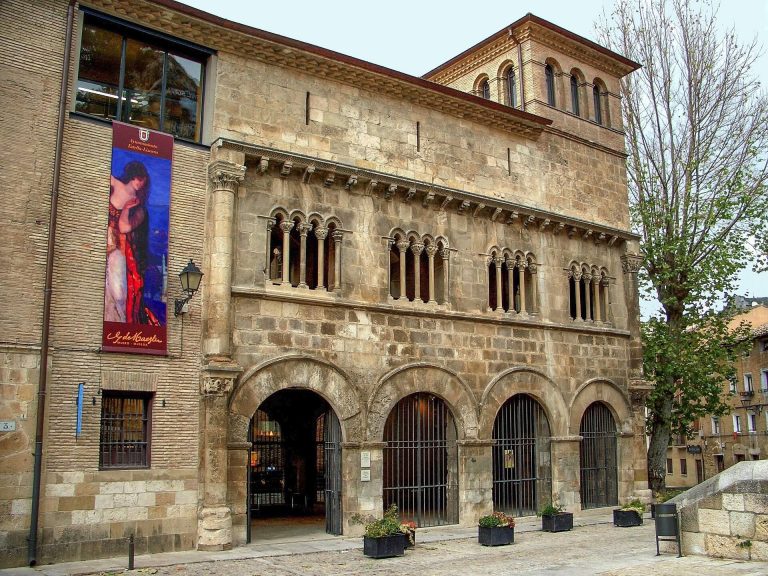
The foundation inscription was moved to the Museum of Navarra in 1942. It records the donation of San Miguel de Villatuerta to San Salvador de Leire. In 1965, the Príncipe de Viana Institution carried out the last documented intervention, repairing the roof after it had fallen into ruin. The hermitage belongs to the Archdiocese of Pamplona and Tudela.
Remains
Building and surviving medieval fabric
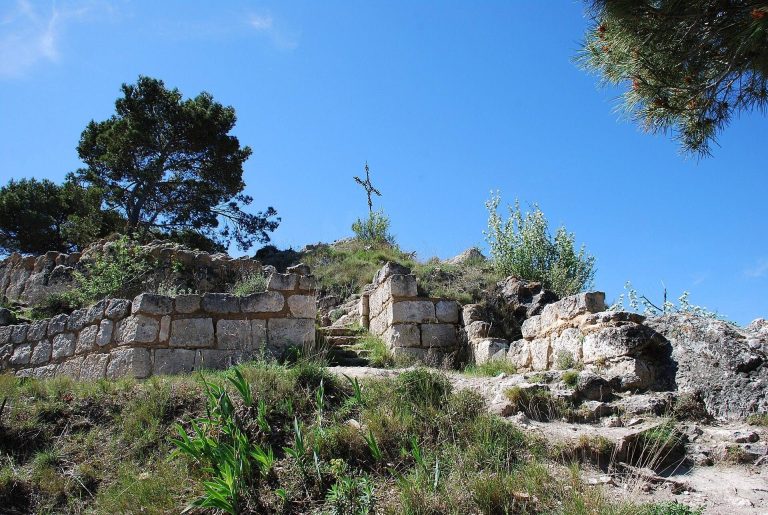
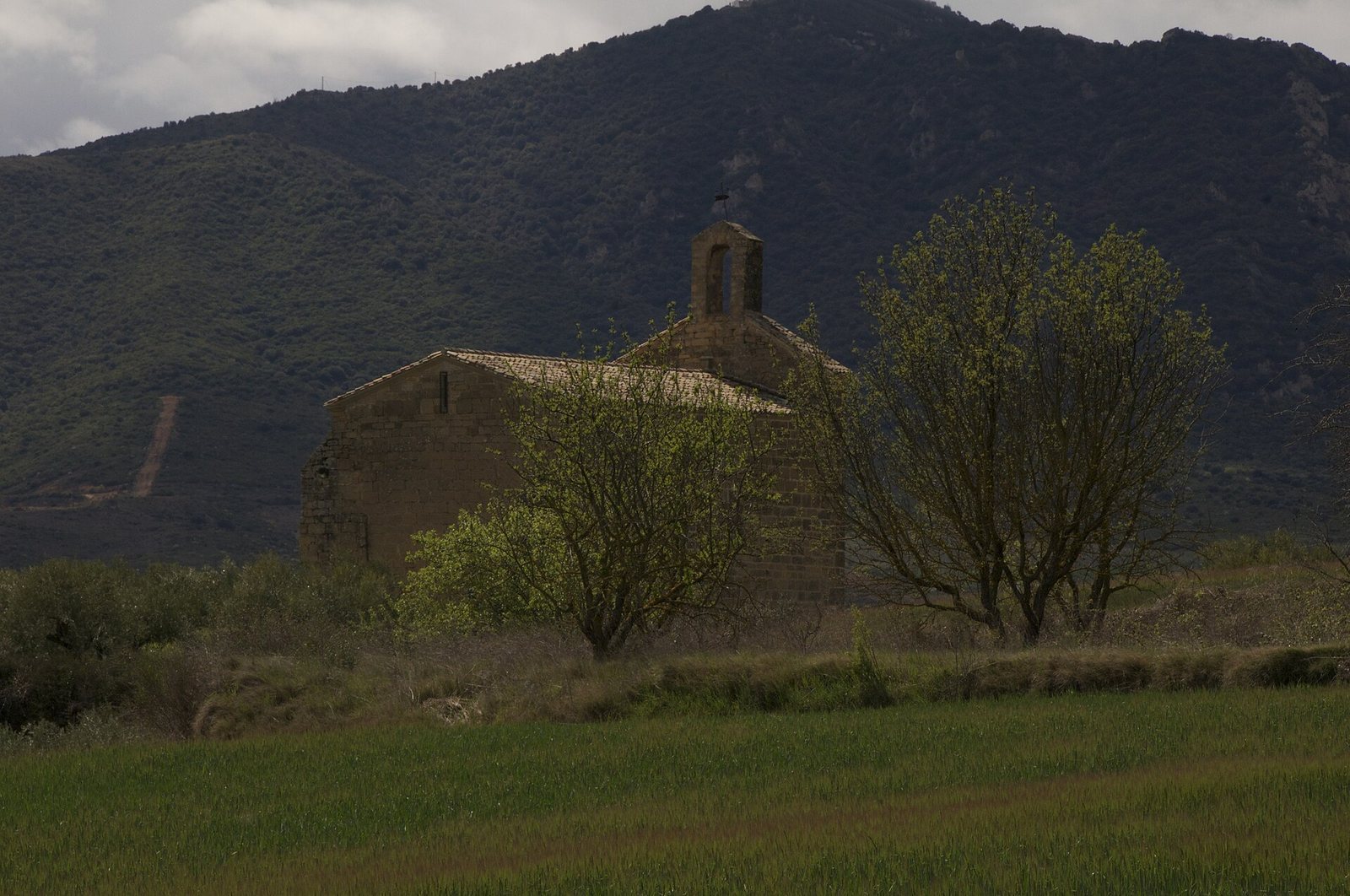
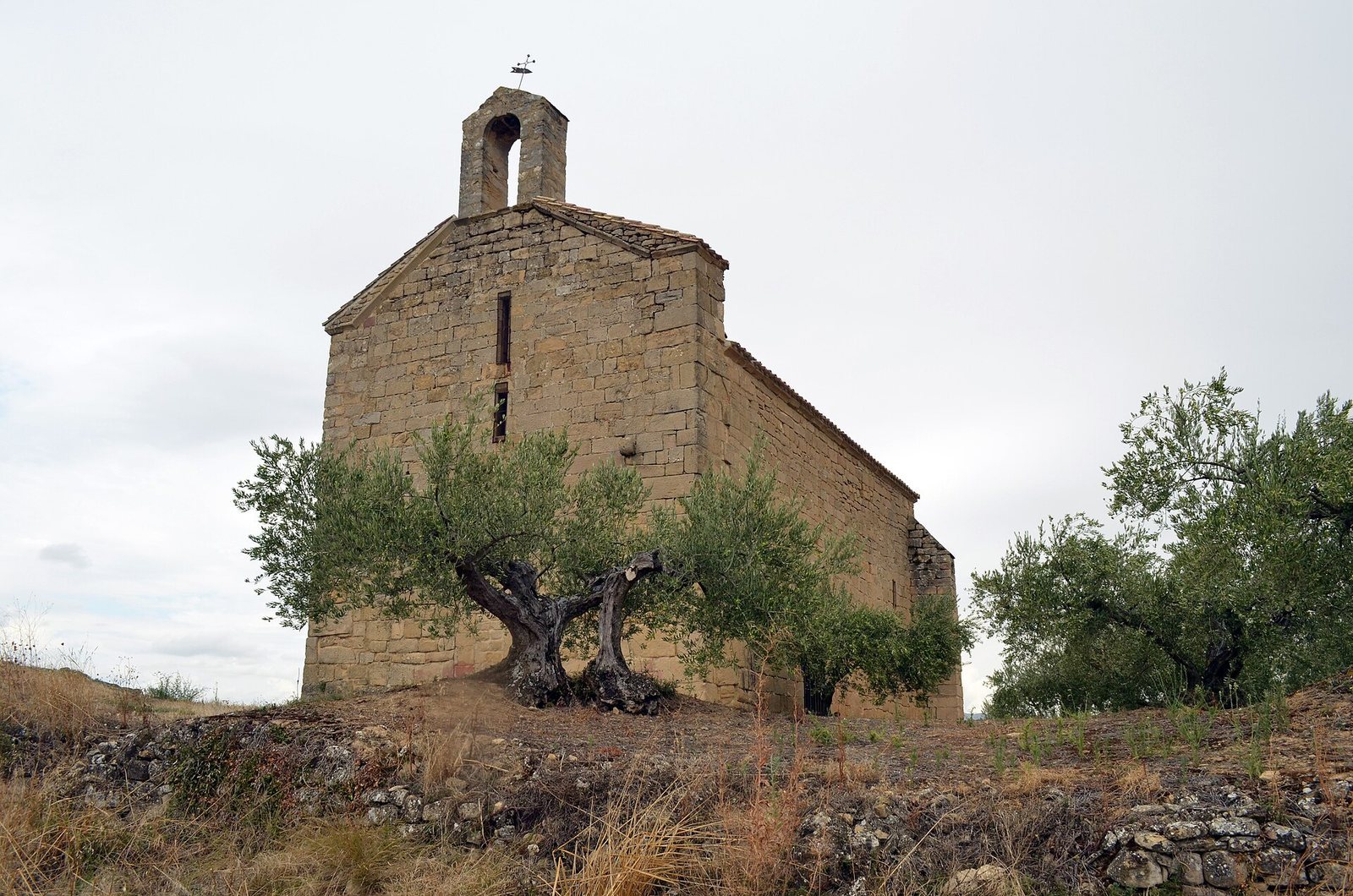
The surviving hermitage is a plain, sober structure with an irregular rectangular nave. Its east end and west gable are flat, and the exterior is generally built from large, irregular ashlar blocks. At the east wall, only the springing points of the apse survive at the corners. The original Romanesque barrel vault, a continuous semicircular ceiling, has disappeared, but the wall-attached shafts that supported its transverse arches remain. A modern bell gable crowns the west gable. The building stands near Villatuerta, close to the road to Estella, in the area known as Cuesta del Moro.
Entrances and sculptural remains
The current entrance in the south wall is modern and unornamented. Inside the west wall, a probable earlier doorway survives beneath substantial alteration by a later segmental arch. Its original form may have been horseshoe-shaped. Reliefs that once occupied the north and south walls were transferred to the Museum of Navarra with the foundation inscription. They are rustic, roughly carved works made with only two planes of carving. The smaller pieces are thought to have come from roof corbels, while the larger ones probably belonged to the metopes between them. These include a highly schematic crucified figure, a mounted figure, a man balanced on one foot, a possible image of Saint Michael with raised arms, and several animals. Their coarse technique has been interpreted either as early pre-Romanesque sculpture or as rural Romanesque work, depending on the proposed chronology of the monastery.
Later furnishings
The hermitage had an altarpiece dated 1605, made by Fermín de Arbizu, a sculptor from Estella. José María Lacarra saw it during his visit in 1923 and recorded detailed information about its appearance. Its later status is not stated.