Ermita de la Virgen de Altagracia: A Medieval Hermitage in Spain

Site at a Glance
- Rating
- 4.4
- Popularity
- Very Low
- Country
- Spain
- Primary era
- Medieval
- Eras represented
- Medieval, Early Modern, Modern
- Civilizations
- Crown of Castile, Spanish
- Site type
- Religious
- Remains
- Chapel
On this page12 sections
History
The Ermita de la Virgen de Altagracia is a medieval Catholic hermitage in Spain, near Garrovillas de Alconétar in Extremadura. Its architecture is primarily Gothic, with the oldest surviving elements dating from the fifteenth century. Documentary references to the current hermitage begin in the fourteenth century, although those records may refer to an earlier building on the same site.
Possible Earlier Origins
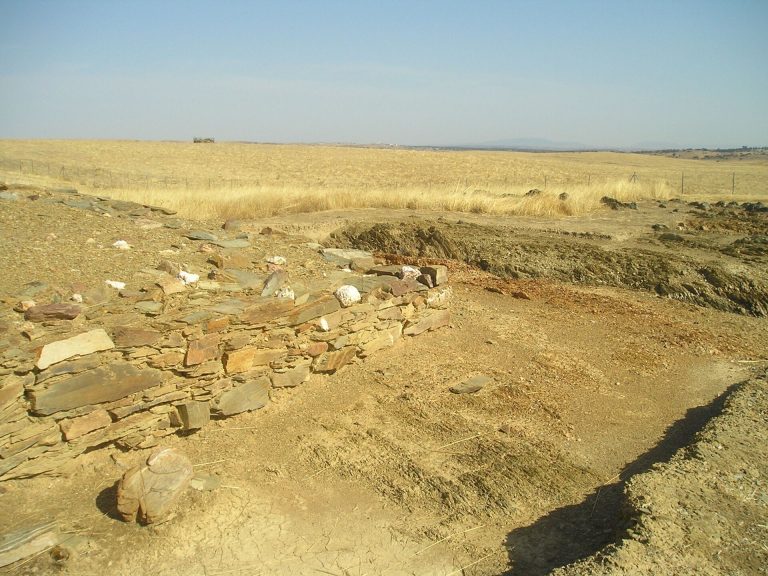
The sanctuary stands in Villaluengo, an area with evidence of settlement across several periods. Nearby remains include Celtic settlements identified as Históbriga and El Garro, a Roman settlement identified as Túrmulus, and early medieval anthropomorphic tombs beside the hermitage. These discoveries have encouraged different interpretations of the site’s beginnings.
One interpretation regards the sanctuary as a Christianized pagan place. It connects the site with an earlier Roman divine presence and with the sacred rock beneath the pedestal of the Virgin’s image. Another hypothesis associates the hermitage with the Order of the Temple, commonly called the Knights Templar, a medieval Christian military order that administered territory and fortified possessions in parts of Iberia. The order governed Alconétar during the twelfth and thirteenth centuries and may have established the sanctuary on the municipal boundary to mark its territory against the district of Cáceres. A possible relationship with a former Templar convent has also been proposed.
The Fair and Its Local Role
From the sixteenth century, the hermitage became an important setting for the locality’s annual fair. Held on 8 September at the end of the harvests, the fair is mentioned in 1536, when ordinances issued by Diego Enríquez de Guzmán stated that it had been celebrated from time immemorial. Its commercial importance was sufficient for the council of Cáceres to restrict free-market activity in an effort to prevent its residents from attending.
The restrictions prompted residents of Casar de Cáceres to complain to Philip II in 1588. Philip II was the Habsburg king of Spain from 1556 to 1598, and the complaint was addressed to him as monarch. During the same period, Roma communities from the region began camping around the hermitage and celebrating weddings there, a practice that continued into the twentieth century.
From Fairground to Pilgrimage
The Altagracia fair was prohibited in 1820 by the Royal Audiencia of Extremadura after a quarrel. The civil governor authorized an attempt to restore it in 1834, but the revival failed amid the economic crisis that followed the Peninsular War and an outbreak of cholera that year. The former fair then gave way to the town’s pilgrimage, and the sanctuary became a more ordinary local hermitage.
The hermitage belongs to the parish formed by the churches of Santa María and San Pedro within the Diocese of Coria-Cáceres. A confraternity of approximately 400 members administers it, while documentary evidence indicates that the tradition of hermits living in the adjoining house continued into the twenty-first century. The site remains the destination of Garrovillas de Alconétar’s annual pilgrimage on 8 September, which coincides with the Day of Extremadura. Every five years, in years divisible by five, the celebration is enlarged by bringing the image of the Virgin of Altagracia into the town. The title refers to the Virgin Mary, venerated here as Garrovillas de Alconétar’s patron.
Remains
Building and Setting
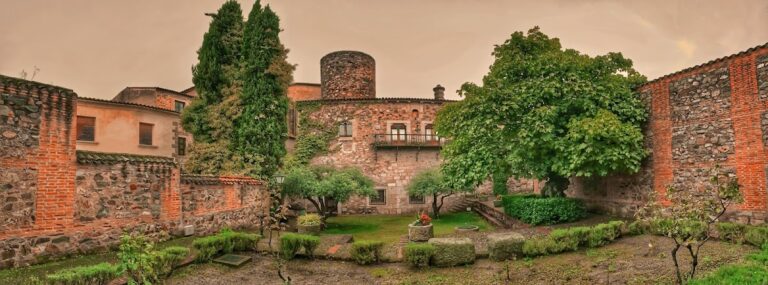
The hermitage occupies a rural area generally known as Villaluengo, approximately 10 kilometres south of Garrovillas de Alconétar and near the boundary with Casar de Cáceres. The small railway settlement of La Perala lies about 3 kilometres to the east. The building is made from rubble masonry and ashlar. Its rectangular plan contains a single nave divided into three bays and covered by tierceron vaulting, a Gothic rib pattern formed by secondary ribs that subdivide the vault surface.
A sixteenth-century sacristy stands beside the main chapel and has a barrel vault. A small devotional chamber, or camarín, adjoins the presbytery and provides a setting for the principal sacred image. Beneath the altar is a small grotto, which local legends identify as the place of the Marian apparition that originated the sanctuary. The stone sacred beneath the pedestal of the image is also part of the site’s devotional tradition.
Exterior Additions and Entrances
A large portico extends across the principal facade and along both lateral sides. It took shape through several alterations during the eighteenth and nineteenth centuries and consists of stone semicircular arches supporting a timber roof structure with tiled covering. The main doorway is set within a semicircular arch. An inscription dates the doorway to 1759, while the arch may belong to the late fifteenth century because it incorporates stone balls characteristic of that period. Two lateral doors provide additional access.
Above a rose window, the principal facade carries a belfry. Pinnacles rise above the external buttresses, adding vertical elements to the otherwise compact structure. Opposite the main entrance stands a rural house in the local vernacular style. It provided accommodation for hermits and a place for the non-religious celebrations connected with the pilgrimage. One corner contains a small window that has been blocked by a small granite column.
Altars, Images, and Painted Decoration
High Altar and Marian Images
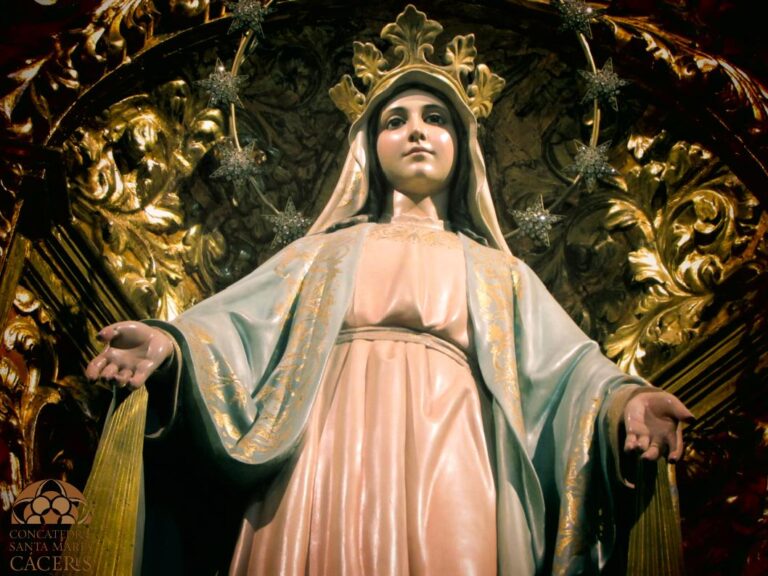
The seventeenth-century high altarpiece is composed mainly of paintings and contains the dressed image of the Virgin of Altagracia. On the Gospel side, the altar of the Virgin of the Milk holds a late Gothic sculpture dated to the sixteenth century. The Virgin of the Milk represents Mary nursing the infant Christ. This sculpture may have been the earlier image of the Virgin of Altagracia, since the present dressed image is considerably later.
Chapel of Christ
On the Epistle side, the Chapel of Christ contains the image known as the Christ of the Expiration, dated to the sixteenth or seventeenth century. The Gospel side and Epistle side are traditional names for the two sides of a church interior when facing the main altar.
Camarín Paintings and Other Devotional Works
The camarín contains a nineteenth-century fresco of the Holy Family by Rafael Lucenqui, a Hispano-Polish painter. The painted Calvary behind the image of Christ is also attributed to Lucenqui because it resembles a work by the same artist in the Church of San Mateo in the old city of Cáceres. Other interior furnishings include a seventeenth-century image of Saint Joseph with the Child and an eighteenth-century ex-voto painting. An ex-voto is a devotional image or object offered in fulfillment of a vow or in thanks for a favor believed to have been received.
Archaeological Features and Land Holdings
The area around the hermitage and the adjoining house contains remains of a fortified Celtic settlement and medieval anthropomorphic tombs. These features form part of the wider archaeological setting that surrounds the building. Several garden plots were donated by worshippers to the confraternity, providing it with a stable source of financing.