Eleshnitsa Monastery: A Bulgarian Orthodox Monastery in the Balkan Mountains
Site at a Glance
- Rating
- 4.5
- Popularity
- Low
- Country
- Bulgaria
- Primary era
- Early Modern
- External website
- Open
- Eras represented
- Medieval, Early Modern, Modern
- Civilizations
- Bulgarian
- Site type
- Religious
- Remains
- Monastery
On this page7 sections
History
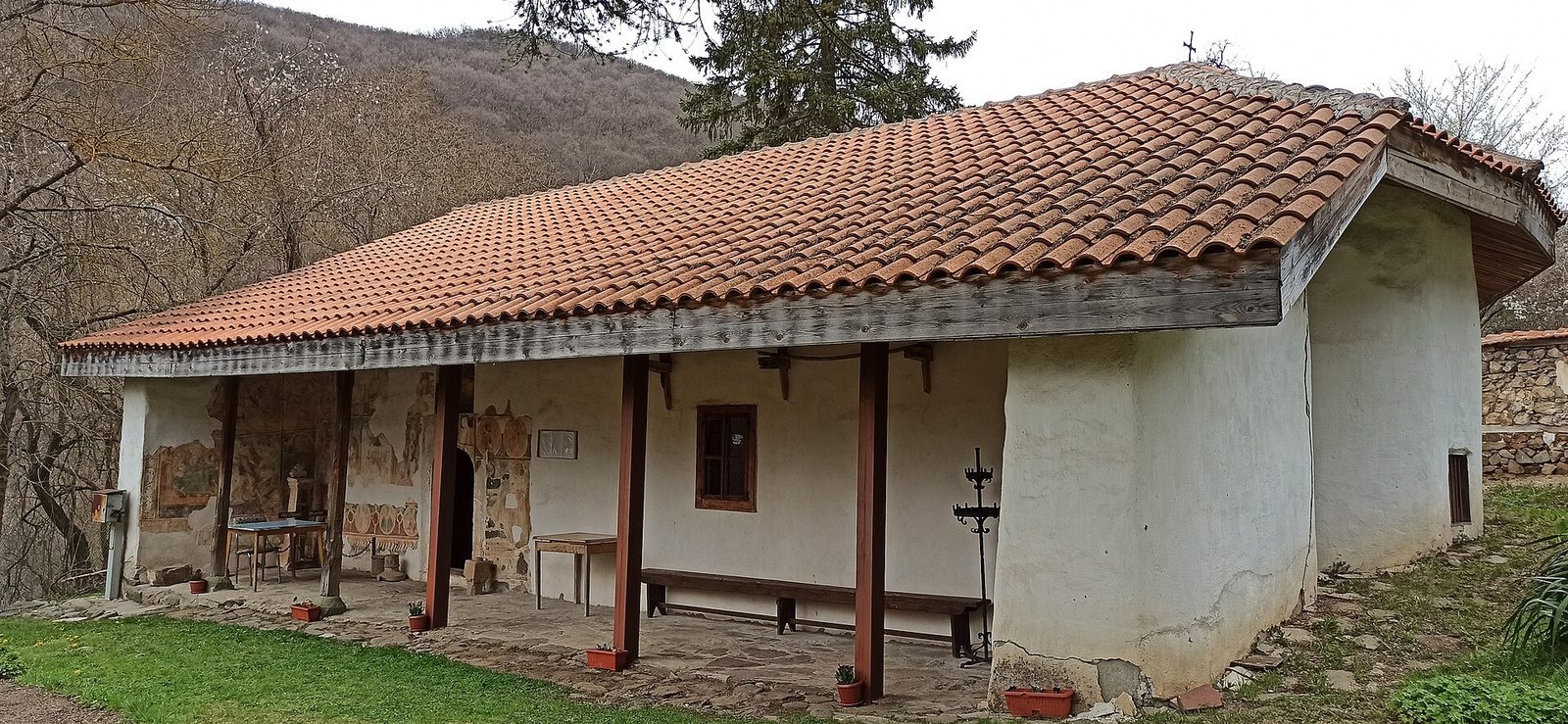
Eleshnitsa Monastery is a Bulgarian Orthodox monastery in Bulgaria, located about 4 km north of the village of Eleshnitsa at the foot of Murgash Peak in the Balkan Mountains. Dedicated to the Assumption of the Virgin Mary, it probably took shape in the late fourteenth or early fifteenth century, during the late medieval period, and forms part of the Little Sofia Holy Mountain, a historical group of Orthodox monasteries in the Sofia region. Its position near the Yakovishtitsa River also gave it the alternative name Yakovski Monastery.
Origins and Medieval Development
The monastery’s earliest history is uncertain. Tradition places a hermit-monastic sanctuary at the site as early as the ninth century, while the monastery itself was probably established during the reign of Ivan Alexander, the Bulgarian tsar who ruled from 1331 to 1371. A marble inscription dated 1499, set into the church floor, confirms the monastery’s medieval history. The surviving frescoes also preserve artistic characteristics associated with the fifteenth and sixteenth centuries.
During the sixteenth and seventeenth centuries, the monastery was renovated and rebuilt. Under Ottoman rule, it became a literary center with a cell school, a traditional monastery school that provided religious and literary education. Its history also includes a role in Bulgaria’s nineteenth-century national liberation movement. Vasil Levski, a leading revolutionary against Ottoman rule, used the monastery as a hiding place.
Destruction and Rebuilding
Kardzhali incursions devastated Eleshnitsa Monastery in 1793. The complex was restored in 1799, but looting and destruction followed again. Abbot Daniel began another renovation in 1820, an event commemorated by an inscription stating that the church was renewed in that year. In 1864, the church was repaired and painted by artists of the Samokov school, a major Bulgarian tradition of Orthodox church painting.
The monastery underwent comprehensive renewal during the first half of the twentieth century. It was inactive during the Second World War, after which its residents alternated between male and female communities. The monastery declined after 1966, and restoration began in 1989 with the aim of recovering its older appearance and style. Eleshnitsa Monastery is recognized as a cultural and architectural monument. After Botev’s rebel company was defeated in early June 1876, some surviving fighters also found refuge at the monastery. Hristo Botev was a Bulgarian poet and revolutionary who led that company.
Remains
Monastery Church
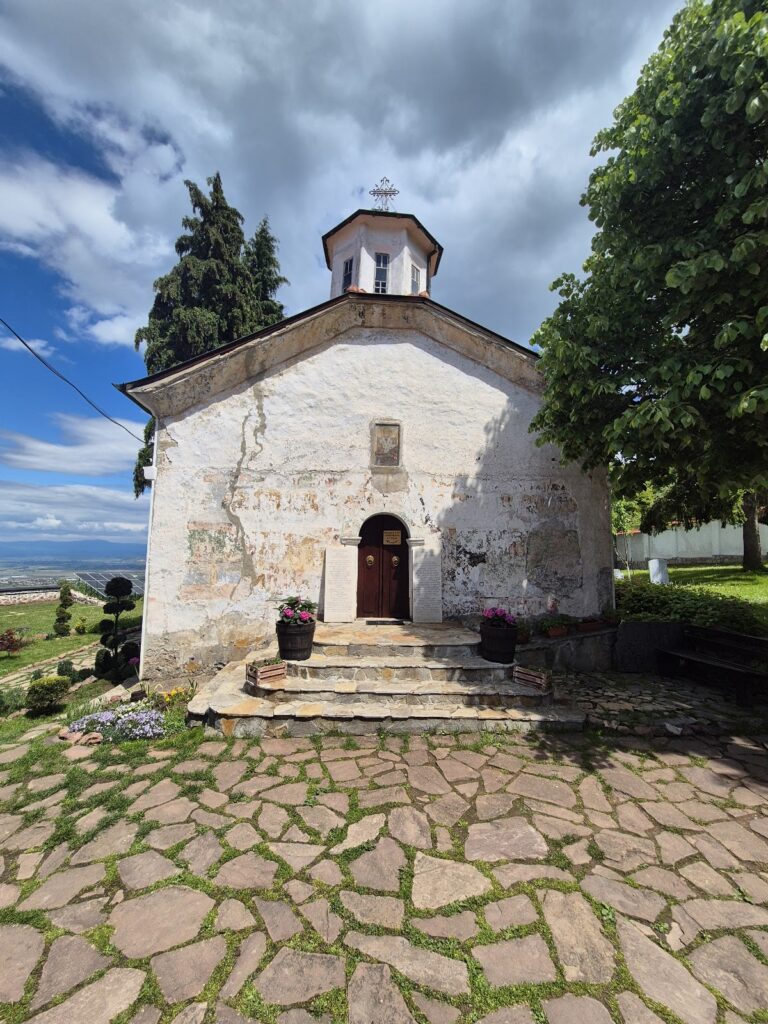
The church is a low, single-nave building in a late-medieval style, measuring approximately 6.8 by 14.5 m. It has a western entrance and consists of a nave with a later-added narthex, an entrance vestibule attached to the western side. A donor inscription above the doorway on the nave’s west wall records the church’s creation and painting in the sixteenth century.
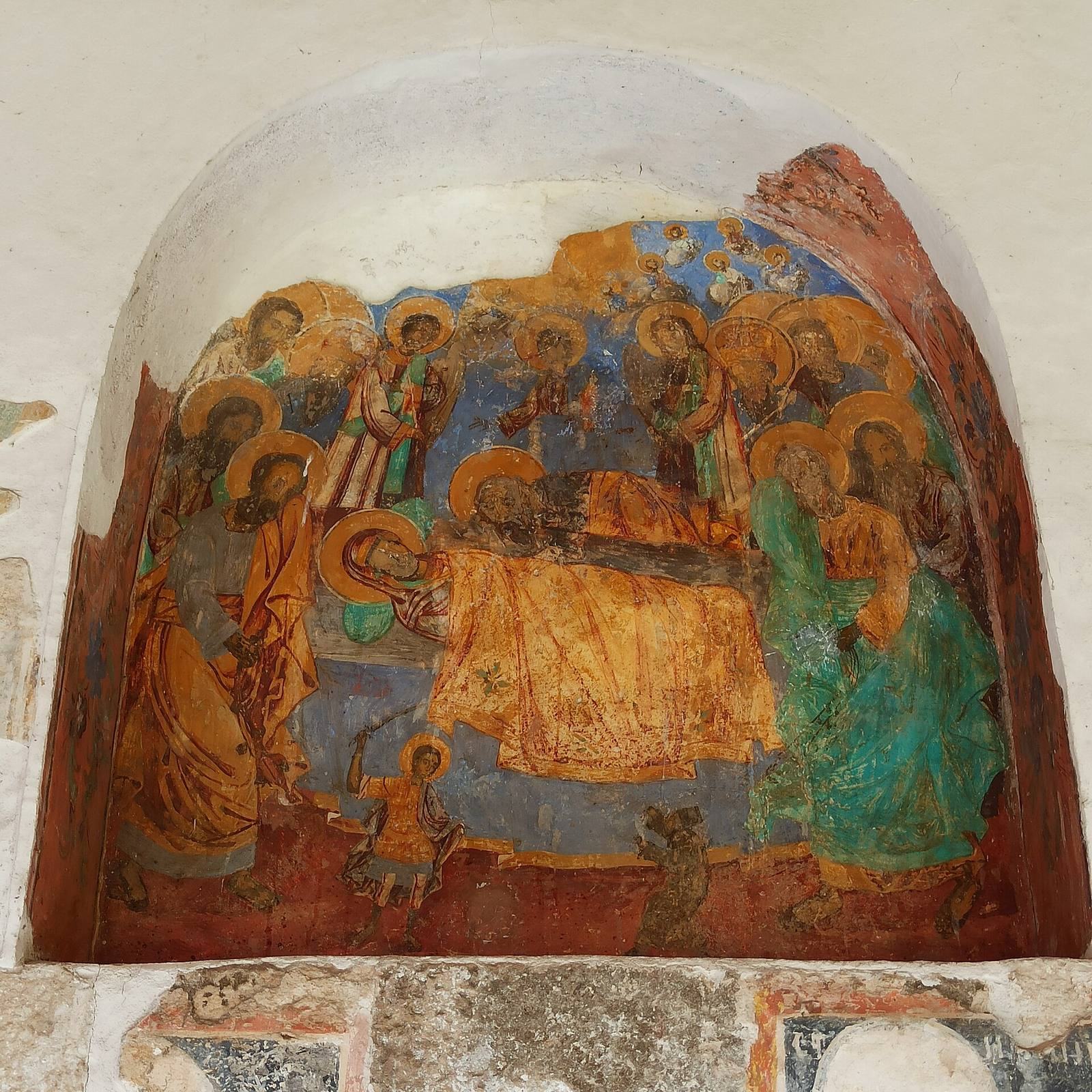
The best-preserved wall paintings are in the entrance vestibule. Their calligraphic features and artistic style place their execution in the late sixteenth or early seventeenth century. The southern door bears a representation of the Assumption of the Virgin Mary. In the altar area, the Annunciation is flanked by images of Kings David and Solomon, while the apse, the curved eastern end containing the altar, shows the Virgin Mary enthroned with the infant Jesus.
The church includes one of four known representations of an Ecumenical Council from Bulgarian lands. It also contains a valuable painting of the Last Supper dated 1864, linking the surviving interior to the nineteenth-century repair and painting campaign.
Monastery Buildings
The monastery buildings are arranged over two storeys. Stables and facilities for livestock occupied the ground floor, while the upper floor contained the monastic cells. The complex has two separate courtyards and two residential wings, forming the principal surviving arrangement around the church.
Books and Literary Heritage
A Gospel book and a Psalter associated with Eleshnitsa Monastery are preserved in the National Church Historical and Archaeological Museum in Sofia. They reflect the monastery’s former role as a literary center during the Ottoman period.