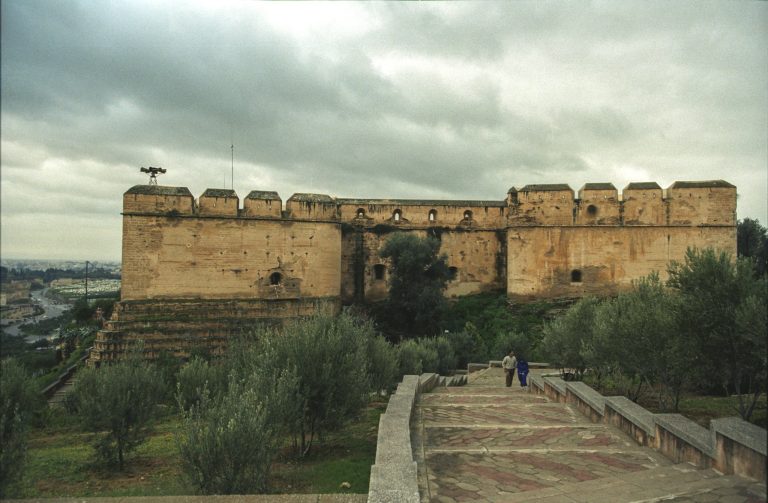
El Glaoui Palace, Fez: A Moroccan Political Residence
Site at a Glance
- Rating
- 4.1
- Popularity
- Low
- Country
- Morocco
- Primary era
- Modern
- Eras represented
- Modern
- Civilizations
- Alaouite
- Site type
- Domestic
- Remains
- Palace
On this page11 sections
History
El Glaoui Palace, Fez, is a late nineteenth- and early twentieth-century palace in Morocco, built in the historic Ziat neighbourhood of Fes el-Bali. Haj Omar Tazi, who had served as finance minister to Sultan Abdelaziz, constructed it during the second half of the nineteenth century. The palace later became associated with the Glaoui family, a powerful Moroccan political clan whose members held major offices during the late nineteenth and first half of the twentieth centuries.
The Tazi and Glaoui connection
In 1907, after Abd al-Hafid defeated Abdelaziz, Madani Glaoui seized several of Tazi’s properties, including the palace. Madani had supported Abd al-Hafid during the Hafidiya civil war, the conflict that determined the succession to the Moroccan throne. After his victory, Abd al-Hafid appointed Madani to senior positions, including the vizierate. A vizier was a high-ranking minister serving a monarch.
The palace is sometimes attributed to Madani’s younger brother, Thami el Glaoui, but Madani’s grandson, Abbderrahman El Mezouari El Glaoui, identifies that attribution as mistaken. The property belonged to the Glaoui family, which included Madani, the Grand Vizier, and Thami, who served as pasha of Marrakesh. A pasha was a senior administrative and military official. Madani died in 1918, while Thami retained his office under the French Protectorate, the system of French political control over Morocco from 1912 until independence in 1956.
French occupation and later decline
After French forces occupied Fez following 1911, the palace temporarily housed Eugène Regnault, the French plenipotentiary. It was later occupied for a period by Hubert Lyautey, the French Resident-General in Morocco.
Moroccan independence in 1956 brought a decisive change to the Glaoui family’s position. King Mohammed V stripped Thami el Glaoui of his status, and the family’s palaces subsequently fell into neglect. El Glaoui Palace remains privately owned and is partly dilapidated. It is also identified as the first building in Morocco to have electricity and heating.
The Ziat neighbourhood
The palace stands in the former al-Uyun neighbourhood, a name meaning “the Water Sources,” now known as Ziat or Ziyat. Until the nineteenth century, this area was a garden district with comparatively abundant open space. That setting attracted wealthy families who built large residences there, including Dar Moqri and Dar Tazi.
Remains
El Glaoui Palace was a large residential complex made up of as many as twelve houses, numerous annexes, and several supporting facilities. Its associated buildings and spaces included hammams, Quranic schools, stables, a cemetery, and extensive gardens. The surviving architecture and decoration are partly dilapidated.
Courtyards and residential spaces
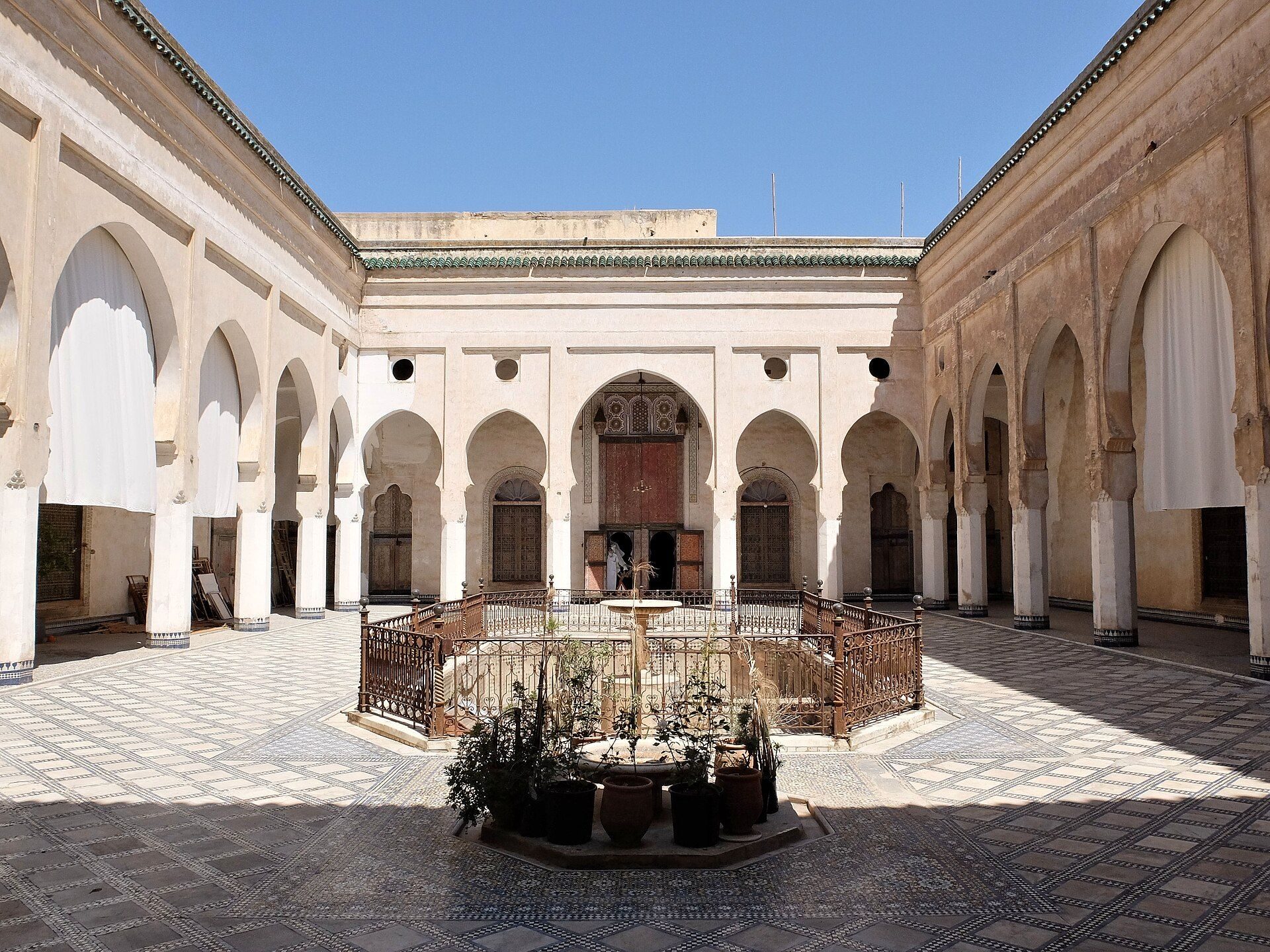
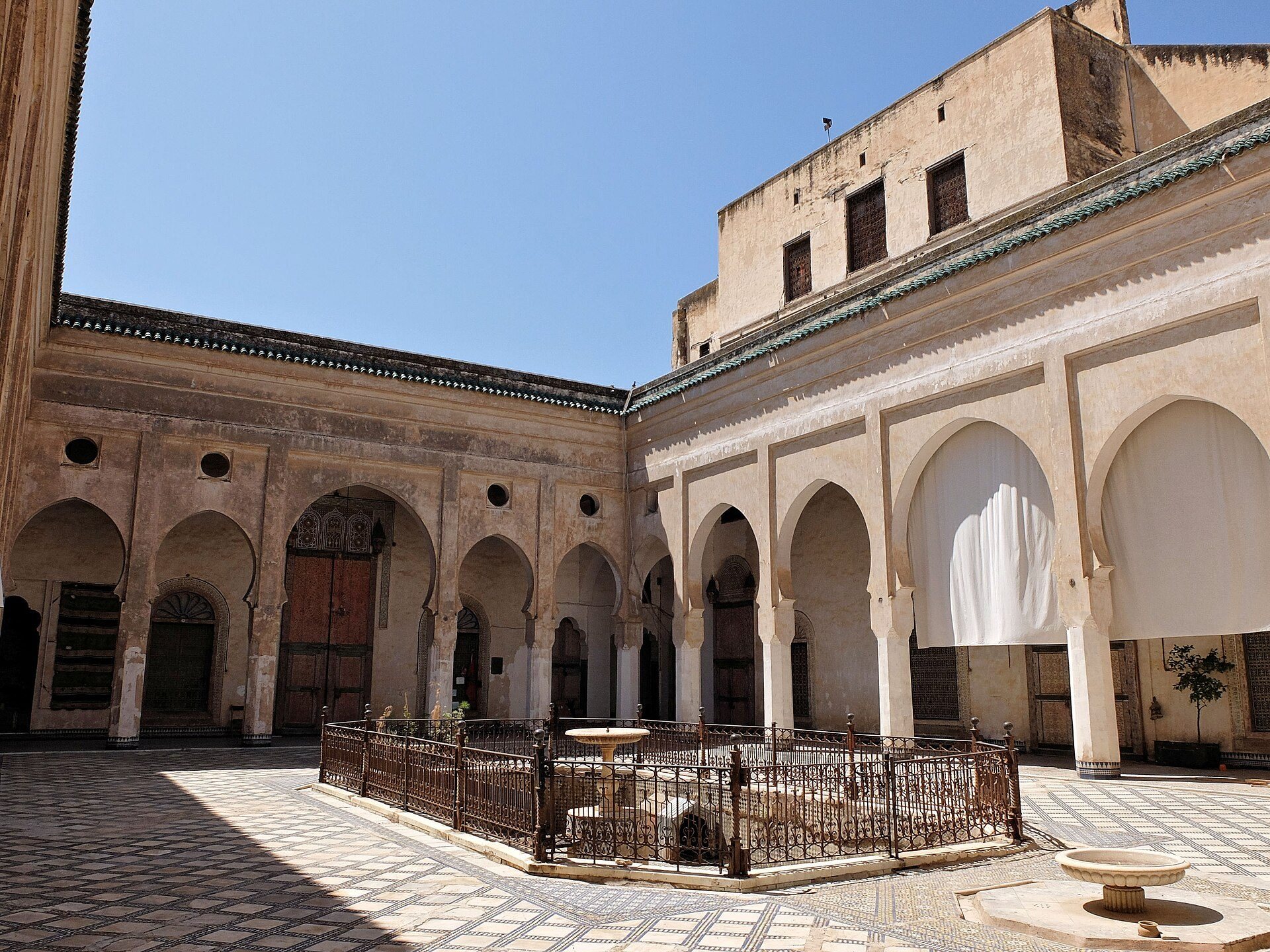
Main courtyard
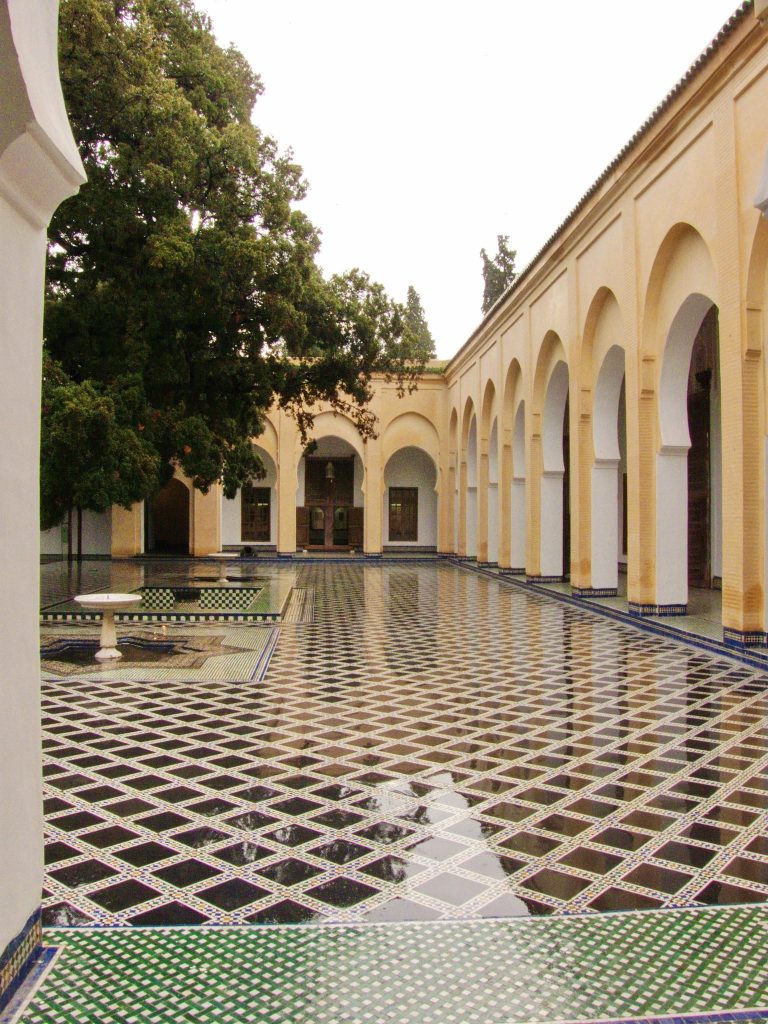
The largest section is arranged around a broad interior courtyard. At its centre is a rectangular pool with a fountain, while two further fountains rise from smaller basins on either side of the main pool. This courtyard formed the principal organizing space of the largest residential section.
Additional courtyards
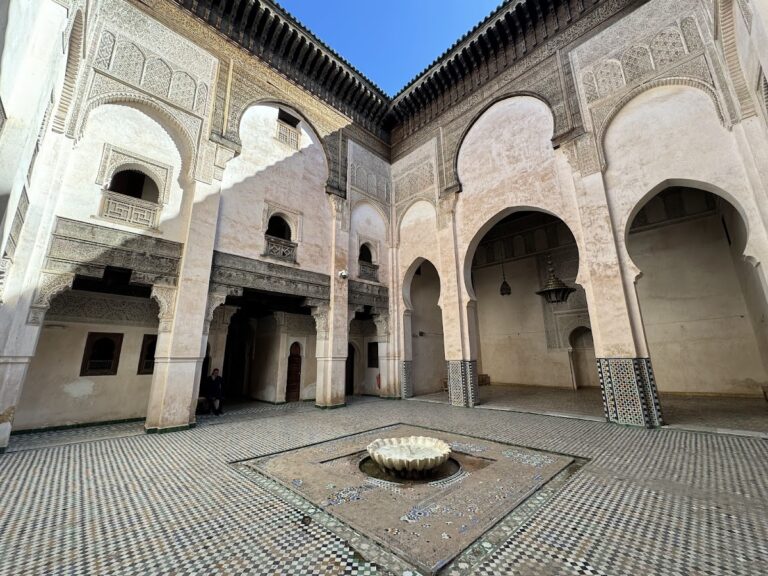
The complex includes at least two further courtyard areas, an eastern first courtyard and a western second courtyard. Salons open from the first courtyard, linking the residential rooms to the interior spaces of the palace.
Decorative features
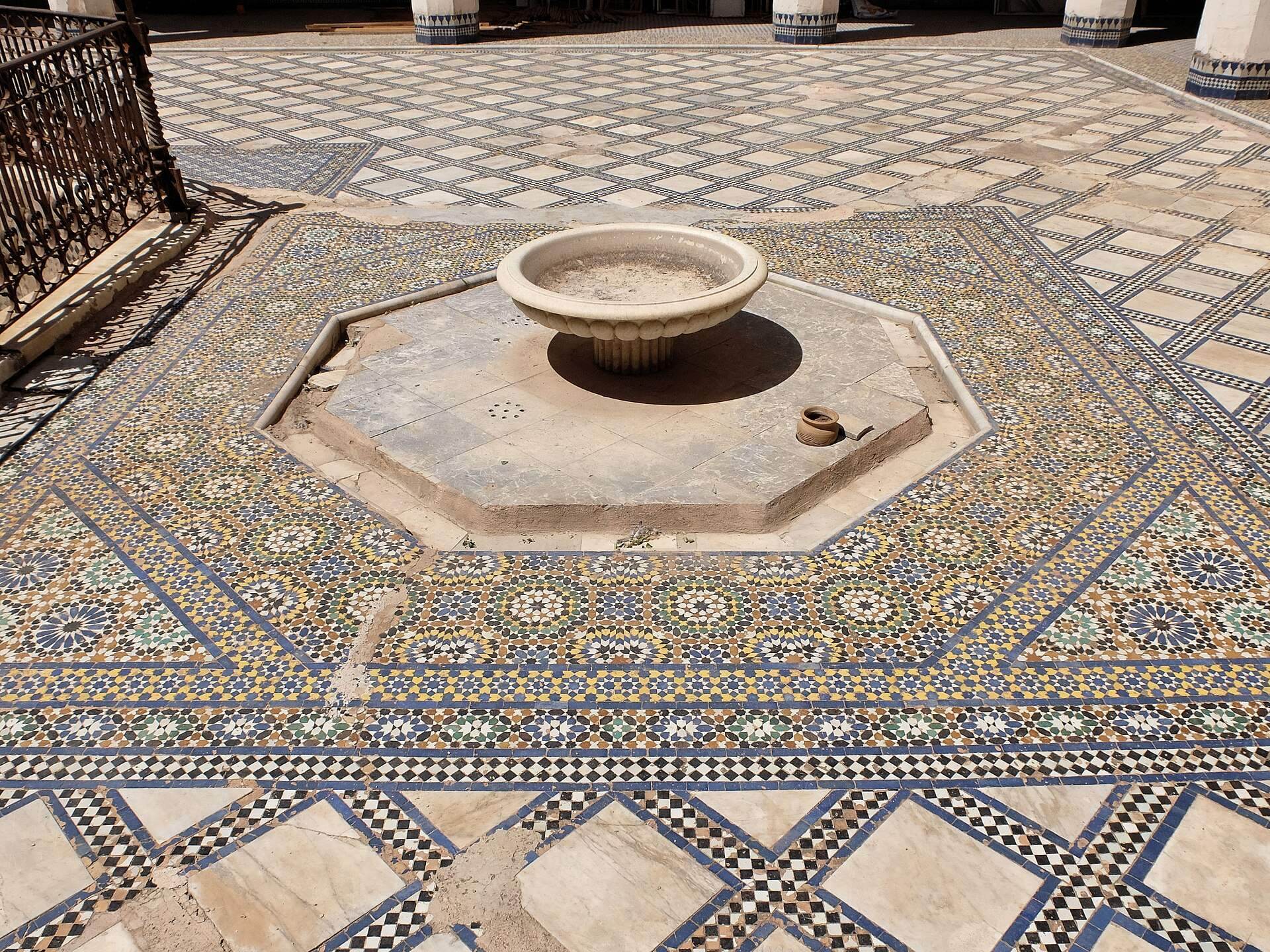
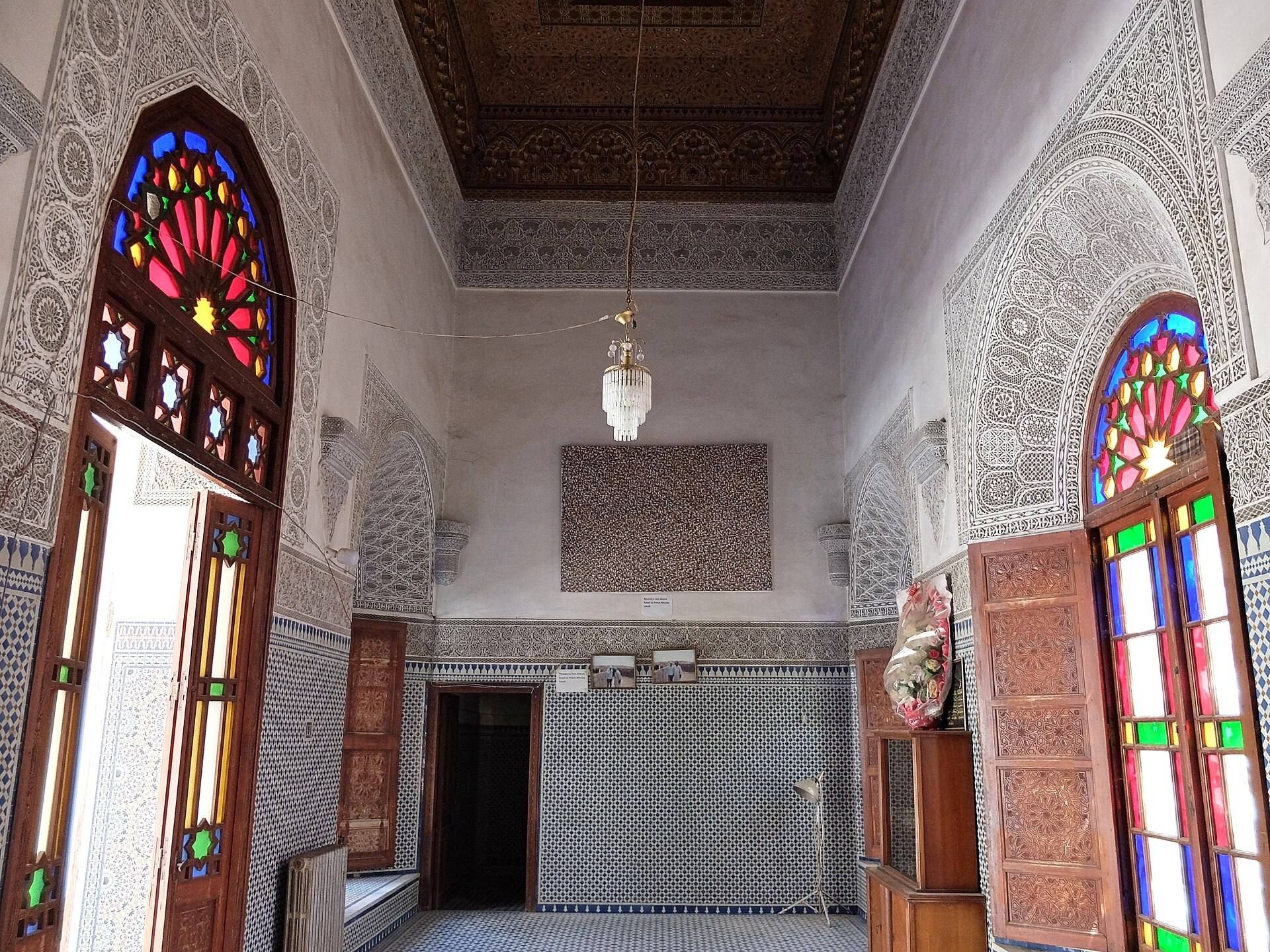
Tilework and wall fountain
The palace contains zellij, Moroccan mosaic tilework made from individually shaped and fitted glazed pieces. A wall fountain is covered with this tilework, adding a functional feature to the decorative treatment of the interior.
Wood and stucco decoration
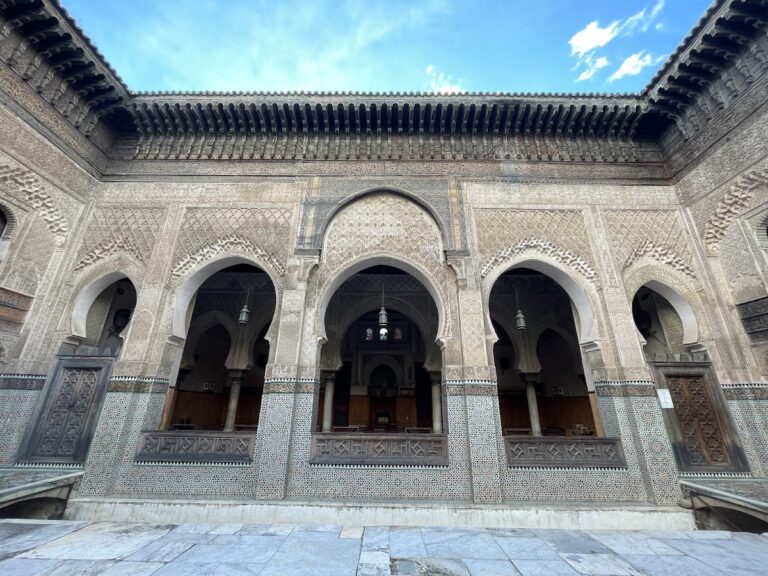
Other surviving elements include painted wood, carved stucco, and painted decoration on a wooden balcony. Together, these features reflect the high level of Moroccan craftsmanship associated with the palace’s period. Their present condition is partly deteriorated, like other surviving architectural elements in the complex.