Dar Batha: A Royal Palace and Museum of Islamic Arts in Fez, Morocco
Site at a Glance
- Rating
- 4.4
- Popularity
- Low
- Country
- Morocco
- Primary era
- Modern
- External website
- Open
- Eras represented
- Modern
- Civilizations
- Alaouite
- Site type
- Domestic
- Remains
- Palace
On this page7 sections
History
Dar Batha is a former Alawi royal palace in Fez, Morocco, commissioned in the late nineteenth century and built in the Moorish style between approximately 1886 and 1907. Sultan Hassan I began the project, and his successor, Sultan Abdelaziz, completed and embellished it. The palace formed part of the development of the area between Fes el-Bali and Fes el-Jdid, two historic medinas of Fez, and later became a museum devoted to the artistic and cultural heritage of Morocco.
Royal development between the medinas
Before Hassan I’s reign, which lasted from 1873 to 1894, the site consisted of small, separate buildings between the two medinas. Hassan I created a walled corridor linking them, after which the surrounding area was developed with royal gardens and palaces. The land used for Dar Batha was purchased from the wealthy Ben Jelloun family of Fez.
Dar Batha and the adjoining Dar el-Beida were constructed as a summer palace and as accommodation for distinguished visitors and guests. Dar el-Beida lay southeast of Dar Batha and originally formed part of the same complex. It was completed under Sultan Abdelhafid, who ruled from 1909 to 1912.
Palace, government offices, and museum
In 1912, the two palaces were used to house services of the Resident-General after the establishment of the French Protectorate in Morocco. The protectorate was the system of French control introduced over most of Morocco while the Moroccan sultanate formally continued.
Dar Batha became a museum of local arts in 1915, after its collection was transferred from Dar Adiyel. It later served as a national ethnographic museum and cultural center, and the palace was classified as a national monument in 1924. A permanent exhibition presented in 2015, Arts and Traditions of Life in Fez and Its Regions, examined the historical and sociocultural forces that shaped Fez and its region through objects connected with urban and rural crafts and practices.
Recent renovation
Earlier renovation work took place between 1990 and 1996. A wider museum-renovation campaign began in Morocco in 2016, with work at Dar Batha starting in April 2019. The project converted the palace into a museum of Islamic art. After its completion in 2025, the institution was officially known as the Al Batha Museum of Islamic Arts.
Remains
Palace layout and garden
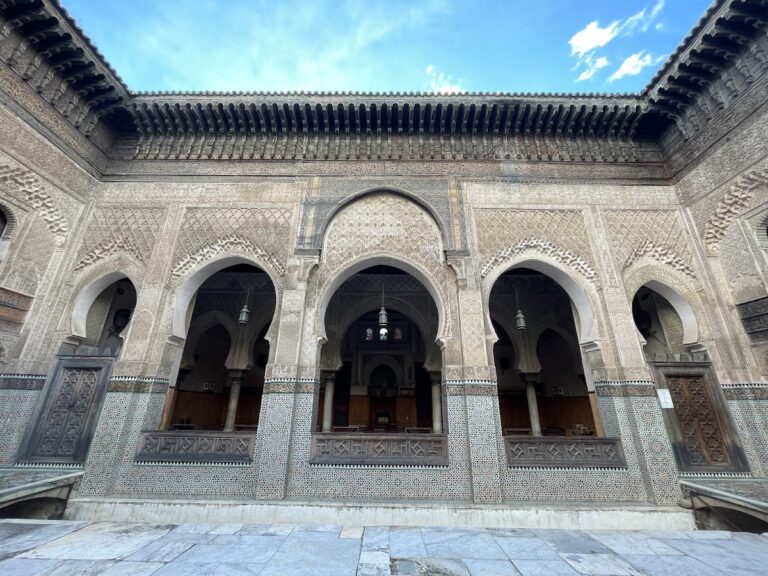
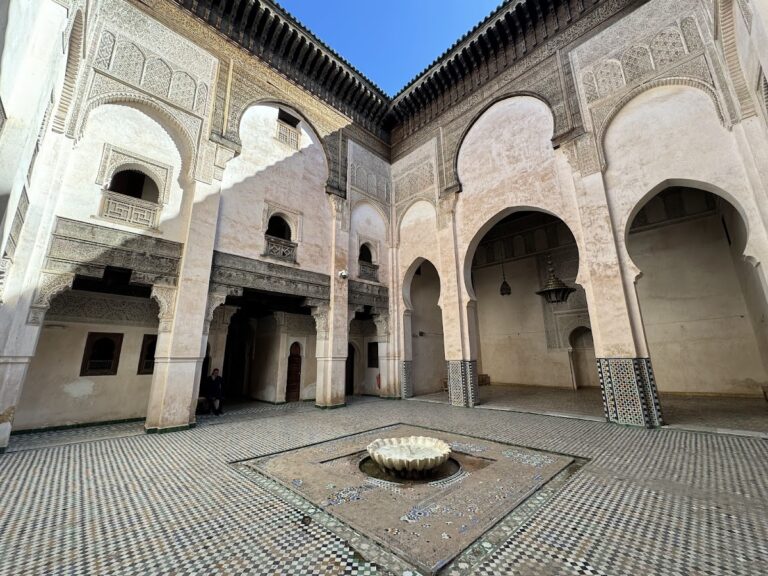
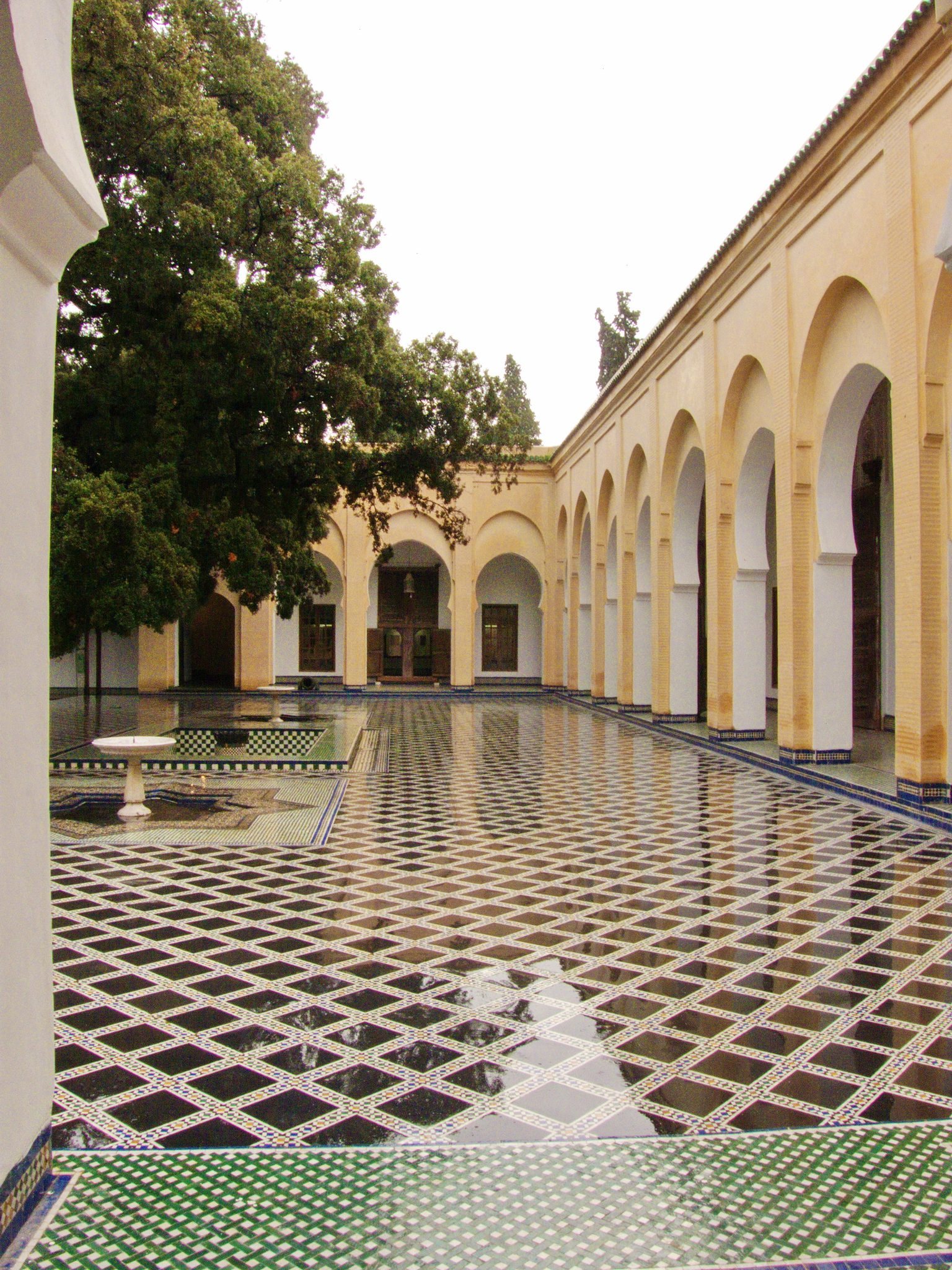
Dar Batha is a one-story palace organized as a riad, a building or garden arranged around an interior courtyard. Its Moorish architecture reflects Hispano-Islamic and Andalusian characteristics associated with the Alawi period, using wood, brick, and tile. The main entrance opens onto a large rectangular courtyard, around which the palace is arranged. Galleries surround the courtyard, while the two principal wings occupy its eastern and western ends.
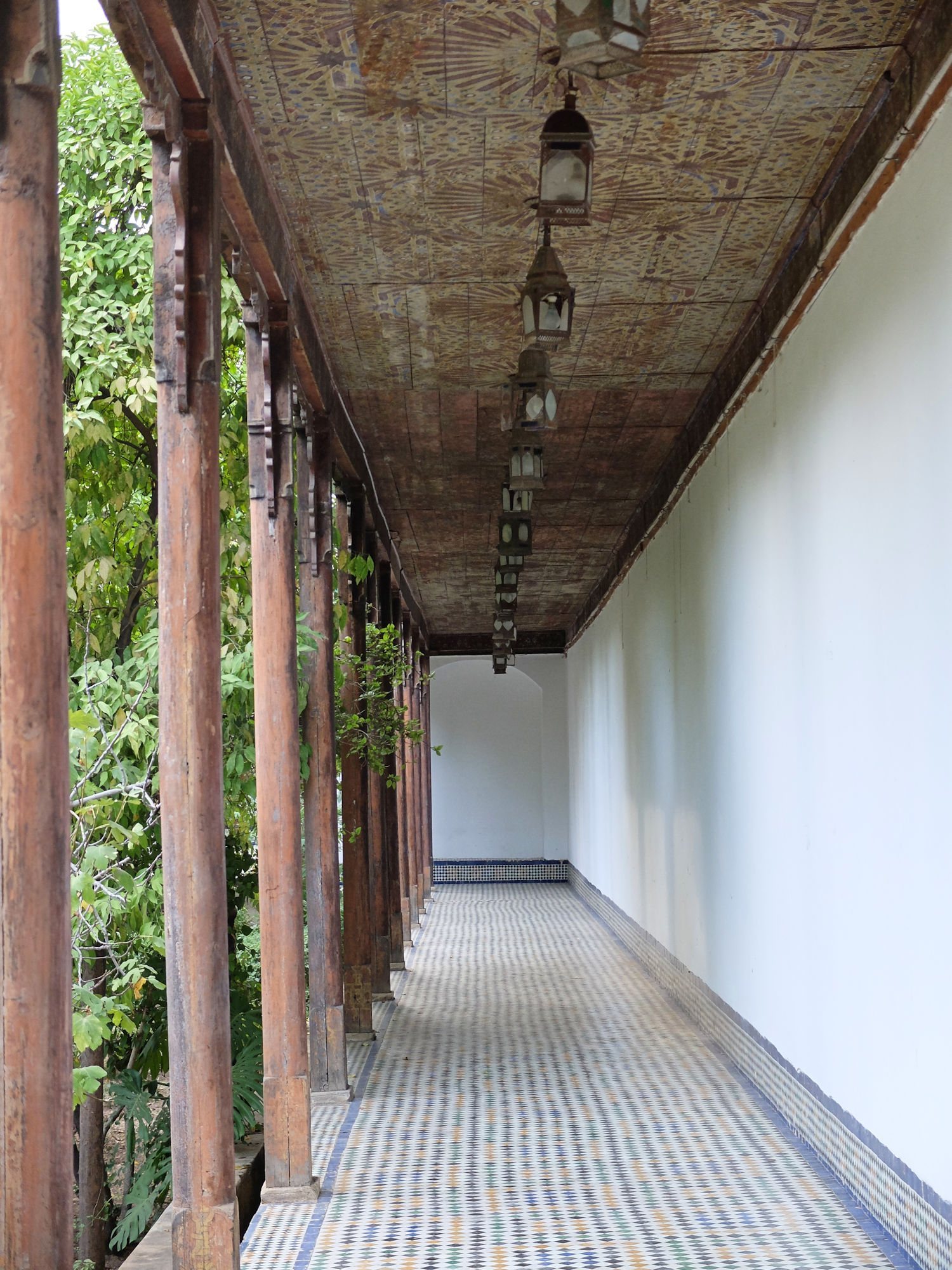
The eastern and western galleries contain large brick horseshoe arches. Along the northern and southern sides of the central garden, the galleries are made of painted wood, and other rooms contain zellij, Moroccan mosaics formed from small cut and glazed tiles, together with further painted woodwork. Colorful zellij covers the paving at the eastern and western ends of the courtyard and extends around ornamental fountains. Painted decoration also appears on the ceilings of the wooden galleries.
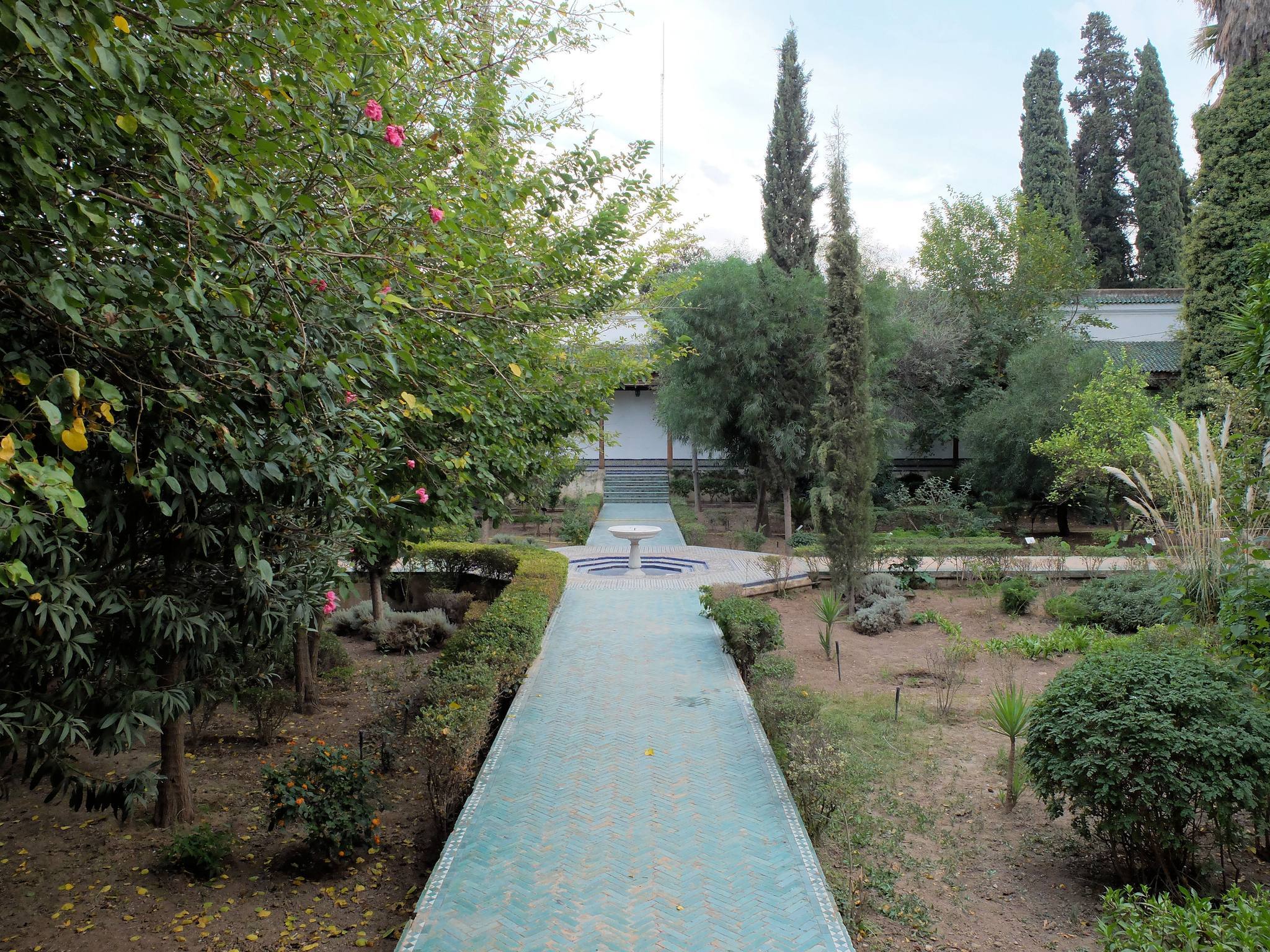
The central garden follows an Andalusian riad plan, with a rectangle divided into four sections by two central axes and a fountain at the center. It occupies approximately 58 percent of the palace area. In 1915, the landscape architect Jean-Claude Nicolas Forestier arranged the garden for the recreational use of visitors, particularly in summer. Palm trees, jacarandas, and hibiscus grow there, and the garden is used for concerts and religious festivals.
Architectural fragments and historic objects
The museum houses architectural fragments from the Idrisid period, when the Idrisid dynasty ruled parts of Morocco in the eighth and ninth centuries. It also contains remains of the ninth-century minbar, the raised pulpit used for a mosque sermon, from the Mosque of the Andalusians. The minbar was produced under both Fatimid and Córdoban Umayyad patronage, linking it to two major Islamic powers that supported artistic and architectural production in North Africa and Córdoba.
A fourteenth-century minbar from the Bou Inania Madrasa is also preserved in the museum. Other collections include historic Qur’ans, astrolabes, musical instruments, carpets, jewelry, coins, textiles, manuscripts, copper and wooden objects, carved plasterwork, carved wood, wrought iron, and ceramics. A large group of local Fez ceramics represents the cobalt-blue style known as “Fez blue.” These objects are arranged thematically in the palace rooms, where they present the material traditions associated with Fez and its surrounding region.