Église Saint-Martin de Saint-Valery-sur-Somme: A Gothic Parish and Collegiate Church
Site at a Glance
- Rating
- 4.4
- Popularity
- Medium
- Country
- France
- Primary era
- Early Modern
- Eras represented
- Medieval, Early Modern, Modern
- Civilizations
- French
- Site type
- Religious
- Remains
- Church
On this page13 sections
History
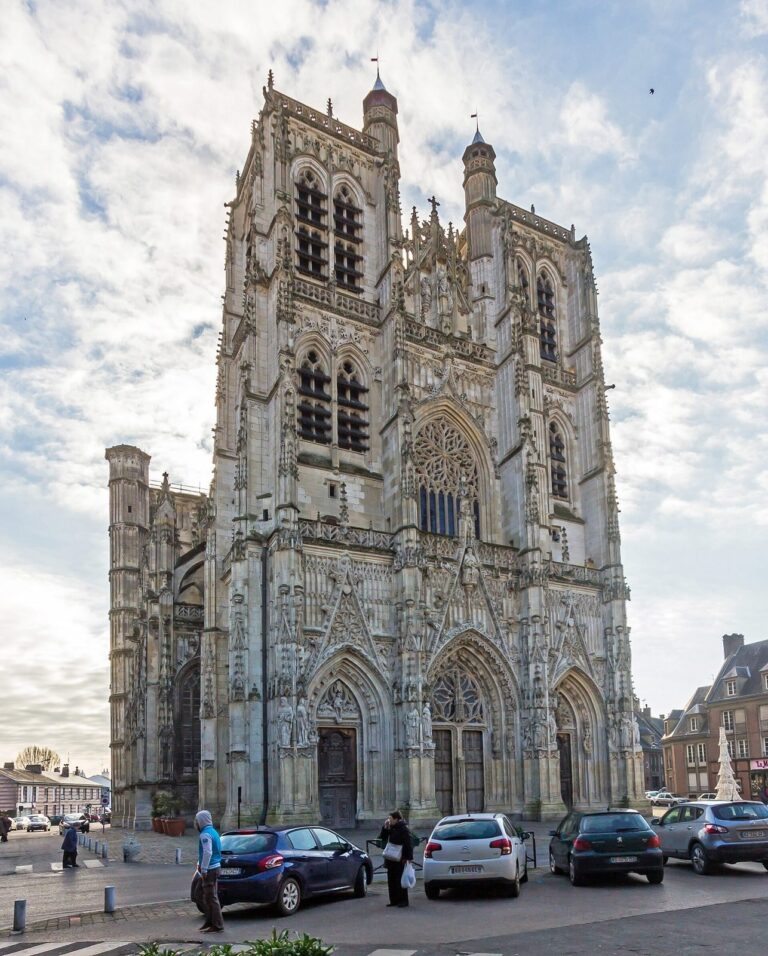
Église Saint-Martin de Saint-Valery-sur-Somme is a Roman Catholic parish and collegiate church in France, dedicated to Saint Martin and belonging to the Diocese of Amiens. A collegiate church is served by a body of clergy, while a diocese is a Catholic administrative district overseen by a bishop. A church here is known from the 12th century, and the present building dates to the 13th century. Its predominant style is Gothic, a medieval European architectural style.
War and rebuilding
The church suffered repeated destruction during the Hundred Years’ War, a series of conflicts between England and France from the 14th to the 15th century. In 1475, Louis XI ordered the church and town burned amid his conflict with Charles the Bold, Duke of Burgundy. Reconstruction began in 1488. The church was consecrated in 1500, although building work continued until 1559.
Early modern and revolutionary upheaval
In 1568, forces led by Protestant captain François de Cocqueville sacked the town and destroyed the church’s gallery organ. During the French Revolution, which began in 1789 and brought major political and institutional change, church furnishings were sold. Paintings and a reliquary shrine were burned, and the bells were melted down.
Historic-monument protection
The church was registered as a historic monument in 1926 and classified in 2022. Its 17th-century silver bust reliquary of Saint Valery received classification as a historic monument in 1907.
Remains
Fabric and plan
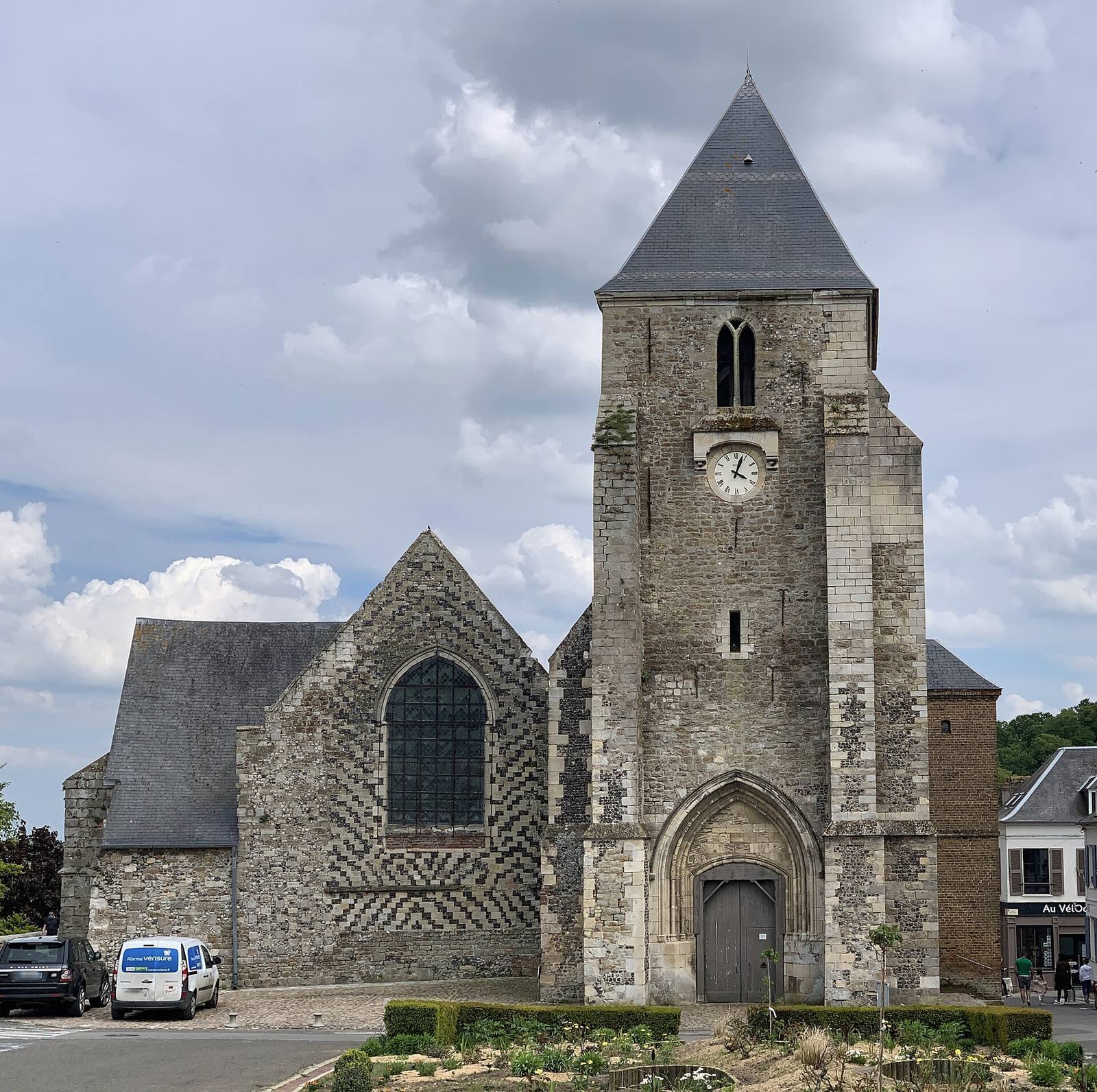
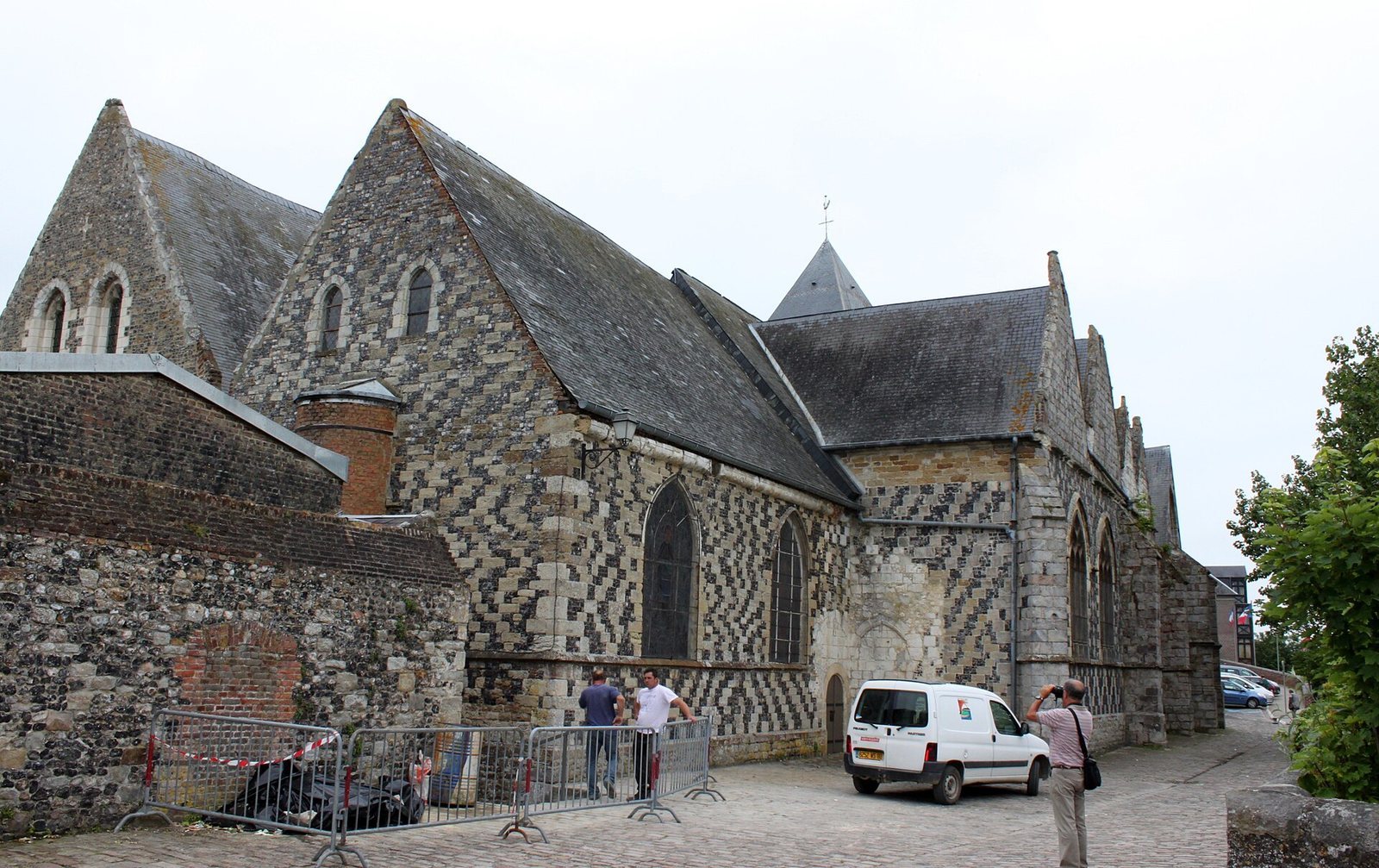
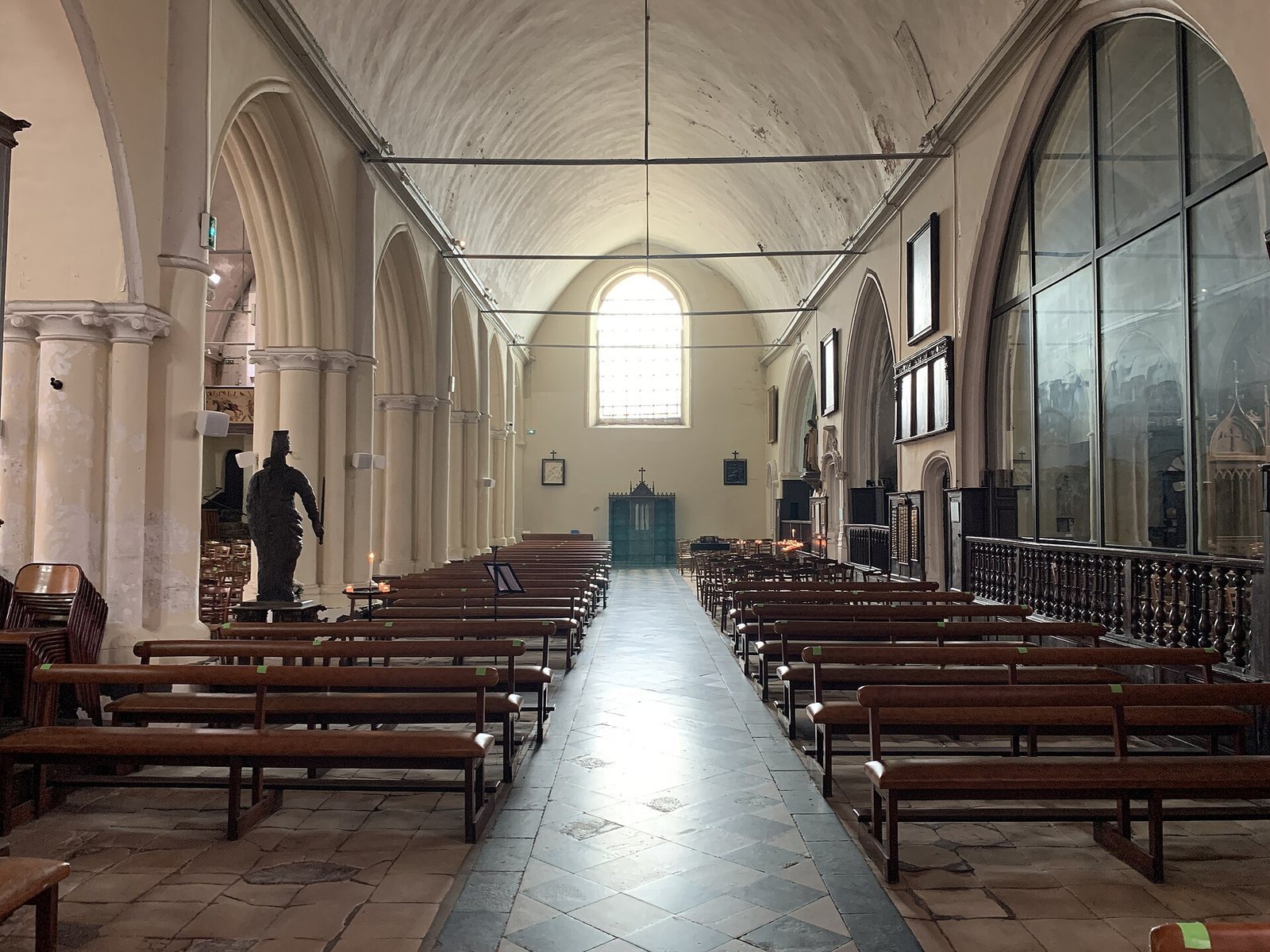
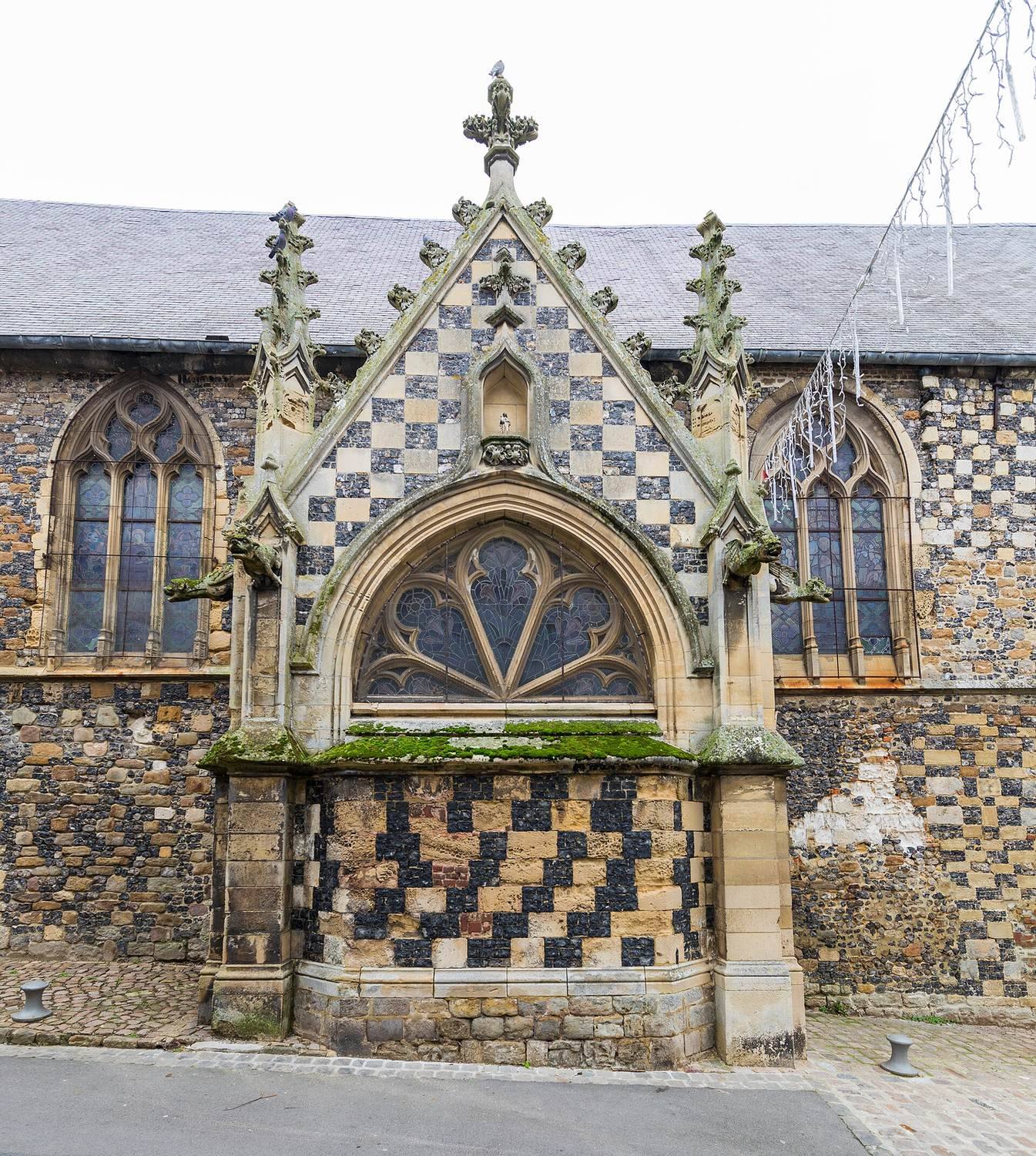
Set in the upper town, the church is built of stone with a checkerboard pattern incorporating pebbles, a feature associated with buildings along the Picardy coast. Inside, two parallel naves, or main worship spaces, are divided by large arches. The baptismal chapel survives from the earlier church.
Bell tower
A massive bell tower stands beside the church, supported by projecting masonry supports called buttresses. Its pyramidal roof was added in 1786. Beside the tower, a rectangular brick building erected in 1845 provides access to it.
Interior furnishings and artworks
Chapel and altar furnishings
Saint Peter’s Chapel is also known as the Chapel of the Sailors, and altars stand in the nave. The principal altar ensemble includes a tabernacle, which houses the consecrated Eucharist, an altarpiece, a painting of the Descent from the Cross, wood panelling, a paschal candle used in the Easter liturgy, and a seat for the officiant.
Paintings, statues, and windows
The church contains a 17th-century painting of the martyrdom of Saint Paul, statues of the Virgin and Saint Valery, and a 17th-century statue tentatively identified as Saint Martin. A wooden statue depicts the Virgin and Child. The stained-glass windows date from the 19th century and include depictions of Saint Peter and Saint Andrew.
Organs
Gallery organ
The gallery organ had been installed by the first half of the 16th century. Isaac Huguet, an organ builder from Noyon, repaired it in 1601 with the help of Abbeville carpenter Louis Fruart, who altered its case. In 1895, Narcisse Duputel of Rouen rebuilt the instrument to accommodate an expressive division, a group of pipes whose sound is varied with shutters, between the rear wall and the Great Organ, the principal division. The organ has 27 stops, each controlling a set of pipes, and 1,200 pipes made of tin, lead, and wood; some date from the 17th century. Its smallest, highest pipe is one centimetre long, while its largest, lowest pipe is nearly three metres. Guillaume Besnier, Olivier Buis, and Thomas Blandeau carried out a complete restoration in 2017.
Choir organ
The choir organ came from Saint-Pierre Church in Mesnières-en-Bray. After a private buyer acquired it, the buyer sold it to the Friends of the Organs of Saint-Martin, who installed it in the church.