Sint Maartenskerk in Zaltbommel: A Lower Rhine Gothic Basilica
Site at a Glance
- Rating
- 4.5
- Popularity
- Medium
- Country
- Netherlands
- Primary era
- Medieval
- Eras represented
- Medieval, Early Modern, Modern
- Civilizations
- Dutch, Holy Roman Empire
- Site type
- Religious
- Remains
- Church
On this page10 sections
History
Medieval origins and rebuilding
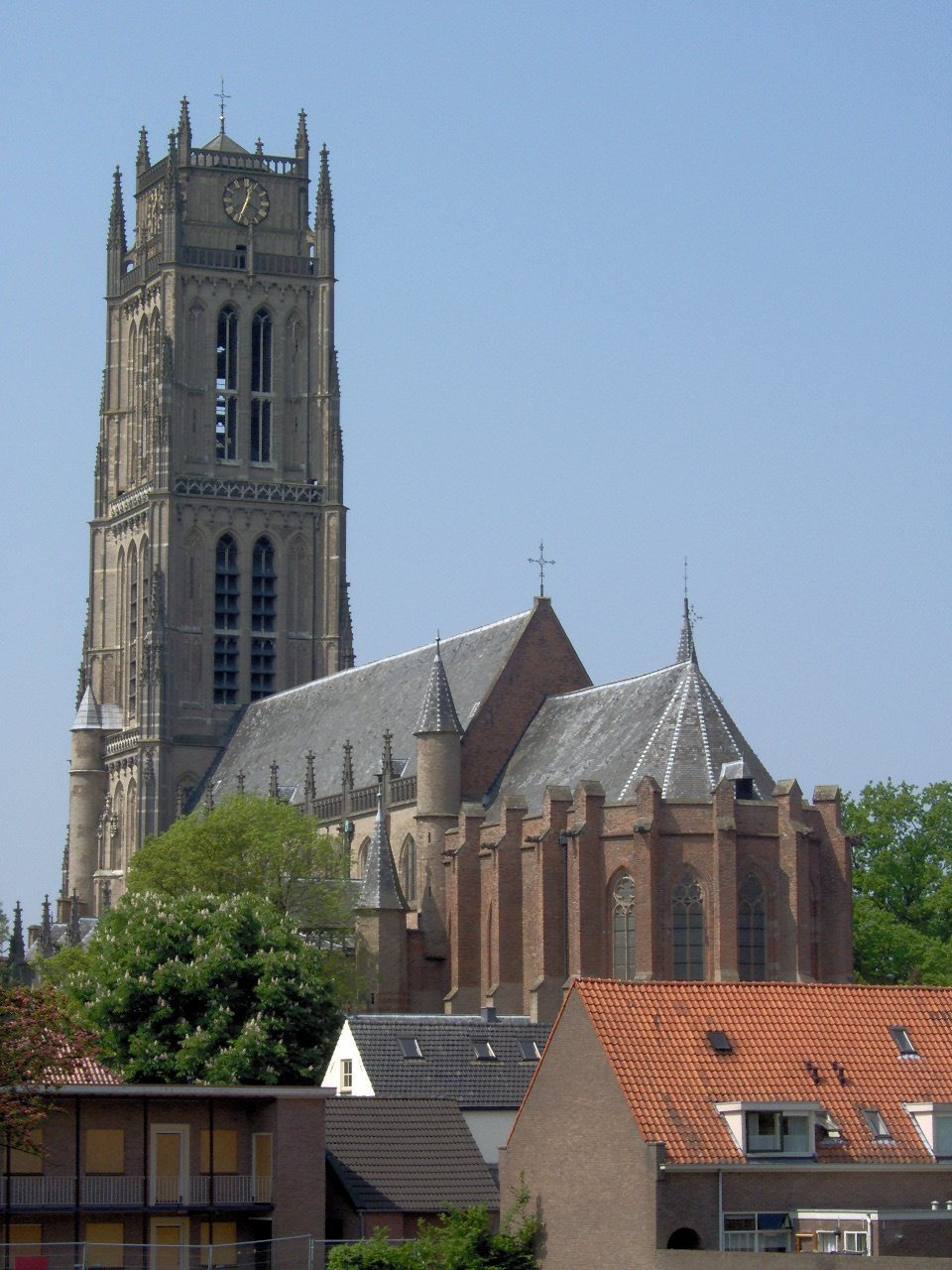
Sint Maartenskerk is a church in Zaltbommel, the Netherlands, dedicated to Martin of Tours and now used by the Protestant Church in the Netherlands. Bishop Bernold, also known as Bernulphus, began a Romanesque church on the site in the 11th century. By 1303, the church had become a collegiate church, served by a chapter of ten canons, or clergy attached to the institution.
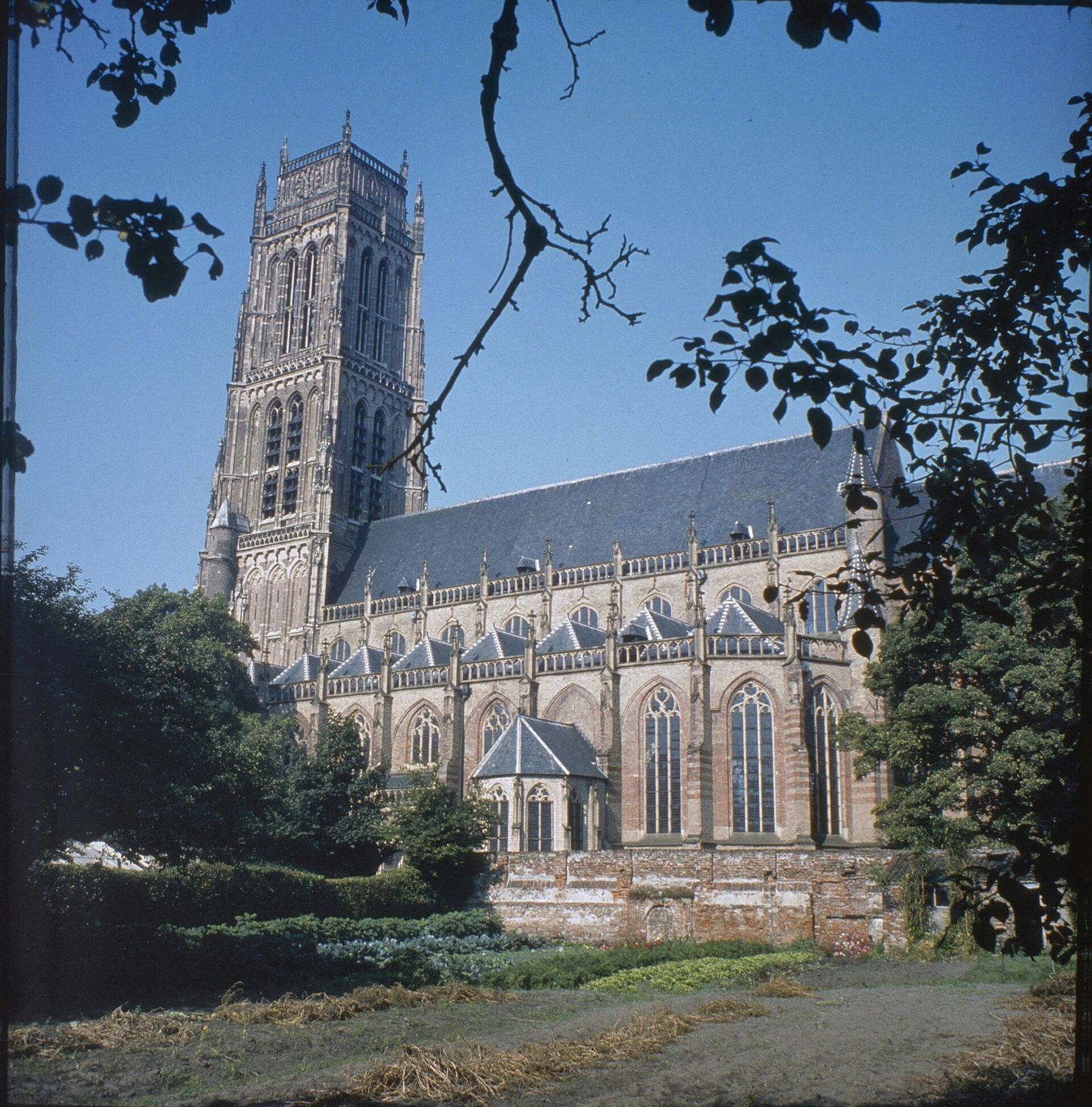
The present basilica was begun around 1450 under architect Gisbert Schairt and completed around 1500. It is an important example of Lower Rhine Gothic, a regional form of Gothic architecture associated with the Lower Rhine.
The tower and Reformation
A spire once raised the tower’s total height to 100 metres. Lightning set the 30-metre spire alight in 1538, and a more modest replacement also burned. Work on another spire reached its base in 1708, but the project stopped and was never resumed. The unfinished base was removed during restoration in the early 20th century.
In 1572, the Watergeuzen, Dutch rebels fighting Spanish Habsburg rule during the Dutch Revolt, captured Zaltbommel. The church’s chapter was dissolved, and the building became a Reformed church, belonging to a branch of Protestant Christianity. Édouard Manet, the French painter, married Dutch pianist Suzanne Leenhoff in the church on 28 October 1863.
The organ
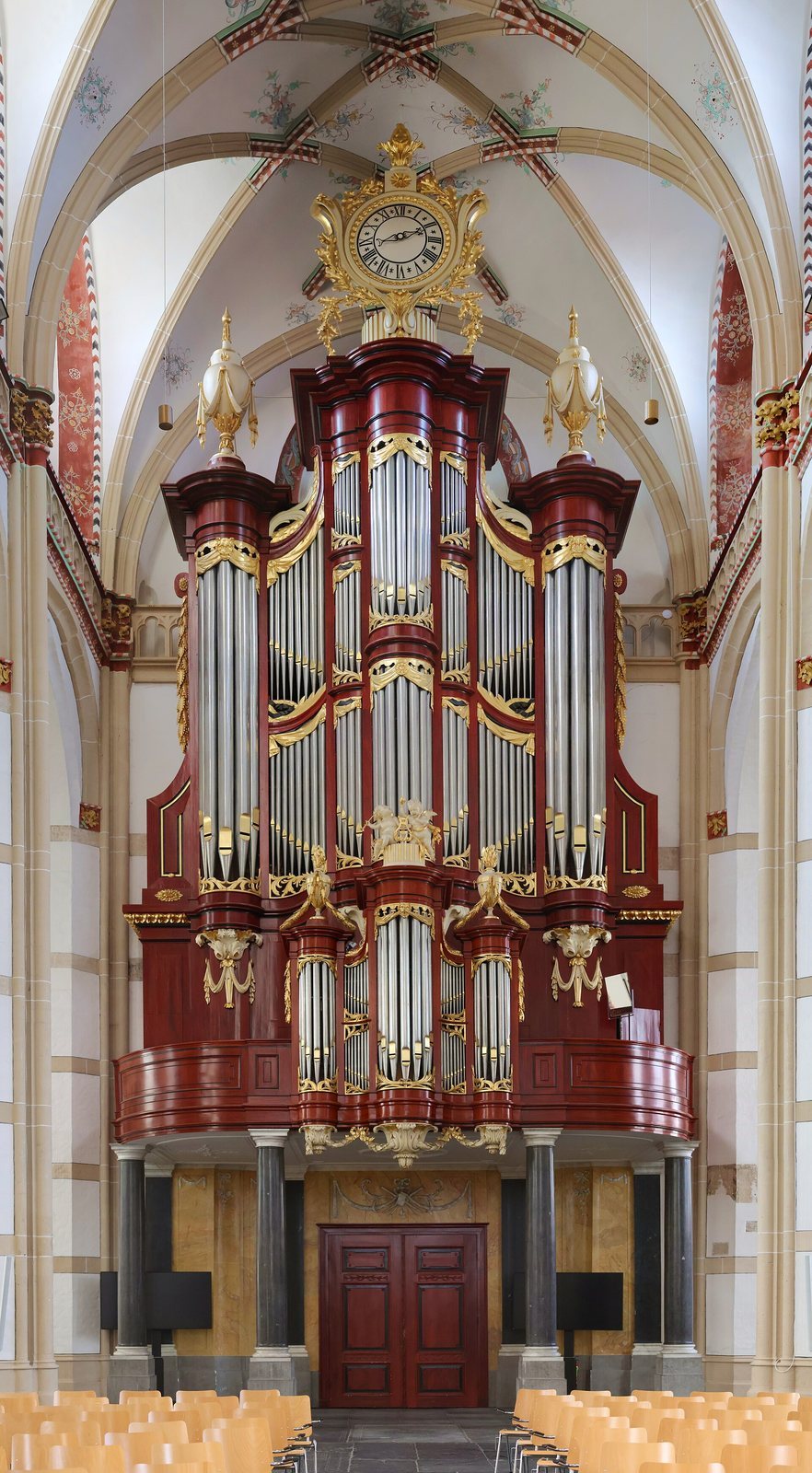
Andries Wolfferts built the organ from 1783 to 1786, incorporating older pipes made by Matthijs Verhofstadt. About a decade later, organ builder Antonius Friedrich Gottlieb Heyneman altered it. In 1860, Naber worked on the instrument and added a Viola da Gamba stop, which was designed to evoke the sound of a bowed string instrument. W. van Dijk of Utrecht made a small change to its arrangement in 1905, without noticeably changing its sound.
Late in the Second World War, the organ was taken apart after German occupying forces threatened to destroy the tower. After liberation, the J. de Koff firm reinstalled and repaired it. Shortened pipes raised its pitch by almost a semitone, though the planned brighter sound was not achieved. In 1982, organ builder Sebastian Friedrich Blank began work to return the instrument to an earlier state, advised by Klaas Bolt. The work included repairing the air-distributing windchests and restoring the pipes to their original length. J. C. van Rossum carried out another overhaul and repair in 1996.
Twentieth-century restoration
The church became a Dutch national monument on 30 March 1971. Extensive restoration from 1977 to 1985 revealed painted musical lines and Latin words beneath a thick lime coating. Further examination identified the text as part of a Gregorian chant, a tradition of Latin liturgical singing.
Remains
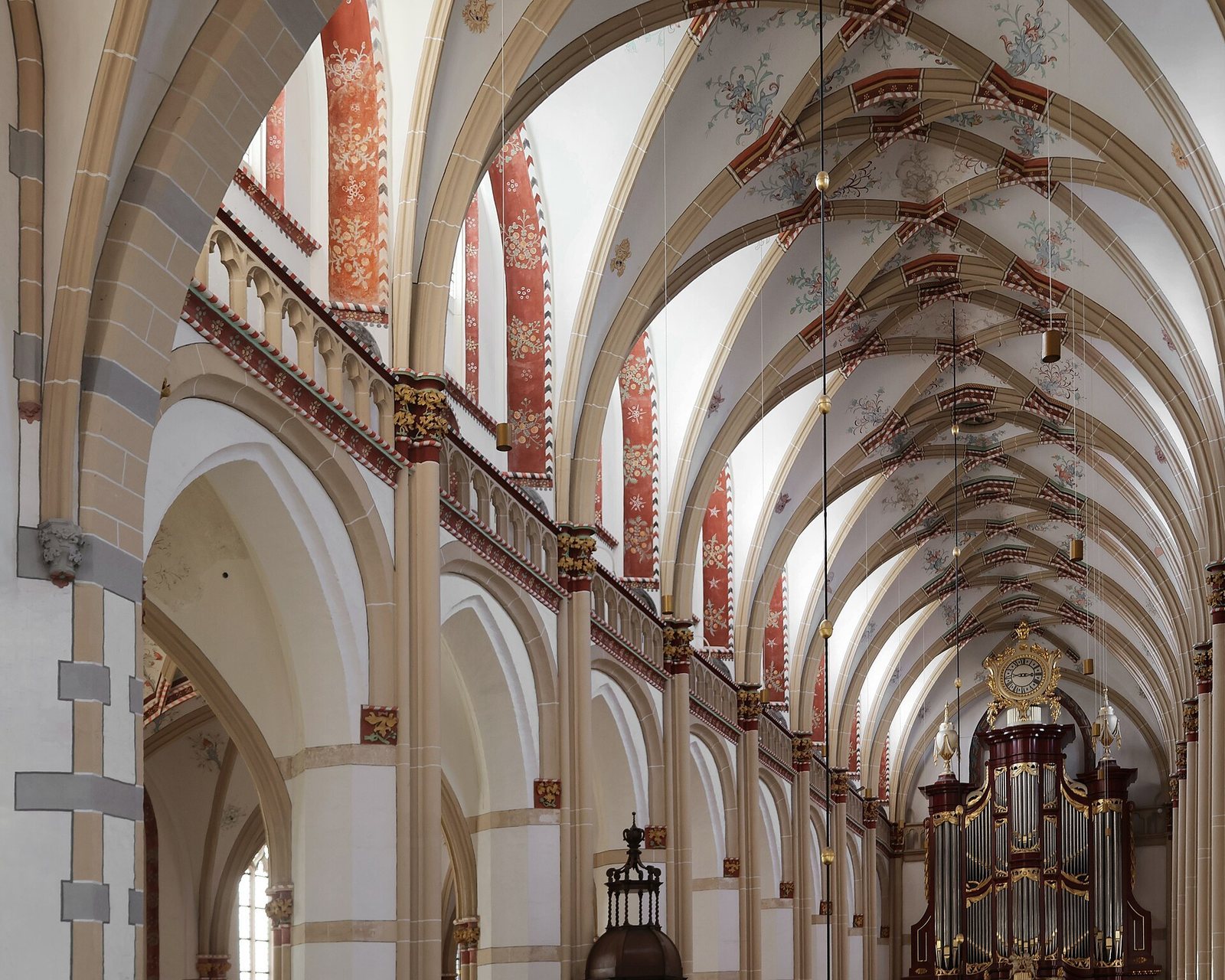
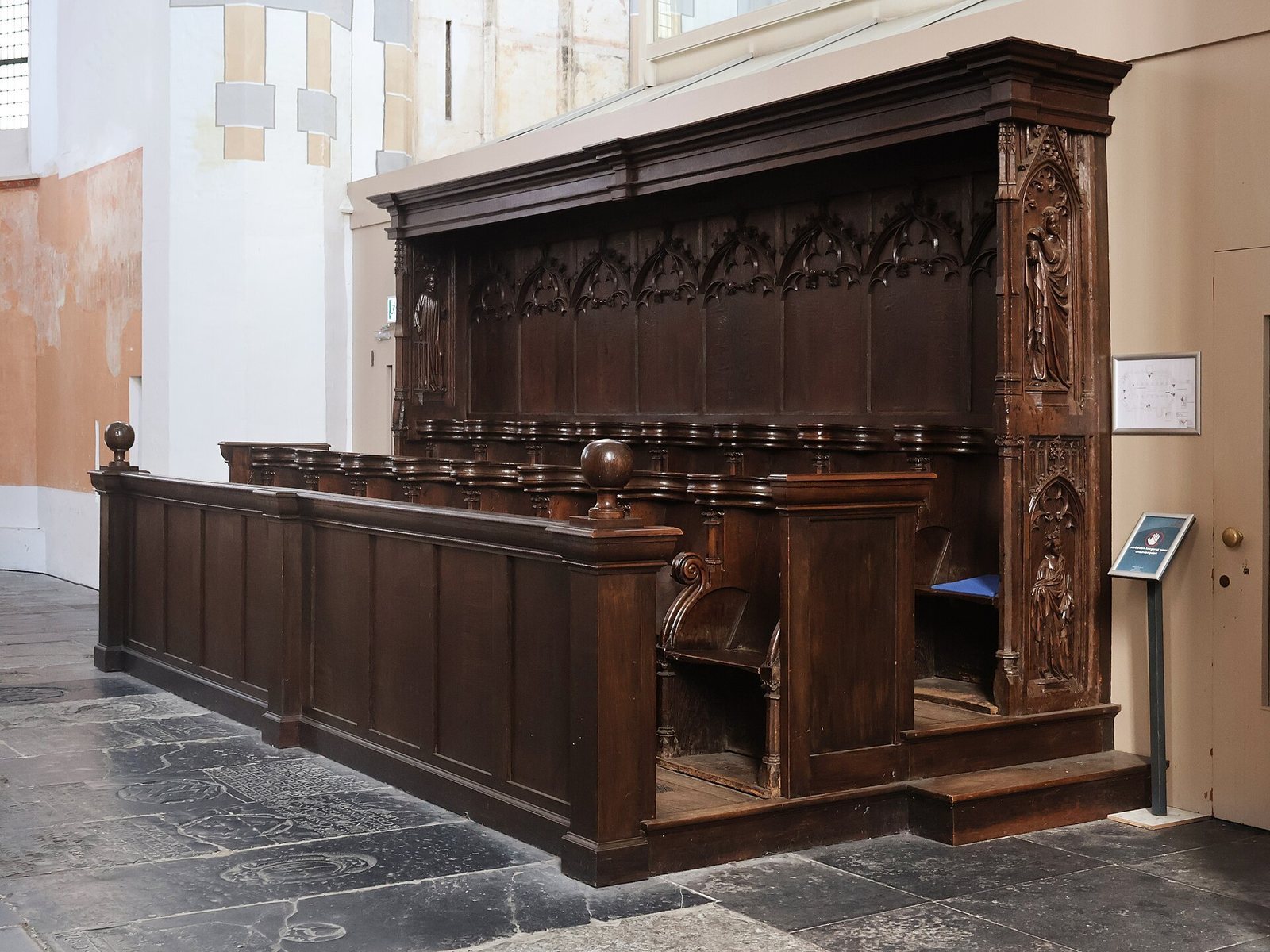
The church is a large basilica with a three-aisled nave and a single-aisled choir. Stone vaults cover the building, whose overall form belongs to the Lower Rhine Gothic tradition.
Surviving church fabric
The choir
The 14th-century choir is the oldest part of the present church. Built to enlarge the earlier church, it is lower than the nave and differs in style from the rest of the building.
Romanesque predecessor
The earlier church had a cross-shaped plan. Excavations beneath the floor in 1981 and 1984 uncovered parts of its foundations. The choir and the structure known as the Varkenstoren, or Pig Tower, are also identified as surviving remains of the predecessor.
The organ
The church organ has 39 stops, which select the pipes that sound, three hand-operated keyboards, and a pedal played with the feet.