Château de Regnière-Écluse: A Historic Estate in France


Site at a Glance
- Rating
- 4.6
- Popularity
- Low
- Country
- France
- Primary era
- Modern
- External website
- Open
- Eras represented
- Early Modern, Modern
- Civilizations
- French
- Site type
- Domestic
- Remains
- Castle
On this page14 sections
History
Medieval ownership and the sixteenth century
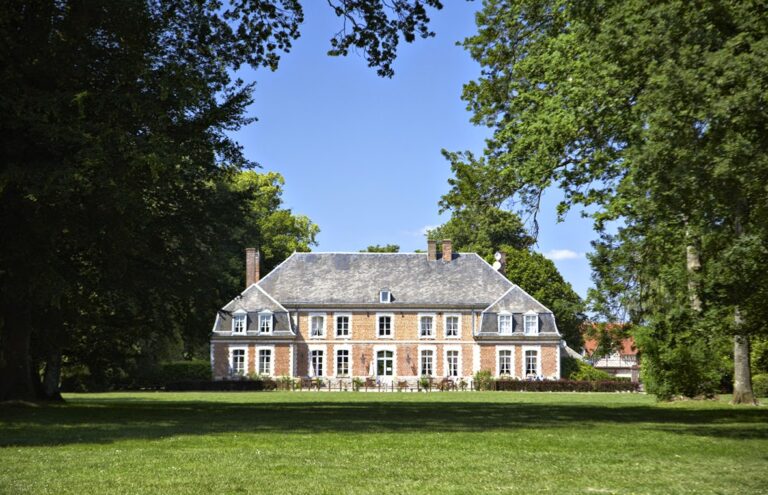
Château de Regnière-Écluse is a historic estate in France, in the commune of Regnière-Écluse. Gautier I Tirel acquired the estate around 1030, and his family retained the original property for nearly a thousand years. In 1424, the Soyécourt family inherited it after the Tyrel and Soissons-Moreuil families.
The oldest part of the present château appears to date from the third quarter of the sixteenth century. A stone fireplace in the library bears the year 1553, linking the surviving building to this period.
The nineteenth-century transformation
During the nineteenth century, Herman, Count of Hinnisdal, reshaped the château and its grounds into the form they largely retain today. Jean Herbault directed the neo-Gothic development, a revival of medieval architectural forms and imagery. The work extended beyond the residence to an English-style garden, a model farm, and two game parks.
The landscape designer Louis-Sulpice Varé laid out the large park during the same century. The ornamental sculptors Aimé and Louis Duthoit of Amiens worked on the château for nearly twenty years, contributing to the estate’s historicist character.
Wartime use and restoration
The British Army occupied the estate during the First World War. In the Second World War, German forces requisitioned the buildings and converted them into a hospital. After the war, the neglected property was used to accommodate holiday camps.
Count Raymond de Nicolaÿ, a descendant of the former owners, restored the estate in 1961. The façades, roofs, and landscaped park received protection as historic monuments in 1976, while the model farm was protected in 2005. In 2006, the entire estate was classified as a historic monument, a stronger form of protection under French heritage law than inscription. The classification includes the château, park, gardener’s house, agricultural land, and named forest areas.
In 2008, ownership was transferred to the Conservatoire du littoral, the French public institution that acquires and protects important coastal and lakeshore areas. The de Nicolaÿ family retained a preferential right of use and continues to live in the château. The Association for the Safeguarding and Enhancement of the Millennial Estate of Regnière-Écluse manages and maintains the property.
Remains
The château and its interiors
Building and decorative work
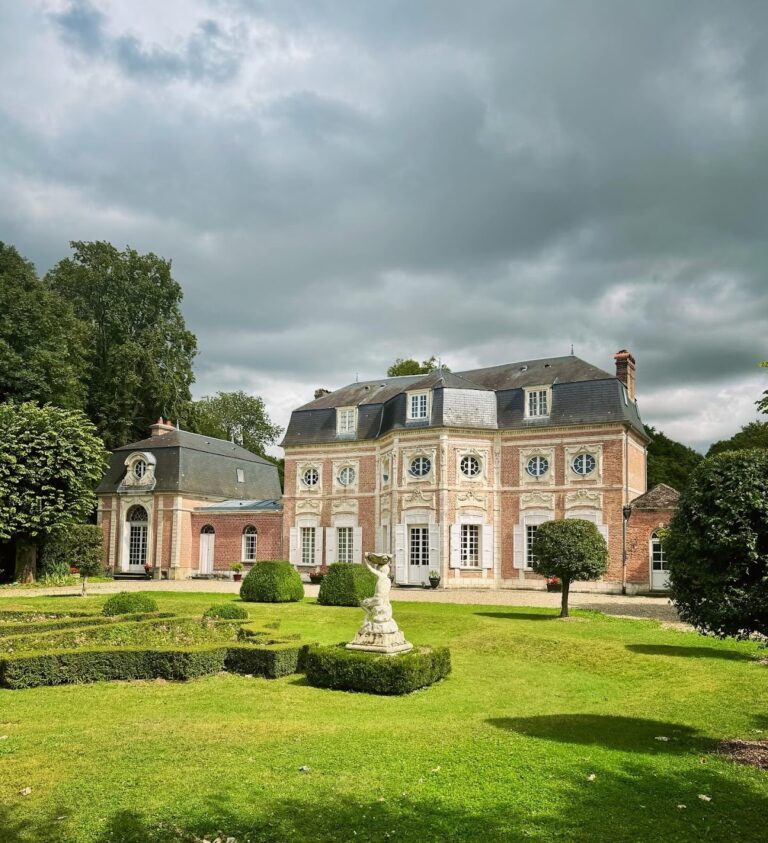
The château stands at the centre of a large estate that also includes a park, hunting reserve, and model farm. Its oldest surviving section belongs to the third quarter of the sixteenth century, while the nineteenth-century rebuilding gave the residence its neo-Gothic appearance. Aimé and Louis Duthoit worked on the decoration for almost two decades.
Staircase and rooms
Inside, the château contains approximately fifteen bedrooms, several salons, and a private chapel. The grand staircase was sculpted in Amiens by the Duthoit brothers and bears the date 1850. It was transported to the estate partly by railway, an unusual method at the time. The library fireplace carries the date 1553.
Park and water features
Landscape and central vista
The estate covers 815 hectares, including a 135-hectare park laid out in the nineteenth century by Louis-Sulpice Varé. The creation of the park involved planting 138,000 trees from the nearby Forest of Crécy. A central vista measuring 2.5 kilometres structures the grounds, with the château visible from every part of the park.
Lower park and Maye
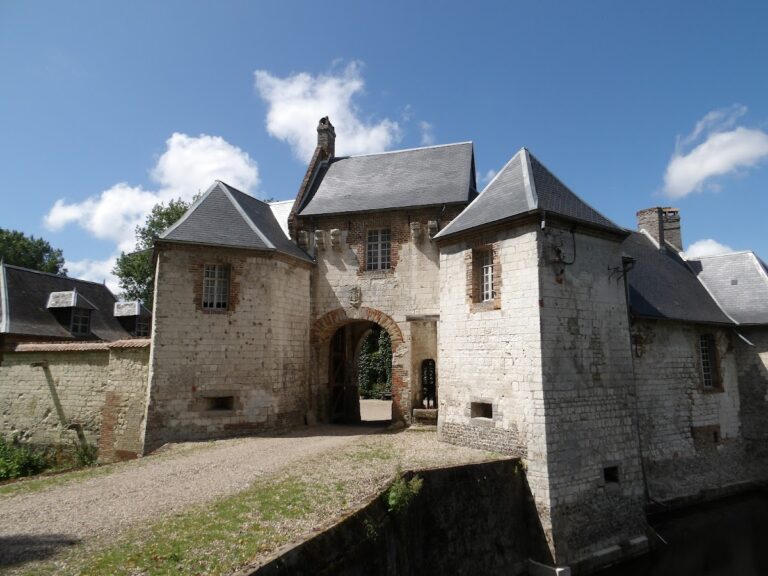
In the lower park, a body of water is crossed by the Maye. Nearby reconstructed ruins evoke the primitive château, providing a physical reference to the estate’s earlier history.
Agricultural and hunting areas
Model farm
The model farm lies within the territories of Regnière-Écluse and Machy. It forms part of the estate’s nineteenth-century organization, alongside the château and landscaped grounds.
Game parks
The two game parks extend across the territories of Regnière-Écluse and Vron. Their creation was considered rare for the nineteenth century, and they remain part of the estate’s extensive combination of cultivated, wooded, and hunting land.