Saint-Hippolyte Church in Thonon-les-Bains: A Catholic Church in France
Site at a Glance
- Popularity
- Low
- Country
- France
- Primary era
- Medieval
- Eras represented
- Medieval, Early Modern, Modern
- Civilizations
- Duchy of Savoy, French, Holy Roman Empire
- Site type
- Religious
- Remains
- Church
On this page9 sections
History
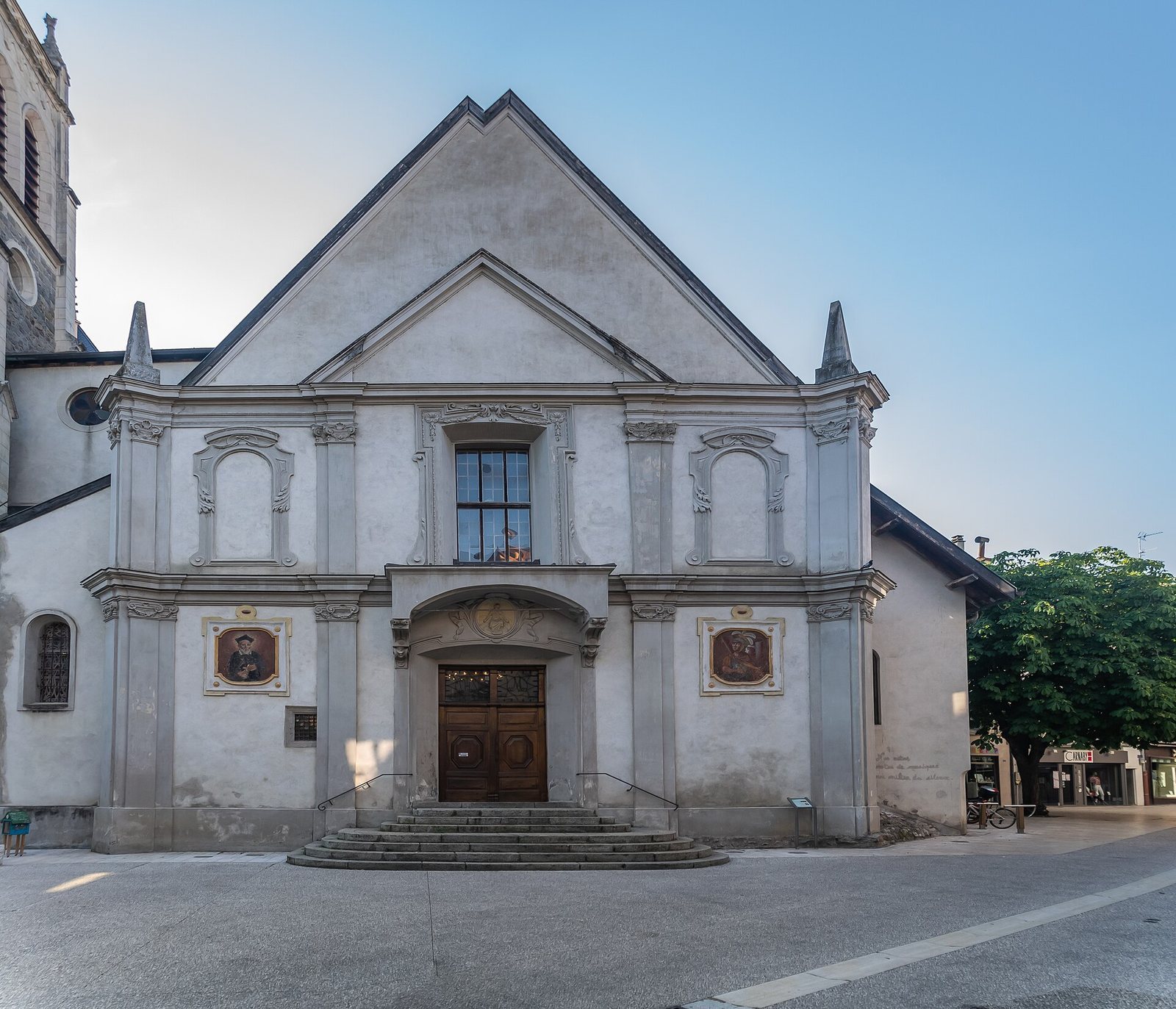
Saint-Hippolyte Church in Thonon-les-Bains, France, is a Catholic church dedicated to Saint Hippolytus. Its origins date to the 12th century, and the church was constructed in the 14th century above a Romanesque crypt, an underground chamber beneath a church. A 17th-century remodeling followed the Savoyard Baroque style, a regional form of Baroque architecture associated with Savoy.
Papal chapel and confessional change
The church became a papal chapel in 1439. During the Bernese invasion, it was used as a Protestant temple from 1536. Catholic worship resumed in 1594 under the influence of Saint Francis de Sales, a Catholic bishop and religious reformer associated with the Counter-Reformation, the Catholic Church’s response to the Protestant Reformation.
Baroque remodeling
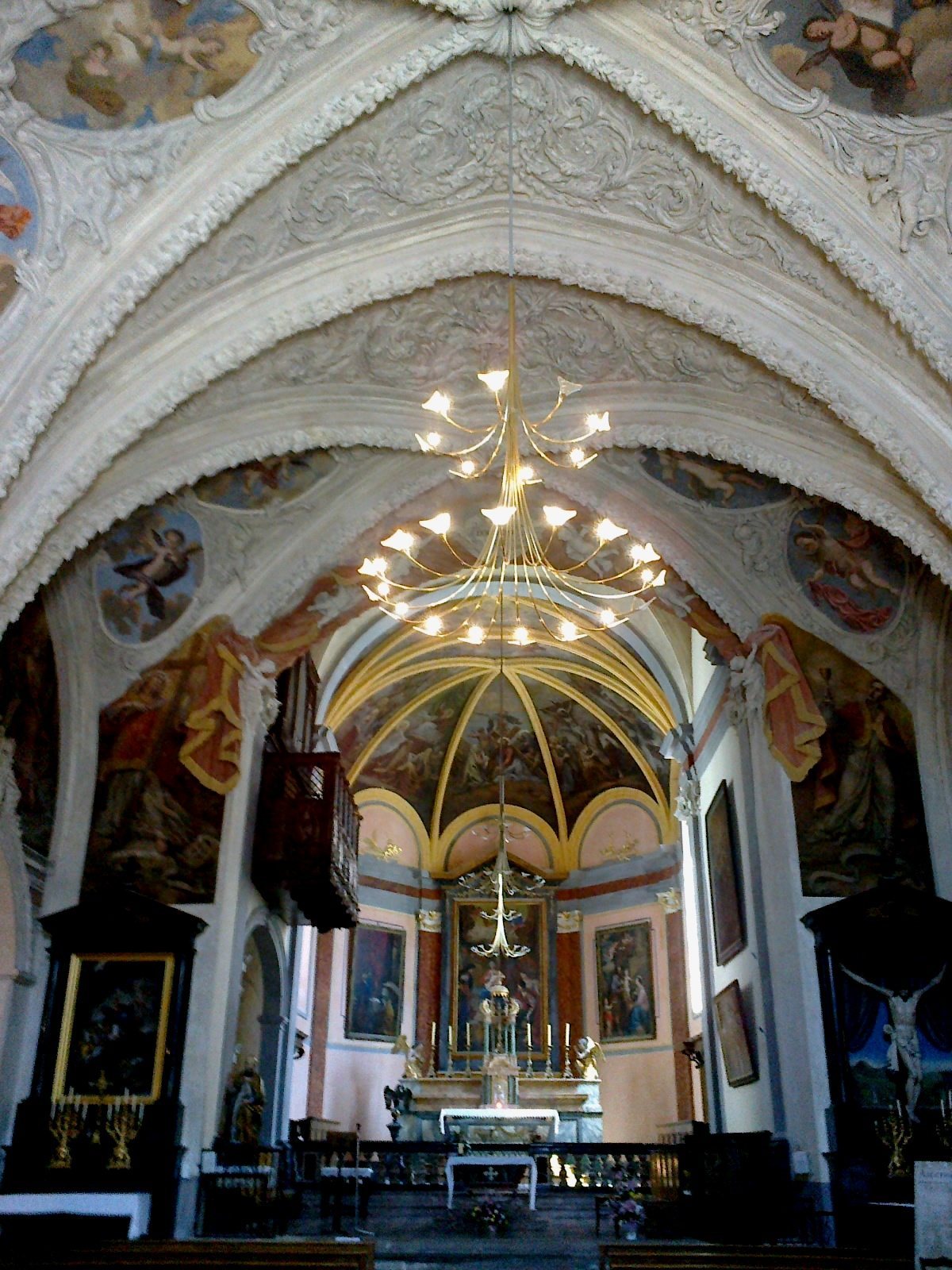
In the 17th century, Abbé de Rossillon de Bernex commissioned an Italian-style stucco vault. Stucco is plaster shaped into decorative surfaces. The church’s remodeling in this period established its Savoyard Baroque character.
Protection and restoration
The church was classified as a Historic Monument on 30 October 1909. In 1941, painter and sculptor Henri Lafitte uncovered and restored frescoes. Further restoration in 2009–2010 included the installation of new lighting.
Remains
The church has a traditional plan that includes a nave, an ante-choir, the space immediately before the choir, the choir itself, and north and south aisles. Its interior includes an Italian-style stucco vault, a decorative plaster ceiling made by hand by J. F. Silva and Bernard Pandolph.
Interior decoration and furnishings
Frescoes
Frescoes on the nave’s side walls illustrate the Creed, a concise statement of Christian belief, while paintings in the choir depict the life of Christ. The frescoes uncovered by Lafitte include pairs of apostles, each shown with personal attributes, and angels carrying inscribed scrolls. Lafitte also cleaned an image of the Assumption of the Virgin, whose treatment recalls the classical style of Nicolas Poussin, a 17th-century French painter. He restored capitals, the tops of supporting columns, and decorative moldings as well.
Altar and paintings
The main altar dates to the early 19th century. It is made of wood finished with stucco to imitate marble and has a classical design. Three paintings are arranged around it: the Holy Family on the right, a Nativity attributed to the painter Lange at the center, and the Annunciation on the left.
Lighting
A chandelier has two crowns, one with 16 arms and the other with eight, ending in understated elements of heat-shaped glass. It illuminates the nave and draws attention to the decorated ceiling. Three large fixtures, with 24 and 21 arms, are positioned in the nave, ante-choir, and choir. Three smaller fixtures serve the north aisle, while a four-arm light is in the south aisle.