Dzagavank: A Seventh-Century Armenian Apostolic Monastery
Site at a Glance
- Popularity
- Medium
- Country
- Armenia
- Primary era
- Medieval
- Eras represented
- Medieval
- Civilizations
- Armenian
- Site type
- Religious
- Remains
- Monastery
On this page9 sections
History
Dzagavank is a seventh-century Armenian monastery near Getargel village in Armenia. It belongs to the Armenian Apostolic Church, an ancient Christian church with its own hierarchy and traditions, and to the Kotayk Diocese, an administrative district overseen by a bishop. The monastery is also known as Getargel’s Holy Sign. Each year, the Sunday after Easter is observed as its pilgrimage day.
Restoration altered the complex, leaving usable stones from the old monastery out of the rebuilding. This diminished the monastery’s former appearance and value.
Remains
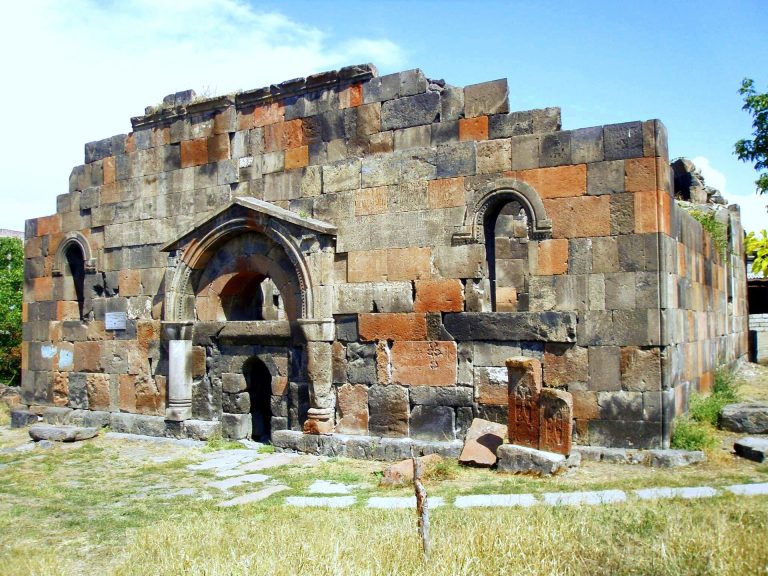
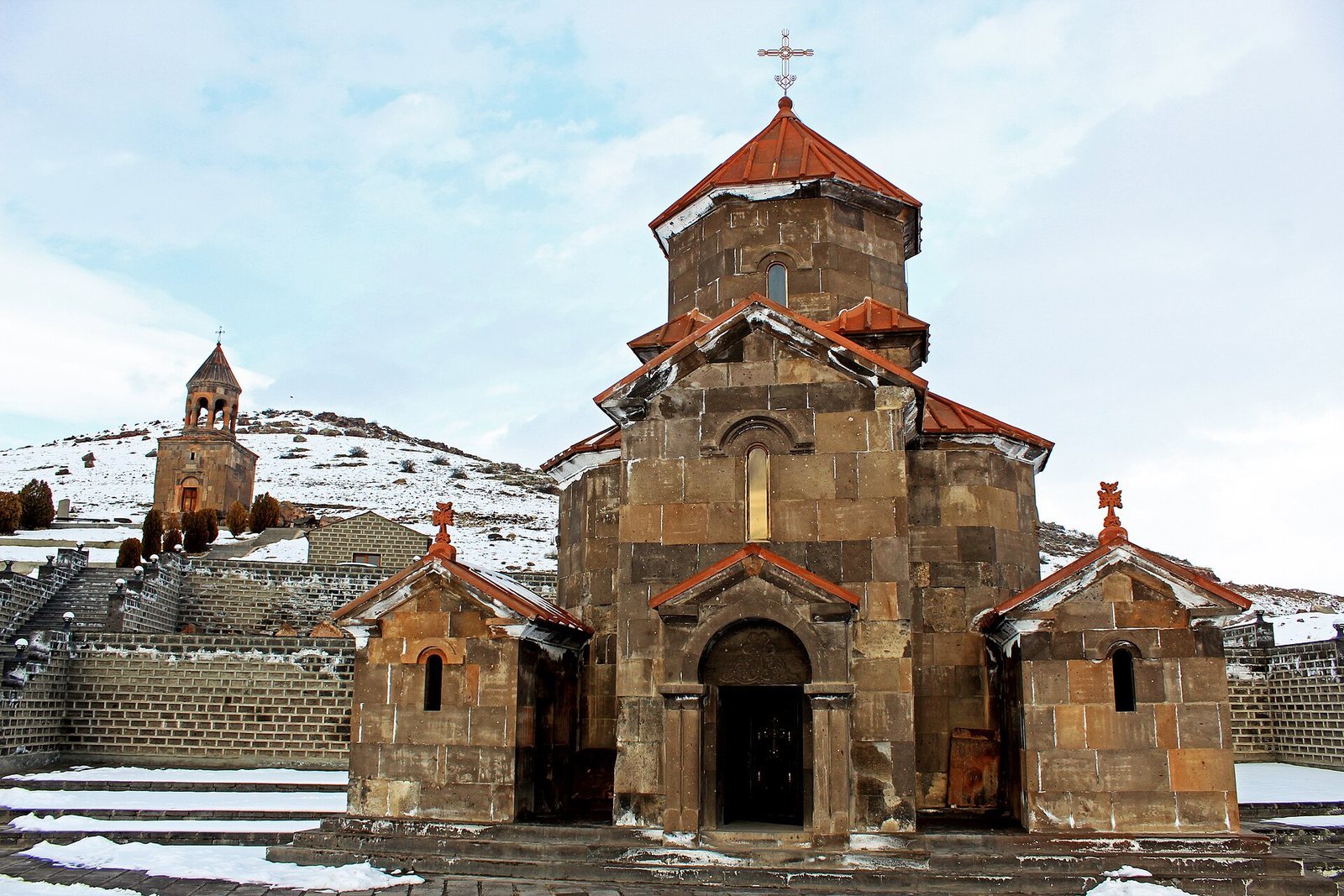
Set on the slope of a small hill east of Arinj and about 100 metres south of a fortress, the complex includes the Church of the Holy Sign, a bell tower, an enclosing wall, residential cells, and ruins of other buildings. A courtyard for carved stones was created during restoration.
Church and bell tower
Church of the Holy Sign
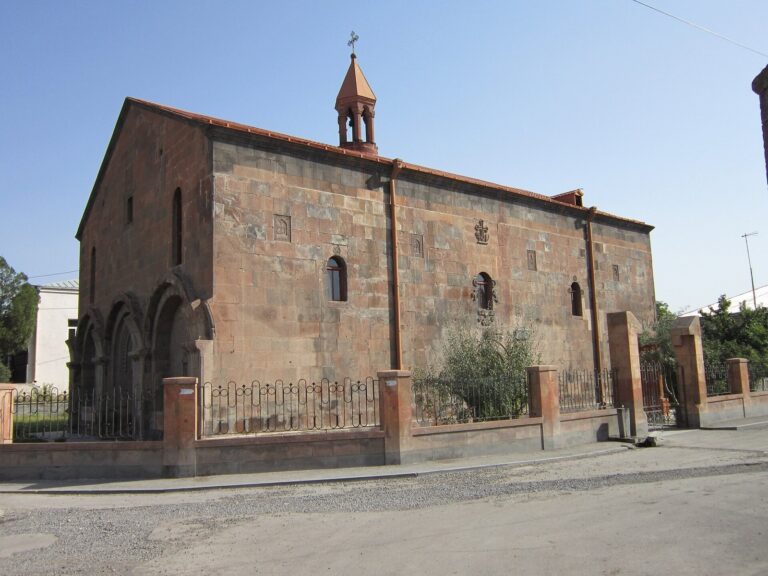
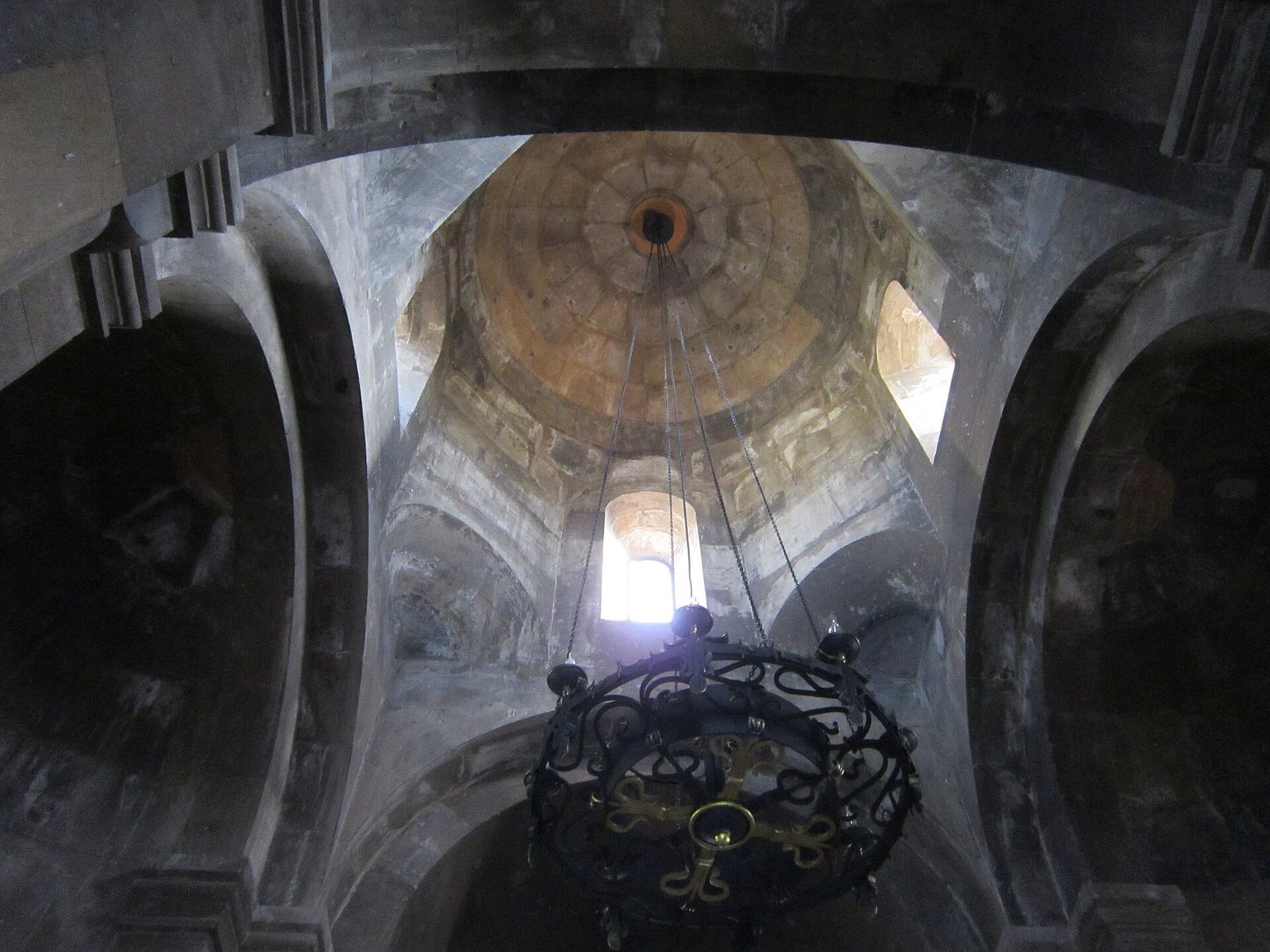
The church has a cross-shaped plan and is built of cut, finished red stone. Inscribed stones from the older monastery can be seen in parts of its walls. Two chapels once attached to the church were converted during restoration into sacristies, rooms for storing vessels, vestments, and other items used in worship. A khachkar, an Armenian carved stone bearing a cross and often ornamental designs, stands beside each sacristy. The restored church has a plain appearance resembling a newly built structure.
Bell tower
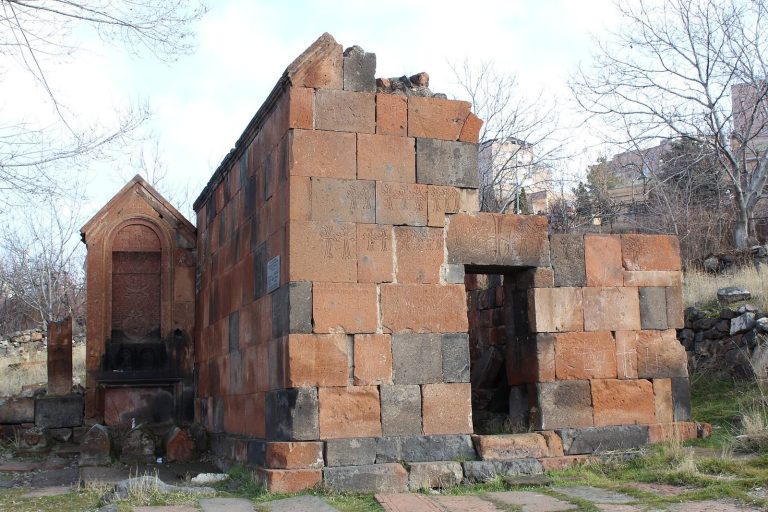
The partly ruined bell tower is built of finished stone and bears inscriptions and carved crosses. Restoration changed its form by adding a dome. Its interior is almost entirely preserved and conveys the impression that the monastery once served as a spiritual center.
Other structures and carved stones
Cemetery and church dome fragment
An old cemetery lies north of the bell tower, with several tombstones still in place. South of the tower is a fragment of the ruined church dome, with several khachkars arranged around it.
Residential cells
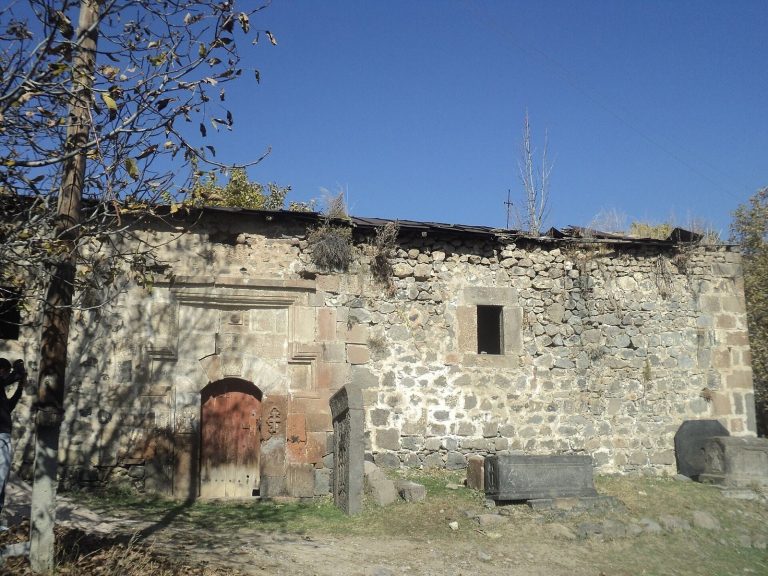
More than ten adjoining cell ruins extend in front of the church. One contains icons, wooden crosses, and other items set aside as unnecessary during repairs.
Courtyard and displaced masonry
Fragments of khachkars and inscribed stones from the old monastery are arranged side by side against the courtyard walls. Some khachkars remain in a pile of stones outside the enclosure. Many usable stones, most bearing carved decoration, are scattered beyond the walls, along with the church’s columns.