Saint Hakob Church of Kanaker: An Armenian Apostolic Church in Yerevan
Site at a Glance
- Popularity
- Medium
- Country
- Armenia
- Primary era
- Early Modern
- Eras represented
- Early Modern, Modern
- Civilizations
- Armenian, Russian, Safavid
- Site type
- Religious
- Remains
- Cathedral
On this page7 sections
History
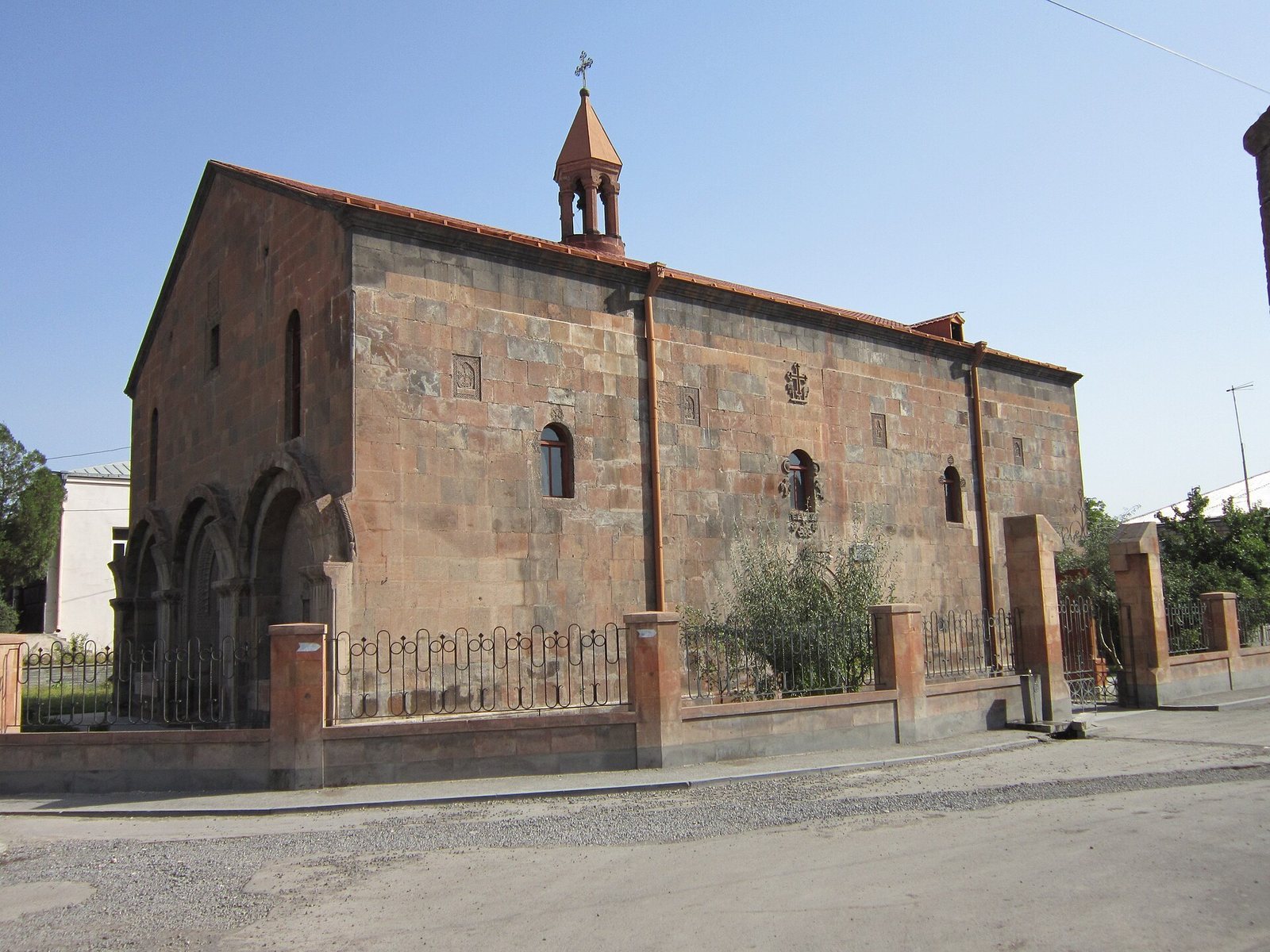
Saint Hakob Church of Kanaker is an active church of the Armenian Apostolic Church in Yerevan, Armenia. The Armenian Apostolic Church is Armenia’s historic national church within the Oriental Orthodox tradition. The church was rebuilt after the 1679 Yerevan earthquake. Its name refers to Saint Jacob of Nisibis, an early Christian bishop revered as a saint.
Reconstruction after the earthquake
An earlier church on the site was destroyed in the 1679 earthquake. Its reconstruction was supported by donations from Hakobjan, a wealthy Armenian resident of Tbilisi, and other Armenians there, as well as contributions from local residents.
Diocesan role and neighboring church
In 1868, Saint Hakob served as a bishop’s seat. Its churchyard also contained a diocesan school named for Saint Sahak Partev, an early Armenian church leader also known as Isaac the Great. The school was administered by Mesrop Smbatyants, an archimandrite, a senior rank in some Eastern Christian monastic traditions. The church’s sister church, Surp Astvatsatsin (Holy Mother of God), was built in 1695.
Closure and later use
During the Soviet period, the church was closed and used as a warehouse. It reopened and was reconstructed with state funding in 1990. On 7 October 2004, it was added to Yerevan’s state list of immovable historical and cultural monuments. The church remains active and is used for memorial services and funerals. At a priest’s discretion, a coffin may be brought inside for the funeral rite.
Remains
Church building
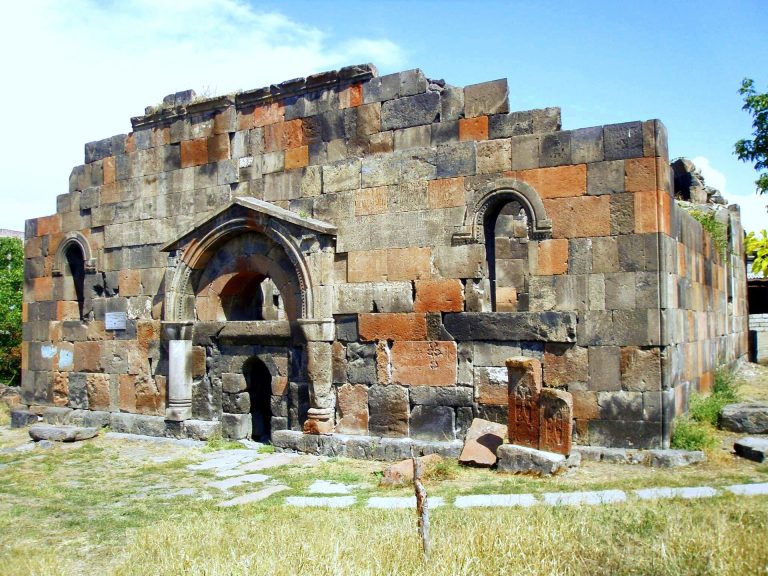
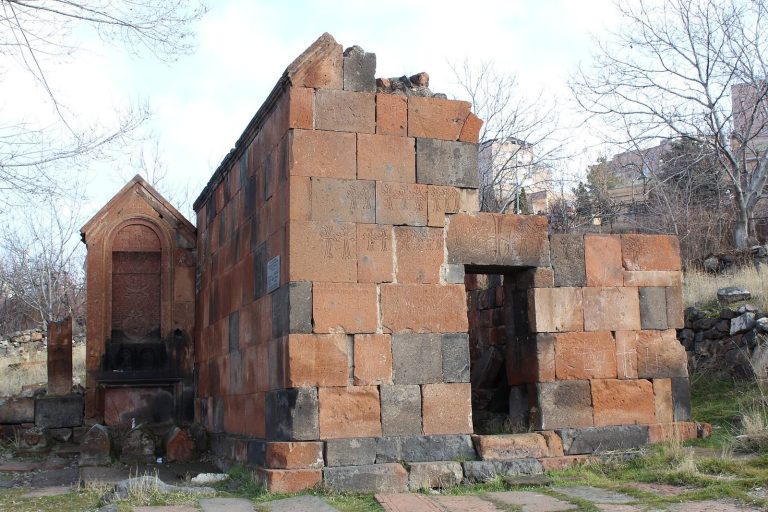
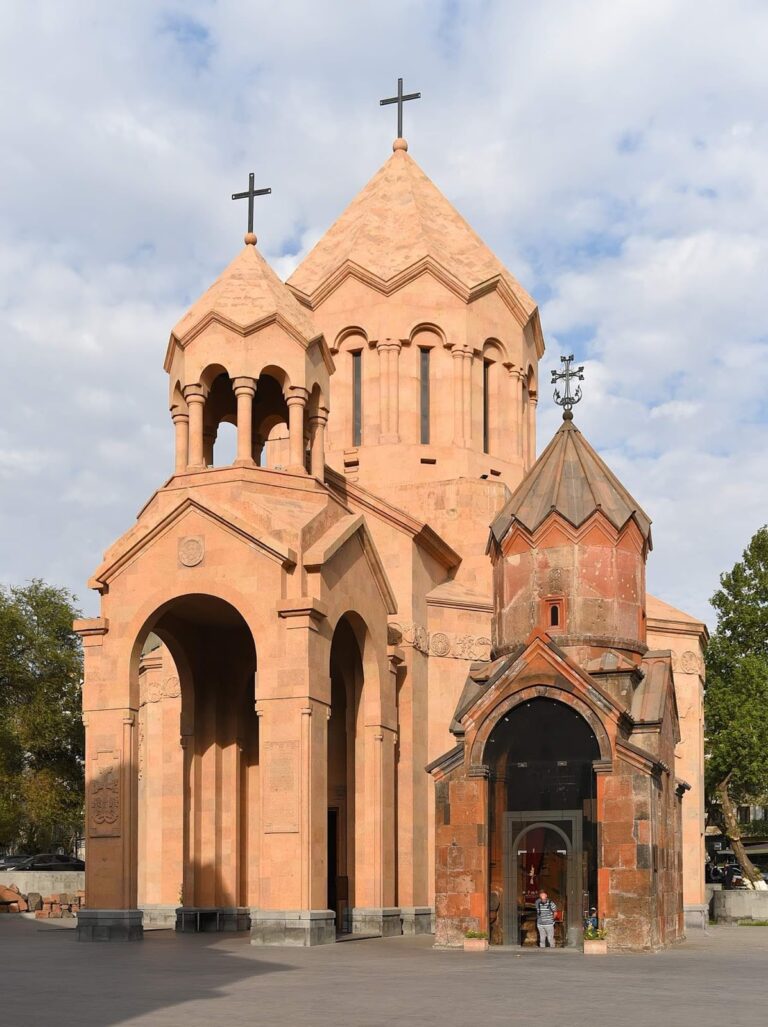
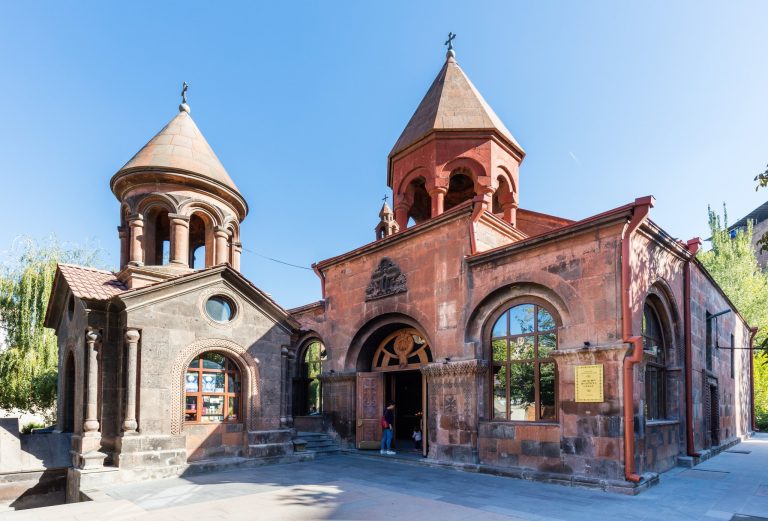
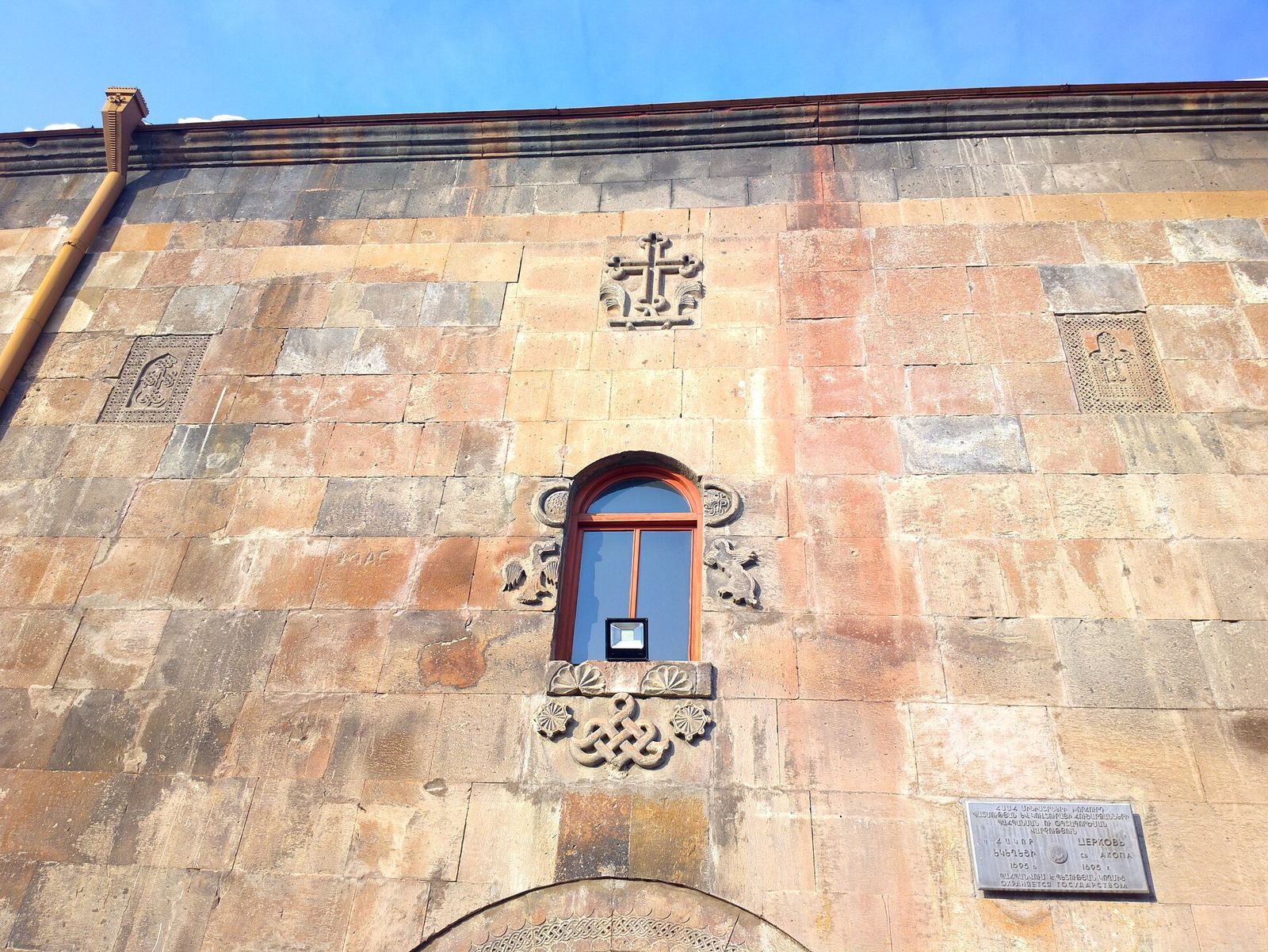
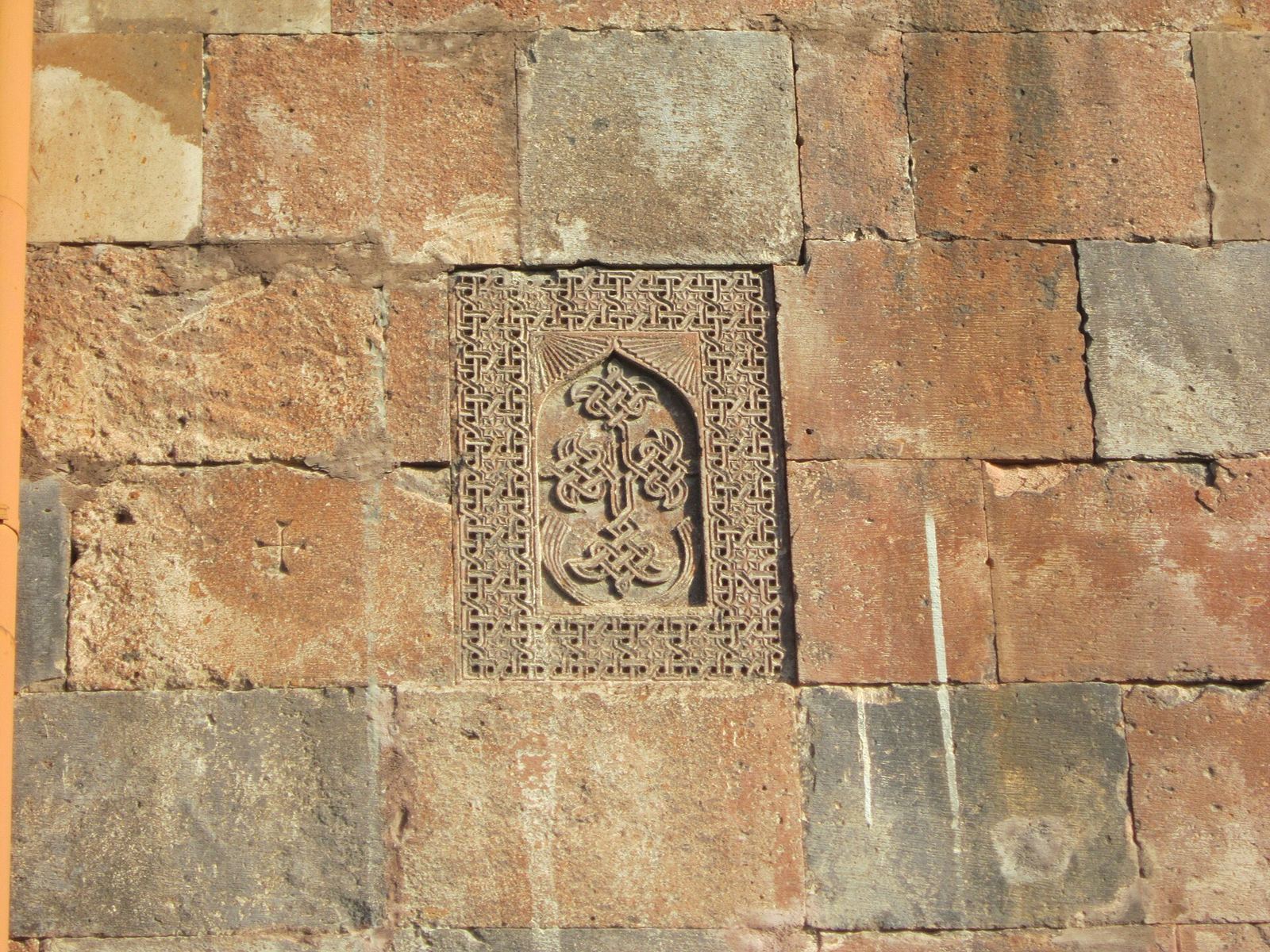
The church is a three-nave basilica, a long building with a central main aisle and two side aisles. It has no dome, but a single small dome-like cupola sits off-center on the gabled roof. Entrances open through the south and west walls, and the western entrance has elaborate carvings. Three carved stones bearing crosses, a distinctive Armenian Christian monument, are fixed to the western wall; they date to 1504, 1571, and 1621. Murals of saints cover the walls and two pairs of columns, one pair in the prayer hall and the other on the eastern side. The main altar stands against the eastern interior wall, with rooms for religious vestments and objects beside it.
Churchyard and nearby church
A decorated gate dated 1887 stands southwest of Saint Hakob. The sister church, Surp Astvatsatsin, is on a hill to the northwest and is within sight of Saint Hakob.