Durbalı Sultan Tekke: A Sufi Lodge in Thessaly
Site at a Glance
- Popularity
- Low
- Country
- Greece
- Primary era
- Early Modern
- Eras represented
- Medieval, Early Modern, Modern
- Civilizations
- Byzantine, Ottoman
- Site type
- Religious
- Remains
- Sufi Lodge
On this page12 sections
History
Durbalı Sultan Tekke is an Ottoman-style lodge where members of Sufi religious communities, known as dervishes, gathered. It stands at Ano Asprogeia in Farsala, Thessaly, Greece, and is associated with Anatolian Alevism, a distinct Islamic religious tradition. Its foundation is uncertain: tradition assigns it to 1492, while architectural characteristics and dates on surviving tombs have led some scholars to place its foundation in the second half of the eighteenth century.
Origins and Ottoman-era growth
In the traditional account, the namesake Durbalı was an Alevi dervish from the Konya region of central Anatolia who arrived in the area around the time the lodge was founded. Local Ottoman authorities were said to have licensed its construction in return for his military service, including assistance in pacifying and Islamizing Thessaly. Some scholars consider Durbalı a legendary figure and suggest that the name Durbalı Tekke derives from a corruption of türbe, meaning a tomb or mausoleum, and can be understood as Lodge of the Tombs. Asprogeia was known as Ireni under Ottoman rule. The tekke occupied the remains of a tenth-century Byzantine monastery dedicated to St. George.
The lodge became wealthy and influential, with estates exceeding 32,000 stremmata, a Greek unit of land area, in Ireni and Arduan, identified with Eleftherochori. Around 1770, the community came under the Mevlevi, a Sufi order.
Greek rule and Albanian Bektashi community
Thessaly became part of Greece in 1881, but the tekke continued its activity. Around 1888, it housed 55 dervishes. Greek novelist Andreas Karkavitsas published an account of the tekke in the newspaper Estia in 1892.
After Mustafa Kemal abolished Sufi orders in Turkey in 1925, Albanian Bektashis took over the lodge. That year, Albanians hostile to Ahmet Zogu, who had persecuted them, also found refuge there under Greek state auspices. By the mid-1930s, six elderly Albanian dervishes lived at the tekke under Kiaxem Baba, their spiritual leader; they were known for their hospitality.
The tekke had historical ties to Leskovik, and the local notable Kani Pasha was buried there. Its memory also continued in ballads and songs in the town during Albania’s communist period.
End of the community and later care
The Albanian Bektashis remained at the tekke until 1973, when its thirty-third and last spiritual leader, or baba (a Bektashi spiritual leader), died. In 2000, Bektashi Muslims from Leskovik living in Greece began restoration work. The tekke is a protected monument and remains the property of the Bektashi order, while practical management falls to the Larissa Prefecture land office. Disputes over ownership and maintenance have complicated its upkeep.
Remains
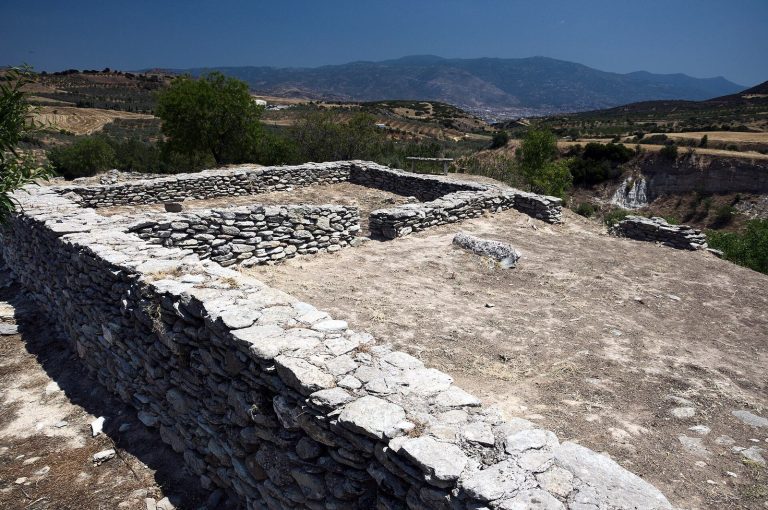
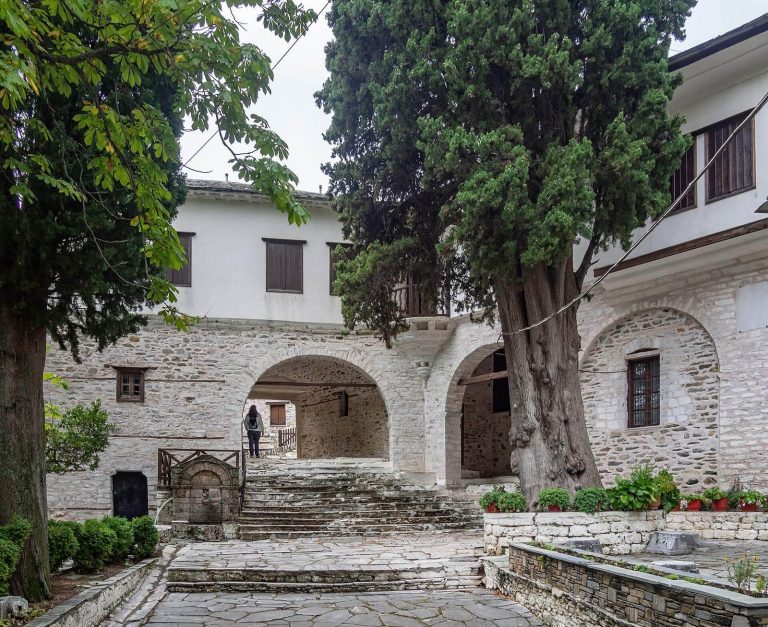
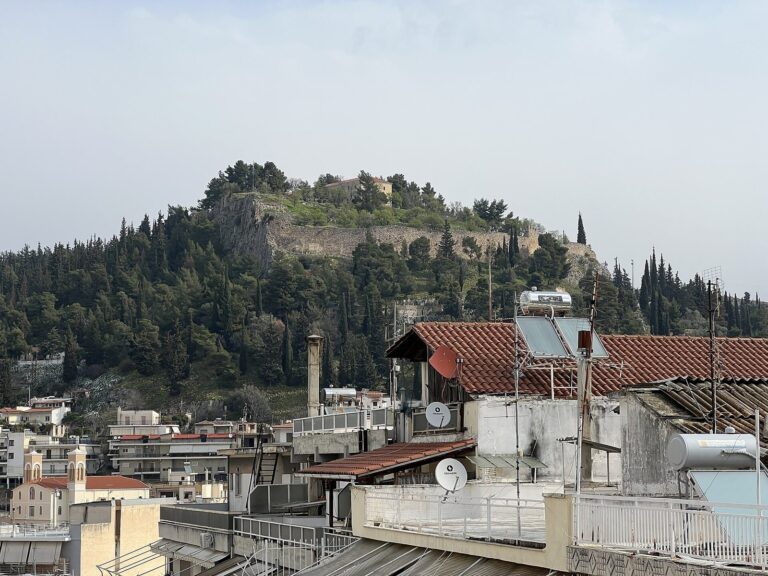
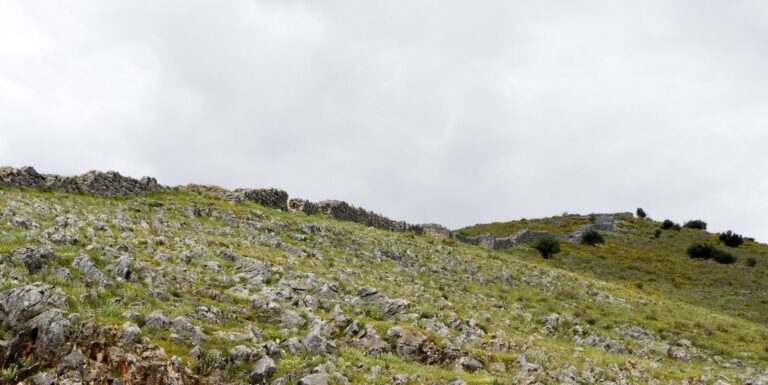
The complex occupies a mountain spur overlooking the Thessalian plain. A defensive perimeter wall reinforced with towers and crenellations encloses two zones: a cemetery to the south and a residential area to the north, each separately walled. A spring is located at the entrance.
Residential area
The northern zone contained stables, a kitchen, storage rooms, guest accommodation, and a building used for the ritual purification of prospective spiritual leaders. Most of these buildings are now ruined.
Southern cemetery
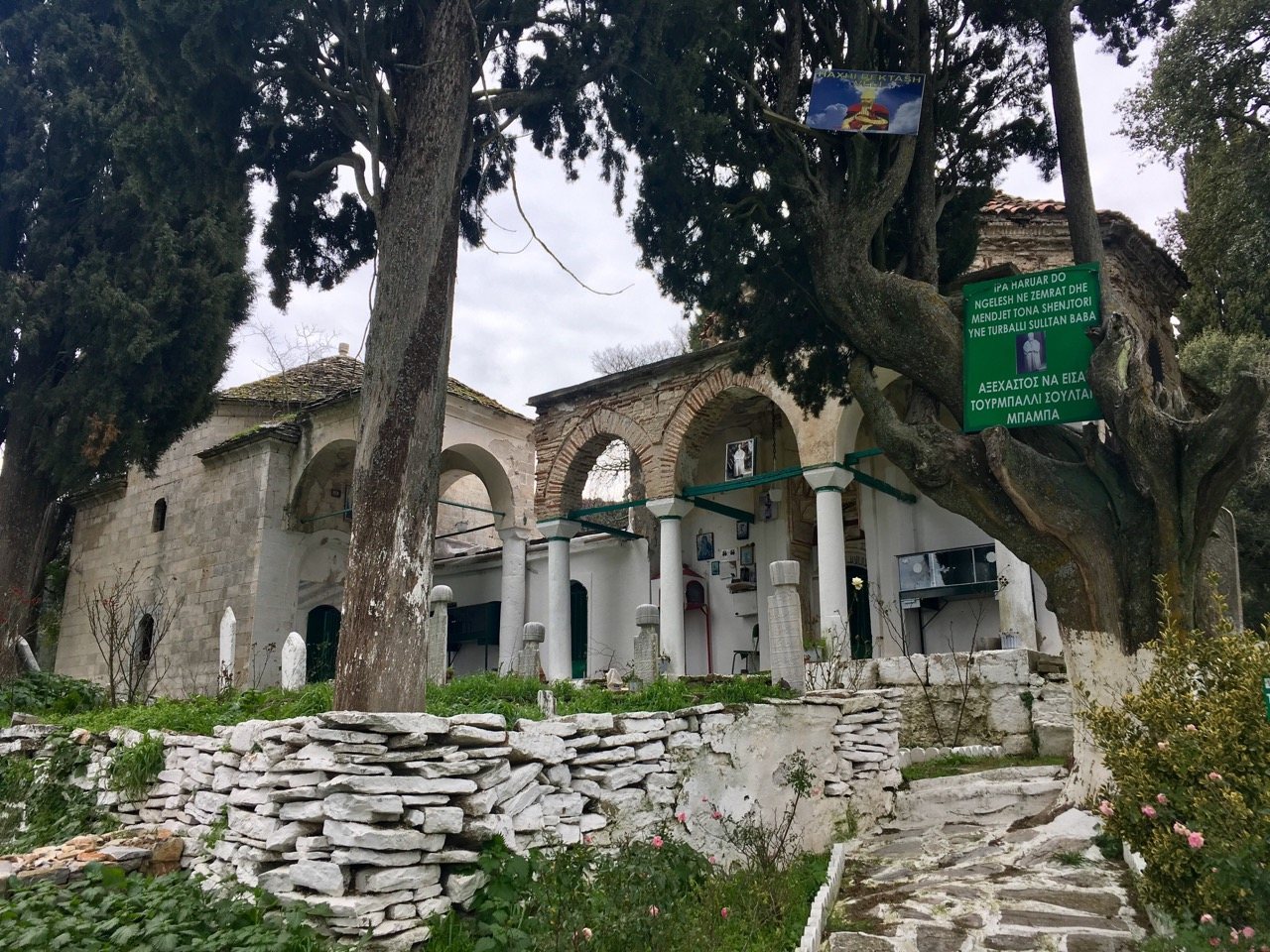
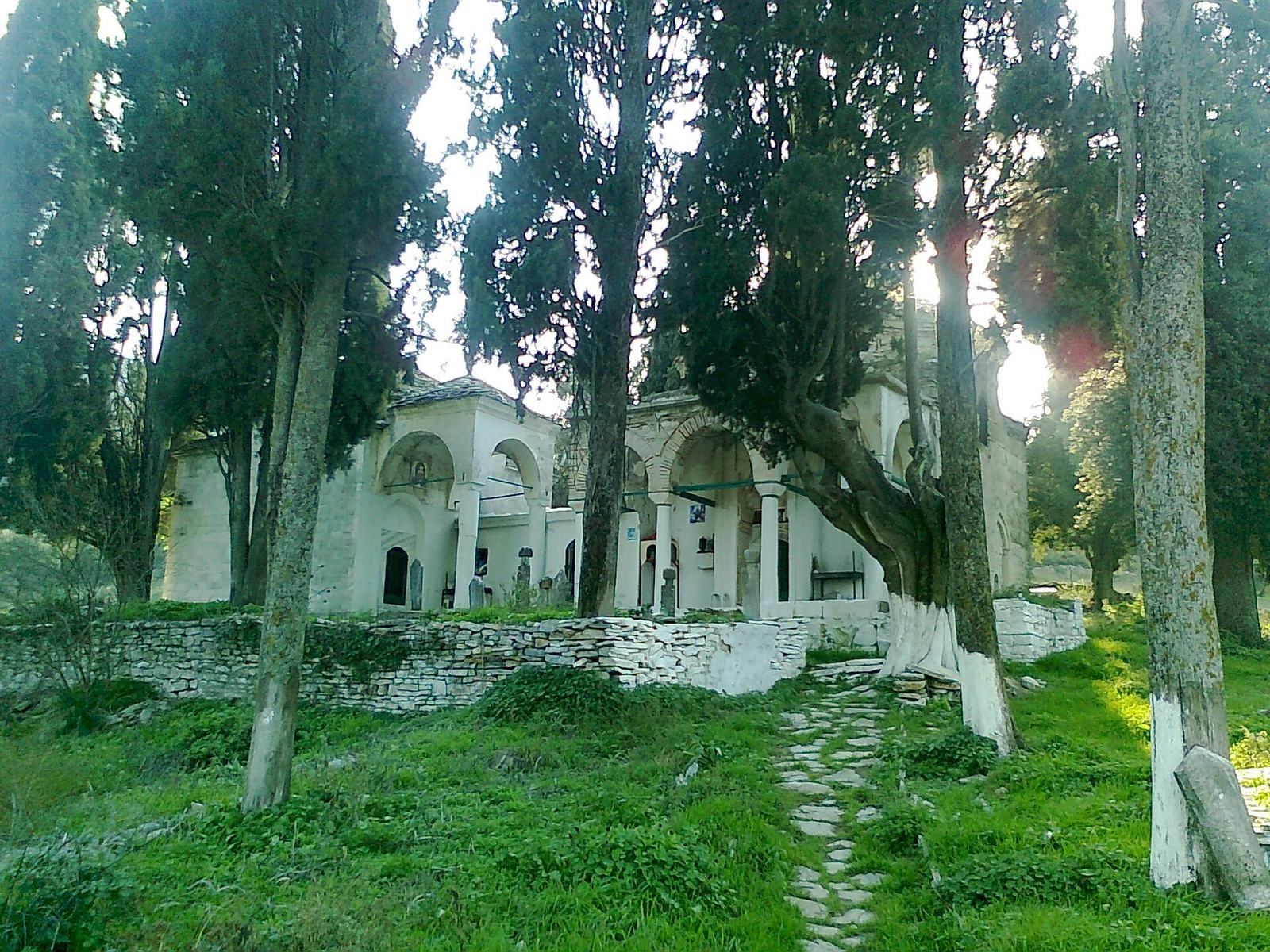
The cemetery contains two mausoleums and 33 tombs. The western mausoleum is the older of the two, while a low modern structure links it to the eastern mausoleum.
Western mausoleum
The western mausoleum measures 6 by 7 by 7.5 metres. Its walls combine irregular stone blocks and brickwork with building material reused from the earlier Byzantine structure. Some scholars date it to the sixteenth century.
Eastern mausoleum and connecting structure
The eastern mausoleum is of similar size and contains three tombs. The low cement structure joining the two mausoleums contains two further tombs.
Religious features
Mosque outside the courtyard
A small mosque stood outside the tekke courtyard and was known as the Temple of Durbalos.
Images and fresco
The complex contains images of Imam Ali, an early Islamic leader particularly revered in Shia traditions, and Haji Bektash Veli, a medieval Muslim mystic associated with the Bektashi order. A surviving fresco on the walls depicts St. George, a Christian saint also revered in some Sufi traditions.