Sesklo Archaeological Site: An Early Neolithic Settlement in Greece
Site at a Glance
- Rating
- 4.7
- Popularity
- Low
- Country
- Greece
- Primary era
- Stone Age
- External website
- Open
- Eras represented
- Stone Age
- Civilizations
- Unclassified
- Site type
- City
On this page13 sections
History
Sesklo archaeological site is a Neolithic settlement in Greece, built by agricultural communities from the seventh millennium BC during the Neolithic period, when farming, animal domestication, settled life, pottery, and ground-stone tools spread before the Bronze Age. Its earliest researched remains date to approximately 7510–6190 BC. Sesklo was one of the earliest known Neolithic settlements in Europe and gave its name to the Sesklo culture, the earliest known Neolithic culture of Europe, which occupied Thessaly and parts of Macedonia.
Early agricultural communities
The earliest occupation belongs to the Pre-Sesklo and Proto-Sesklo phases. Pre-Sesklo included smaller settlements adjoining the main Proto-Sesklo community and has been associated with groups connected to the Starčevo culture from north of Thessaly and the Danube region. Both phases belonged to agricultural societies. Their economy included the cultivation of wheat and barley and the keeping of sheep and goats, along with cattle, pigs, and dogs. Domesticated cattle occurred in the aceramic levels, an early Neolithic phase before pottery had been developed or adopted. Cattle domestication in Thessaly may therefore have preceded the earliest comparable evidence from the Near East.
The settlement developed continuously through successive building phases. Earlier structures were not cleared before later construction, so occupation deposits accumulated and raised the ground surface, creating the hill seen today. During its peak around 5000 BC, Sesklo covered approximately 20 hectares and contained about 500–800 houses. Its estimated population of roughly 3,000–5,000 people has led to its description as one of Europe’s earliest known cities and to comparisons with Neolithic cities of the Near East.
Expansion and cultural influence
Sesklo’s material culture changed from an early aceramic phase to increasingly refined pottery production. Later painted pottery and related cultural forms influenced or contributed to the development of the Karanovo, Körös, Starčevo–Kőrös–Criș, Cardial, and wider Danubian Neolithic traditions. The settlement also yielded stone tools and obsidian, a volcanic glass used to make sharp cutting tools, imported from the island of Melos. Female figurines, often showing pregnant women, have been interpreted as possible evidence of prehistoric fertility or Mother Goddess cults, although comparable figurines occur across the Balkans and the Danube region.
Marija Gimbutas identified what she regarded as a gorgon-mask image among Sesklo cultural material dating to approximately 6000 BC. Her interpretation connected the motif with imagery that continued in later ancient and Classical Greek art.
The relationship with Dimini
One interpretation holds that the neighboring Dimini culture conquered Sesklo around 5000 BC in a violent conflict. Another interpretation relies on thermoluminescence dating, an archaeological method that estimates when fired clay or minerals were last heated by measuring stored radiation released as light. Applied by Ioannis Lyritzis and R. Galloway, this dating placed the first appearance of Dimini inhabitants within the Sesklo settlement around 4800 BC, approximately four centuries before the Sesklo culture ended around 4400 BC. This chronology allows for a period in which the two communities coexisted. The settlement was abandoned shortly before the end of the fifth millennium BC, around 4400 BC.
Discovery and archaeological investigation
The settlement was discovered in the nineteenth century, and excavation began under the Greek archaeologist Christos Tsountas. Research on the hill resumed in 1956 and continued during the 1960s under Dimitris R. Theoharis. From 1972, investigations extended into the surrounding area and identified the large Middle Neolithic settlement. Theoharis also traced the settlement deposits through their full depth, clarifying the sequence of habitation phases. The area has been designated an archaeological site since 1963.
Remains
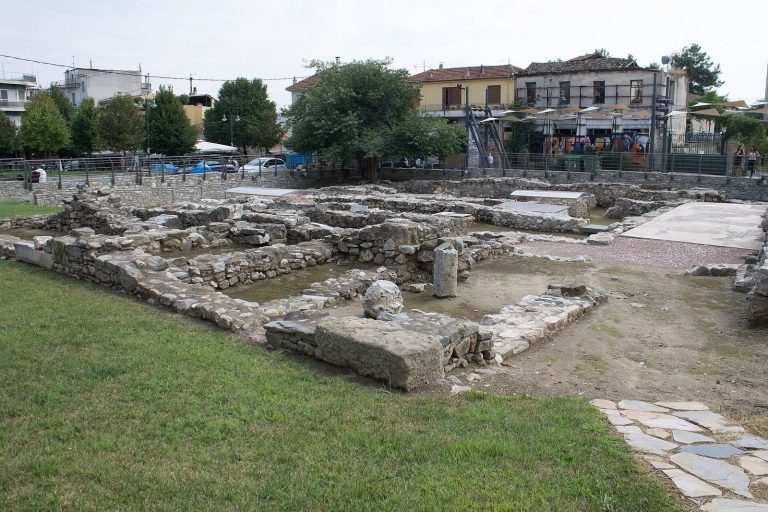
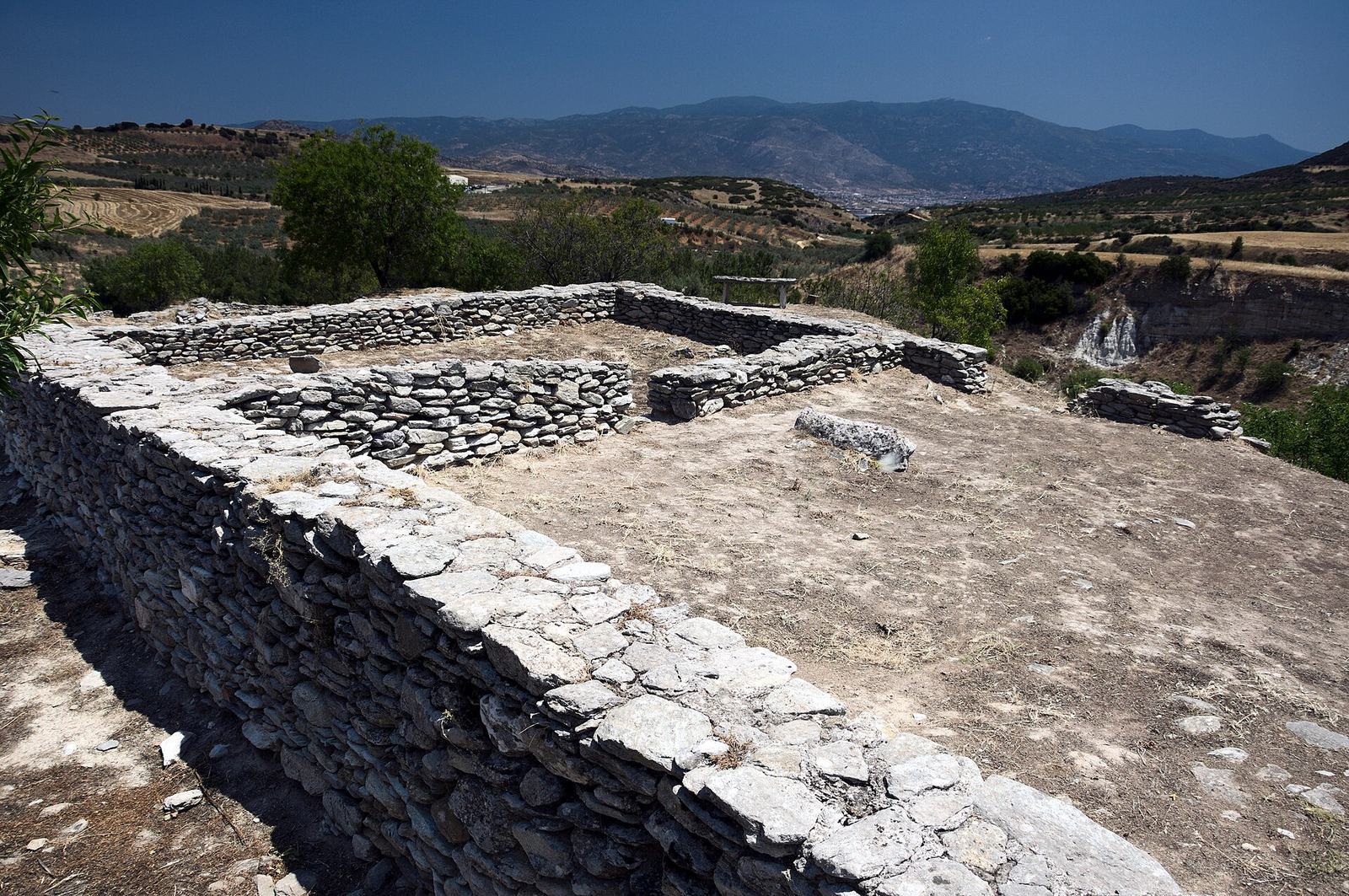
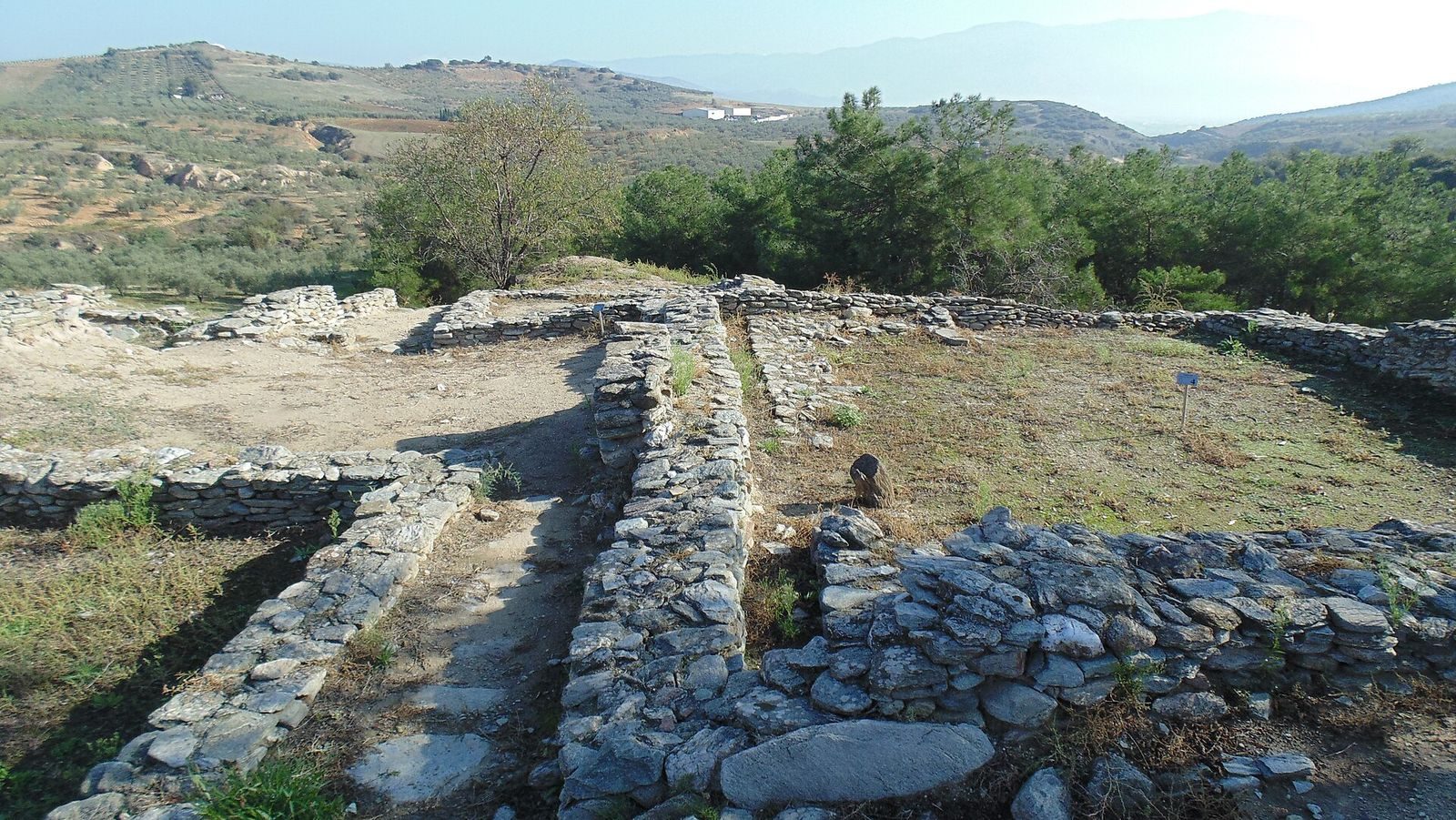
Sesklo lies southeast of the modern village of Sesklo in a hilly environment near the Pagasetic Gulf and Lake Karla. Deep stream channels and low hills with strong drainage shaped the surrounding landscape and influenced the choice of location. The settlement extended across Kastraki Hill, known as the Acropolis or Sesklo A, and the level slope to its west. The western area, traditionally called the “city,” covered more than 100 stremmata, or 100,000 square metres, and contained densely built groups of houses dating mainly from the Early and Middle Neolithic periods.
Settlement layout and building phases
Aceramic and Early Neolithic structures
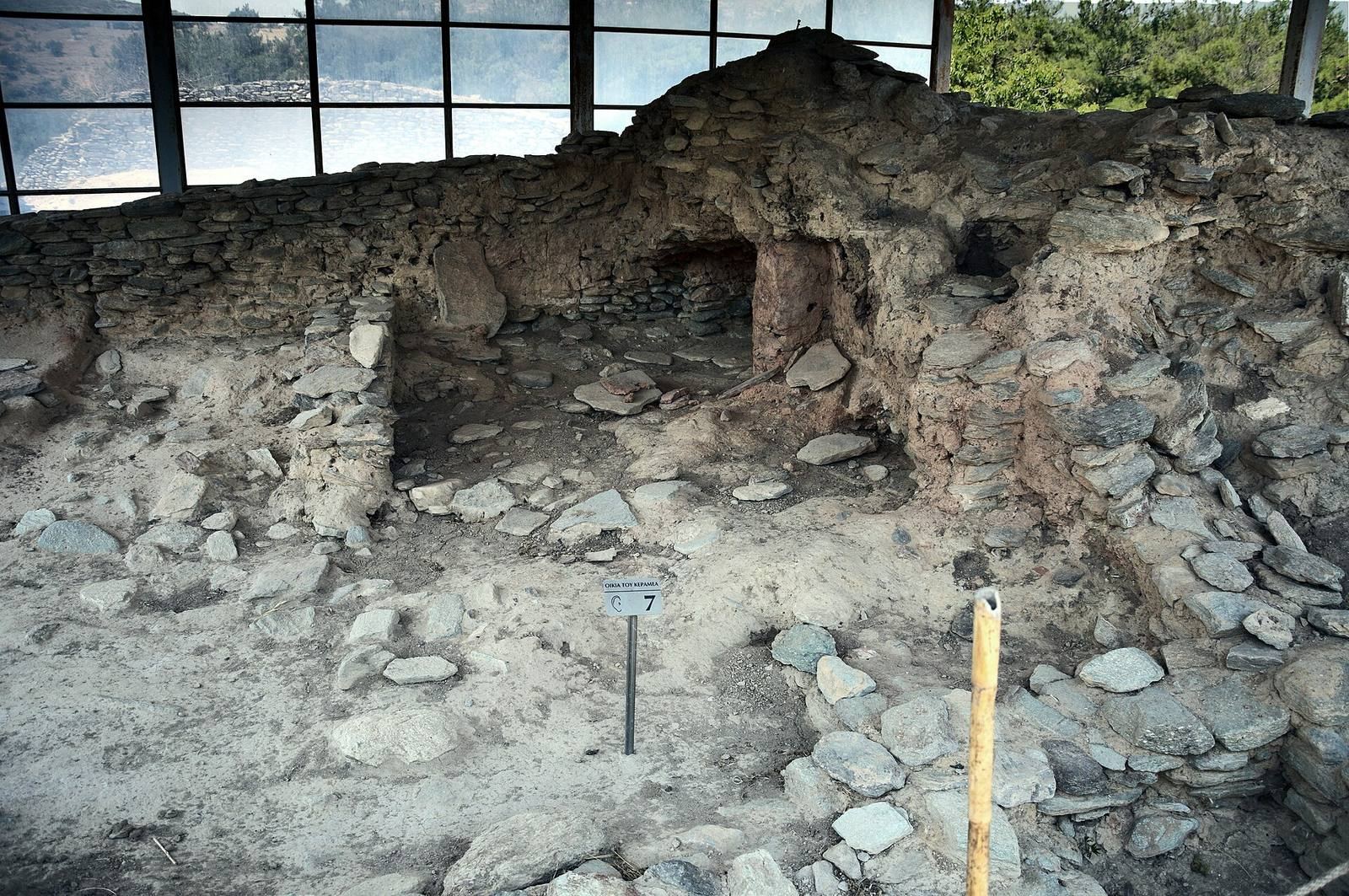
The earliest settlement occupied the low hill and an area northeast of it. Its small, shallow, elliptical pits were cut into firm ground, while light foundation trenches and traces of branches, mud, and compact clay indicate the construction of dwellings. In the Early Neolithic period, houses stood on stone foundations with mudbrick walls and tamped-clay floors. Open spaces between them supported domestic craft activities. The earliest houses were generally small, with one or two rooms, and used wood or mudbrick above their stone foundations.
Middle Neolithic settlement
Later construction became more standardized. Houses were built of adobe on stone foundations, and the settlement produced some of the earliest known two-storey houses. During the Middle Neolithic period, occupation expanded onto the area opposite the hill. Nearly all of the architectural remains currently visible on the hill belong to this phase, whose organized planning arranged clustered houses with open areas between them.
Late Neolithic Acropolis
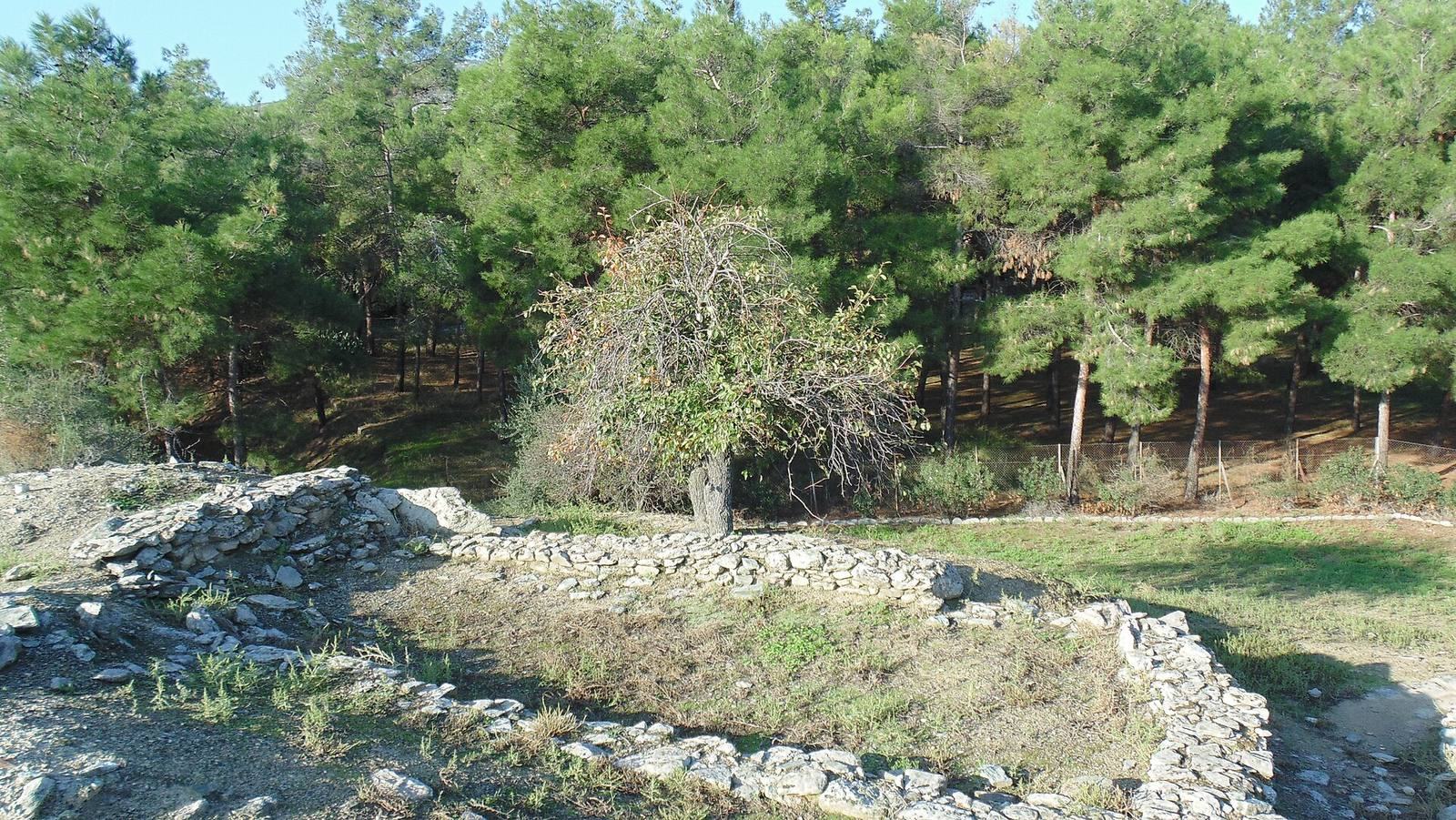
During the Late Neolithic period, settlement contracted toward the Acropolis. A large megaron-like building was erected there. A megaron is a large building organized around a principal room, often with a columned entrance or porch. Enclosures helped organize the space around the building, while other structures were arranged around it. The architecture also included other megaron-type, columned buildings alongside the clustered houses.
Pottery and portable finds
Painted pottery
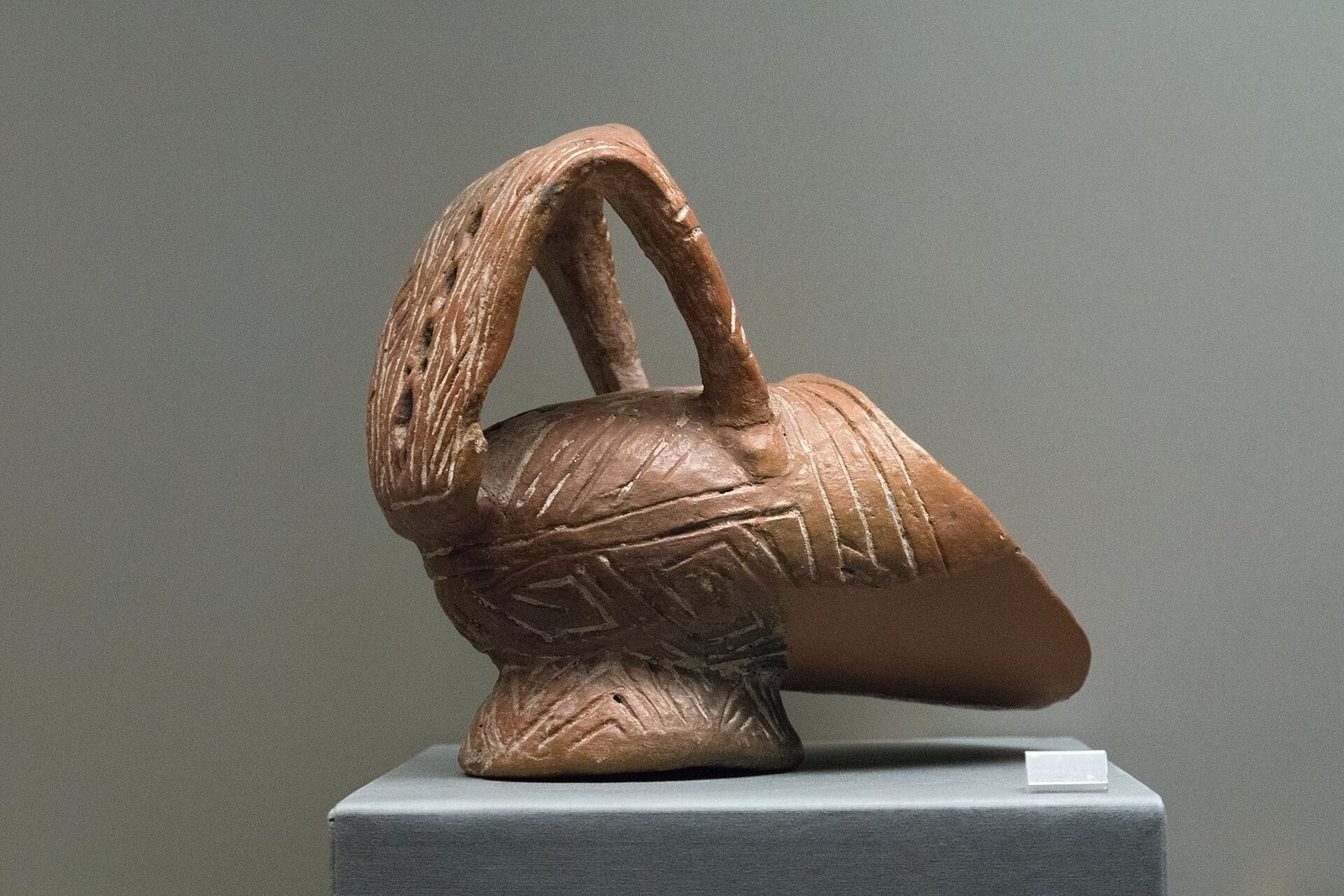
Early Proto-Sesklo levels produced no pottery, but later inhabitants made fine, glazed earthenware decorated with geometric designs in red or brown. Improved firing techniques during the Middle Neolithic period created stronger red colors, and painted pottery became more common. Toward the end of the Sesklo culture, decoration developed into flame-like motifs. Sesklo vessels included shallow, slightly open bowls and forms that differed from contemporary Anatolian pottery. Similar vessels occurred in western Macedonia, including at Servia, while the rare early pottery from Çatalhöyük resembled Sesklo pottery in shape but differed substantially in its clay paste.
Tools and figurines
Stone tools formed part of the settlement’s material remains, together with obsidian from Melos. The use of this volcanic glass became widespread during the Middle Neolithic period. Female figurines, frequently depicting pregnant women, provide material for interpretations of fertility or Mother Goddess practices, while their wider Balkan and Danubian distribution places them within a broader prehistoric tradition.