Duomo (Novara di Sicilia): The Mother Church of Santa Maria Assunta


Site at a Glance
- Rating
- 4.8
- Popularity
- Very Low
- Country
- Italy
- Primary era
- Early Modern
- External website
- Open
- Eras represented
- Medieval, Early Modern, Modern
- Civilizations
- Crown of Aragon, Kingdom of the Two Sicilies, Spanish
- Site type
- Religious
- Remains
- Church
On this page19 sections
History
The Duomo of Santa Maria Assunta is the largest church in Novara di Sicilia, Italy, and serves as the town’s Roman Catholic parish church under the patronage of Saints Peter and Paul. Dedicated to Santa Maria Assunta, meaning Saint Mary of the Assumption, it belongs to the Archdiocese of Messina-Lipari-Santa Lucia del Mela and remains the principal church of the Novara di Sicilia vicariate and archpriesthood. Its present form reflects a long development from a modest medieval place of worship through late Renaissance enlargement, earthquake reconstruction, and postwar repair.
Medieval origins and enlargement
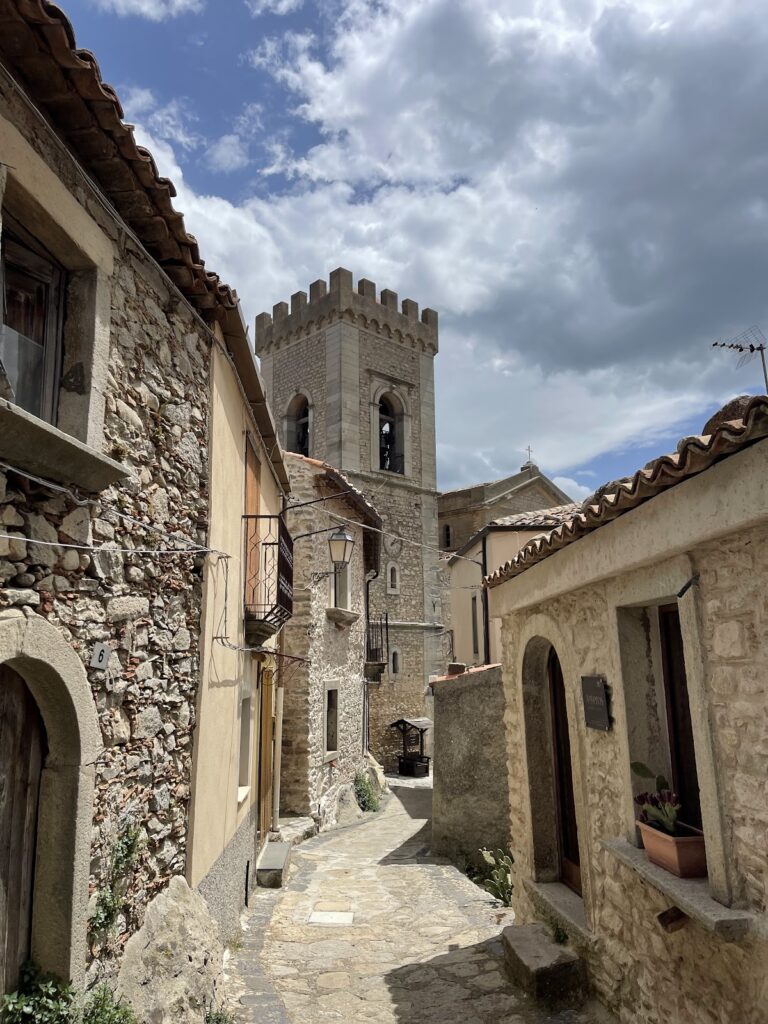
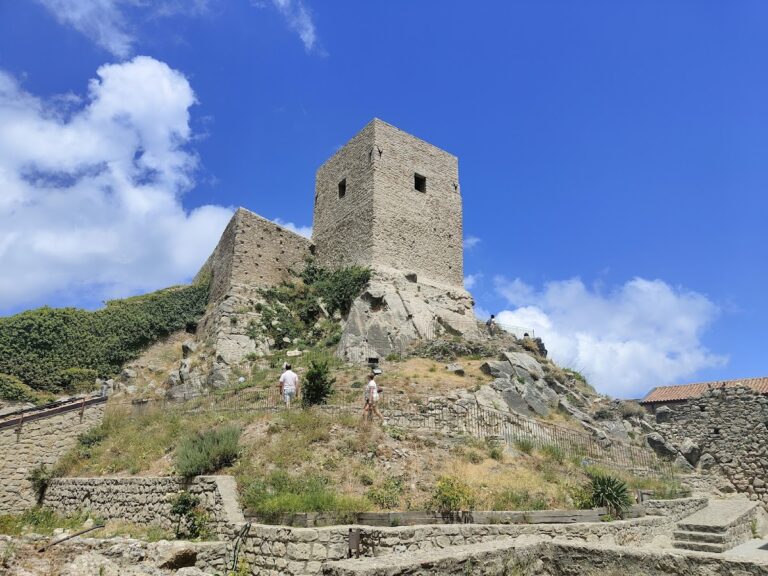
The church stands within a settlement whose history reaches back to the Sican settlement of Noà and the Roman Novalia. Later phases included a Byzantine settlement rebuilt farther downhill, the Arab-Norman Noah, and the Angevin Castrum Nucariae. The town subsequently passed through Aragonese, Spanish, and Bourbon rule before becoming modern Novara di Sicilia. These successive political periods formed the wider setting in which the church developed.
Before 1400, a small church stood in the area now occupied by the left nave, within the settlement clustered around the castle. During the fifteenth century, the building acquired its crypt, walls, columns, and altars in successive stages. A larger church was then developed from this earlier place of worship during the late sixteenth century. The enlargement established the core of the building that later reconstructions would preserve and modify.
Earthquakes and reconstruction
Novara di Sicilia has repeatedly been affected by earthquakes, including events dated between AD 24 and 79, a fourth-century earthquake, and shocks in 1169 and 1295. Later destruction or damage followed the Naso earthquake of 1613, the Calabria earthquake of 1638, the Val di Noto earthquake of 1693, the southern Calabria earthquake of 1783, the Gulf of Patti earthquake of 1786, the southern Calabria earthquake of 1894, the Messina earthquake of 1908, and the Gulf of Patti earthquake of 1978.
The earthquake of 1783 partially destroyed the church. It was rebuilt with papal funds under Benigno Salvo, a Novarese architect and priest, who retained the original sixteenth-century project. Decorative work continued through the nineteenth century, and the monumental facade was completed in 1818. The earthquake of 1908 caused further damage, although its effects were less severe than those of 1783. The eighteenth-century bell tower was altered after the Second World War with an upper section and spire.
Anglo-American bombing on 9 and 12 August 1943 brought additional damage. During restoration and reconstruction after the war, the decoration was modified in 1948. The crypt was also restored under the direction of the heritage authorities. These interventions form part of the building’s continuing physical history, alongside the earlier rebuilding after seismic disasters.
Devotion and the cult of Saint Hugh
The Duomo complex preserves religious traditions associated with the Assumption. The annual Assumption festival is followed, every five years, by the Apotheosis of the Assumption. During that celebration, the statue of the Virgin is carried in procession with numerous saintly images, including those of Saint Rocco, Saint Gregory the Great, Saint Sebastian, Saint Francis of Assisi, Saint Rosalia, Saint Anthony the Abbot, Saint Catherine of Alexandria, Saint Francis of Paola, Saint Anthony of Padua, Saint Mark, Saint George, Saint Philip of Agira, Saint Michael the Archangel, Saint Joseph, and Saint Hugh the Cistercian.
Saint Hugh the Abbot is celebrated in Novara on 16 August and at Badiavecchia on 17 November or the following Sunday. His relics are carried on an elaborate wooden fercolo, a processional structure used to bear a statue or relic. After the Assumption festivities, the relics remain in the Mother Church during a seven-day observance before returning to the saint’s church on 22 August. A procession tradition that had lapsed during the early twentieth century was revived in 1996, and Saint Hugh is invoked during periods of drought.
The parish museum preserves objects connected with this history, including the Jar of Saint Hugh and a large bronze thurible from the former twelfth-century Abbey of Santa Maria La Noara. It also holds the saint’s ashes, skull, and gloves. These relics once formed part of a reliquary kept for centuries on the left wall of the Royal Abbey of Saint Hugh in central Novara. Other relics of saints and of the Holy Cross were brought to Novara during the saint’s journey of settlement.
Remains
The Duomo has a basilican plan, meaning that a central nave is flanked by two lower side naves. Twelve sandstone columns divide the interior, while twelve cipollino-marble altars line the side naves. The building combines the surviving organization of the late sixteenth-century project with later furnishings, chapels, paintings, earthquake repairs, and additions.
Exterior and tower
Facade
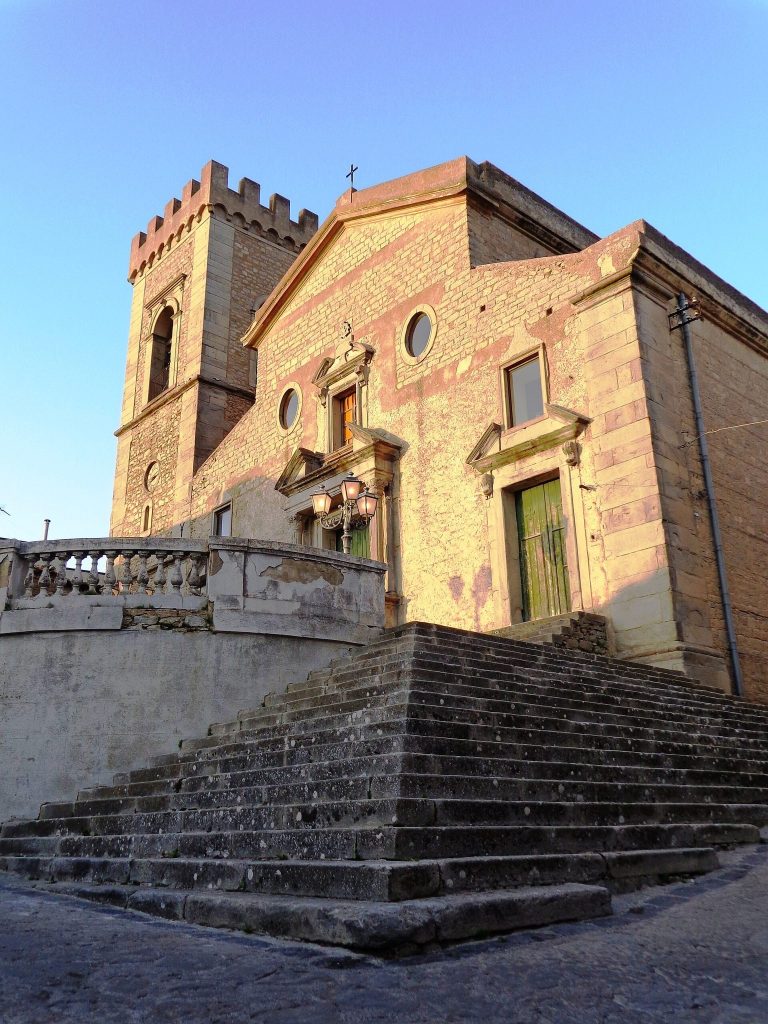
Completed in 1818, the monumental facade is built from local sandstone in a late Renaissance design. Four large bare-stone pilasters rise across two levels in the central body, and two further pilasters flank the smaller entrances on the lower level. Their capitals are carved in white marble in the Corinthian order. The central portal has a complete triangular pediment, two empty niches, and framed panels above and below. The side entrances have full arched pediments and rectangular windows.
The upper level contains a large central niche with an arched pediment and side windows beneath complete triangular pediments. Above them, the facade ends in a large central pediment carrying a dramatic crowned coat of arms with canopy-like drapery. An aedicule with a domed roof stands at the apex without a cross. Vase-shaped pinnacles with floral decoration and terminal spheres flank it, while additional vases bearing pinecones and an allegorical third-eye figure rise above the side buttresses. Downward-curving half-arches join the side-nave bodies to the central body at the upper level, and a staircase heightens the vertical movement of the composition.
Bell tower
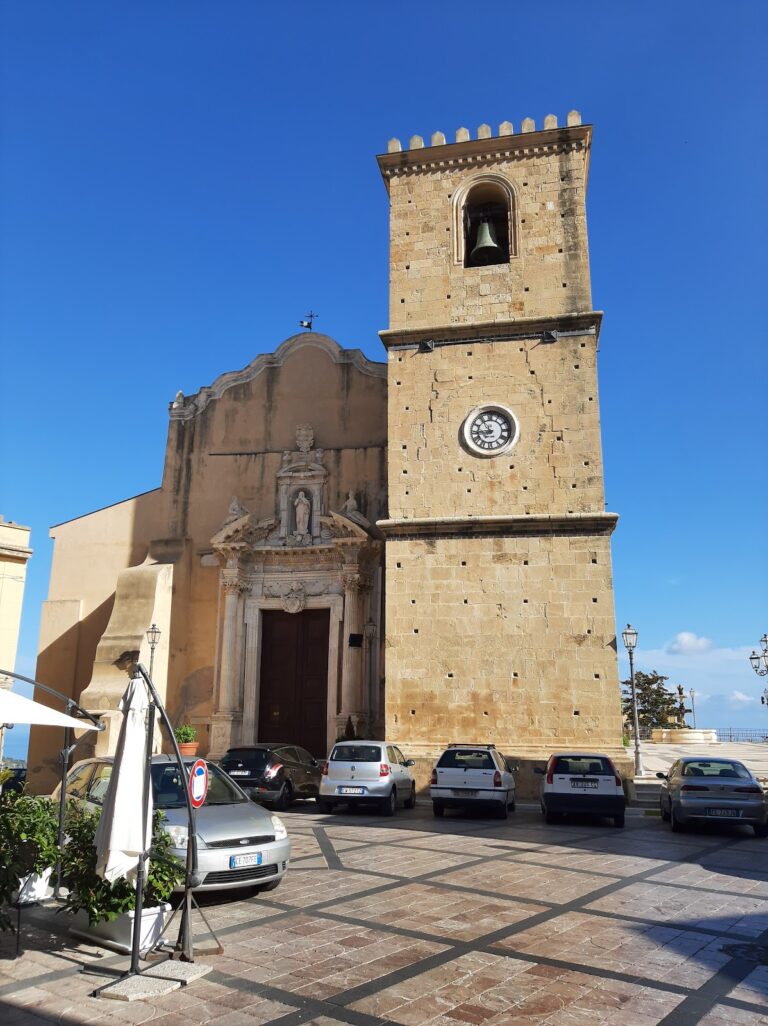
The squat bell tower dates from the eighteenth century and is divided into three orders by corner pilasters. Its first order is connected to the church. The second has one stone-framed arched window on each side, while the third has simpler arched windows above clock faces. Two levels of bell chambers occupy the tower. Pinnacles with weather vanes surround an elongated octagonal spire, which ends in a sphere and cross. An upper section and spire were added after the Second World War.
Crypt and nave chapels
Crypt
The crypt lies beneath the apse and contains mummies of archpriests, canons, vicars forane, and cats, together with skulls found over the years. Until the beginning of the twentieth century, it was used for the mummification and burial-related treatment of clerics. A side chamber held bodies during the process, while a floor drain carried away bodily fluids. This drainage installation formed part of the chamber’s practical arrangement. The crypt was later restored under heritage supervision.
Right nave chapels
The Baptistery Chapel occupies the first bay of the right nave, on the site of the former baptistery, which had been built where the old bell tower once stood. Its large cipollino-marble font is covered by a wooden pavilion-like canopy. The chapel also contains Giovan Battista Mazzolo’s marble Annunciation triptych of 1531, transferred from the Church of the Annunciation, and a painting of Saint John the Baptist dated 1778.
The second bay contains the Chapel of Saint Anne, with an eighteenth-century altar and a seventeenth-century altarpiece of Saint Anne attributed to Nunzio Rossi. The Chapel of Saint Michael the Archangel occupies the third bay. Its altar is dedicated to the saint and bears a wooden statue by Vincenzo Genovese dated 1864 and recently restored. The fourth bay is the Chapel of the Rosary, with an eighteenth-century altar dedicated to the Virgin of the Rosary and an 1889 painting of the Virgin. The fifth bay leads to the sacristy.
Left nave chapels
The first bay of the left nave contains the Chapel of the Souls in Purgatory, with an eighteenth-century altar and an altarpiece representing the Souls in Purgatory. The second bay is occupied by the Chapel of the Dying, whose eighteenth-century altar is paired with a 1756 altarpiece showing a dying person with the Virgin and saints.
The Chapel of Our Lady of Mount Carmel fills the third bay. It has an eighteenth-century altar and an 1886 statue of Saint Mary of Carmel by Professor Genovese. The fourth bay contains the Chapel of the Immaculate Conception, with an altar dedicated to the Immaculate Conception and an 1862 altarpiece by Salvatore Caggiano. The painting shows Saint Hugh, patron of the town, venerating Mary Immaculate. The fifth bay is the Chapel of Saint Philip of Agira, with an eighteenth-century altar and a wooden statue of Saint Philip the Syrian, described as a martyr of Agira and dated 1721.
Other statues represent Saint Rosalia in the habit of a Basilian nun, Saint Anthony of Padua, Saint Catherine of Alexandria, and Saint Barbara, identified by her crenellated tower. The coats of arms above the arches leading to the side naves carry words forming a Latin inscription that means, “My house is a house of prayer for all peoples.” The triumphal arch bears the words “Assumpta est Maria in caelum,” the opening of a Gregorian chant and the introduction to a large sacred composition by Giovanni Pierluigi da Palestrina.
Transepts and presbytery
Right transept
The right transept apsidiole, or small apse, contains the Chapel of the Assumption. Its walls are faced with decorated polychrome marble, a work by the engineer Michele Scandurra dating from 1908. The chapel houses the city’s principal patronal statue, a wooden figure of the Virgin Assumed made in 1764 by the Neapolitan sculptor Filippo Colicci.
The right transept altar is also dedicated to Saint Anne and bears a painting of the Madonna and Child among Saints. Beside it stands a sixteenth-century wooden statue of Saint Sebastian the Martyr, transferred from the demolished Church of Saint Sebastian. On the other side is a marble statue of Saint Blaise dated 1711.
Left transept
The left transept apsidiole contains the Chapel of the Blessed Sacrament. Its seventeenth-century altar is richly decorated with fine marble and polychrome enamels, including statues of Saints Peter and Paul and several bas-reliefs. The left transept altar also contains the Chapel of the Most Holy Crucifix, with an old wooden Crucifix, an 1854 statue of Our Lady of Sorrows by Professor Bagnasco transferred from the demolished Church of Saint Sebastian, and a case containing a bust of Ecce Homo.
Presbytery and apse
The presbytery, the area around the main altar reserved for the clergy, has steps of red cipollino marble. Its marble altar is decorated with panels bearing bas-reliefs of biblical symbols. An eighteenth-century carved wooden choir extends around the apse. The apse paintings include the Virgin and Child with Saint Anne and Saint Venera by Francesco Cardillo, dated 1607; Saint Michael the Archangel, dated 1737; and the Virgin of the Rosary with Saint Simon Stock by an anonymous artist from the early eighteenth century.
The apse also contains Antonio Catalano’s Fall of Christ, or Way to Calvary, dated 1598. The painting belongs to a group of interpretations inspired by Raphael’s Spasimo of Sicily. At the centre is Giuseppe Russo’s large Crowned Assumption, dated 1805. In front of the high altar, a versus-populum altar, oriented so that the celebrant faces the congregation, was assembled from four seventeenth-century inlaid wooden corbels transferred from the demolished Church of Saint Sebastian. Individual corbels also form the lectern and the base for the Paschal candle.
Sacristy and parish museum
Sacristy
The sacristy contains three artistic eighteenth-century wooden cabinets. It also preserves Francesco Stetera’s panel painting Annunciation of the Lord, dated 1570 and transferred from the Abbey of Santa Maria La Noara. Other holdings include a painting regarded as the true portrait of Saint Hugh the Abbot and a large wooden Crucifix by Professor Genovese dated 1865, transferred from the demolished Church of Saint Sebastian.
Parish museum
The museum within the Duomo complex holds part of the parish silverware, gold objects, sacred vestments, and other furnishings of historical and artistic value. Its devotional holdings include the Jar of Saint Hugh and a large bronze thurible shaped like a Gothic bell tower, decorated with repoussé figures. Both objects came from the former twelfth-century Abbey of Santa Maria La Noara. The museum also preserves the ashes, skull, and gloves of Saint Hugh, together with relics of other saints and of the Holy Cross.