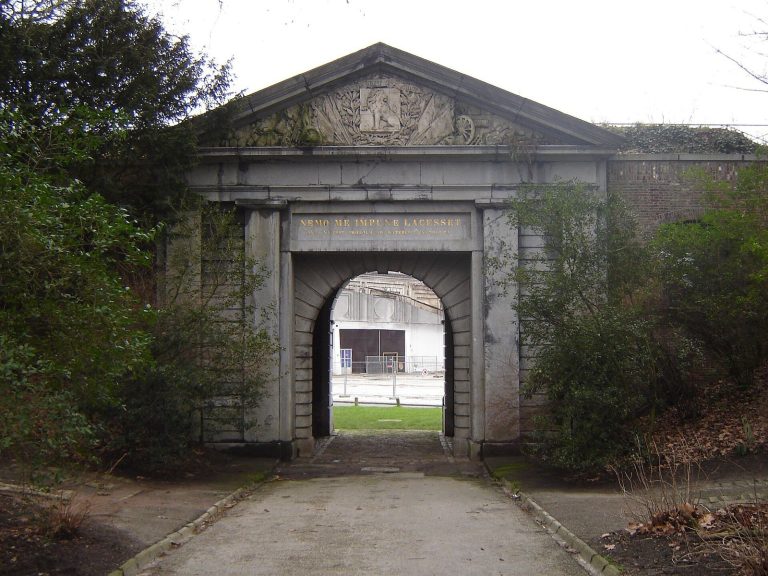
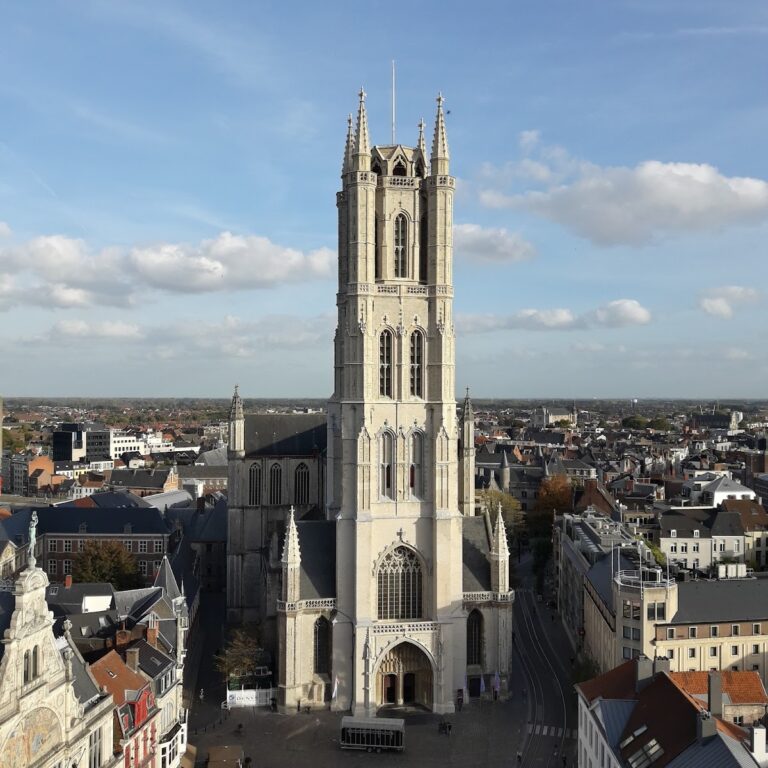
Drongen Abbey: A Historic Religious Complex in Ghent, Belgium
Site at a Glance
- Popularity
- Medium
- Country
- Belgium
- Primary era
- Early Modern
- Eras represented
- Early Modern, Modern
- Civilizations
- Belgian, Habsburg, Spanish
- Site type
- Religious
- Remains
- Monastery
On this page9 sections
History
Drongen Abbey is a historic religious complex beside the River Leie in Drongen, now part of Ghent, Belgium. Its origins are traditionally placed in the seventh century, though the nature and founders of the early institution remain uncertain.
Early foundations and the Premonstratensians
Traditions attribute the foundation variously to Basinus, described either as a king of the Basotes or as Saint Basin, the father of Saint Aldegonde, and to Saint Amand. Another interpretation identifies an early Benedictine monastery, while the first occupants are also described as secular canons, clergy attached to a church chapter rather than members of a monastic order. Norman raiders are said to have destroyed the early religious establishment. It was rebuilt under Baldwin II, Count of Flanders, in the early tenth century. The date when it became a chapter of secular canons is uncertain, although 884 has been proposed; evidence for a monastic community appears in the tenth century.
In 1136, Iwein, Count of Aalst and lord of Waas, Drongen and Liedekerke, founded a religious community at Salegem, near Vrasene. It moved to Drongen in 1138 and joined the Premonstratensians, a Catholic order of regular canons founded by Saint Norbert. Its superiors at first held the rank of unmitred abbot. In 1540, a papal bull gave Petrus de Block, the first mitred prelate of the abbey, permission to wear a mitre, a ceremonial headdress used by bishops and some abbots. The abbots also exercised feudal rights and held regional influence. Later, Abbot Steuperaert returned the community to Drongen and consecrated new convent buildings.
Uncultivated land at Maldegemveld was sold to the abbey at the direction of Count Thomas of Savoy and his wife, Joan of Constantinople. In 1740, Abbot De Stoop abandoned plans to turn it into farmland because its hard clay soil resisted cultivation. He instead laid out a grid of avenues for forestry in what is now Drongengoedbos, and built Drongengoedhoeve, a historic farmstead, there in 1746.
Destruction and reconstruction
The abbey was damaged during the iconoclasm of 1566, when religious images and furnishings were destroyed or removed. Interior fittings, relics and part of its library were lost. Calvinists, adherents of the Reformed Protestant tradition, occupied the complex in 1572. In 1578, during Ghent’s Calvinist republic, they expelled the canons and destroyed the abbey. The canons took refuge at the Hof van Drongen in Ghent. The property passed to William the Silent, a leading figure in the Dutch revolt against Spanish rule, and his heirs returned it in 1609.
The abbey church was rebuilt in 1638, and reconstruction of the monastic buildings continued from 1638 to 1698. The convent had been restored by the latter year, after Alexander Farnese, a Spanish commander and governor in the Low Countries, recaptured Ghent and its surroundings for the Spanish Crown.
Suppression and later uses
During the French occupation in 1796, the Premonstratensians were expelled and the abbey was suppressed. Its property was confiscated and sold, while pastoral care of the parish passed to diocesan priests. In 1804, Flemish industrialist Lieven Bauwens acquired the site and installed a cotton-spinning mill and a dye works that used madder root. The cotton mill failed in 1836.
The Jesuits, members of the Catholic Society of Jesus, acquired part of the abbey in 1837 and the rest of the estate in 1848. They made it a novitiate, where new members underwent initial religious formation, and a major Belgian centre for Jesuit training, including a tertianship, a later stage of formation. The juniorate closed in 1958, the novitiate moved in 1967, and the tertianship ended in 1968 as vocations declined. Retreats and spiritual exercises, a structured form of prayer and reflection in the Jesuit tradition, continued. During the 1990s the site developed into a retreat and conference centre.
The complex remains in religious and retreat use, with a Jesuit community, an L’Arche community, where people with and without intellectual disabilities share life, and other residents. The entire property, including its garden, has been protected as a monument since 1998.
Remains
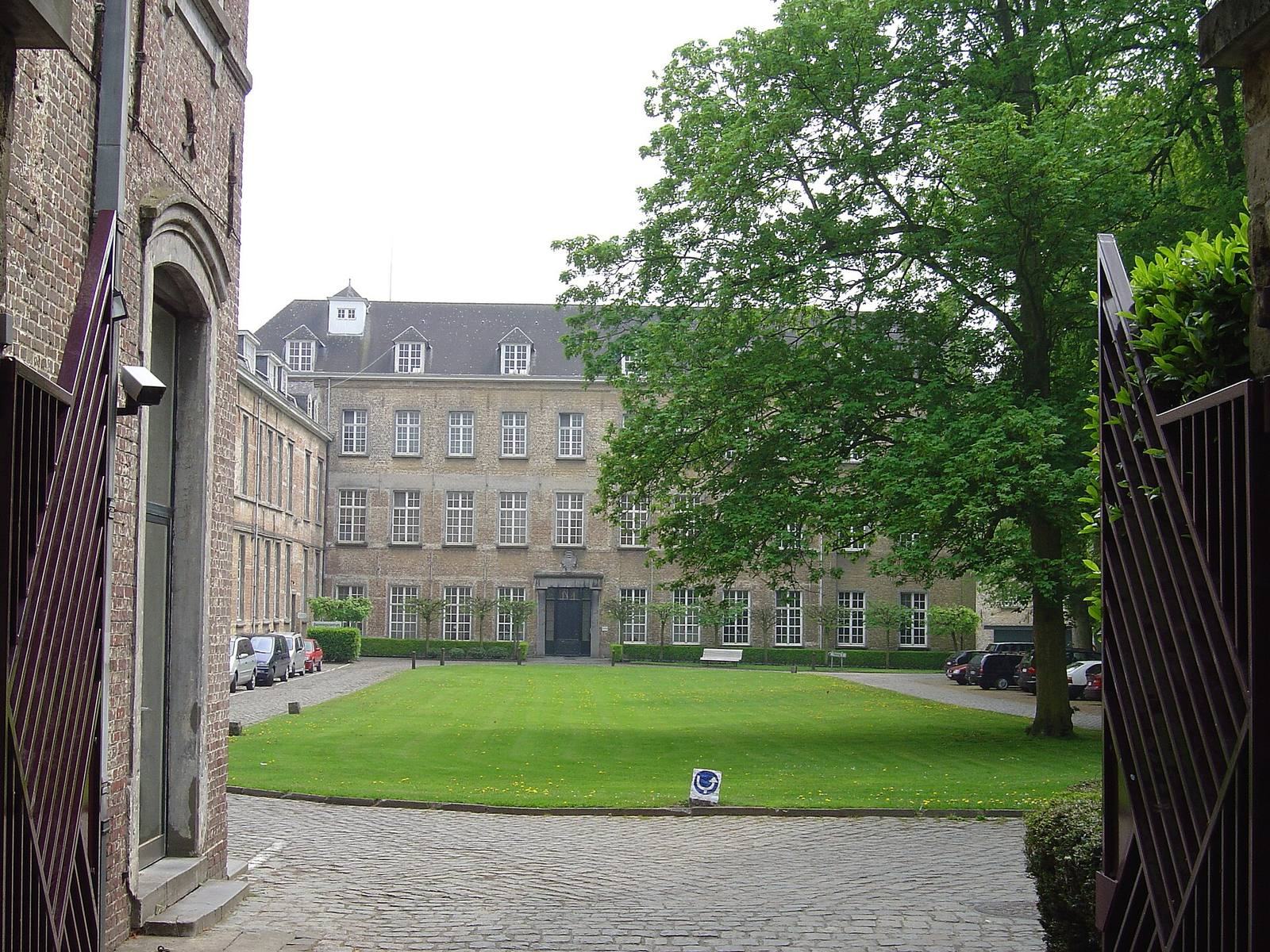
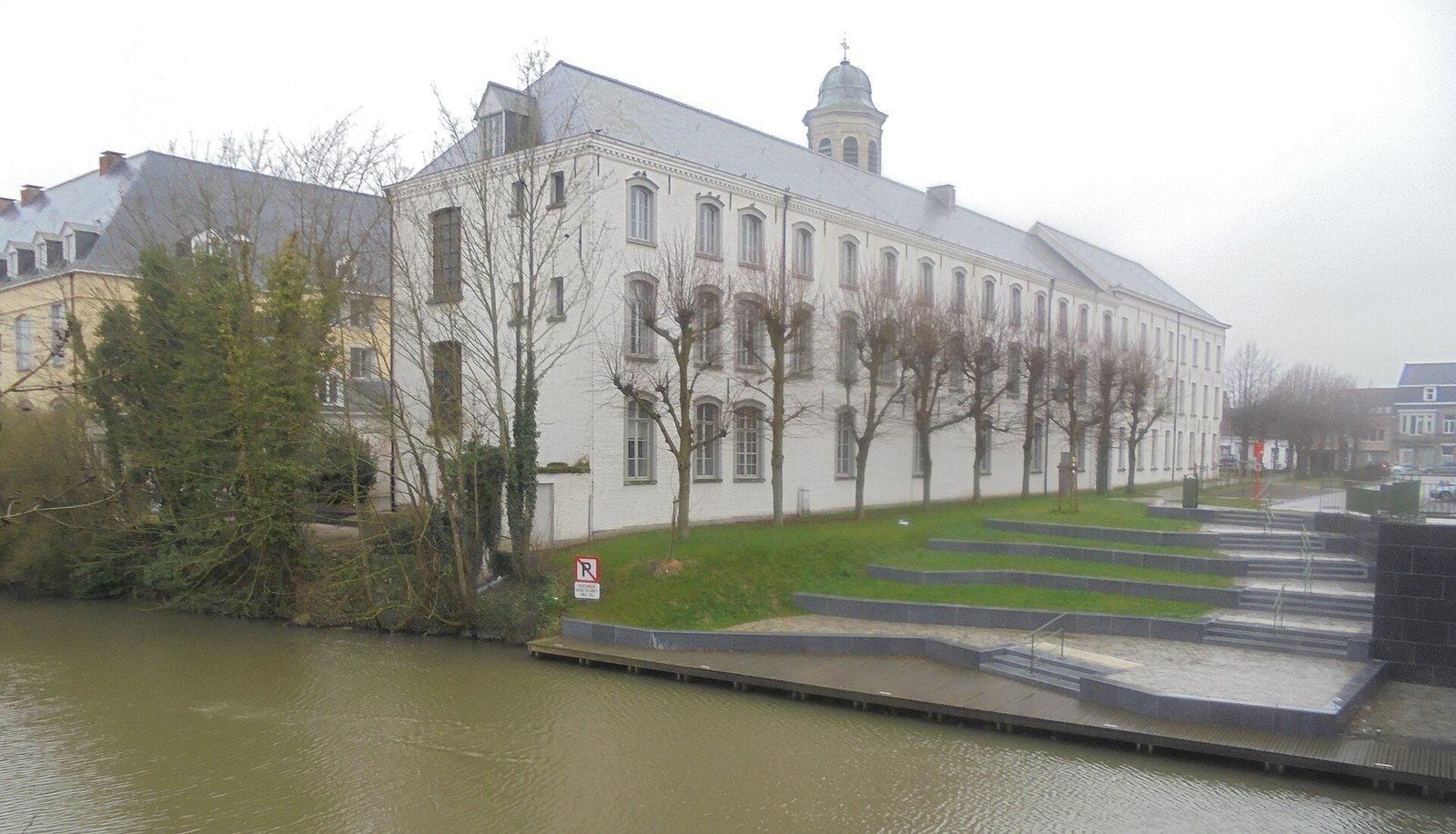
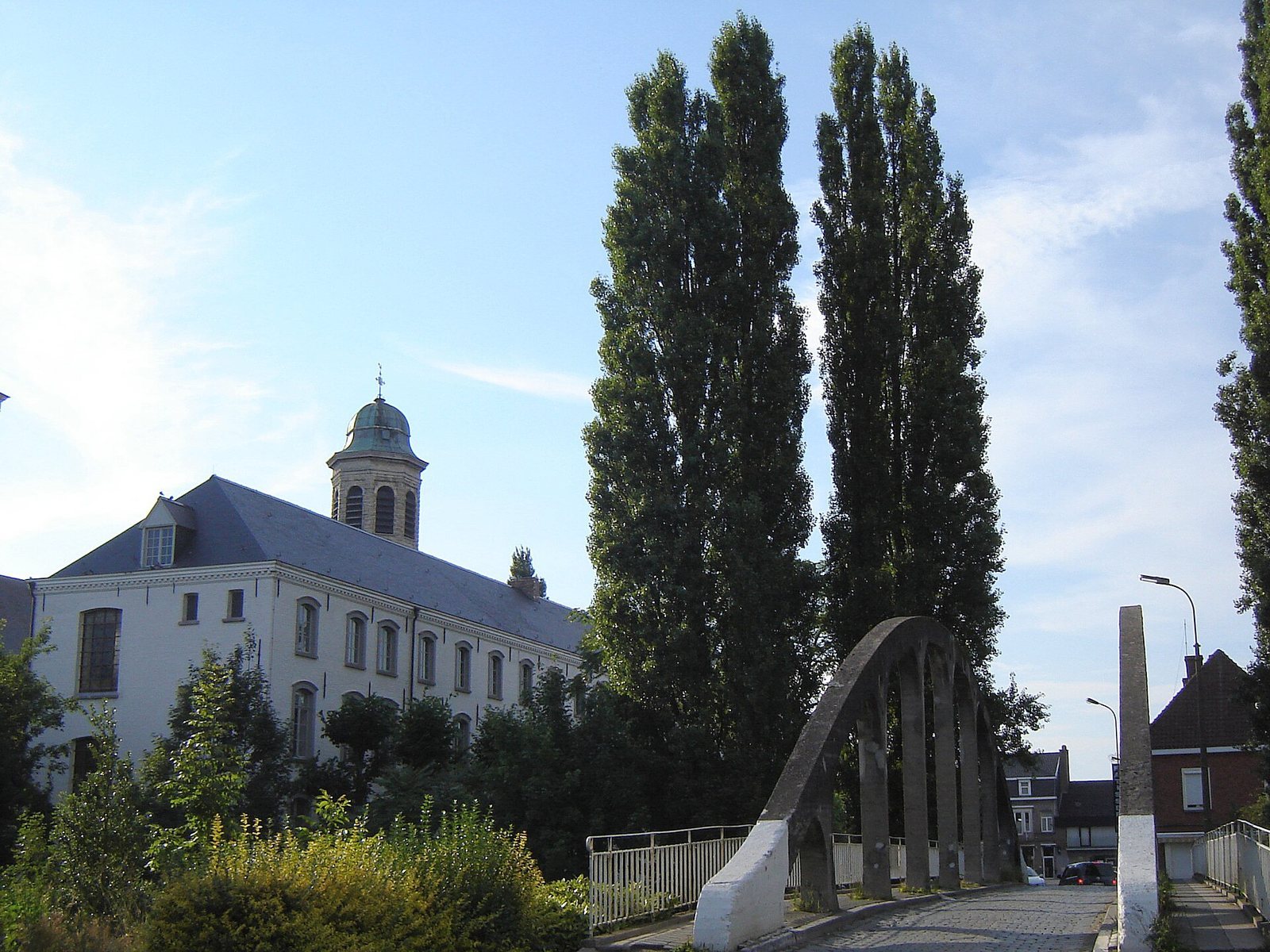
The complex stands beside the River Leie, and its grounds, including the garden, cover about ten hectares. The surviving convent buildings date mainly from the seventeenth and eighteenth centuries. They include a cloister and an abbot’s residence, set apart from the church, and were adapted and enlarged for Jesuit formation. The site also contains three chapels.
Churches and chapels
Abbey church
The abbey church is an octagonal white-stone building with a small cupola. It was rebuilt following a fire in 1734, and its octagonal tower is dated 1733. The building now serves as the parish church of Drongen-Centrum under the name Sint-Gerolfkerk.
Late Neoclassical parish church
A late Neoclassical parish church was added to the complex in 1858–59.
Neo-Gothic chapel and organ
A Neo-Gothic chapel was created within the old abbey in 1878 to designs by Belgian architect and designer Jean-Baptiste Béthune. It contains a Romantic organ built by Charles Anneessens in 1891, with 15 stops and 1,104 pipes. The organ was modified in 1939.