Musinens Castle: A Medieval Fortified Residence in France
Site at a Glance
- Popularity
- Low
- Country
- France
- Primary era
- Medieval
- Eras represented
- Medieval, Early Modern
- Civilizations
- Duchy of Savoy, Holy Roman Empire
- Site type
- Military
- Remains
- Castle
On this page8 sections
History
Medieval lordship
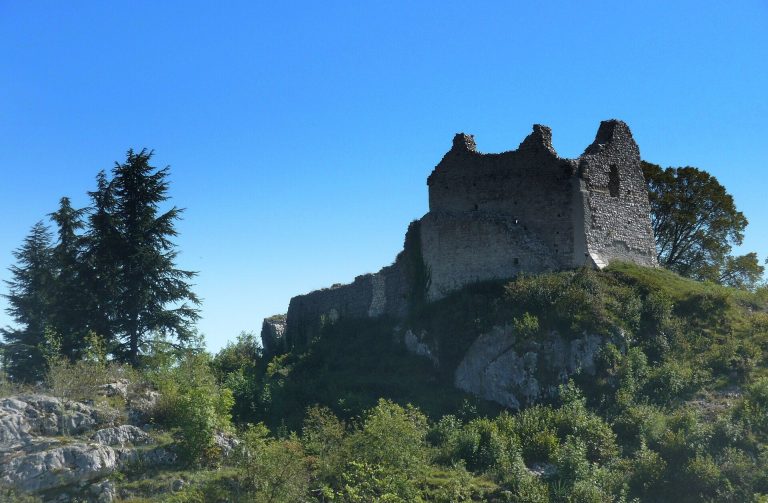
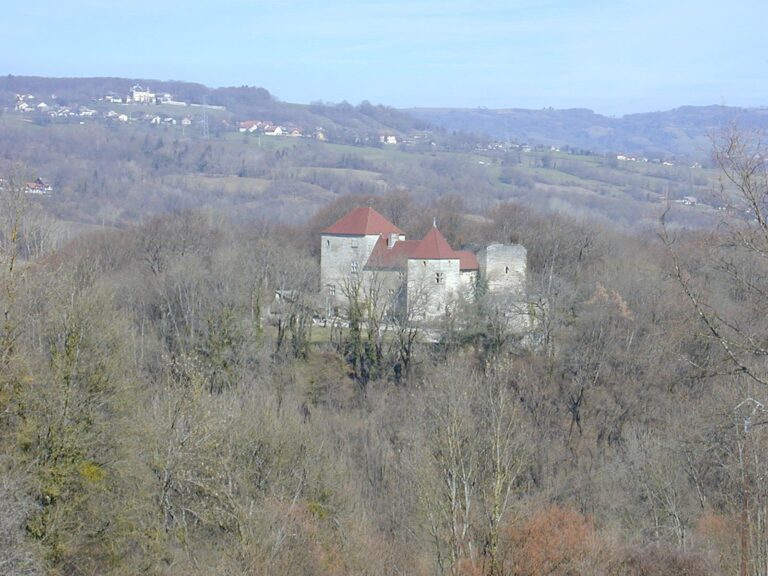
Musinens Castle is a medieval fortified residence in Valserhône, France, with foundations dating to the twelfth century. It was built to protect crossing points between the Rhône and Valserine rivers. In the Middle Ages, Musinens was a fief, land held under a lord’s authority, belonging to the Musinens family. The castle later passed to the Châtillon and Bouvens families.
Changing administration and settlement
The lordship of Musinens became a parish within the Kingdom of France and then a commune, a local administrative unit, in 1793, during the French Revolution, a period of political upheaval that began in 1789. At that time, the castle remained in the hands of the Bouvens family. After the settlement’s centre shifted to the Bellegarde bridge beside the Rhône, it took the name Bellegarde in 1858. The commune was renamed Bellegarde-sur-Valserine in 1956; the castle is now within Valserhône.
Twentieth-century ownership
Swiss owners acquired the castle during the twentieth century. The municipality bought it in the 1970s.
Remains
Castle buildings
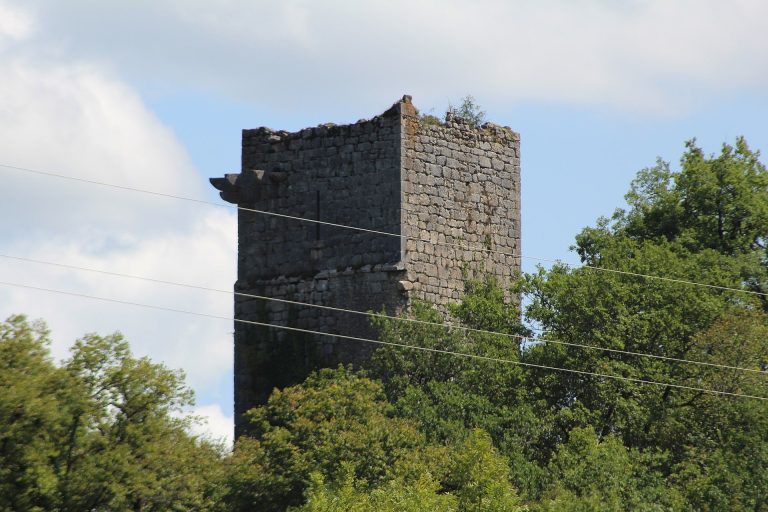
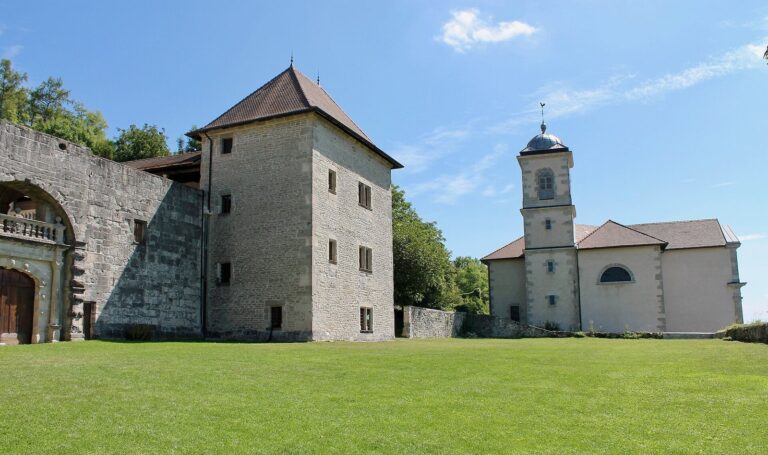
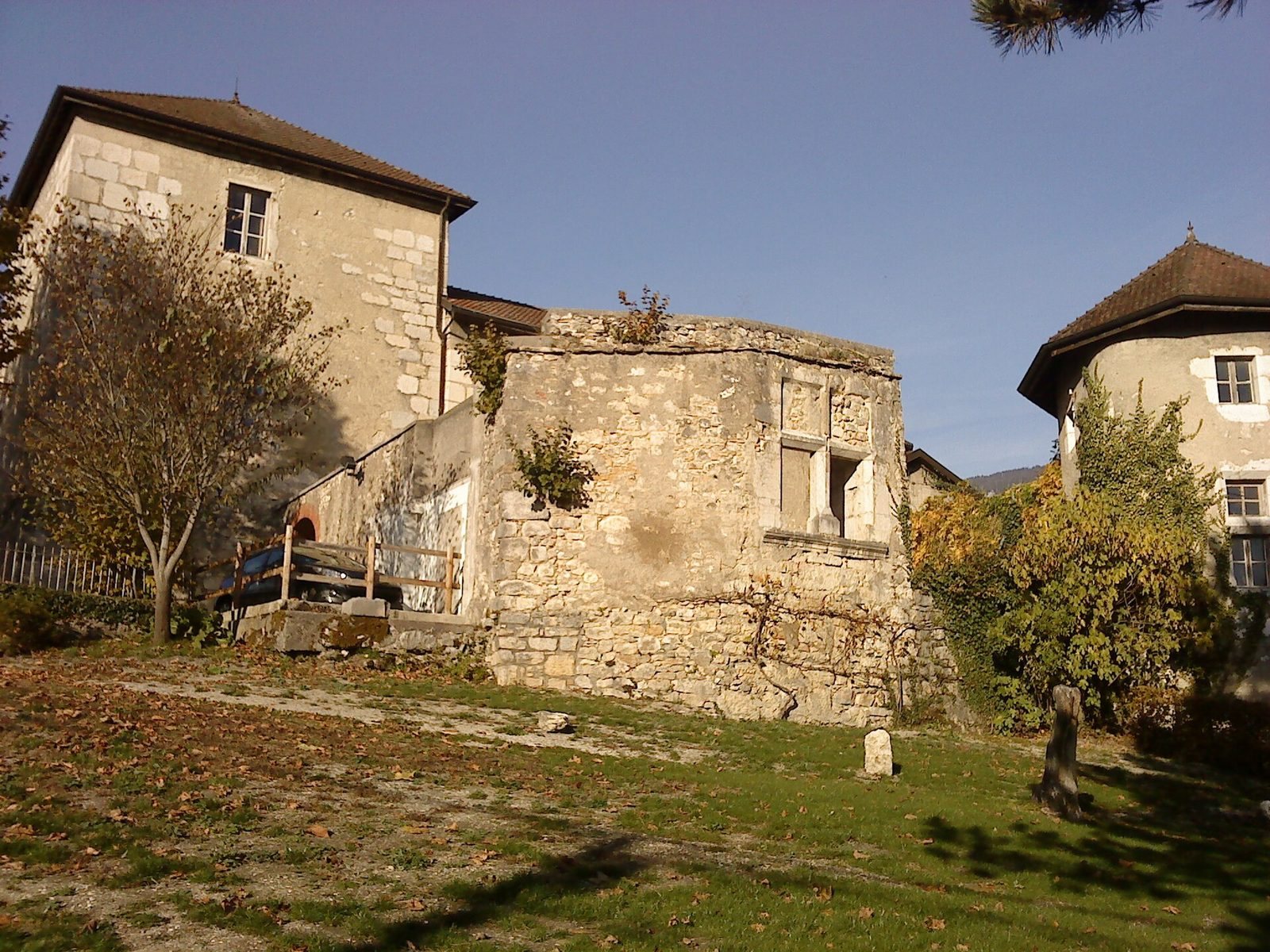
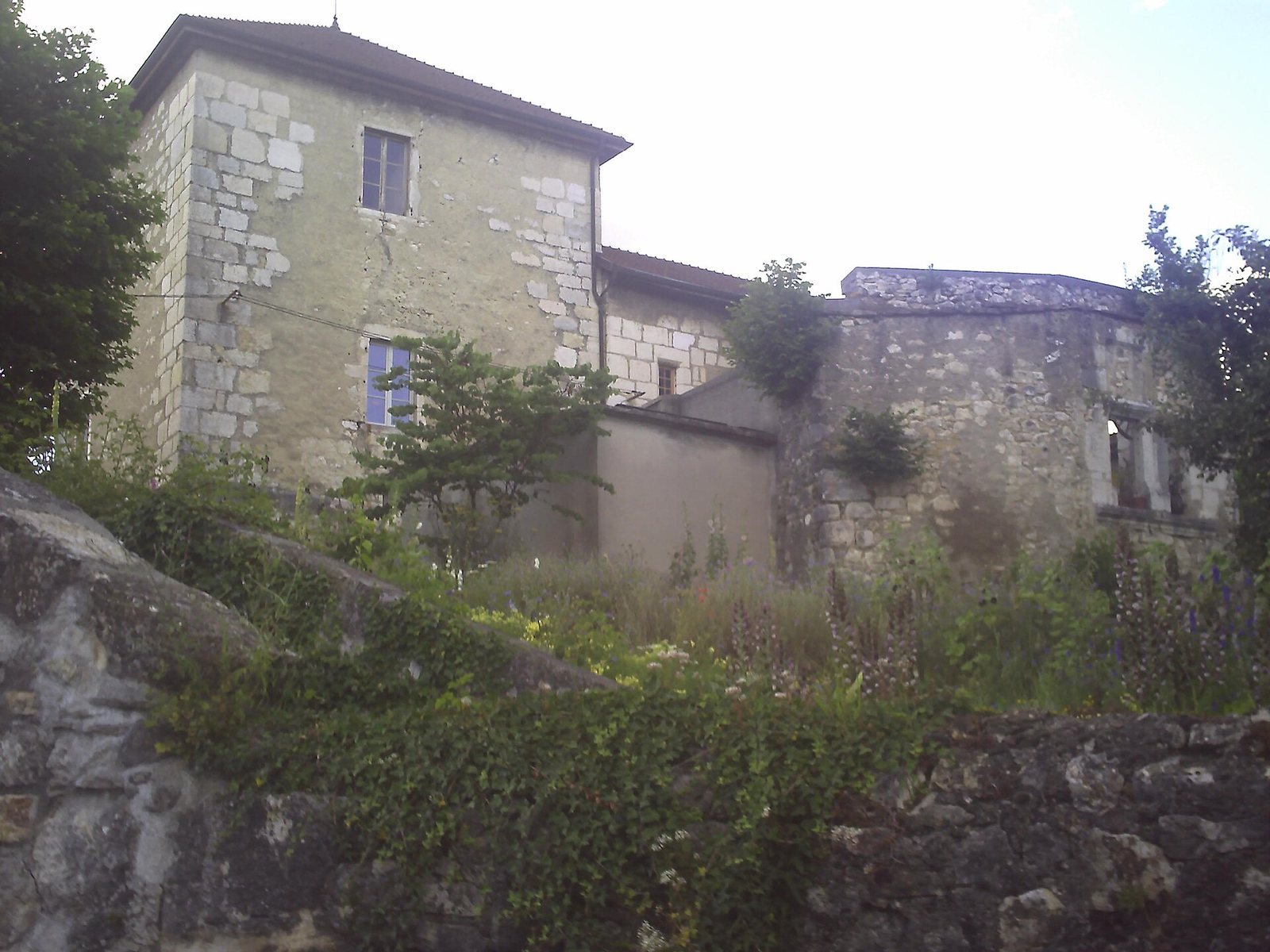
The castle’s buildings form an ensemble of dressed-stone masonry, made from stones cut into regular blocks. Its surviving architectural features include a large square tower and an adjoining wing.
Square tower
The large square tower was built in the thirteenth century and served as the castle’s keep, or fortified stronghold.
Renaissance wing
An adjoining wing was added during the Renaissance, the European cultural and artistic period that followed the Middle Ages. Its mullioned windows are divided into sections by vertical supports.