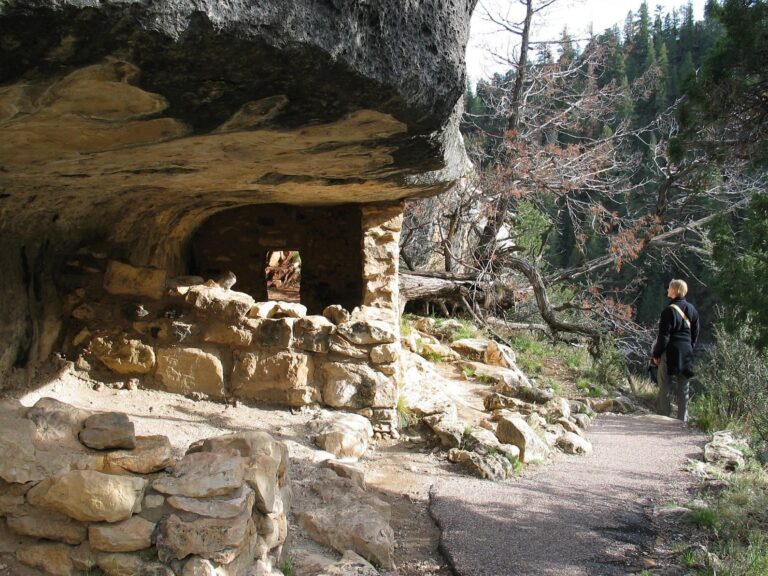
Wupatki National Monument: Ancestral Pueblo Settlements
Site at a Glance
- Popularity
- High
- Country
- United States
- Primary era
- Medieval
- Eras represented
- Medieval
- Civilizations
- Ancestral Puebloan
- Site type
- Domestic
- Remains
- House
On this page11 sections
History
Wupatki National Monument in the United States preserves settlements built by ancestral Pueblo communities, with the earliest in the area dating to about AD 500. These communities included groups identified as Cohonina, Kayenta, and Sinagua.
Settlement and population
A major influx of people followed the eruption of Sunset Crater, dated between 1040 and 1100. Volcanic ash improved the soil for farming and helped it retain water. A survey in the 1980s estimated that about 2,000 people moved into the area during the century after the eruption.
Residents grew maize and squash on arid land without irrigation. With springs scarce, they depended on collected rainwater. By 1182, Wupatki Pueblo housed about 85 to 100 people. The settlement was permanently abandoned by 1225; layers of ash and lava would have made continued habitation difficult.
Continuing ties and modern recognition
Hopi tradition holds that those who lived and died at Wupatki remain there as spiritual guardians. Stories of the place are passed down among Hopi, Navajo, Zuni, and other Indigenous communities in the region. Members of the Hopi Bear, Katsina, Lizard, Rattlesnake, Sand, Snow, and Water Clans return periodically to deepen their understanding of clan history.
Exploration began in the mid-19th century, and excavations have taken place over an extended period. Wupatki became a national monument on December 9, 1924. It was added to the National Register of Historic Places, the federal register of historic properties, on October 15, 1966. The listing covered 35,422 acres and included three buildings and 29 structures. The National Park Service administers Wupatki in close conjunction with nearby Sunset Crater Volcano National Monument.
Remains
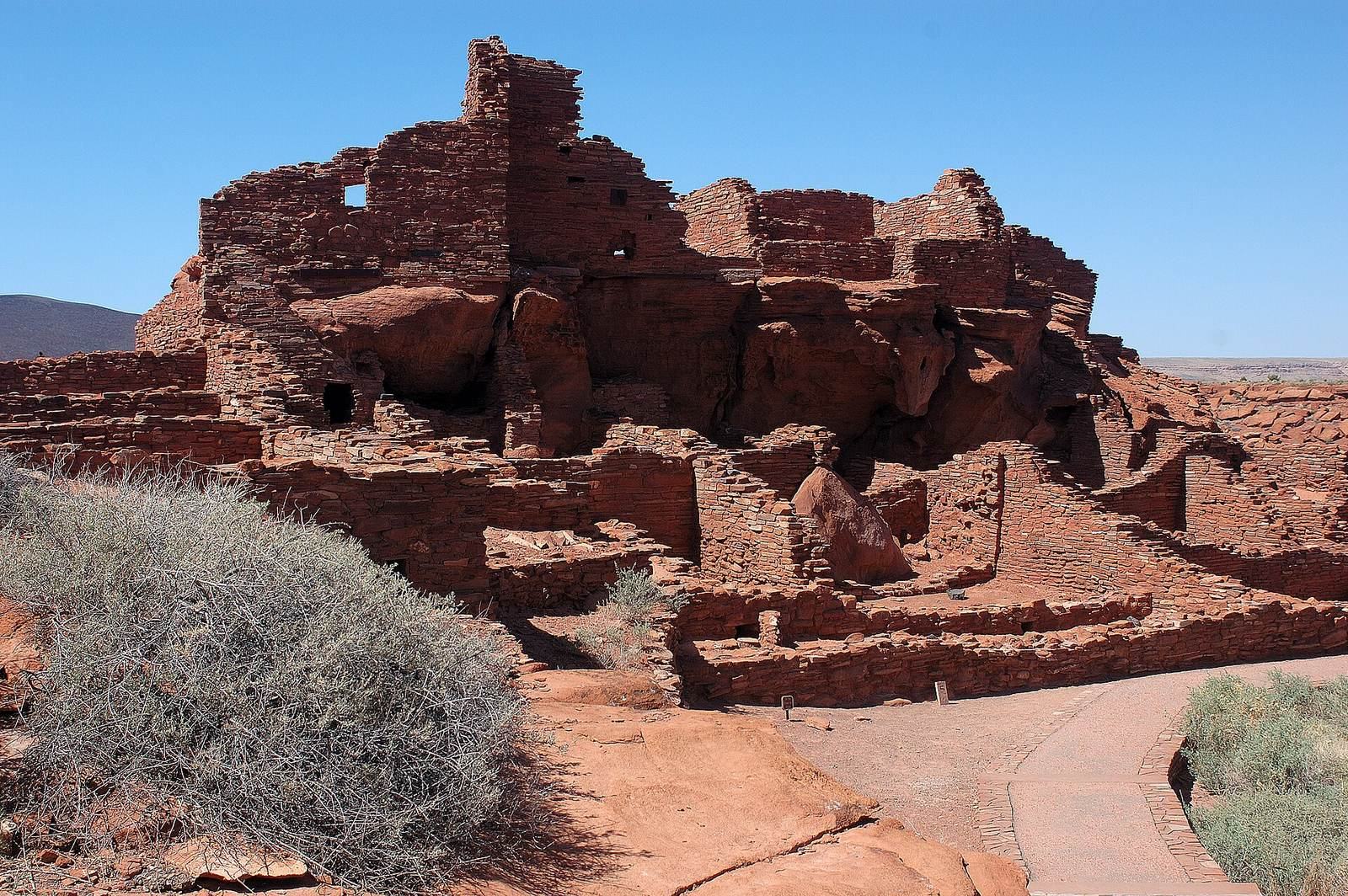
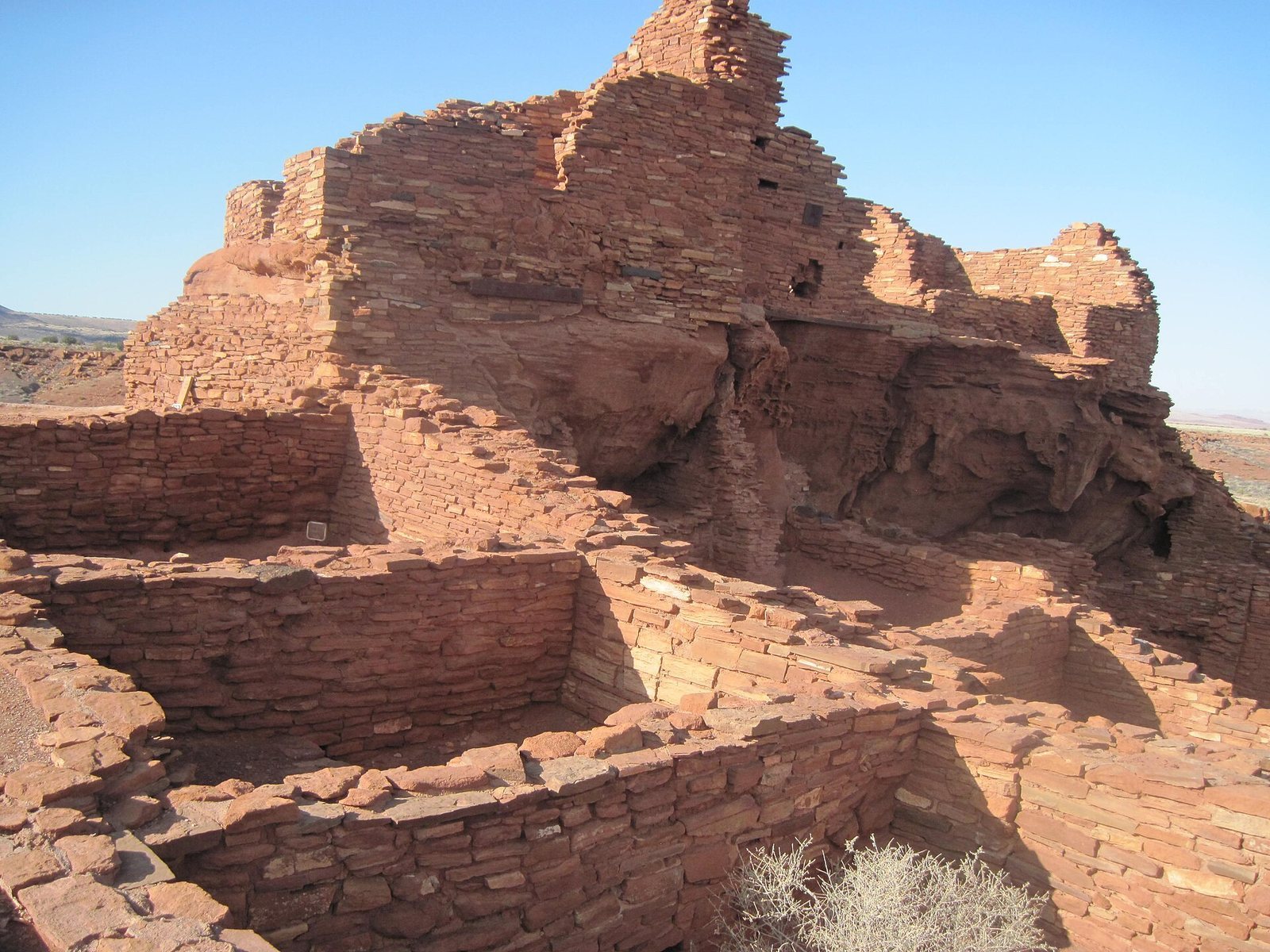
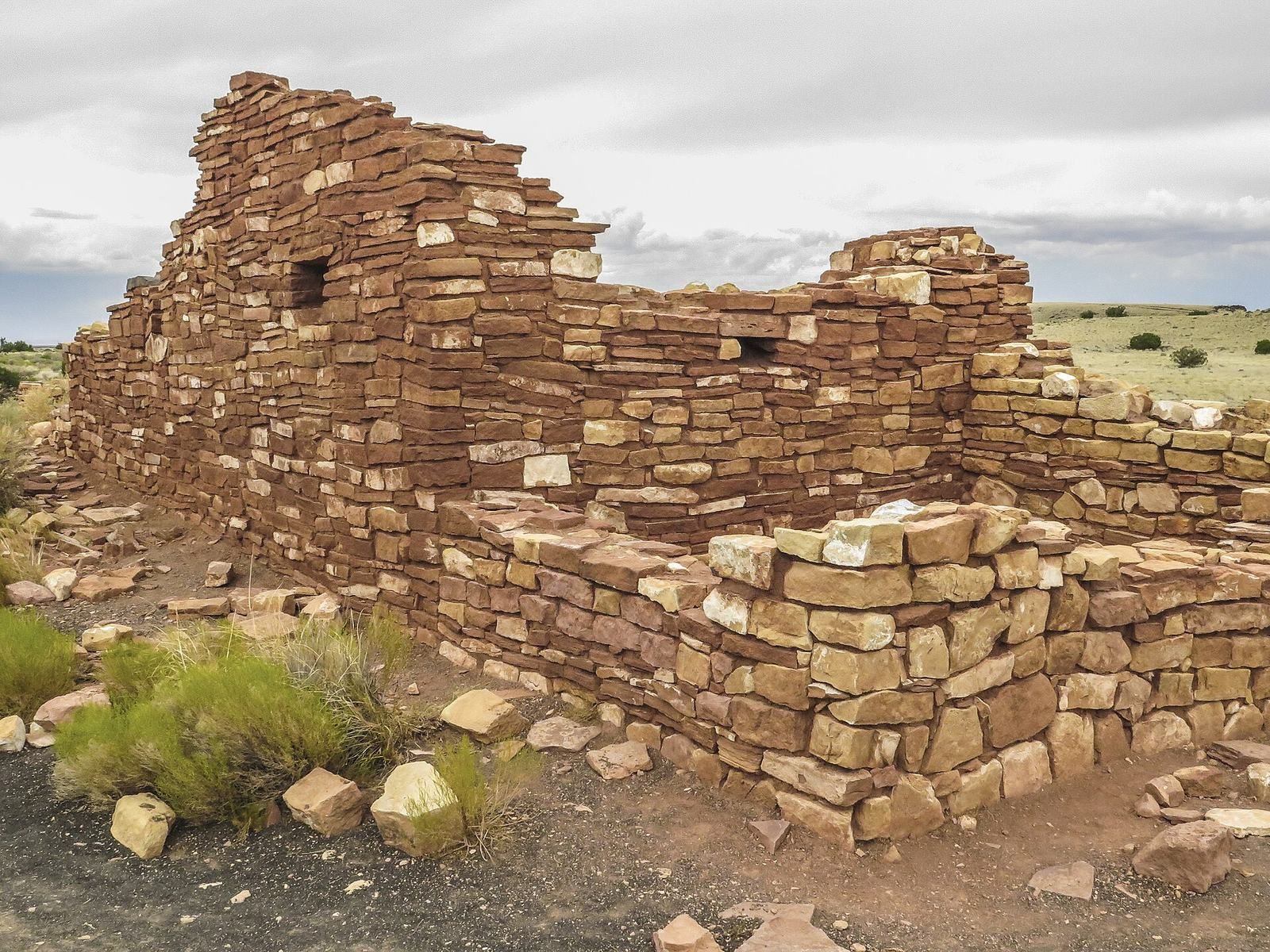
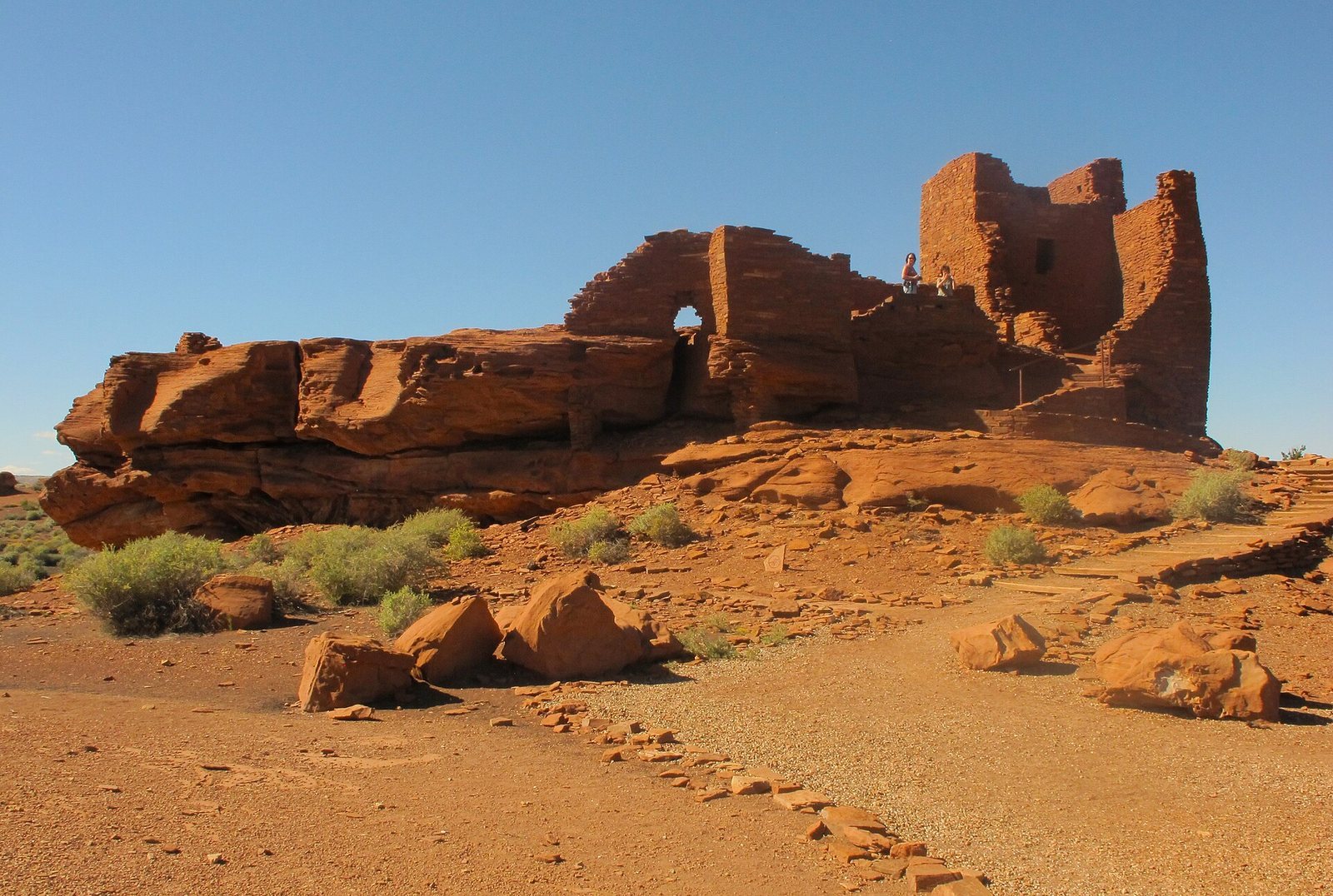
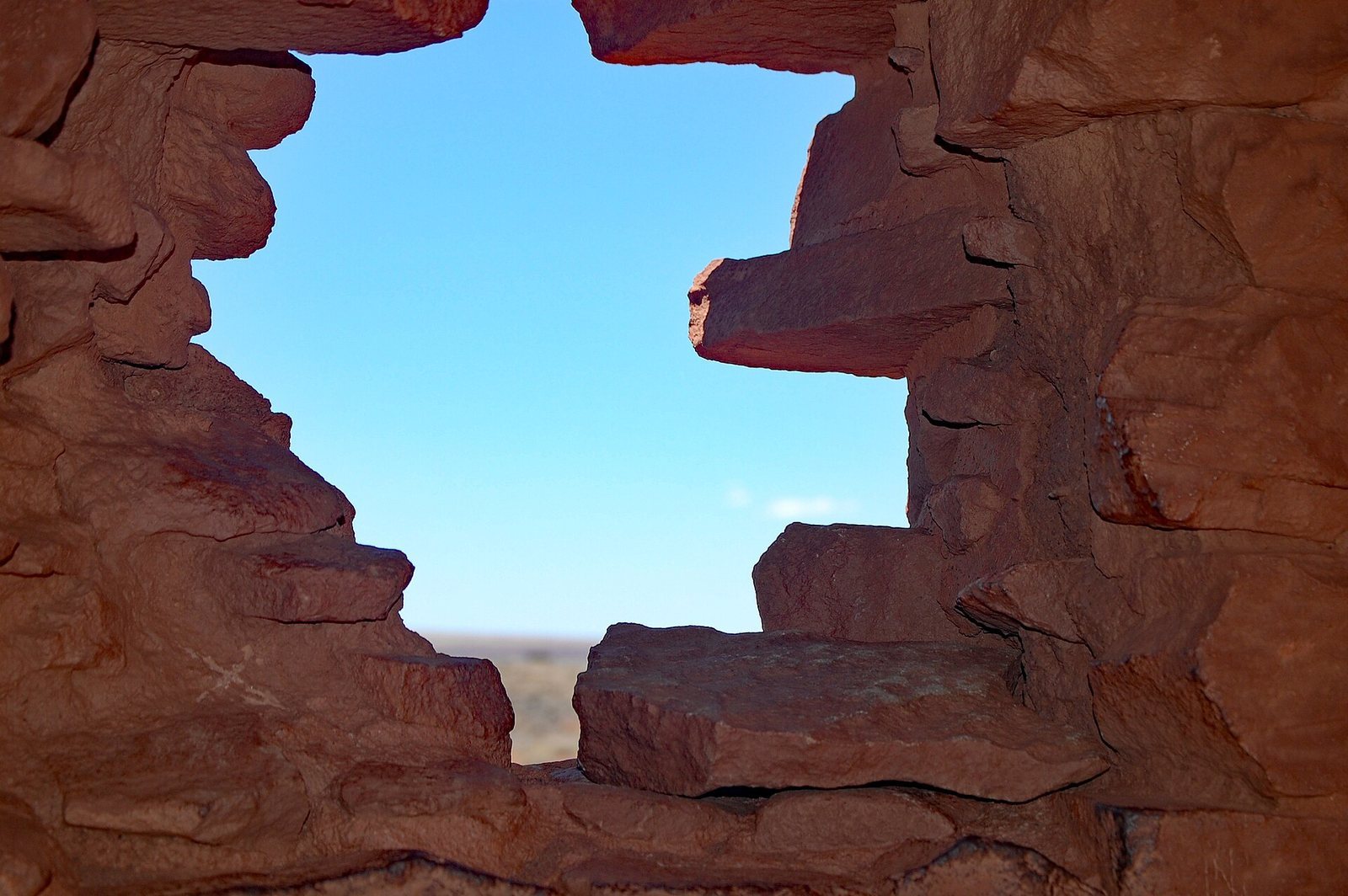
Wupatki’s remains include individual settlement buildings, sometimes with many rooms, as well as the multistory pueblo built around a natural rock outcrop. Thin, flat blocks of local stone form the walls, and mortar binds them together. Many walls still stand, while additional ruins and smaller structures surround the pueblo.
Wupatki Pueblo and associated structures
Main dwelling
Wupatki Pueblo contains more than 100 rooms, including a community room in its northern section. It was the largest building site for nearly 50 miles and is believed to have been the tallest and largest structure in the region at the time.
Ballcourt and nearby structures
A ballcourt, a purpose-built space for a ball game, is enclosed within the pueblo. It is the northernmost example of its type found in North America. Comparable courts occur in Central America and at sites of Hohokam communities in southern Arizona. Two nearby structures resemble kivas, large, usually underground circular rooms used for religious and political gatherings.
Stonework and underground airflow
The pueblo’s red walls use local Moenkopi Sandstone, a regional sedimentary rock, with mortar between the blocks. A natural blowhole vents air from an underground cave system. The large voids below Wupatki have a combined volume exceeding 200 million cubic metres, and air moving through the vents can reach 48 kilometres per hour. Cool air from the caves was carried toward buildings in an arrangement likened to air conditioning.
Other settlements and finds
Other settlements
Wukoki and the Citadel are other major archaeological sites within the monument. Settlements across the area were generally built as single structures, sometimes containing scores of rooms.
Recovered objects
Pottery and seashells found at Wupatki are associated with distant regions, including the Pacific and Gulf coasts. These objects indicate that the inhabitants participated in long-distance exchange.