Drača Monastery: A Serbian Orthodox Monastic Center near Kragujevac
Site at a Glance
- Rating
- 4.9
- Popularity
- High
- Country
- Serbia
- Primary era
- Early Modern
- Eras represented
- Medieval, Early Modern, Modern
- Civilizations
- Habsburg, Habsburg Austria, Serbian
- Site type
- Religious
- Remains
- Monastery
On this page11 sections
History
Drača Monastery is a Serbian Orthodox monastery in the Drača river valley near Kragujevac, Serbia. Its foundation date is uncertain: one tradition places an earlier church here in the late 14th century, while another dates the monastery’s establishment to the 15th century. The present church was built in 1734, and its design is associated with the Morava school, a medieval Serbian architectural tradition.
Origins and early records
Ottoman records from 1572–1573 identify Drača as a monastery dedicated to Saint Nicholas, near the village of Dračica in the Lepenića district. A document from Vrdnik Monastery in the late 16th century also refers to it. In 1690, during the Great Migration of the Serbs, a large-scale departure of Serbs, the monastery was abandoned and its monastic community moved to Novo Hopovo Monastery.
The community later returned. Records name the monk-priest Josif of Rakovica as a teacher at Drača in 1726, and Gerasim as its head in 1726–1727. In 1731, Abbot Leontije represented Kragujevac among the delegates to an assembly at Sremski Karlovci.
The church and eighteenth-century upheaval
An inscription above the church entrance credits Staniša Marković Mlatishuma, an 18th-century military officer, with building the church for the monastery. It is dedicated to the Translation, or transfer, of the relics of Saint Nicholas.
During the 1788 uprising against Ottoman rule associated with Serbian rebel leader Koča Anđelković, some monks supported the Austrian side, and Koča took refuge at Drača for a time. After the uprising was suppressed, Ottoman forces burned the monastery. The community, led by Abbot Isaija, fled to Novo Hopovo. Isaija received a reward for his service to Austria in 1791 and remained in Austrian territory. Monks who returned restored Drača in 1793.
Parish role and later community
Drača became an important spiritual and cultural center in this part of Serbia during the 18th and 19th centuries. From the 1820s, its church also served as a parish church. In 1845 the monastery became subordinate to Vraćevšnica Monastery, a relationship that lasted until 1851. During the first half of the 19th century, Toma Vučić Perišić restored the monastery’s residential buildings.
Drača was a men’s monastery until 1958, when it became a women’s monastery under Abbess Jelena Jokić. It remains an active Serbian Orthodox women’s monastery within the Šumadija diocesan jurisdiction. Serbia designates it a Monument of Culture of Great Importance.
Remains
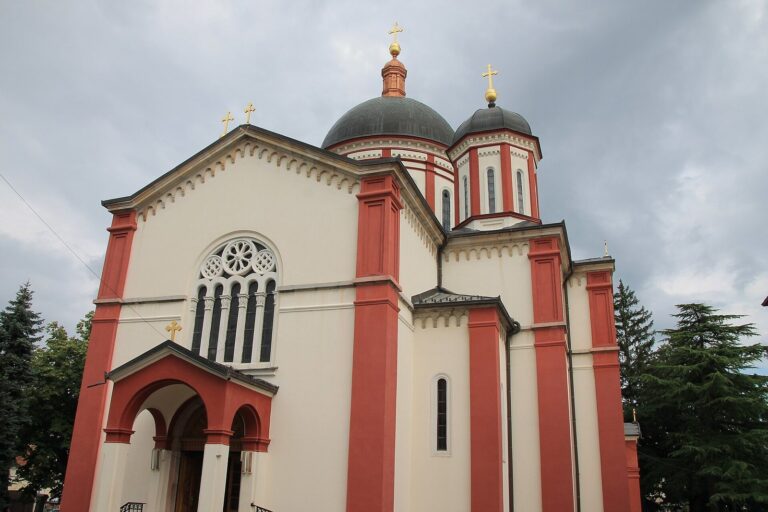
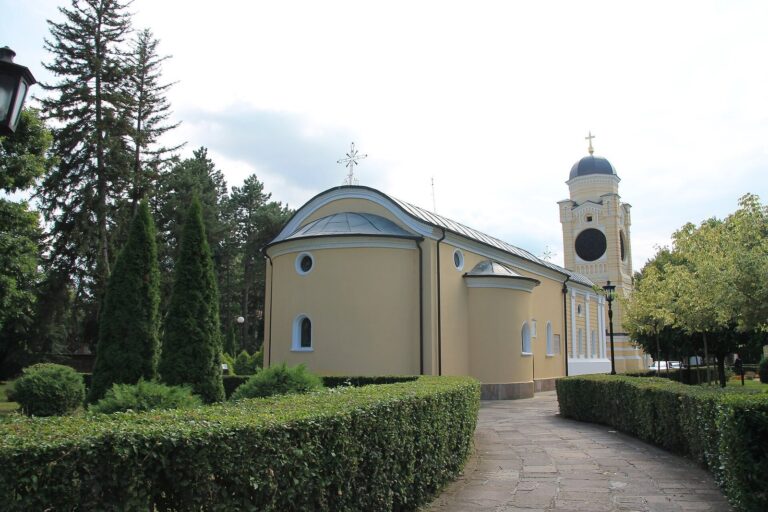
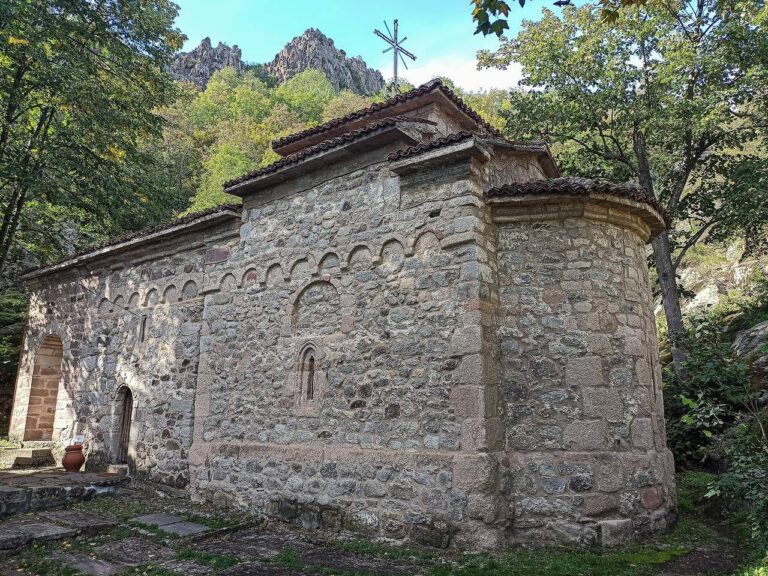
The monastery stands in the Drača river valley, near the source of the Dračka reka and below the Rujevica hills, about 9–10 km from Kragujevac. The church has a defined entrance hall, main worship space and sanctuary, with rounded choir spaces projecting from its long walls. Its design and facade decoration reflect the medieval Serbian Morava school.
The church
Plan and construction
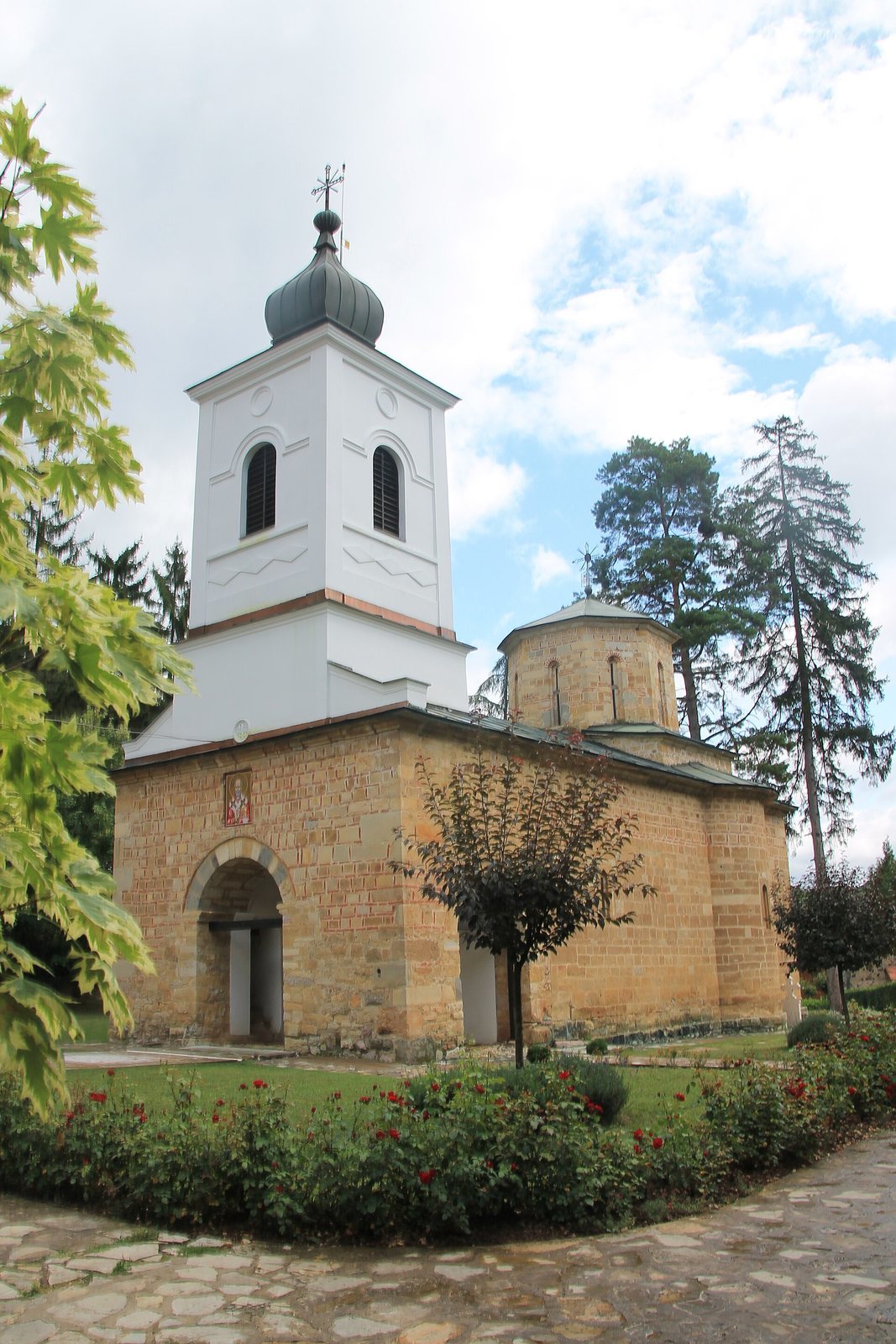
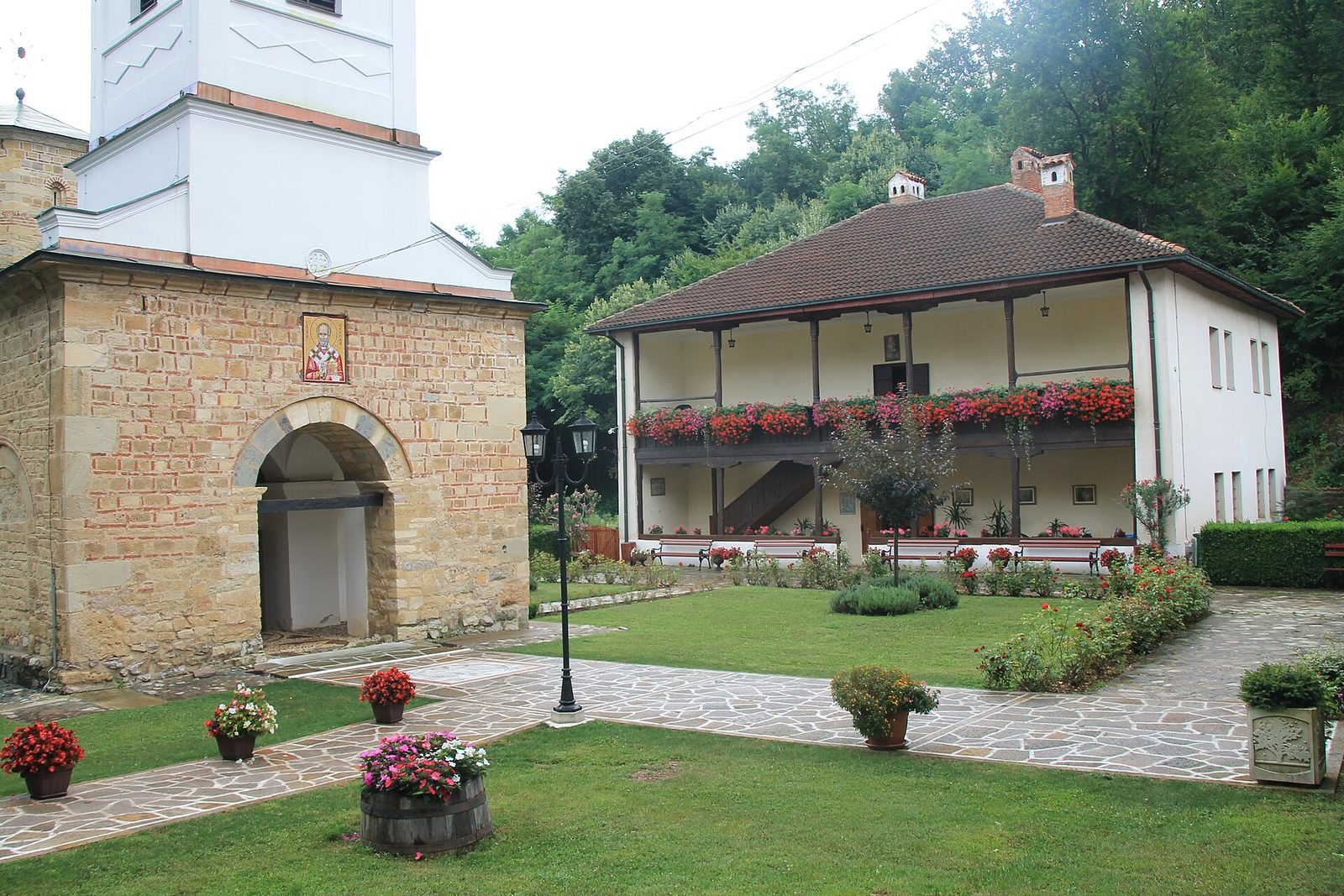
The church was built over the remains of an earlier structure with three rounded projections. Its central space is covered by an eight-sided dome resting on shallow supports attached to the walls. The entrance hall has a continuous curved ceiling, reinforced by broken arches on its north and south sides. The walls combine regularly cut yellowish sandstone and brick in alternating courses up to the roof cornice; stone, brick and tufa, a porous stone, are combined in the upper section.
West entrance and bell tower
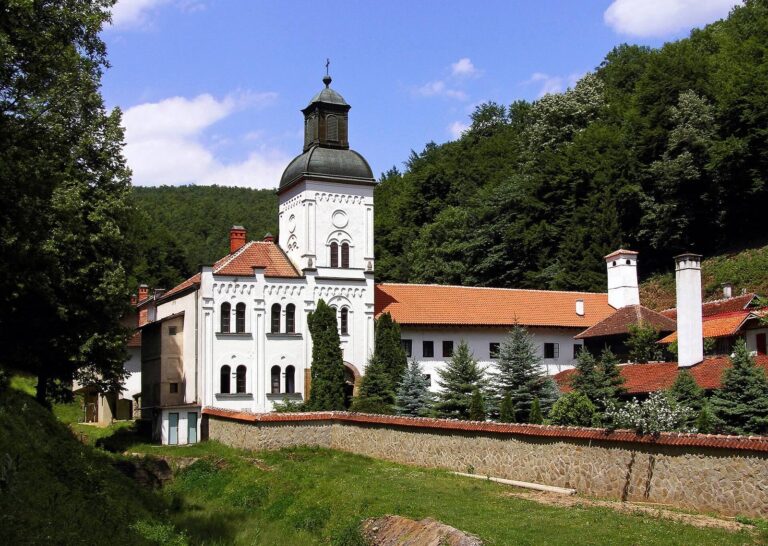
On the west side, a two-storey bell tower in the Baroque style, an ornate early modern style, rises above a small porch. The porch has large arched openings and a ceiling formed by intersecting vaults. Above the entrance, a semicircular painted panel sits over the doorway, alongside a wall painting of Saint Nicholas.
Wall paintings
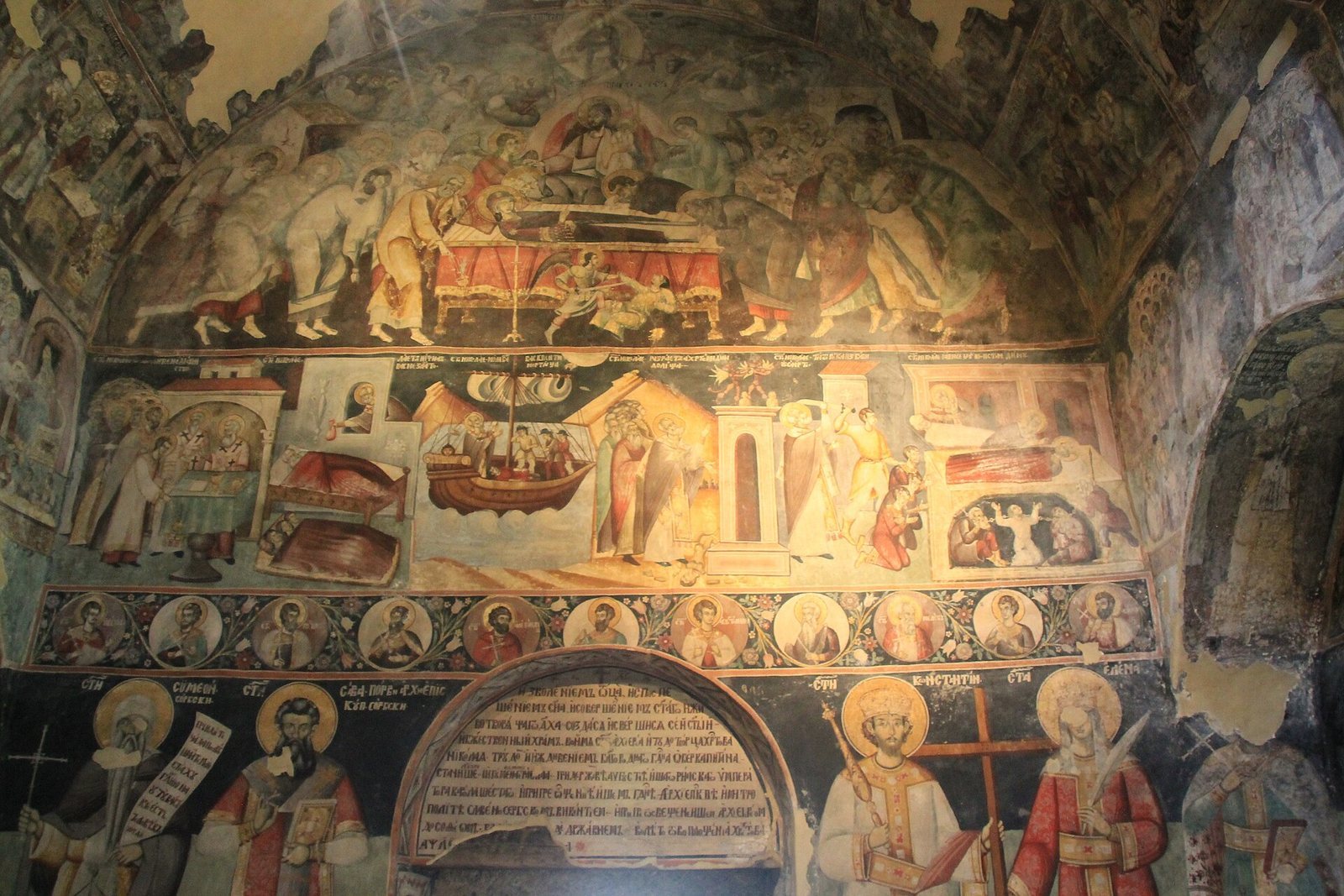
The church was painted in 1735, and its wall paintings are also dated to 1735–1737. Painters from Moschopole, including Konstantin and Hristo, probably created them. The surviving paintings are fully preserved and rank among the finest Serbian works of the first half of the 18th century. They depict episodes from the life of Saint Nicholas and the Old Testament in a style recalling medieval Serbian painting. Small-scale investigation also revealed traces of an earlier layer of wall painting.
Tombs
An arched tomb recess on the south side contains the sarcophagus of Saint Jov, an Orthodox monk of Mount Athos who was revered as a saint. The church is also associated with the tomb of Jovan Dimitrijević Dobrača, commander of Serbian forces at the Battle of Ljubić during the 1815 uprising against Ottoman rule.
Monastic buildings
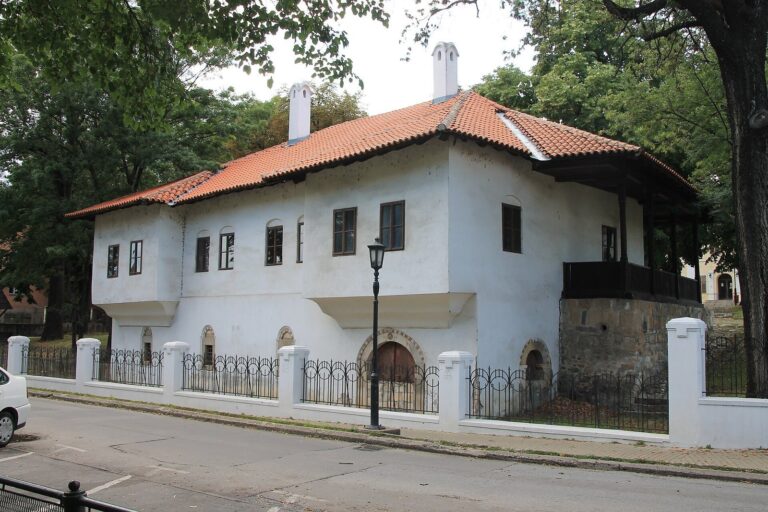
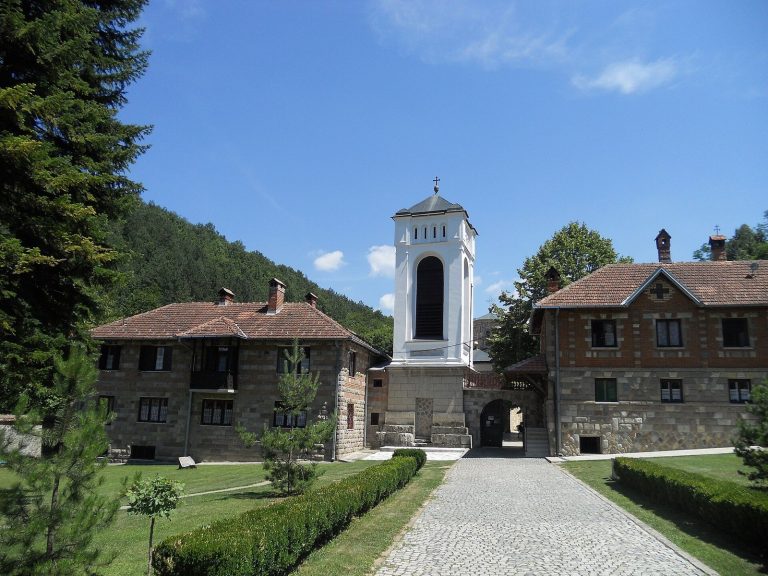
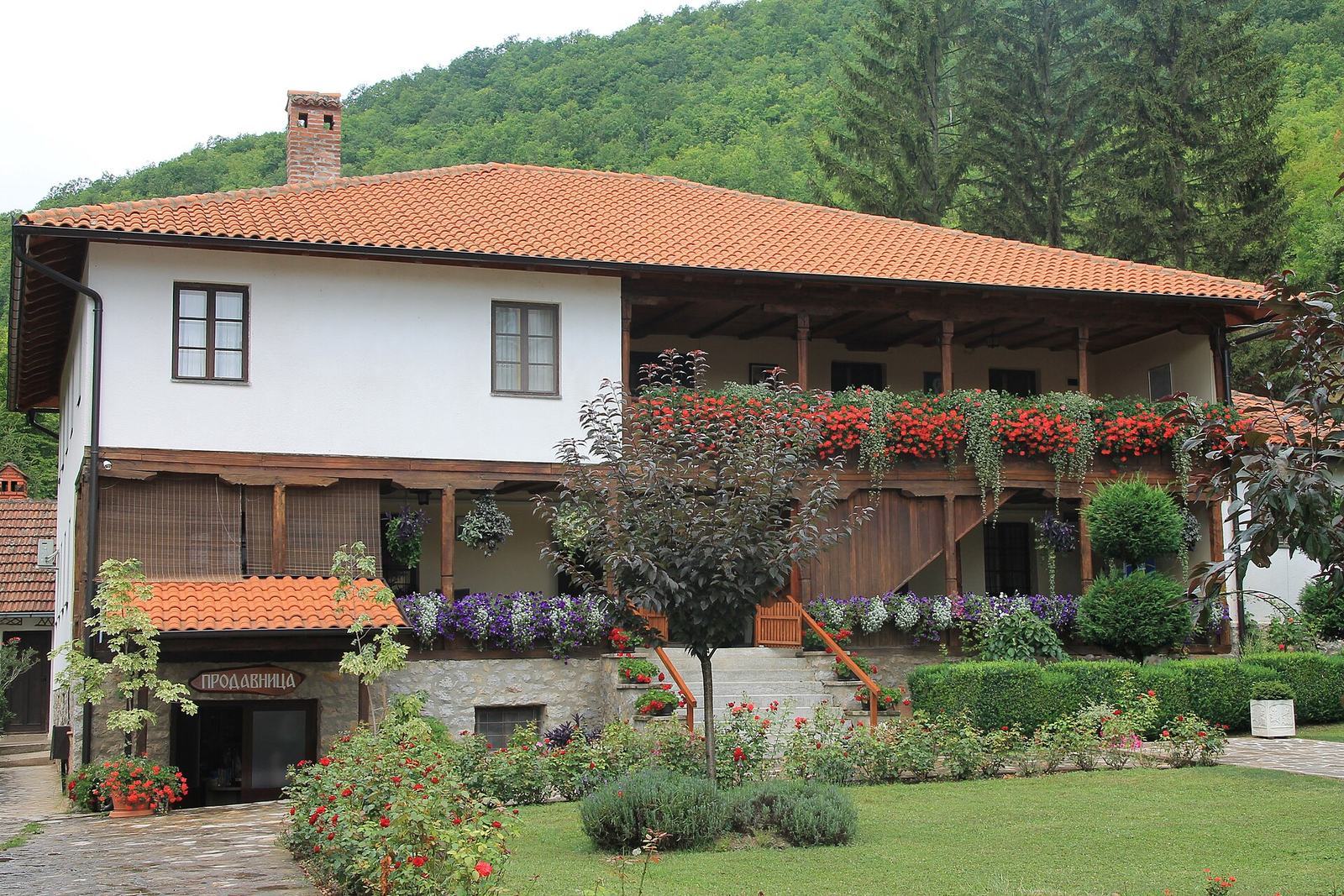
Two monastery buildings constructed in the first half of the 19th century housed its library and archive. A further monastic residence was added in 1978.