Domaine de Squividan: A Historic Manor Estate and Artists’ Legacy in France


Site at a Glance
- Rating
- 4.5
- Popularity
- Very Low
- Country
- France
- Primary era
- Modern
- Eras represented
- Modern
- Civilizations
- French
- Site type
- Domestic
- Remains
- Manor House
On this page13 sections
History
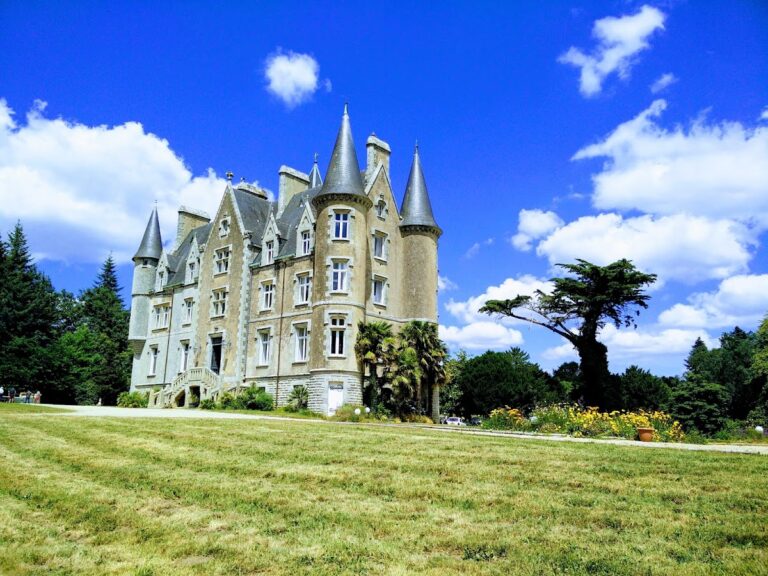
Domaine de Squividan is a historic manor estate in Clohars-Fouesnant, France, centered on a nineteenth-century house constructed in 1886 and its surrounding park. Its history extends from a noble estate recorded in 1426 to a departmental property preserving the home, works, and everyday objects associated with the painters Émile Simon and Madeleine Fié-Fieux.
From noble estate to family property
Squividan was occupied by Jean de Penguily in 1426, when it was recognized as a noble estate. From the early seventeenth century through the late eighteenth century, ownership passed to commoner families. The first of these was the Bénéat family from the Bigouden area. The estate later descended through the female line, bringing successive changes of surname: Leurré, Jourden, Bolloré, Rien, Nédélec, and Picart.
On 12 November 1836, Charles Olivier, Marquis of Kermel, purchased Squividan from the widow Picart. After his death, his widow, Thérèse de Silguy, retained the property until her death in 1872. Their daughter, Hortense de Kermel, inherited it with her husband, Saget de la Jonchère, and donated it to their son Henri Saget de la Jonchère in 1880. Henri’s widow sold the estate on 15 March 1893 to the widow Guivart de Kerstradt, who gave it to her son Albert Guivart de Kerstradt. His widow later sold it to Thérèse Villard, the legally separated wife of Olivier, Count of Kermel, briefly bringing Squividan back into the Kermel family.
The estate in the twentieth century
At the beginning of the twentieth century, Squividan was divided into two lots. The tenant-farmer couple Hélias acquired the farm and 12 hectares of land, while Jules Verlingue, a Quimper manufacturer of faience, bought the manor and 9 hectares. Verlingue created the park, surrounded it with a high wall, and built the entrance gate.
Verlingue later sold the property to the British couple Cosson. They left during the German occupation in 1940 and sold the estate after the Second World War to Philippe and Madeleine Fié-Fieux. During the French collapse in 1940, Madame Estienne d’Orves, her cousin, and their eight children fled German troops and reached Clohars-Fouesnant. Olivier de Mauduit, the mayor and the estate’s administrator appointed by the German Feldkommandantur, a German military administrative command in occupied territory, authorized them to live in the then-unoccupied manor. Madame Estienne d’Orves stayed there until the war ended. Her husband, Lieutenant Honoré d’Estienne d’Orves, never came to Squividan.
Simon and Fié-Fieux at Squividan
Madeleine Fié-Fieux and Émile Simon settled at Squividan in 1943, after bombing had affected the Fié-Fieux couple and Simon. They lived and worked at the estate for about thirty years, while travelling through Brittany to find landscapes and scenes of daily life.
Simon was born in Rennes in 1890. He trained at the Regional School of Fine Arts in Rennes and graduated in 1908. Influenced by Impressionism, the nineteenth-century movement associated with direct observation, changing light, and spontaneous visual effects, he painted landscapes and portraits directly from his subjects. His figurative work was spontaneous and sometimes approached the character of a sketch. In 1945 he became director of the Nantes School of Fine Arts, and he died at Squividan in 1976.
Madeleine Fié-Fieux was born at Varennes-en-Gatinais in 1897 and raised in Paris. She studied drawing and painting at the Académie Julian, a private Paris art school that admitted women and became an important center for artistic training. After marrying Philippe Fié-Fieux, she settled in Nantes, where she met Simon and became his pupil. At Squividan, she concentrated mainly on portraits, floral compositions, and studies of religious statuary.
Preservation and public stewardship
After Simon’s death, Fié-Fieux worked to preserve and promote his artistic legacy. When she died in 1995, she bequeathed the estate and the artists’ works to the General Council of Finistère, the elected local government authority responsible for the department before its renaming as the Departmental Council in 2015. Her bequest required the property to be opened to the public and used to promote Simon’s work.
The General Council entrusted preservation and promotion of the collection to the Musée départemental breton in Quimper, a public museum devoted to Brittany’s cultural heritage. The park and exhibition area opened to the public in 2009, and annual exhibitions have presented selected works by Simon and Fié-Fieux. Squividan is now a departmental estate of Finistère, with its interpretation centered on the lives and work of the two artists.
The association Les Amis du Squividan was founded in June 2002 under France’s 1901 law governing nonprofit associations. Working with the Musée départemental breton, it promotes the manor and the artists’ work and has organized periodic painting workshops in the park. The estate’s parking area bears the name of Honoré d’Estienne d’Orves, the French naval officer and Resistance member, recognizing his wartime activities and his family’s temporary residence at Squividan.
Remains
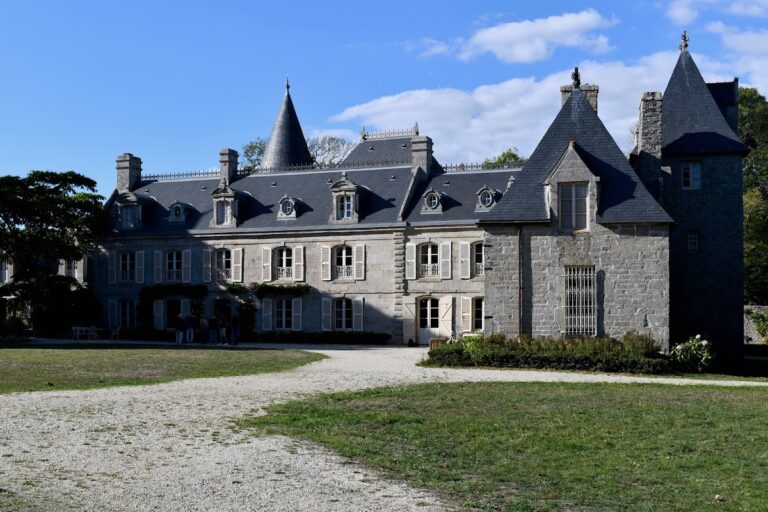
Domaine de Squividan consists of a nineteenth-century manor house and a landscaped park created within a walled estate. The principal house was built in 1886, while a later extension on its eastern side now contains an exhibition gallery and storage area. The grounds cover 2 hectares and 61 ares, or approximately 2.61 hectares, and retain the enclosing wall and entrance gate created by Jules Verlingue.
Manor and park
Manor house
The manor is the principal historic building of the estate. Constructed in 1886, it contains the spaces associated with the later life and work of Simon and Fié-Fieux, as well as objects from everyday life inventoried inside the house. An eastern extension built between 1970 and 1980 provides an exhibition gallery and storage area, adapting the estate for the preservation and presentation of the collections.
Park and enclosure
Jules Verlingue established the park after acquiring the manor and its surrounding land at the beginning of the twentieth century. He enclosed it with a high wall and added the entrance gate. The park covers 2 hectares and 61 ares, and tactile panels present information about its flora. Its grounds also provide the setting for periodic painting workshops connected with the association Les Amis du Squividan.
Artistic and domestic collections
Émile Simon’s works
The estate preserves 942 items associated with Émile Simon. His paintings include landscapes and portraits made in a direct, spontaneous figurative manner, reflecting his interest in Brittany, its inhabitants, and scenes of daily life. Works from this collection contribute to exhibitions presenting views of Finistère and Brittany.
Madeleine Fié-Fieux’s works
A further 211 items are associated with Madeleine Fié-Fieux. Her collection includes portraits, floral compositions, and studies of religious statuary, continuing the range of subjects she pursued at Squividan. Together with Simon’s works, these objects form a double collection used for exhibitions, with approximately forty works selected for presentation each year.
Objects from the manor
The collection also includes objects from everyday life inventoried inside the manor. They remain part of the estate’s preserved contents and help connect the building’s domestic spaces with the lives of the two artists who lived and worked there for about three decades.
Nearby sites