Dolní Věstonice: A Gravettian Archaeological Complex in Czechia
Site at a Glance
- Popularity
- Very High
- Country
- Czechia
- Primary era
- Stone Age
- Eras represented
- Stone Age
- Civilizations
- Unclassified
- Site type
- Domestic
- Remains
- House
On this page23 sections
History
Dolní Věstonice is an Upper Paleolithic archaeological complex near the village of Dolní Věstonice in Czechia, formed chiefly by Gravettian hunter-gatherers about 26,000 years ago. The Gravettian is an archaeological culture of the Upper Paleolithic, a period of early human history; some areas of the complex also preserve traces of the earlier Aurignacian culture. The site became known for its evidence of prehistoric settlement and for finds that helped shape the study of ancient life in Moravia.
Prehistoric occupation
The settlements around the Pálava hills were occupied during the Gravettian period, generally dated to about 27,000–20,000 BCE. Later research established that Dolní Věstonice, Pavlov, and Milovice were distinct, broadly contemporary settlement areas rather than parts of a single vast camp. Some places served as longer-term residences associated with artistic objects and ritual activity. Smaller sites, including Dolní Věstonice III and Pavlov II, may have been occupied seasonally; Pavlov VI has been linked to animal-meat processing, while mammoth bones were especially concentrated at Milovice I.
Around 26,000 years ago, hunter-gatherers began moving from the Pálava hills toward the Danube and Váh river valleys. This movement may have been prompted by climate change and the southward advance of the Scandinavian ice sheet, which reduced the animals and other resources available locally. The precise purposes of some objects and practices remain uncertain, including whether clay figures were used in ritual, divination, storytelling, or games.
Discovery and excavation
References to unusually large bones near Mikulov date to about 1659. Smaller bones and stone objects were found beneath the Pálava hills roughly a century before systematic excavation began. The site was identified in 1922, and in 1924 the Czech archaeologist Karel Absolon began organized investigations for the Moravian Museum. His work continued through 1938 and brought discoveries from the area to wider attention.
A female figurine found in 1925 became known as the Venus of Dolní Věstonice. Absolon published his discoveries and presented them in a special exhibition called Anthropos at the Brno fair. He used the finds to reconstruct aspects of prehistoric settlement and its inhabitants, an approach that helped establish paleoethnology in Moravia. Paleoethnology studies past peoples through material remains and reconstructions of their ways of life.
War and continued research
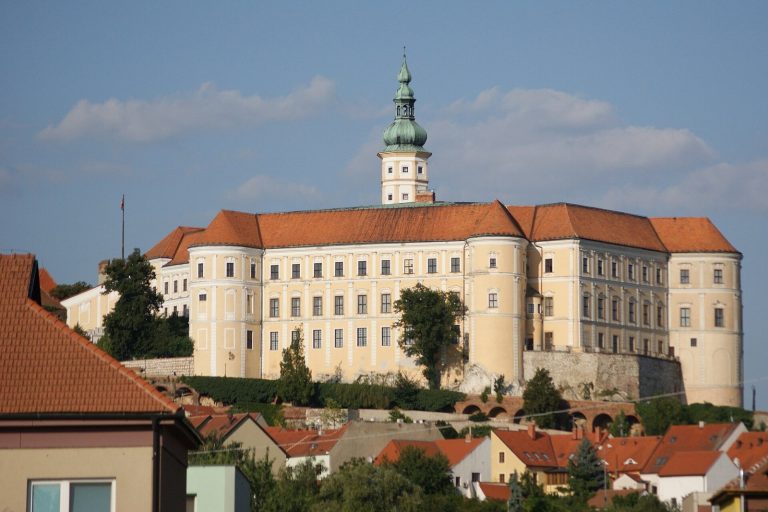
The German army occupied Dolní Věstonice in 1938. During the war, many finds, particularly human skeletal remains, were transferred to Mikulov Castle for safekeeping. A fire at the end of the war destroyed them. Excavations resumed under several archaeologists: Assien Bohmers worked at Dolní Věstonice I from 1939 to 1942, Karel Žebera and colleagues investigated the area in 1945–1946, and Bohuslav Klíma led campaigns from 1947 onward. Later work by Klíma and Jiří Svoboda, among others, expanded investigation across Dolní Věstonice, Pavlov, and Milovice.
Construction of artificial lakes on the Dyje River in the 1980s involved removing earth from the hills and depositing it at new archaeological areas, including Dolní Věstonice II and Milovice I. The resulting pressure to investigate these areas prompted intensive excavations. A research centre for Paleolithic archaeology was established near the original site in 1995, supporting work at newly identified regional locations and the use of new scientific methods. Finds made from 1994 onward appeared in the interdisciplinary series The Dolní Věstonice Studies. The Mikulov Regional Museum opened a public exhibition of finds in 1979 and substantially reorganized it in 1997. Development and groundworks continue to threaten buried layers; in 2009, a road collapsed above a settlement at Milovice.
Remains
Landscape and settlement areas
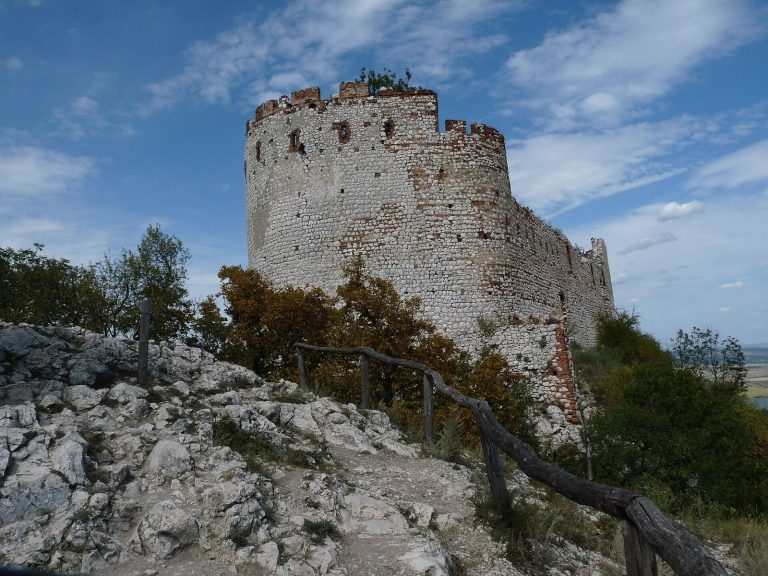
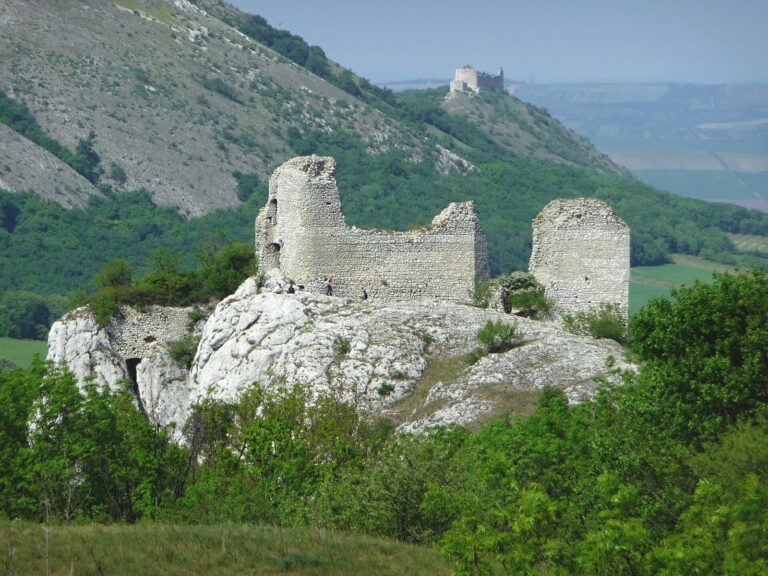
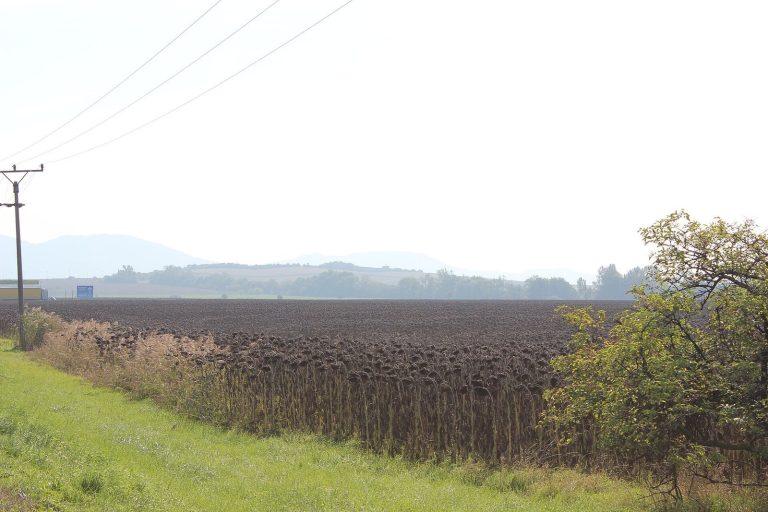
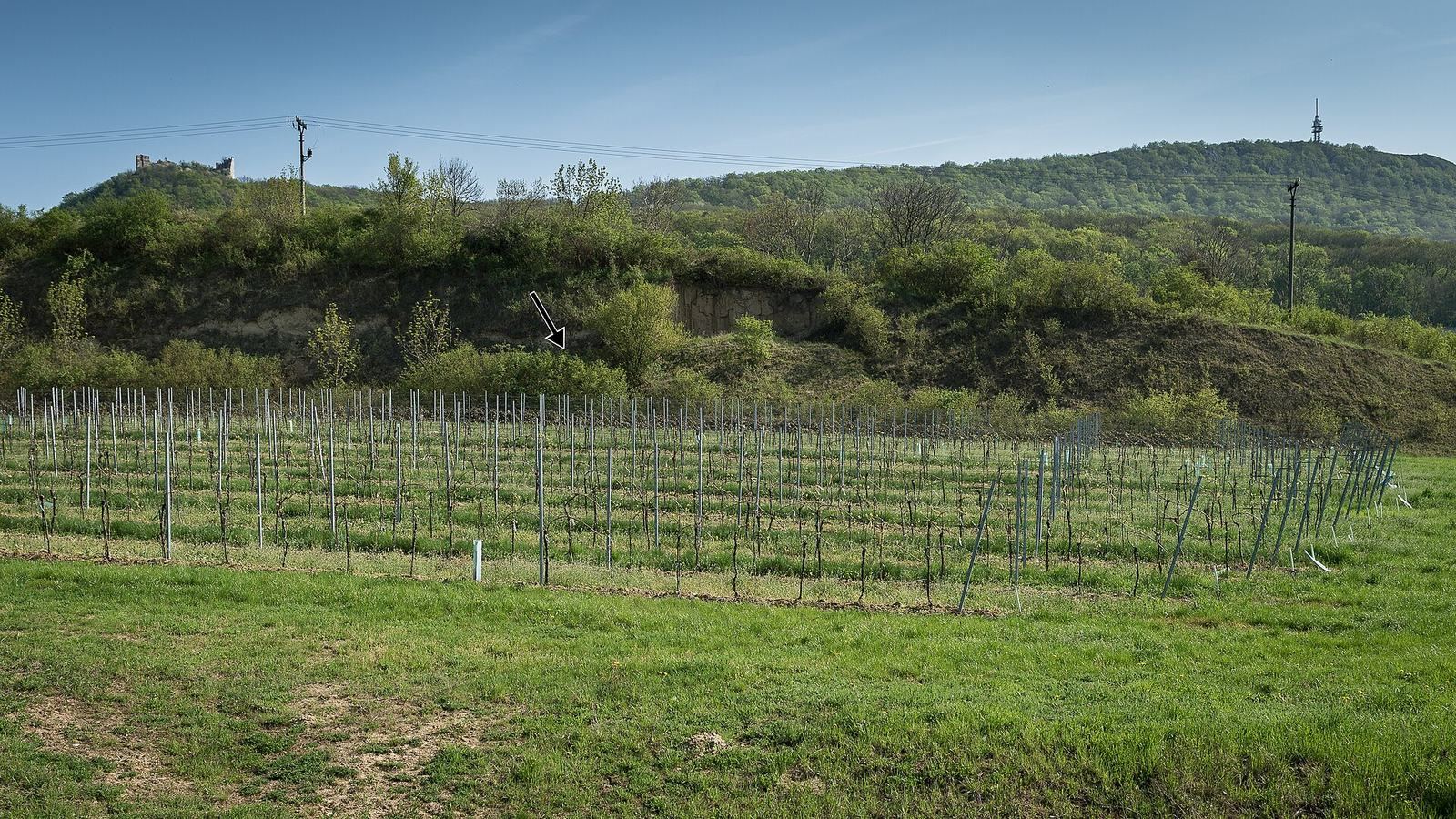
The open-air complex occupies slopes, ridges, and fields near a stream on the Pálava hills, in the landscape of Mount Děvín. The settlement areas lie at elevations ranging from about 180 to 360 metres. Many were positioned on higher ground, from which animals moving roughly 20–30 metres below could be observed. Milovice IV is an exception, situated on the Dyje floodplain.
Dolní Věstonice settlements
Dolní Věstonice I occupies a long slope on the eastern edge of the village area, at about 200–235 metres. Mammoth-bone deposits occur there, and separate hut groups have been distinguished on the middle and upper slope. Dolní Věstonice II extends across terraced ground on a ridge and its western slope, continuing into a field below the forest at locality IIa. Individual huts and another mammoth-bone deposit lie in a nearby ravine; one settlement unit appears to belong to the earlier Aurignacian. The area ranges from about 200 to 250 metres in elevation. Dolní Věstonice III lies on a steep vineyard slope between the other two sites, at about 215–290 metres. It includes individual Gravettian settlement units as well as an apparently earlier layer, with surface finds extending toward the forest.
Pavlov settlements
Pavlov I, at about 190–205 metres, contains two major concentrations in a field west of the village. Hut layouts overlap, particularly in the southeast, where successive structures make the original arrangement difficult to distinguish. Pavlov II is a smaller settlement at the village’s eastern edge, about 205–215 metres above sea level; family homes have gradually been built over parts of it. Pavlov III consists of scattered tools and bones found in the wall of a former clay pit along the road to Milovice. The pit is now covered, and the site lies at about 180 metres. Pavlov IV has surface stone tools in a valley along the settlement’s southeastern boundary, while Pavlov V has similar surface finds below the castle, at about 360 metres. Surface investigation continues at both locations.
Pavlov VI is an isolated, well-preserved Gravettian settlement unit beside the road to Milovice, at about 215 metres. Animal bones occur there. Its separation from the larger concentrations makes it one of the distinct settlement units in the wider complex.
Milovice settlements
Milovice I lies in the valley south of the settlement, at about 230–240 metres, and includes mammoth-bone deposits. A layer associated with the earlier Aurignacian lies beneath its Gravettian deposits. Milovice II has surface stone tools on a small ridge north of Milovice I, at about 220 metres; Milovice III consists of isolated finds at elevations of about 220–265 metres. Milovice IV lies beneath the present village on the Dyje floodplain, at about 180 metres. Its position is described as blocking the entrance to a side valley.
Settlement layout and hearths
Settlements were generally oval and could exceed 100 metres across. A settlement might contain five to ten huts, each probably occupied by about ten people. Some hut outlines remain recognizable; the huts were about five metres in diameter and were likely raised on wooden supports and covered with hides. Mammoth and other animal bones formed fence-like boundaries around living areas. Within these enclosures, huts were grouped around a large central fire.
Hearths and cooking features
Hearths occur inside individual huts. Roasting pits at Dolní Věstonice II and Pavlov VI contained ash or burned stones, with kettle-shaped holes nearby interpreted as places for boiling water in hide bags. At Dolní Věstonice II, stone blocks in a hearth lay beside burial DV 16. They may have helped retain heat and warm the older individual buried there.
Figurines and craft
The Venus of Dolní Věstonice
The Venus of Dolní Věstonice is a fired-clay female figure dated to about 26,000 years ago. Its form has broad hips, and a tomographic scan in 2004 revealed the fingerprint of a child in the clay, left before firing. The figurine is among the best-known finds from the complex.
Clay figures and their manufacture
More than 5,000 fired-clay fragments have been found across the settlements. Human figures and animals, including lions, rhinoceroses, mammoths, bears, and grazing mammals, are represented. Female forms outnumber male ones among the human figures. Many pieces are incomplete or damaged, and lion figures are particularly often broken. Some figures have channels that could have been used to tie or hang them. Deliberate damage has been proposed for some pieces, possibly caused by sudden heating or cooling, blows, or damage while the clay was still wet.
The clay was probably made from moist loess, a fine sediment deposited by wind. Semi-plastic masses formed the body or central part of a figure, while limbs, tails, heads, and ears were shaped separately and attached. Details could be made with fingernails, pointed tools, or small stone tools. Small blade marks, about 5–10 millimetres long, occur on some decorative details. Permanent hearths reached temperatures of about 500–700°C, sufficient to fire the clay objects.
Shelter and firing remains
A small lean-to shelter dug into an embankment stood at an isolated spot about 80 metres upstream. Around 2,300 clay animal figures were found among the remains of a kiln there. The structure has been interpreted as a possible early covered oven for firing clay. Bohuslav Klíma also interpreted a burned wall in one hut as part of a kiln used for firing clay sculptures.
Textile and organic impressions
Clay fragments preserve impressions of adult and child fingerprints, plant material, animal hair, crossed fibres, cords, and knots. The surviving pieces are roughly the size of fingernails, so the original forms and uses of the textiles cannot be established. Possible products include clothing, mats, baskets, and hunting nets.
Ornaments, tools, and carved objects
Personal ornaments and stone tools
People made ornaments from shells, carnivore teeth, bone, and mammoth tusk. Worked tusk became beads, sewn-on decorations, and hair ornaments, often engraved with geometric designs. Other pieces carry human or animal forms, perforations, channels, or projections. Some shells came from the Mediterranean, while local fossil molluscs served as ornaments or small bowls for mixing mineral pigments. Mammoth tusks marked with geometric designs have been interpreted as possible representations of hills and perhaps as landscape maps.
Stone and bone tools include possible spear fragments and implements made from bone and mammoth ivory. Flint tools fashioned from elongated blades include burins, scrapers, awls, and saw-like forms. Flint came from deposits more than 100 kilometres away on the Carpathian Plateau, near the Moravia–Slovakia border. Pebbles from the Dyje River were used for rough tools, hearths, and dwellings. Some traces have been interpreted as evidence for the use of bows, arrows, and nets.
Ivory sculpture and the marked bone
A carved mammoth-ivory figure about three inches high, found in 1891, appears to depict a young man with a heavy build and long hair reaching below the shoulders; traces of a beard may also be present. Analysis of the ivory surface dated it to around 26,000 years ago. It has been proposed as a possible early portrait. An ivory female head found near the huts has a distorted left side of the face and has been linked to the burial of a woman with similar features.
The so-called Wolf bone, discovered during Absolon’s excavations in 1937, bears 55 marks and is attributed to the Aurignacian, around 30,000 years ago. The marks may have been used for counting. An ivory Venus head was excavated near the bone.
Burials and human remains
The woman buried at Dolní Věstonice I
Found in 1949 near the huts at Dolní Věstonice I, a woman’s burial contained the remains of an individual estimated to have been 36–45 years old. She lay crouched on her side, facing northwest, beneath two mammoth shoulder blades leaning against one another. Red ochre, an iron-rich earth pigment, colored her skull and torso and was also present on the bones and surrounding soil. Ten perforated fox teeth accompanied her. A flint spearhead lay near her skull, and one hand held a fox’s body. The facial features and burial objects have been interpreted as possible signs of high status or a ritual role, though their meaning is uncertain.
The triple burial at Dolní Věstonice II
Excavated in 1986, the triple burial contained three young people estimated to have been 16–25 years old. The central individual was placed first, and the other two bodies partly covered it. All three had red ochre on their skulls; the central individual also had ochre around the pelvis. The person on the left lay on their back, turned slightly toward the centre, while the person on the right lay face down. The left individual’s hands were positioned near the central person’s pelvis.
The left individual, Dolní Věstonice 13, was a man aged 21–25 and wore 20 perforated mammoth-ivory teeth as pendants. The right individual, Dolní Věstonice 14, was a man aged 16–20, accompanied by three perforated wolf teeth and mammoth-ivory pendants. The central person, Dolní Věstonice 15, was aged 21–25 and was buried with four perforated fox teeth. A 2016 genetic analysis identified an XY chromosome pattern for this individual, whose sex had previously been uncertain. The person also had a genetic condition associated with curved legs. The unusual arrangement has prompted speculation about a distinct social role, but the burial’s meaning is unresolved.
Pavlov burial and wider human evidence
A separate burial found in 1987 lay beside a fire at the middle of a settlement. Known as Pavlov 1, the man was estimated to have been 36–45 years old and was originally crouched; ground movement disturbed the burial. Across Dolní Věstonice and Pavlov, human remains are catalogued as 64 and 33 individuals respectively. Most consist of bone fragments, although six complete skeletons have been found. Genetic analyses indicate close relationships among some individuals.