Ithe Dolmens: Neolithic Burial Monuments in France
Site at a Glance
- Popularity
- Medium
- Country
- France
- Primary era
- Stone Age
- Eras represented
- Stone Age
- Civilizations
- Unclassified
- Site type
- Burial
- Remains
- Tomb
On this page8 sections
History
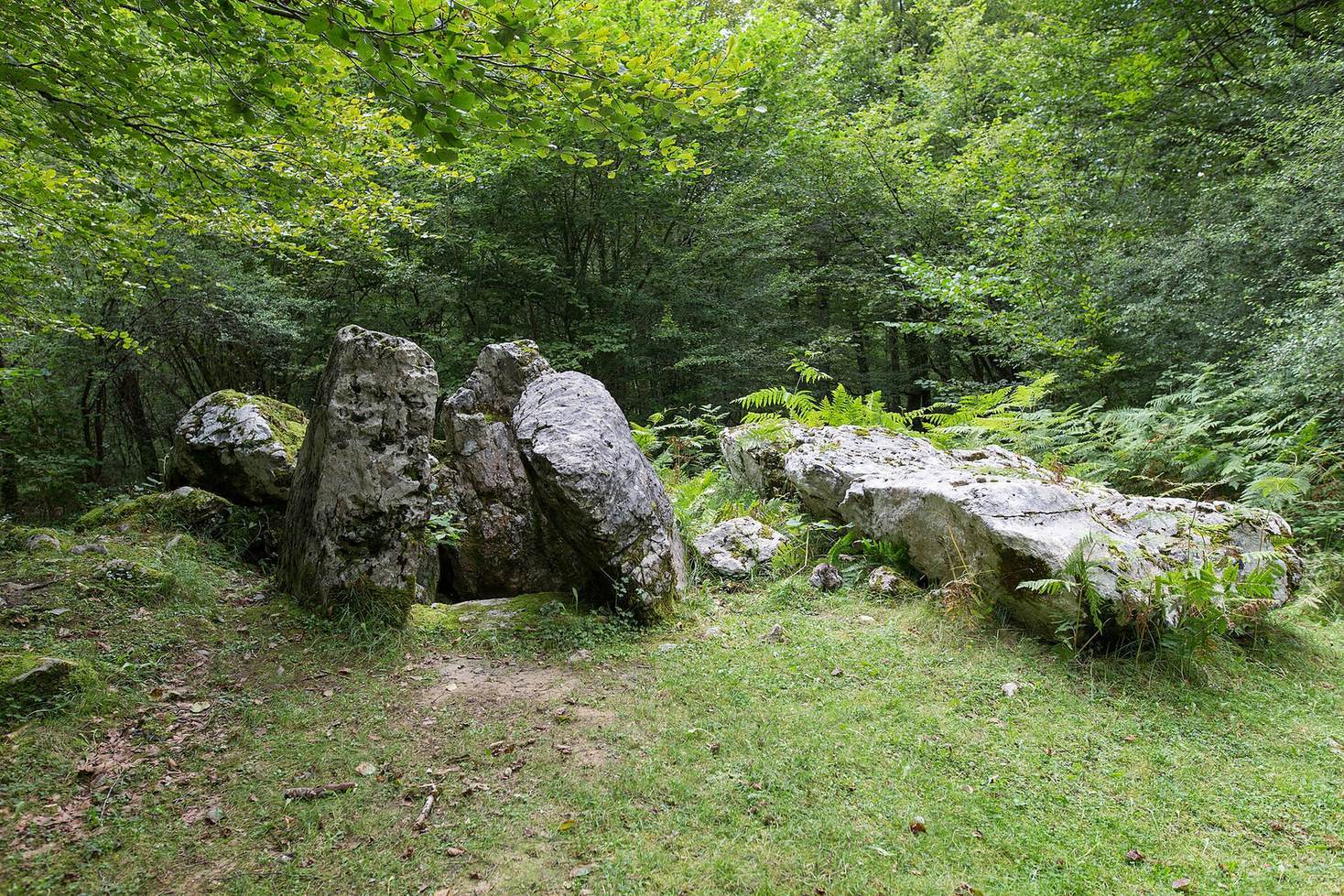
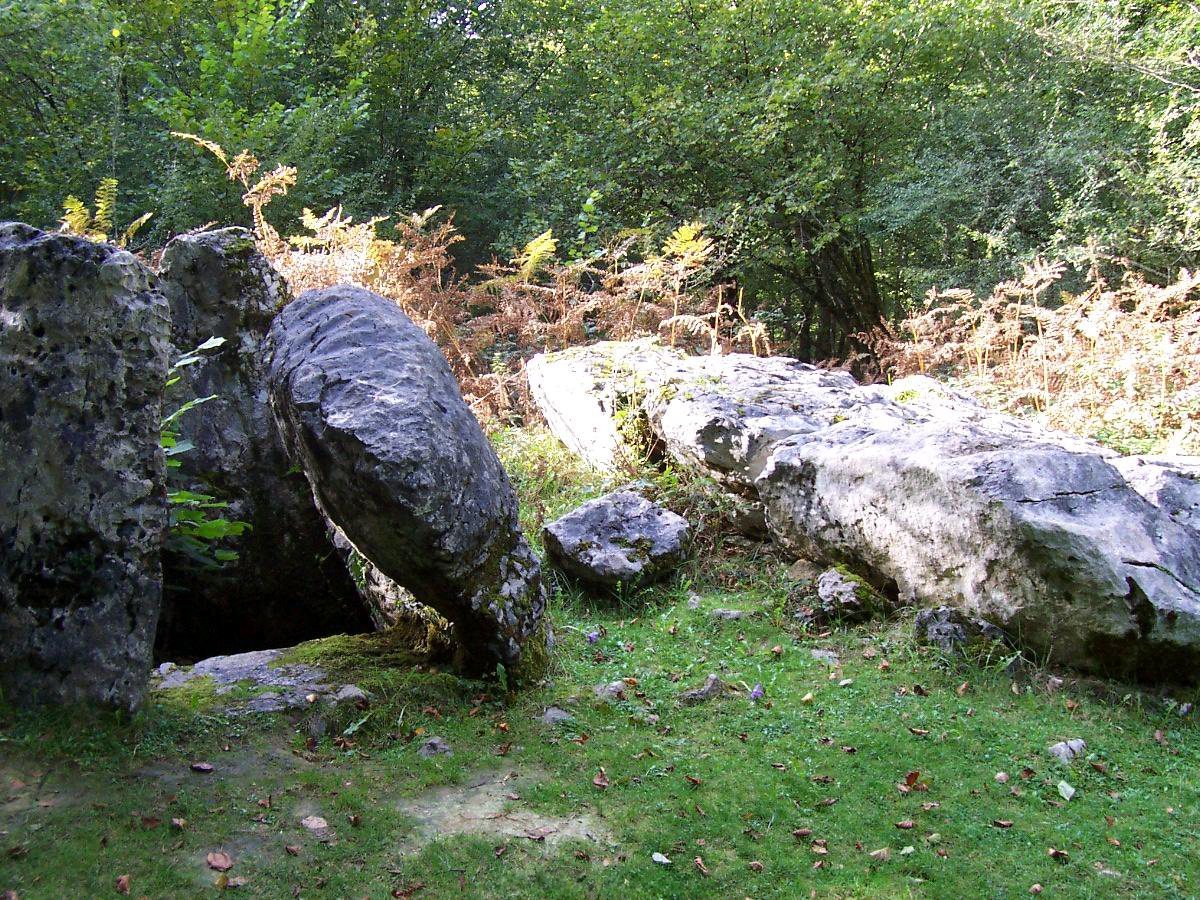
The Ithe Dolmens are two megalithic burial structures at Aussurucq, France. Their construction is thought to date from the Middle Neolithic to the beginning of the Late Neolithic. The Neolithic was a prehistoric period preceding the Bronze Age. The dolmens belong to a wider group of burial mounds in the valley of the Arbailles massif.
Neolithic construction and burial use
The two monuments’ architectural similarities suggest that they were built at about the same time. Dolmen 2 was first used around 3790–3650 BCE. A ritual deposit of flint arrowheads preceded each dolmen, and both served as burial places. Their funerary use continued into the middle Bronze Age, a later prehistoric period characterized by bronze use. This phase is associated with funerary urns and cremation.
Reuse and excavation
The burial chambers were repeatedly emptied and used again. Trampling during these operations contributed to the fragmentation of human remains. Dominique Ebrard excavated both monuments between 1977 and 1987.
Remains
Setting and layout
The dolmens stand about 750 metres apart beside an old pastoral track, with Dolmen 2 slightly north of Dolmen 1. Their immediate ground conditions differ: Dolmen 1 stands on relatively flat ground, while the terrain at Dolmen 2 is more uneven. These differences were attributed to the rocky substrate.
Dolmen 1
Dolmen 1, among the largest dolmens in the French Basque Country, retains part of a circular mound about 15 metres across. Its layers comprise nearly a metre of clay-silt sediment topped by limestone and marl blocks, 0.20 to 0.50 metres thick. The chamber is rectangular to roughly trapezoidal, measures 2.70 metres long, 1.35 metres wide, and 2.35 metres high, and faces east-southeast. Locally sourced Urgonian limestone forms its slabs. Two upright slabs line the south side and one the north; a 2.70-metre-high slab closes the end, while a dry-stone wall, built without mortar, stands near the entrance. Natural joints in the marl floor and cut grooves helped hold the slabs in place. The capstone, still in position in the mid-twentieth century, now rests on the ground in four broken pieces.
Dolmen 2
Dolmen 2 has an oval mound made from small blocks measuring 0.20 to 0.50 metres long. Its rectangular to roughly trapezoidal chamber narrows toward the entrance and faces east-southeast. An end slab and two supports on each side define the chamber. The capstone has broken into several small blocks, about 0.15 to 0.30 metres long. Natural fractures in the underlying rock helped secure the side supports. The floor is paved with one large slab and closely fitted smaller slabs, with more irregular paving near the entrance.
Burial evidence and finds
Finds from the two monuments include pendants, buttons, beads, hematite, and sticks of yellow ochre. Excavators recovered 8,428 fragments of red pottery goblets from Dolmen 1 and 2,960 from Dolmen 2; the sherds were highly fragmented and degraded. Other pottery fragments came from flat-bottomed vessels. Small metal finds include a blade fragment and an awl. Transverse arrowheads lay on Dolmen 2’s paving and between its paving stones. Human bones from both monuments are highly fragmented, but small hand bones indicate primary burials. Some bones bear traces of burning.