Chianca Dolmen: A Bronze Age Burial Monument in Bisceglie
Site at a Glance
- Popularity
- Medium
- Country
- Italy
- Primary era
- Bronze Age
- Eras represented
- Bronze Age
- Civilizations
- Unclassified
- Site type
- Burial
- Remains
- Tomb
On this page10 sections
History
Bronze Age monument
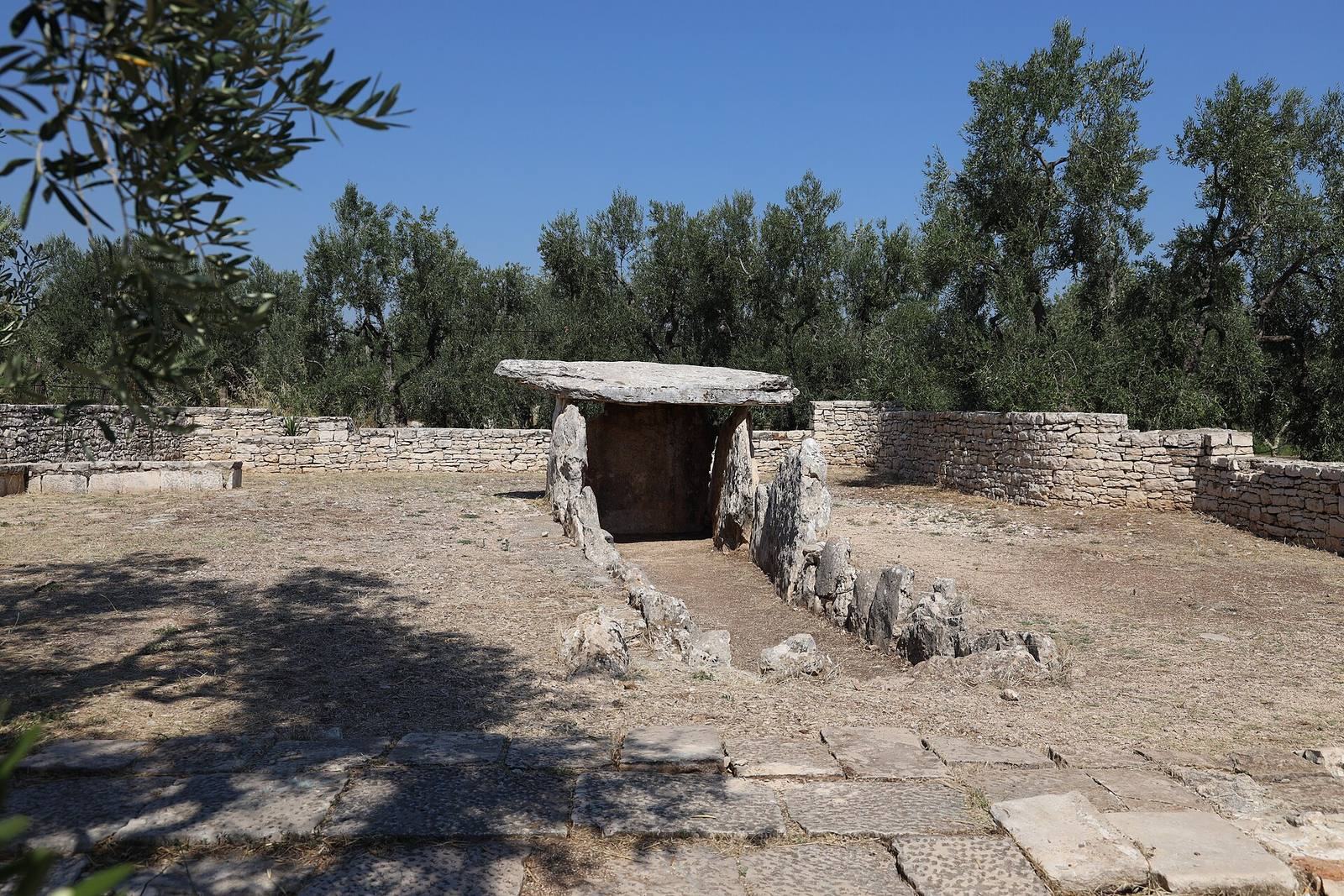
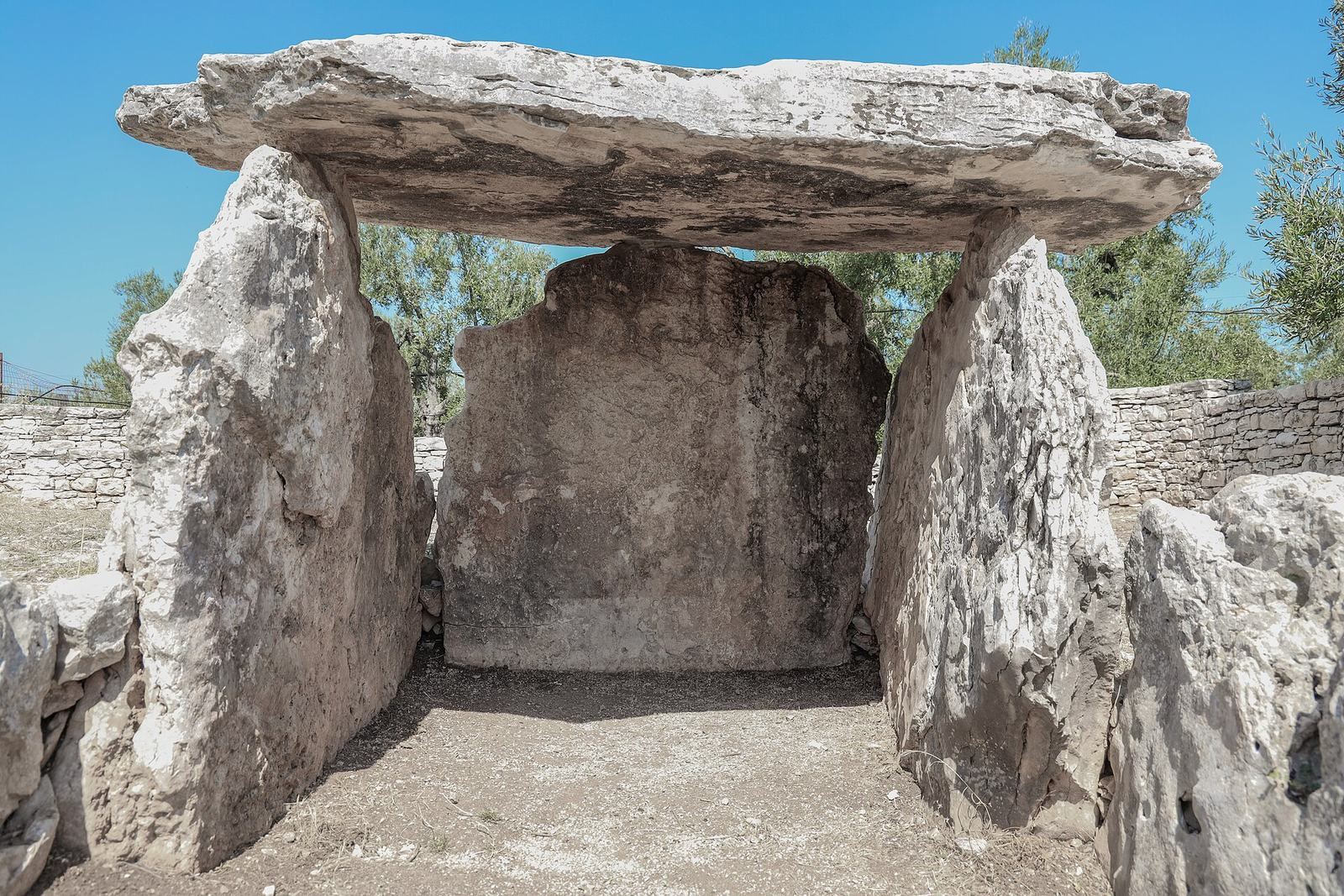
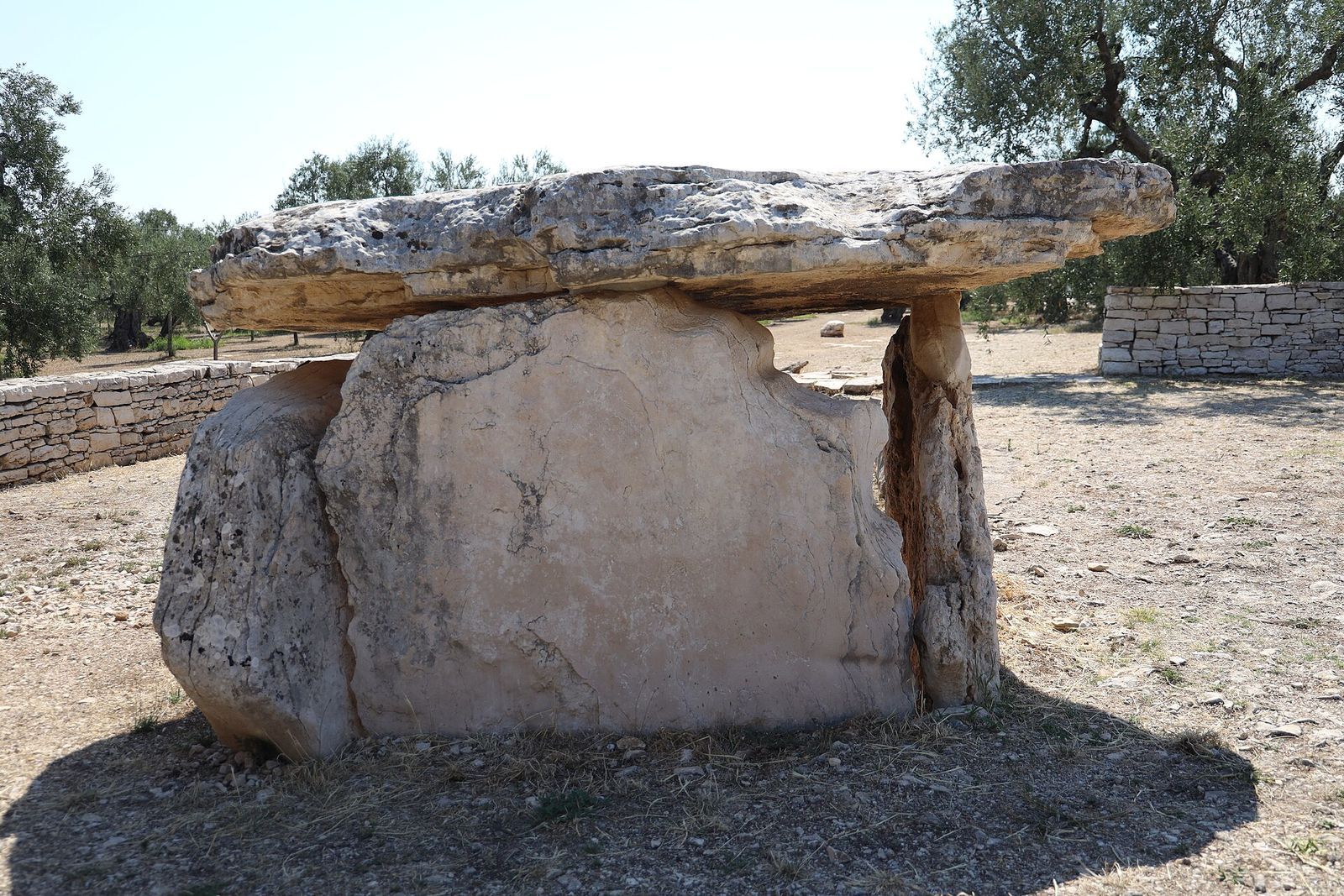
The Chianca Dolmen is a prehistoric tomb in Bisceglie, Italy, built from upright stones supporting a large capstone. It dates to approximately 2300–1750 BCE, within the Bronze Age, a prehistoric period marked by widespread use of bronze tools and objects. The monument belongs to the Bari–Taranto group, an archaeological classification for megalithic monuments in Apulia, and served as a funerary structure.
The name Chianca comes from the Bisceglie dialect word chienghe, meaning a stone or lava slab. Later interpretations have considered the dolmen’s symbolic meaning in anthropological, cultural, and economic contexts.
Discovery and recognition
Local farmers had disturbed the monument before its archaeological investigation, removing much of its stone-and-earth covering. Traces of the heaps remained visible. Francesco Samarelli and Angelo Mosso discovered the dolmen on 6 August 1909, and excavation began that year. The excavation campaign is dated to 1909–1913; Michele Gervasio continued the work in the final months of 1910.
On 19 May 2011, UNESCO, the United Nations Educational, Scientific and Cultural Organization, recognized the dolmen as a “witness to a culture of peace for humanity.”
Remains
Layout and construction
In the Chianca locality, at 93.3 metres above sea level, the monument lies near the deep Santa Croce valley and a few kilometres from Pulo di Molfetta. It is oriented west to east and measures about 10 metres long overall, 2.4 metres wide, and 1.8 metres high, with a listed area of 24 square metres. An open passage leads east to a quadrangular chamber. The chamber was originally enclosed within an elliptical mound.
Burial chamber
Three local limestone slabs form the chamber: two side walls and a rear slab, each resting directly on the underlying rock. One slab has two small openings. A large capstone covers the chamber and measures about 3.8 by 2.4 metres, with roughly 1.8 metres of height beneath it. Estimates suggest that positioning the capstone may have required the coordinated effort of at least 100 people.
Passage
The passage extends about 7.5 metres eastward from the chamber. Seven small slabs set vertically border it, and some are broken. A gap at the side provides access.
Excavated evidence
Chamber finds
Finds from the chamber include animal bones, fragments of small vessels, and stone knives dated to approximately 1200–1000 BCE. The animal bones were burned and may have been sacrificial remains. Human remains include those of six adults and young people arranged irregularly, along with two additional skeletons in crouched positions.
Passage finds
Excavated objects from the passage include dark pottery, a bronze pendant, and a jug. The excavated material is preserved at the Santa Scolastica Archaeological Museum in Bari. The dolmen is among the best-preserved megalithic structures in the region and on the Italian mainland, and its finds are considered exceptional compared with those from other dolmens in the Bari area. A stone plaque marks the site.