Porz Guen Dolmens: Neolithic Passage Tombs in Brittany
Site at a Glance
- Popularity
- Very Low
- Country
- France
- Primary era
- Stone Age
- Eras represented
- Stone Age
- Civilizations
- Unclassified
- Site type
- Burial
- Remains
- Tomb
On this page11 sections
History
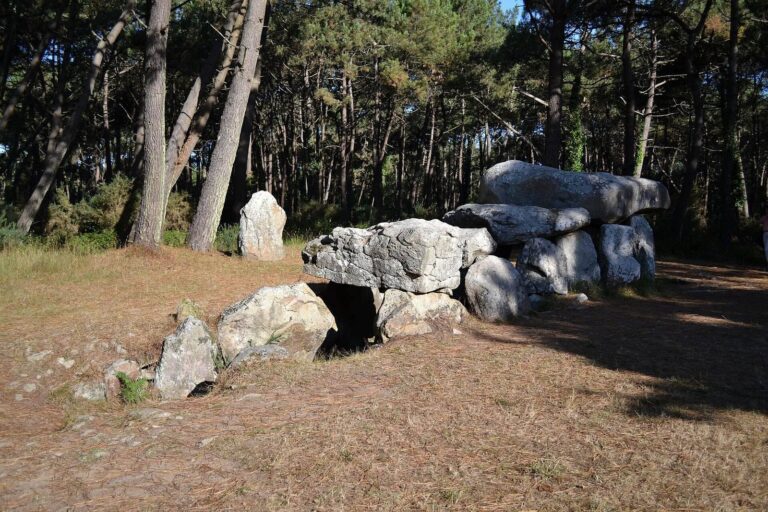
The Porz Guen dolmens are a pair of prehistoric passage tombs near Saint-Pierre-Quiberon on France’s Quiberon peninsula. Their history spans the Middle and Late Neolithic, a prehistoric period associated with the spread of farming. A radiocarbon date of 3930–3660 BC from a skull in Dolmen A’s lower level supports the possibility of Middle Neolithic construction, followed by later use.
Neolithic development
A survey in 2008 clarified that Dolmen B was built first and Dolmen A was added later. The varied finds from A also point to a later intrusion associated with the Bell Beaker culture, a prehistoric archaeological culture identified partly by its distinctive bell-shaped pottery.
Excavation and conservation
After the monuments had deteriorated and treasure seekers had visited them, French archaeologist Félix Gaillard excavated the dolmens in February 1883. They were restored the following year and listed as French historic monuments in 1889, a form of legal heritage protection. Work at the site in 2008 enabled a fuller survey. A later restoration included further investigation and sampling, while an architectural study allowed comparison with findings from Gaillard’s excavation.
Remains
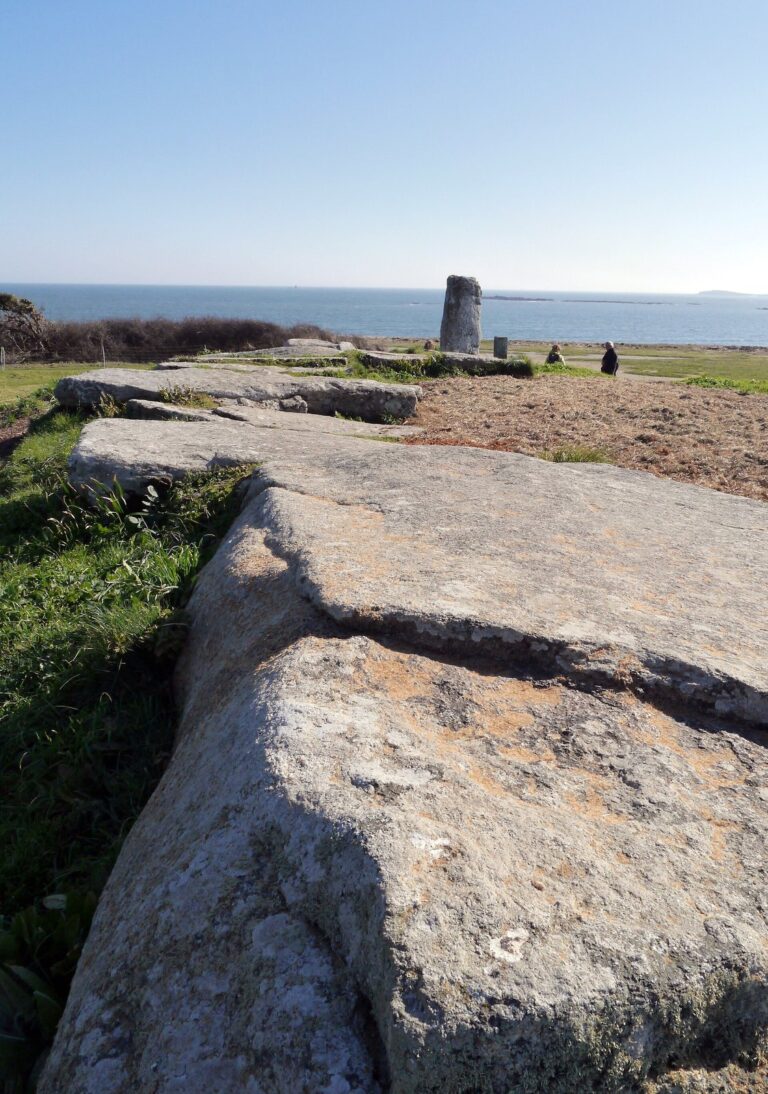
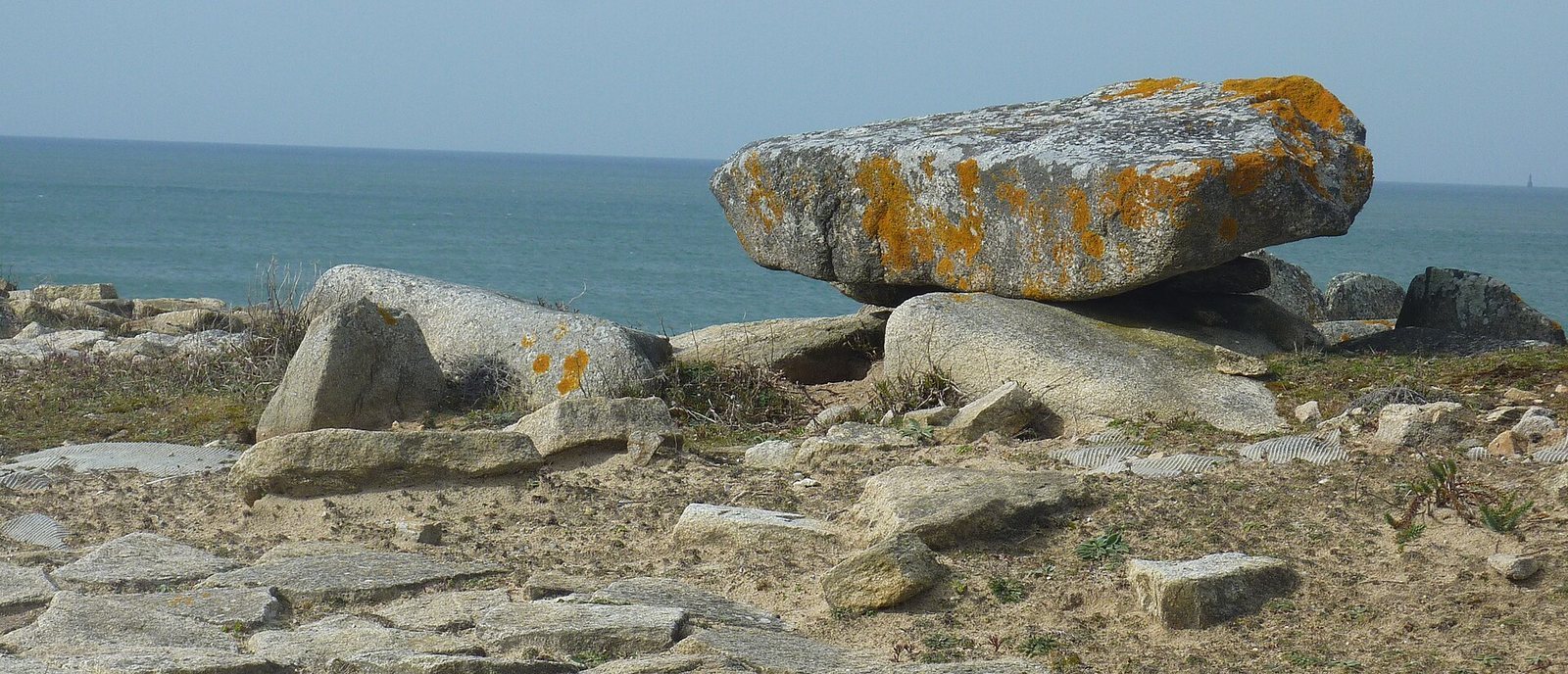
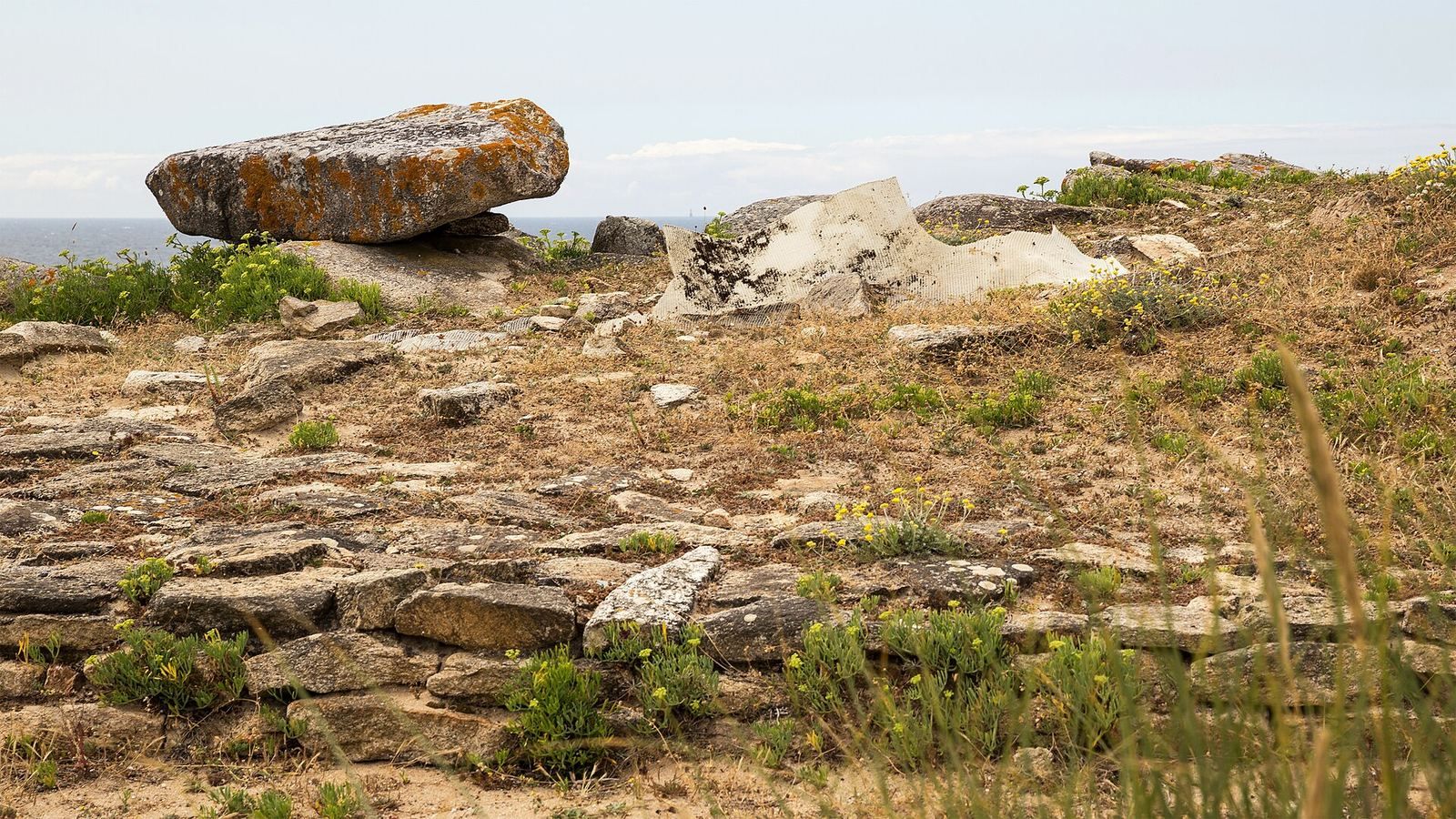
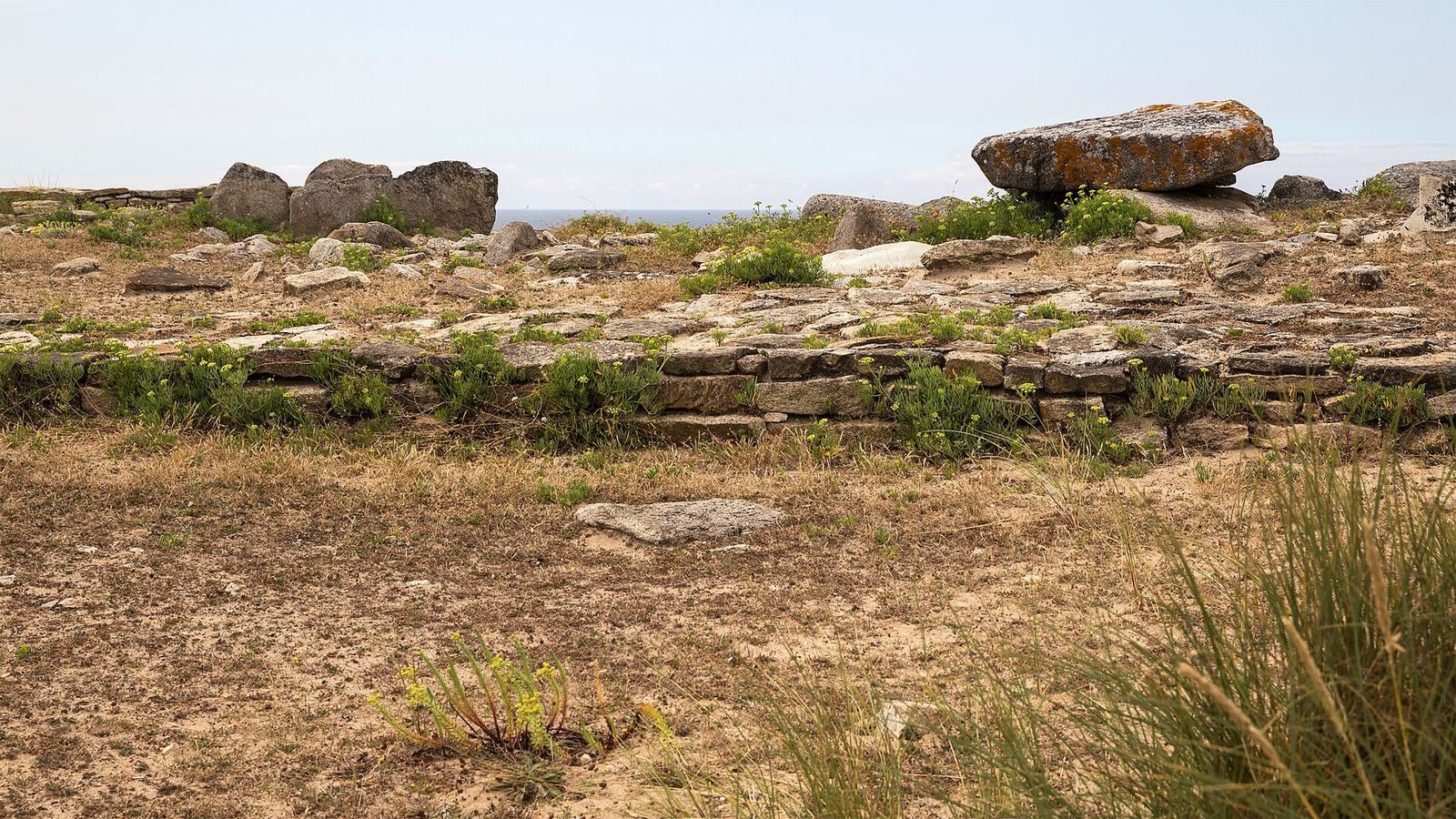
The two monuments stand at the edge of a cliff near Pointe du Percho, west of Saint-Pierre-Quiberon. They are parallel, about 5 m apart, and their passages face southeast. A stone mound, or cairn, survives to a height of 1–1.5 m and has an outer facing wall. Gaillard’s plan places Dolmen A to the west and Dolmen B to the southwest, with stones between them. The dolmen farther inland is more complete. Many flints have been found on the surface near Pointe du Percho.
Chambers and passages
Gaillard described both chambers as having roofs made from successive courses of stone that project inward, and floors paved with flat stones laid over small pebbles.
Dolmen A
Dolmen A has a subrectangular chamber measuring 2.65 by 2.55 m, bounded by eight upright stones between 1.20 and 1.30 m high. Its passage is 2 m long and 1.10 m wide, with five slabs surviving. A slab measuring 2 by 0.90 m marks the entrance to the chamber like a small portico.
Dolmen B
Dolmen B’s chamber was probably circular and about 4 m across, although cliff erosion has removed part of it. Its passage measures 3.25 m long by 1 m wide and points southeast toward the chamber’s centre. Gaillard’s plan shows eight upright stones in the passage, of which four remain; some stones have fallen over the cliff.
Burials and finds
Excavation indicated that the two dolmens held the remains of at least 37 people. Gaillard estimated that Dolmen A alone had contained between 40 and 50 individuals.
Dolmen A
In Dolmen A, flat stones separated two layers of human bones. Most bones were disarticulated, with about a dozen skulls placed along the chamber wall and roughly ten in the upper layer. One skull had a deliberate perforation, a procedure known as trepanation. Some articulated bones were also recovered, a comparatively rare find in western France. Objects from the chamber included a bronze awl, two diorite axes, a talc necklace bead, a bone pin and four vessels. One vessel was a footless, bell-shaped beaker.
Dolmen B
Dolmen B contained five complete skeletons. One was laid out at full length, while the other four were crouched beside the walls. Finds included a perforated pebble and pottery fragments. Charcoal and ash provided evidence of cremation.
Cist and construction platform
Shell-bearing sand covered the monument to a depth of more than 1 m and helped preserve the human remains. In 2008, a small stone-built burial chamber, or cist, about 1 m across was found between the dolmens’ entrances. It may have been inserted into the cairn during the Bell Beaker period. A test trench 5.20 m from Dolmen A’s walls revealed a rough platform measuring 0.95 by 0.95 m and 0.40 m thick. It consisted of a bed of stones against a laid-down block measuring 1.70 by 0.60 m. Finds included ten skulls, accumulated bones, an axe fragment, a decorated vase and fragments of two other vases. Gaillard considered this material cleared from Dolmen A; the platform may instead have served as an activity area connected with megalithic construction.