Preitenstein Castle: A Gothic Military Stronghold in Czechia
Site at a Glance
- Popularity
- Low
- Country
- Czechia
- Primary era
- Medieval
- Eras represented
- Medieval
- Civilizations
- Holy Roman Empire, Kingdom of Bohemia
- Site type
- Military
- Remains
- Castle
On this page8 sections
History
Prehistoric occupation and royal foundation
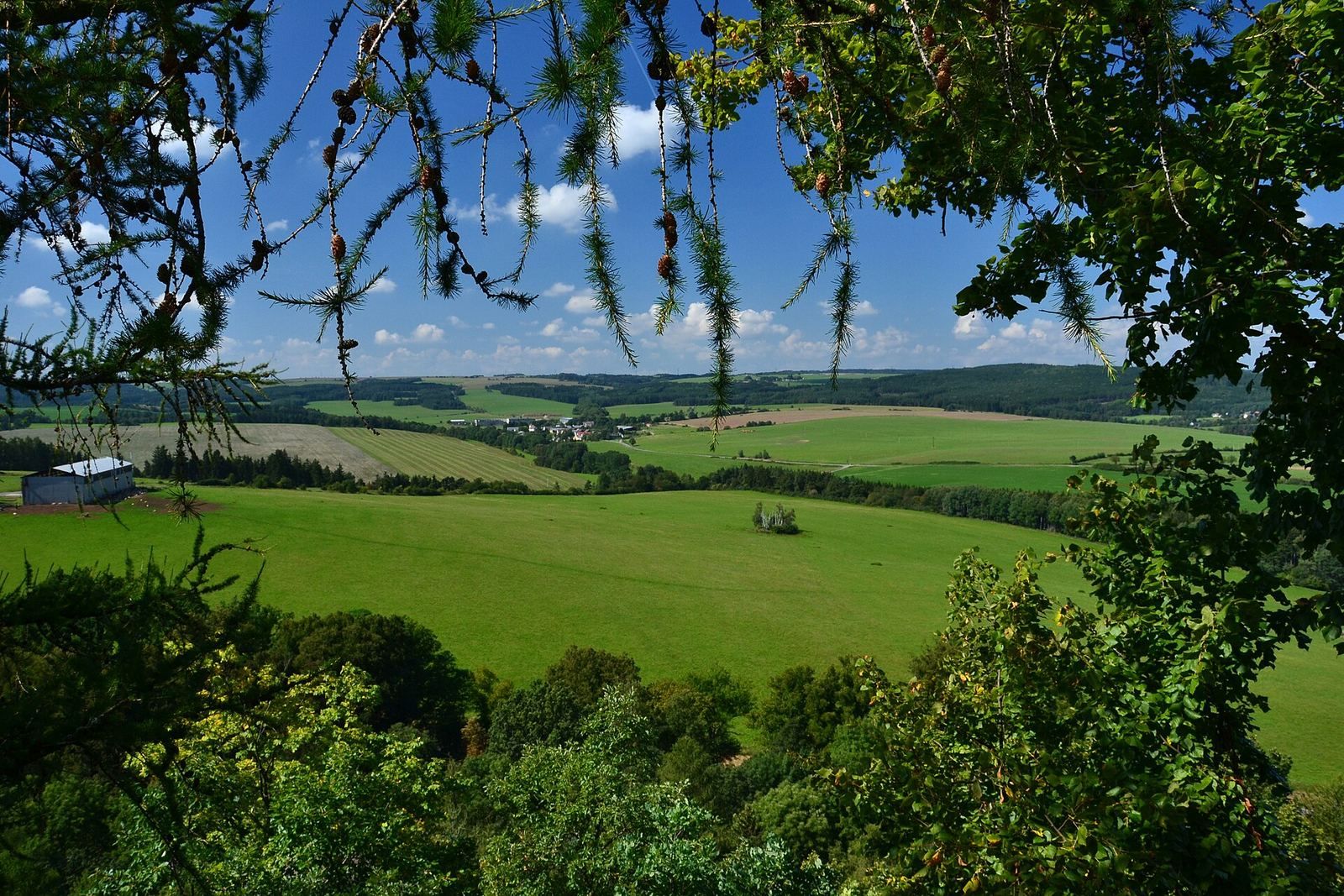
Preitenstein Castle is a Gothic stronghold on a hill above Nové Městečko, near Nečtiny, in Czechia. King John of Luxembourg built it at his own expense after 1330 and before 1333. Planned as a military position capable of accommodating a large force, it later served as a royal possession and the family seat of the Gutštejns.
The hilltop had earlier human activity. A Copper Age settlement was associated with the Cham culture, and finds from the late Hallstatt period, an early Iron Age era in Central Europe, have also been identified. These later finds may come from either a fortified hilltop settlement or an unfortified one. In the late thirteenth century, Wenceslaus II, king of Bohemia and Poland, bought the Nečtiny estate from Bavor and Vyšemír of Nečtiny. The estate did not remain continuously in royal hands and was often pledged as security. The lords of Nečtiny may have established the castle to replace an earlier seat on Nečtinský Špičák, but this possibility is uncertain.
The castle was initially called Breitenstein and is also known as Preitenštejn or Nečtiny. John soon pledged it to Oldřich Pluh of Rabštejn, who held it between 1330 and 1333. Oldřich founded a settlement beneath the castle with the same name, later renamed Nečtiny, and raised the original Nečtiny to the status of a small town.
Royal control and Hussite-era damage
After 1333, Charles IV, John’s son and king of Bohemia and Holy Roman Emperor, redeemed the castle from its pledge-holder. He included it in the Majestas Carolina, a legal code prepared for the Kingdom of Bohemia, among castles that could not be pledged. It remained royal property until Wenceslaus IV, Charles’s son and king of Bohemia, pledged it to Petr Zmrzlík of Svojšín near the end of the fourteenth century. Oldřich Huler held the castle from 1406 or 1407 to 1408, after exchanging it with Petr for Orlík. It returned to royal ownership in 1411.
After Wenceslaus IV died in 1419, his brother Sigismund took possession of the castle and pledged it to Něpr Duc of Vařin for 400 kop. A kop was an accounting unit equal to 60 groschen. Because income from the estate could not cover upkeep, Sigismund ordered the Teplá monastery to contribute 100 kop for the castle’s maintenance. Něpr lived there in 1423; by 1427, Sezema of Kočov held it. After Sezema died, his underage son inherited the estate, with Sezema’s brother Zbyněk administering it.
The Hussites, followers of the Bohemian religious reformer Jan Hus, probably captured the castle during Zbyněk’s administration. In 1434, Emperor Sigismund granted Zbyněk 200 kop for repairs to the castle and its protective ponds. After the Hussite Wars, conflicts in Bohemia involving the Hussite movement, a dispute between Zbyněk and Petr Brada of Nekmíř damaged the castle and led to the burning of Nečtiny.
The Gutštejn family and the castle’s destruction
Before 1441, Burian I of Gutštejn acquired the castle. Although he and his namesake son also owned Bělá and Rabštejn castles, they made Preitenstein their family seat and described themselves as residing at Nečtiny. Burian II received 500 Hungarian gold florins from King Vladislaus II of Bohemia and Hungary for alterations to the castle.
Burian III died in 1494, and his son Jan inherited the estate. In 1506, Jan and his four brothers rebelled against the king and were later forced to surrender the castle. It remained royal property until Ferdinand I, king of Bohemia and Holy Roman Emperor, pledged it to Hanuš Pluh of Rabštejn in 1511. Hanuš’s son Kašpar joined the 1547 revolt of the estates against the king. After the revolt failed, Kašpar fled the country and was sentenced in his absence to death and the loss of his property. The castle was burned, and its destruction is dated to the mid-sixteenth century.
On 12 April 1549, Ferdinand I pledged the estate to his secretary Florián Gryspek as compensation for defamation. The property included the burned town of Nečtiny, devastated villages, mills, and other assets. Gryspek complained that the lands were in poor condition and the castle uninhabitable and distant from the estates he administered. The king granted him a further 200 kop to improve the property. Gryspek could use it for life, and his sons for ten years after his death, but the castle itself was not rebuilt. The ruins are protected as a cultural monument in Czechia.
Remains
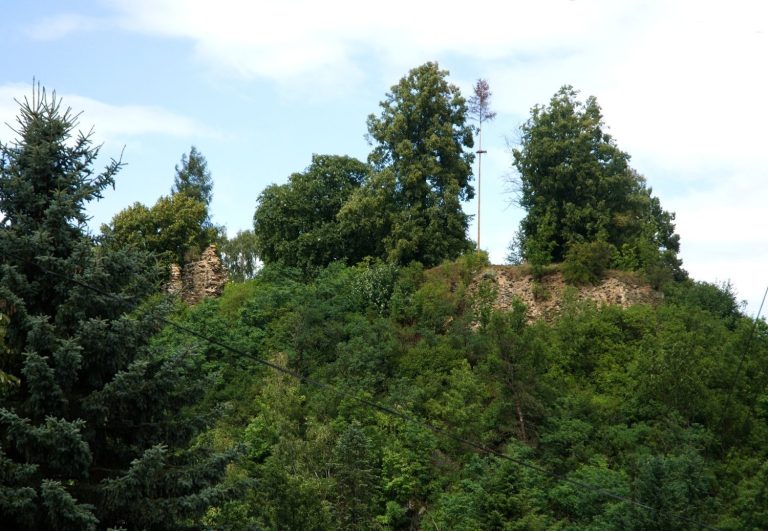
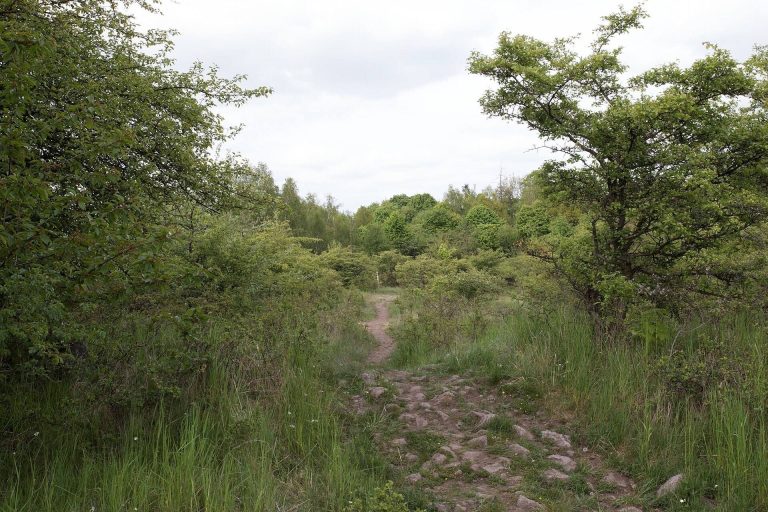
The ruin occupies a hill above Nové Městečko. Its polygonal castle core and layered outer defenses formed a military complex intended to accommodate a large force.
Outer defenses and entrance
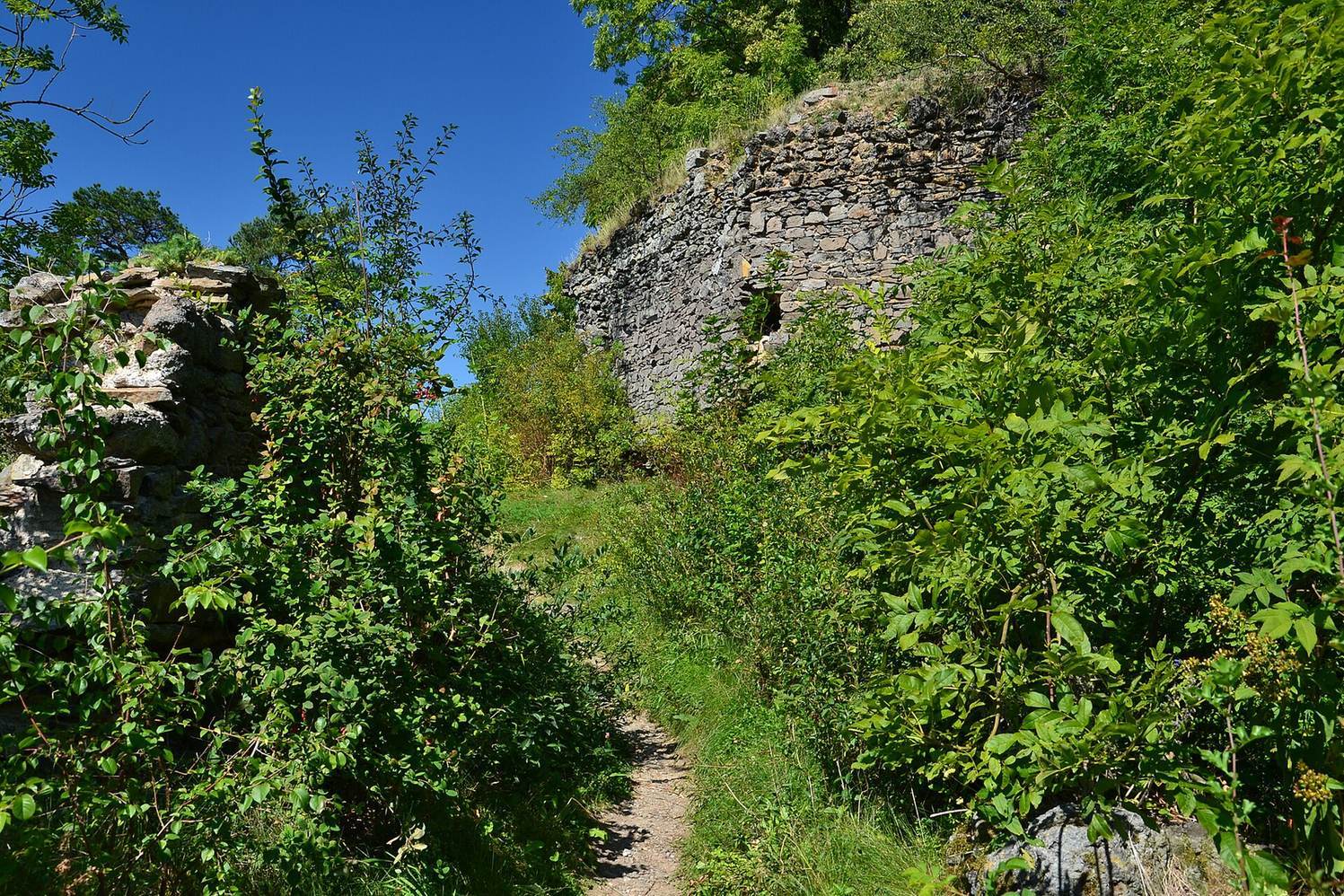
A broad open area on the western part of the hill was probably only lightly fortified, while three lines of defensive walls protected the southeastern approach. The entrance route crossed an outer defensive passage and probably continued through a tower gate into an inner passage. A third gate led to the western platform of the outer enclosure. Part of the wall surrounding the inner passage survives beside the second gate. Protective ponds also formed part of the castle’s defenses.
Castle core
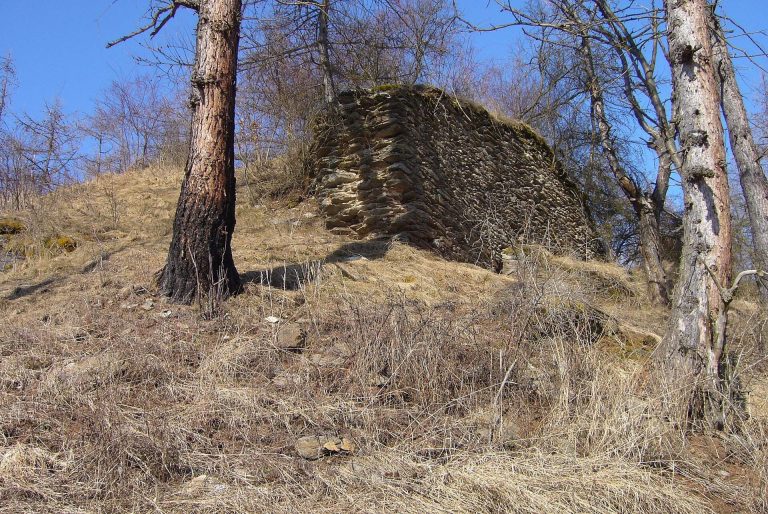
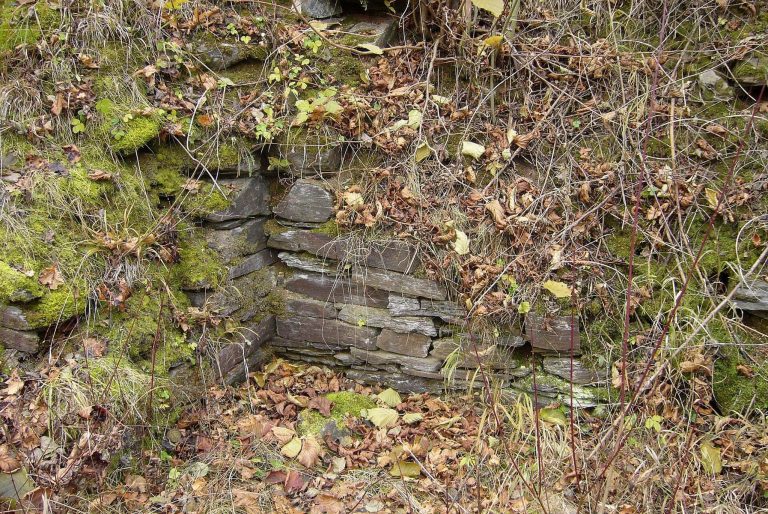
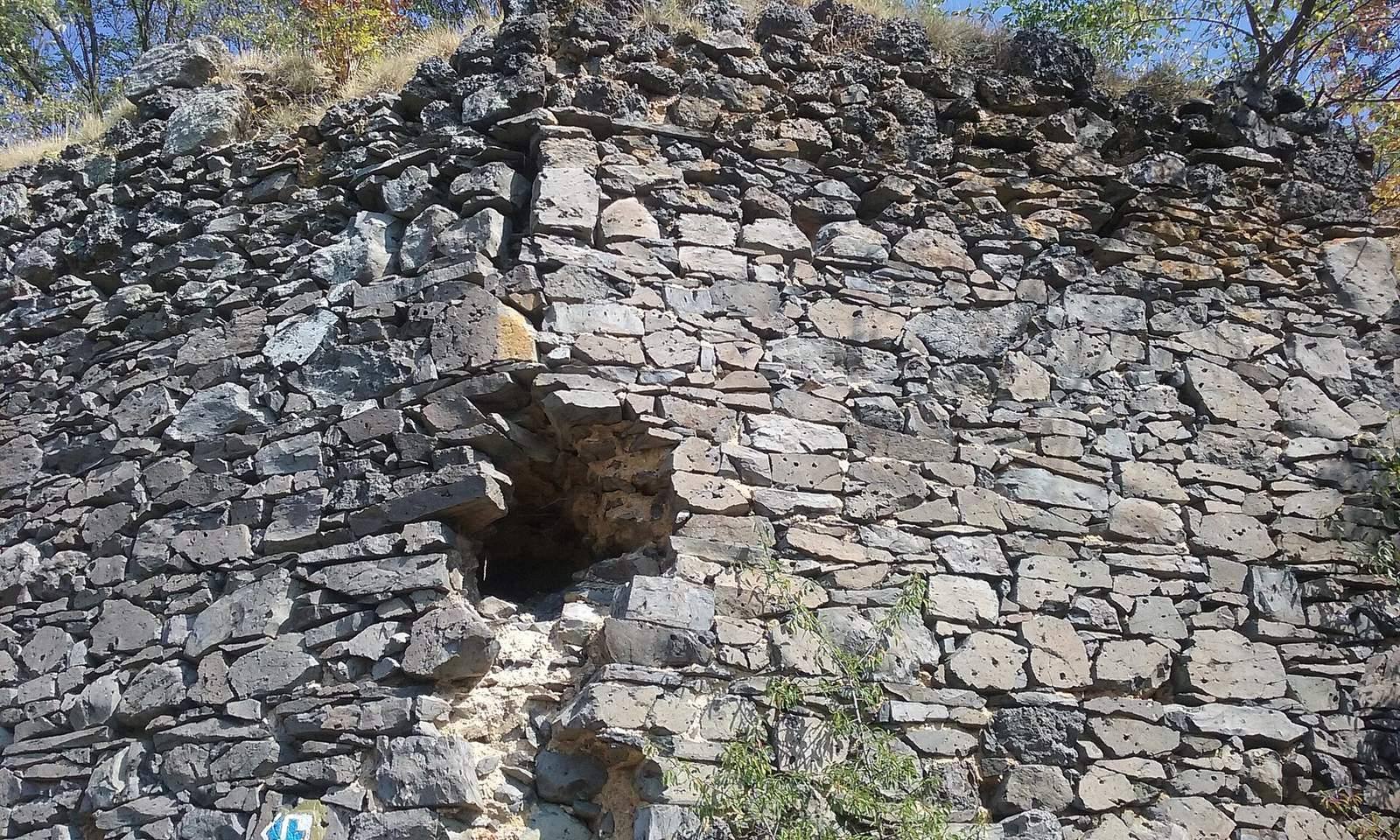
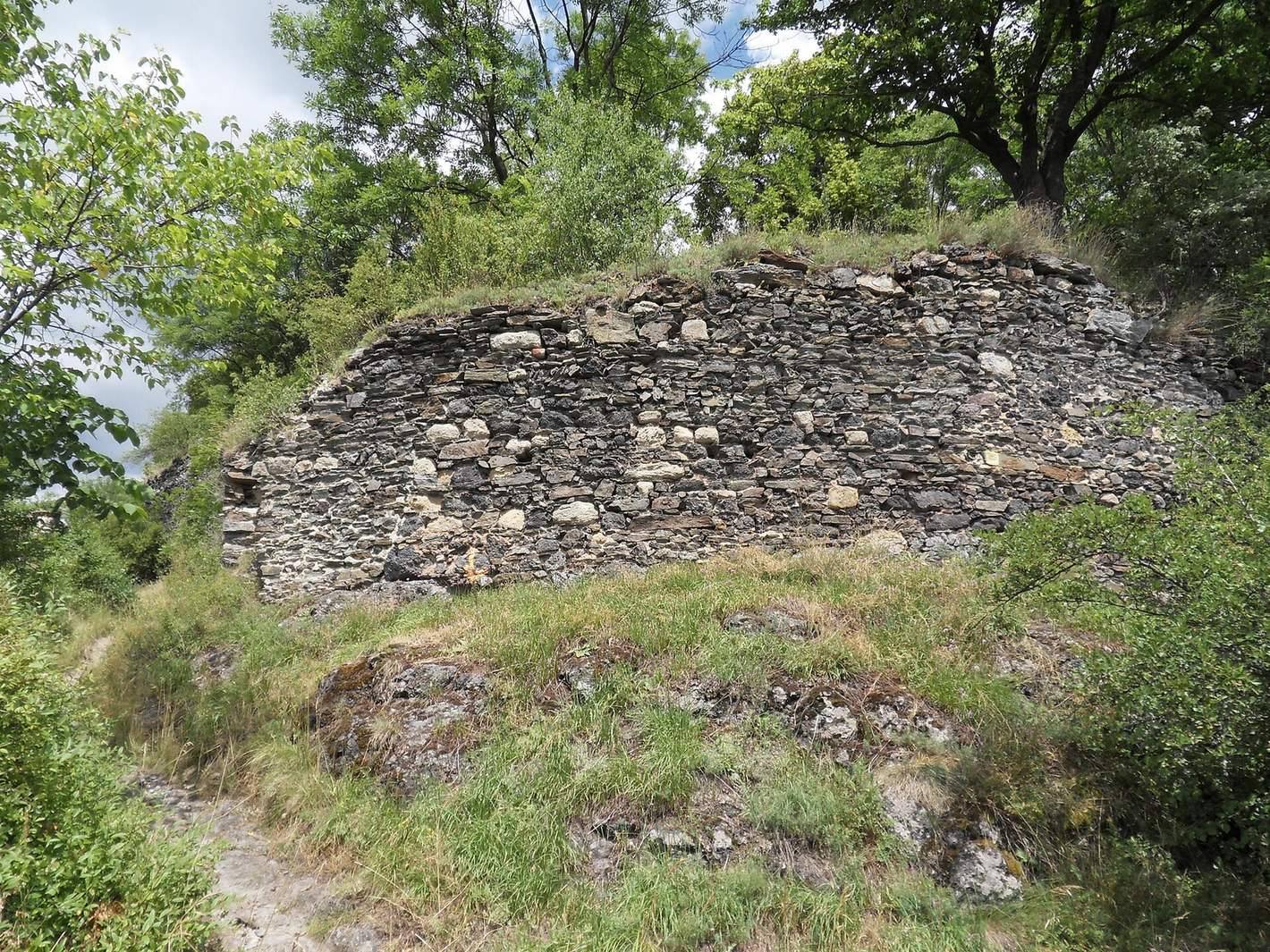
A substantial wall enclosed the core, and much of it still stands. Buildings attached to its inner face surrounded a courtyard. Most survive only as traces in the ground, though a fragment on the northern side retains rooms with barrel-vaulted ceilings, formed by continuous curves. A raised feature in the middle of the western entrance side may mark the former position of a round tower.
Settlement below the hill
A Renaissance château was built in the settlement beneath the castle, below the flat-topped hill.