Stora Kopparberg Church: A Medieval Parish Church in Falun
Site at a Glance
- Popularity
- Medium
- Country
- Sweden
- Primary era
- Medieval
- Eras represented
- Medieval, Early Modern, Modern
- Civilizations
- Swedish
- Site type
- Religious
- Remains
- Church
On this page11 sections
History
Stora Kopparberg Church is a medieval parish church in Falun, Sweden, consecrated in the fifteenth century. It serves Stora Kopparberg Parish, a local congregation and its district, within the Diocese of Västerås, a regional ecclesiastical jurisdiction, and belongs to the Lutheran Church of Sweden. It is regarded as Falun’s oldest building.
Organs and musical history
An organ was present in the church by the sixteenth century. Paul Müller built a 16-stop instrument in 1611, and Johann Hermann Cahman added ten pedal stops in 1698. Per Larsson Åkerman of Stockholm built an 18-stop organ in 1862, with two keyboards and a pedal. In 1901 it was moved from the western gallery to the north aisle and given a new facade. A. Magnusson Orgelbyggeri AB rebuilt it in 1920, increasing its size to 29 stops.
W. Hill & Son built an English pipe organ in 1914. After use in a London church, it spent part of the 1990s in the Netherlands. Dutch organ builder Henk van Eeken dismantled and transported it, and Tostareds Kyrkorgelfabrik renovated and reassembled it before its inauguration in 2001. Th. Frobenius & Co. built a gallery organ with mechanical action in 1963, meaning that physical linkages connect the keys to the pipes. Johannes Menzel Orgelbyggeri AB built a mechanical-action choir organ in 1981.
Remains
Exterior and plan
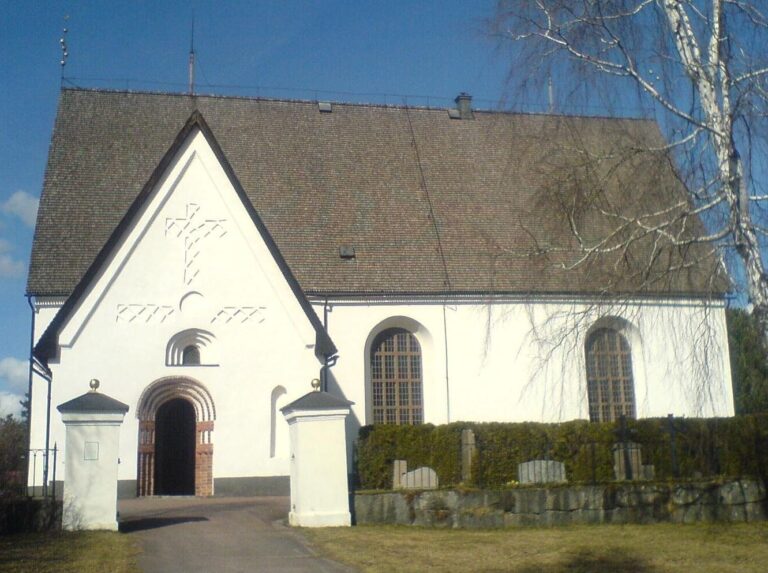
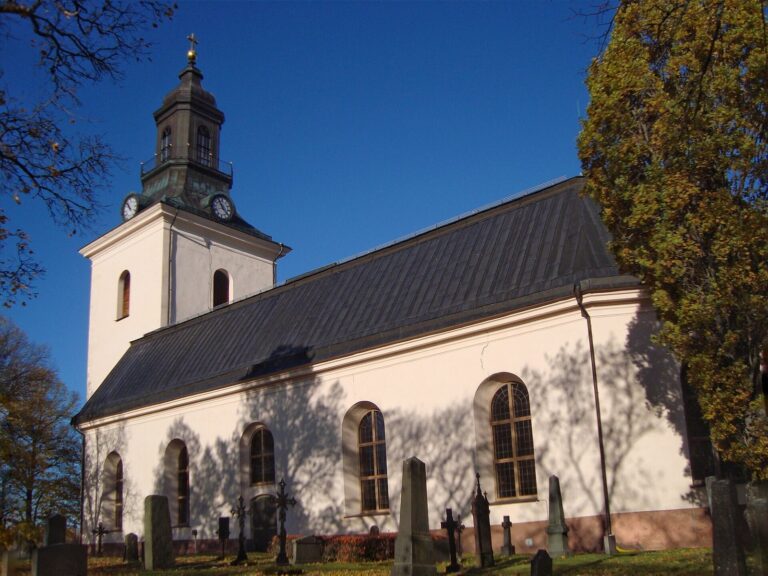
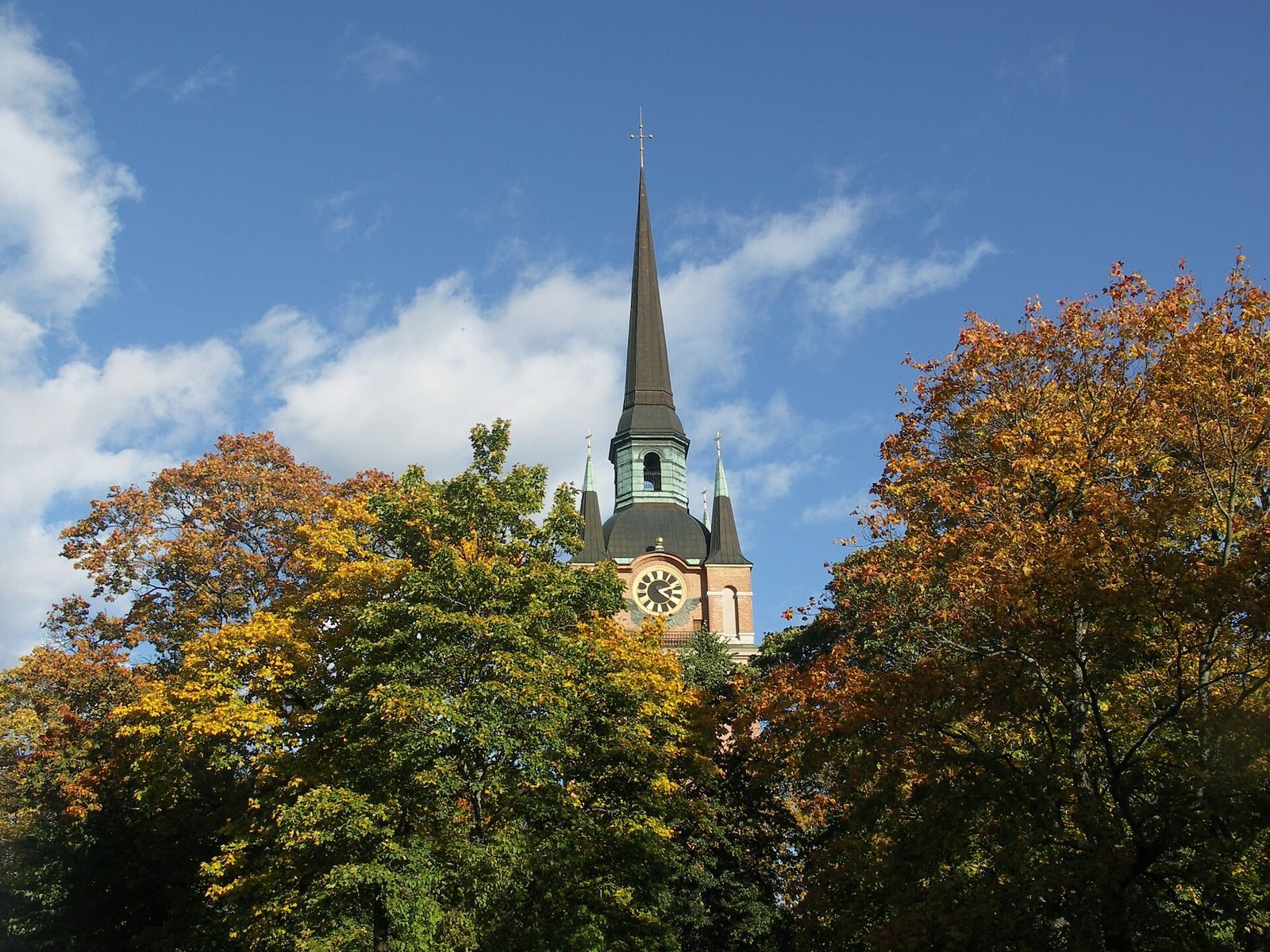
The church has a three-aisled medieval nave beneath a copper-covered gabled roof. Parts of the building date to the fourteenth century, while the nave was built in the fifteenth. The medieval sacristy was extended in 1691. An east chancel was added in 1684–86, and a tower was built at the west end in 1780. The tower spire, four small corner towers, and twelve small spires on the nave roof were added later.
Interior architecture and furnishings
Vaults and pillars
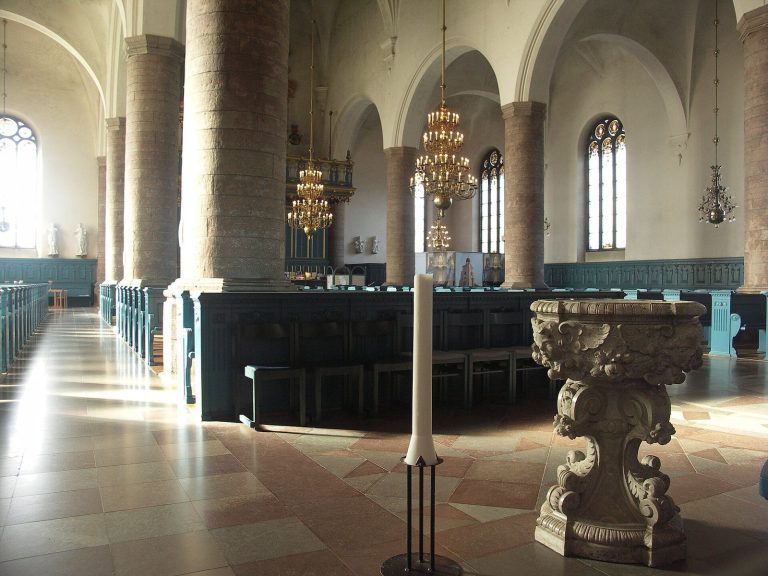
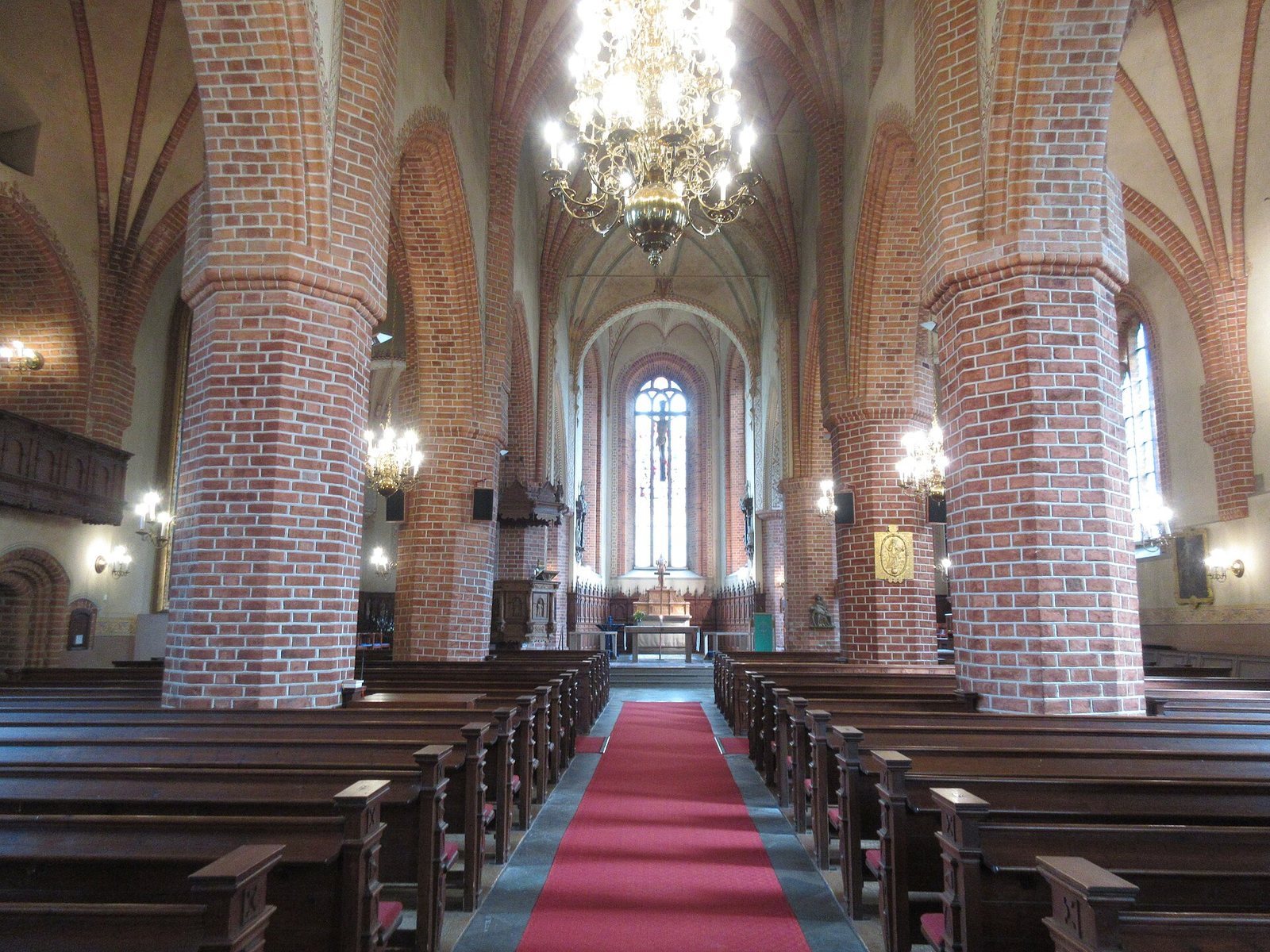
Nineteen star vaults, ribbed ceilings whose ribs form star-shaped patterns, cover the interior. Their profiled brick ribs create varied designs. The church has more star vaults than any other Swedish church. Ten octagonal brick pillars separate the central nave from the side aisles.
Windows, floors, seating, and pulpit
The windows contain leaded panes of coloured glass and stained glass. Limestone flooring in the central and side aisles dates to 1898–1901. The pews are from the same period, with tongue-and-groove panel backs and carved end panels, and stand on a varnished plank floor. A richly carved, dark-stained oak pulpit from the seventeenth century stands at the front of the central nave on its north side.
Chancel and altar
A limestone altar table made in 1978–79 stands in the centre of the chancel, with a movable altar rail in front. Behind it is an earlier altar, built of brick in 1900 and faced with limestone slabs. Its ornament is made of light-coloured, oiled oak and includes sculptures carved from hornbeam and maple.
Organs and bells
Organ gallery and instruments
The west-end organ gallery, built in 1963 in a modernist style, rests on two concrete pillars with sandblasted and polished surfaces. Its flat front and organ case are made of lacquered oak. The church has a mechanical-action gallery organ and choir organ, as well as the W. Hill & Son pipe organ, which serves as a choir organ.
Bells
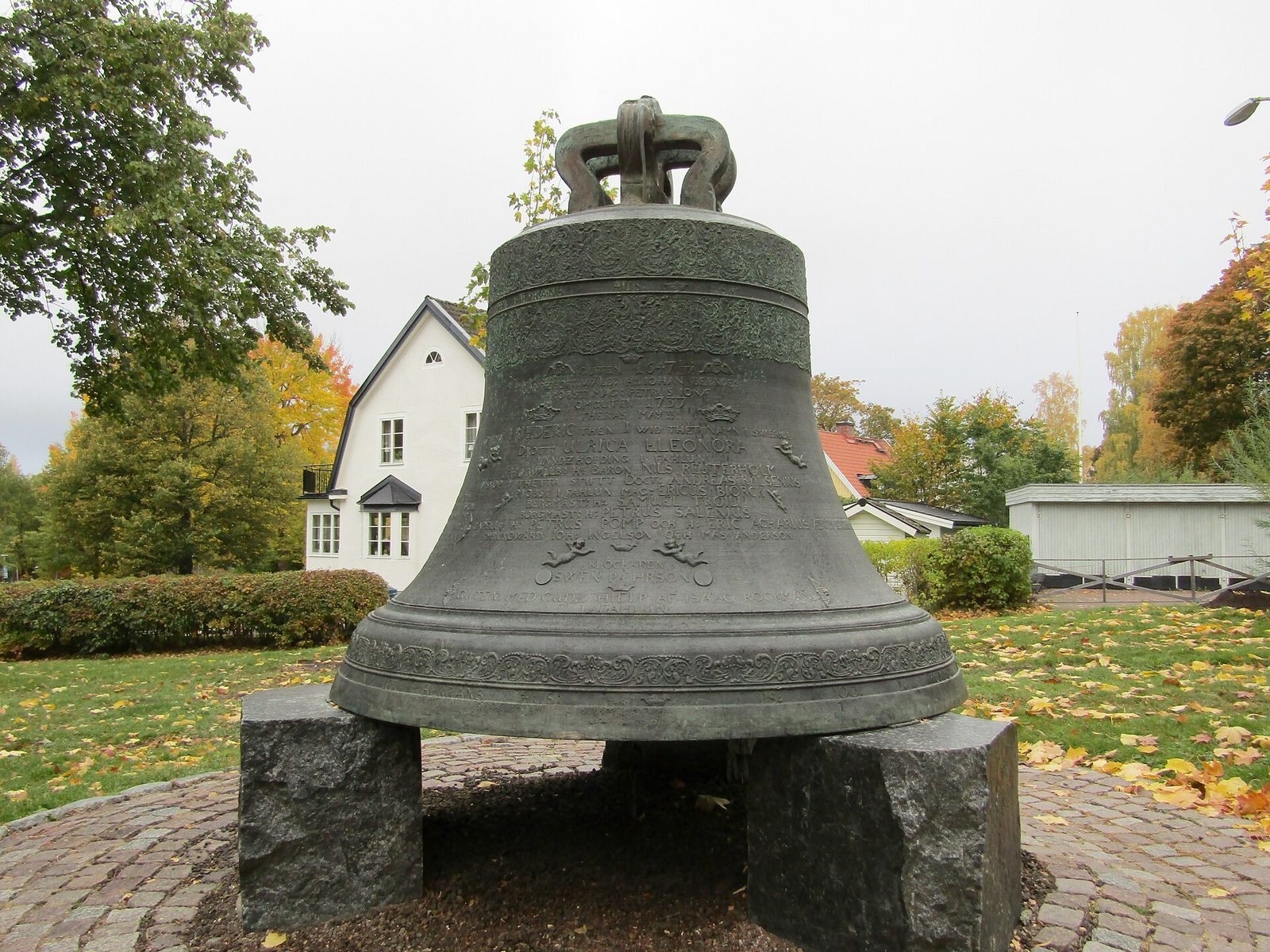
The church has four bells. The largest was cast in 1598, recast in 1744, and weighs 4.8 tonnes. The service bell, the second-largest, was cast in 1622, recast in 1695, and weighs two tonnes. The Mary Bell was cast in 1628, recast in 1706, and weighs 1.2 tonnes. The St Anne Bell, the smallest and youngest, was cast in 1987 and weighs one tonne; it replaced the earlier Master Per’s Bell.