Djursdala Church: A Seventeenth-Century Wooden Parish Church in Sweden
Site at a Glance
- Popularity
- Low
- Country
- Sweden
- Primary era
- Early Modern
- Eras represented
- Early Modern, Modern
- Civilizations
- Swedish
- Site type
- Religious
- Remains
- Church
On this page11 sections
History
Djursdala Church is a wooden church in Södra Vi, Sweden, where a church has stood since the Middle Ages. Fire ravaged the earlier wooden church and its belfry in spring 1691. Work on the present building began on 9 May 1692, and Provost Johan Phoenix of Vimmerby, a senior clergyman with oversight responsibilities, consecrated it on 30 November that year. Local farmsteads supplied the building materials apart from nails and tar, and the church was fully covered with shingles by 1695. It belongs to the Church of Sweden, within the Diocese of Linköping and Södra Vi-Djursdala Parish.
Decoration and eighteenth-century changes
Master painters Petter Wadsten and Zacharias Hake, both from Eksjö, decorated the interior in 1707–08. Their work may have been influenced by painter Johan Künkel, who had decorated the ceiling of Eksjö Old Church. Illustrated German Bibles and Dutch prints may also have provided models.
A west-end gallery was added in 1730, with new windows on the west side to bring it light. During the 1830s, the roof was renewed with pine shingles, and the church and belfry were apparently painted red.
Renovation and later use
A major renovation took place in 1939. Electric heating followed in 1968, and electric lighting was installed in 1983. A thorough interior restoration in 1990 included conservation of the paintings, additional lighting for them, and a new colour scheme for the pews. A loudspeaker and guide system and a hymn-number board were also installed. On Easter Sunday 1991, Rural Dean Eric Nilsson of Hultsfred, a senior clergyman with oversight responsibilities, reconsecrated the church.
Remains
Setting and building
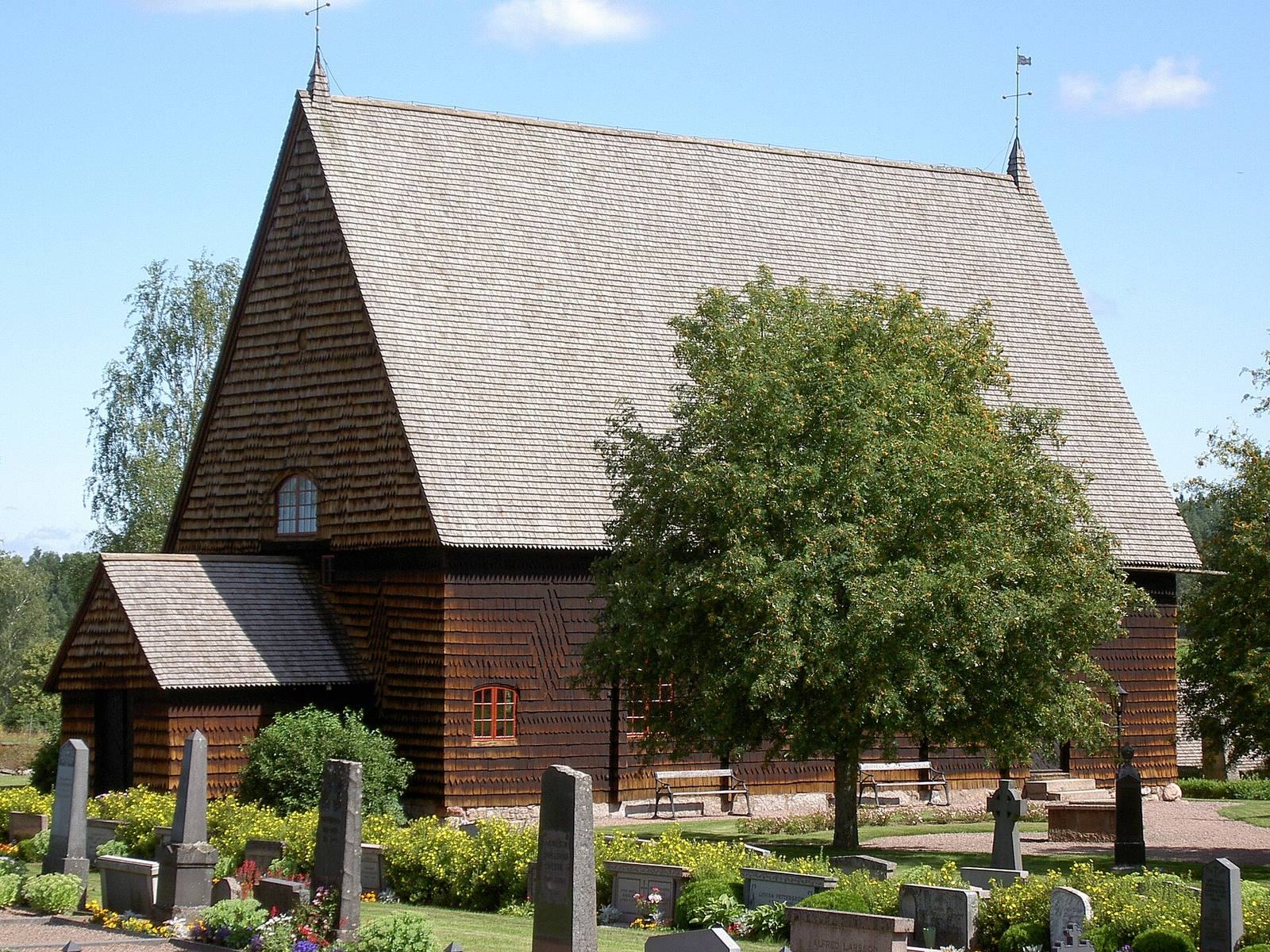
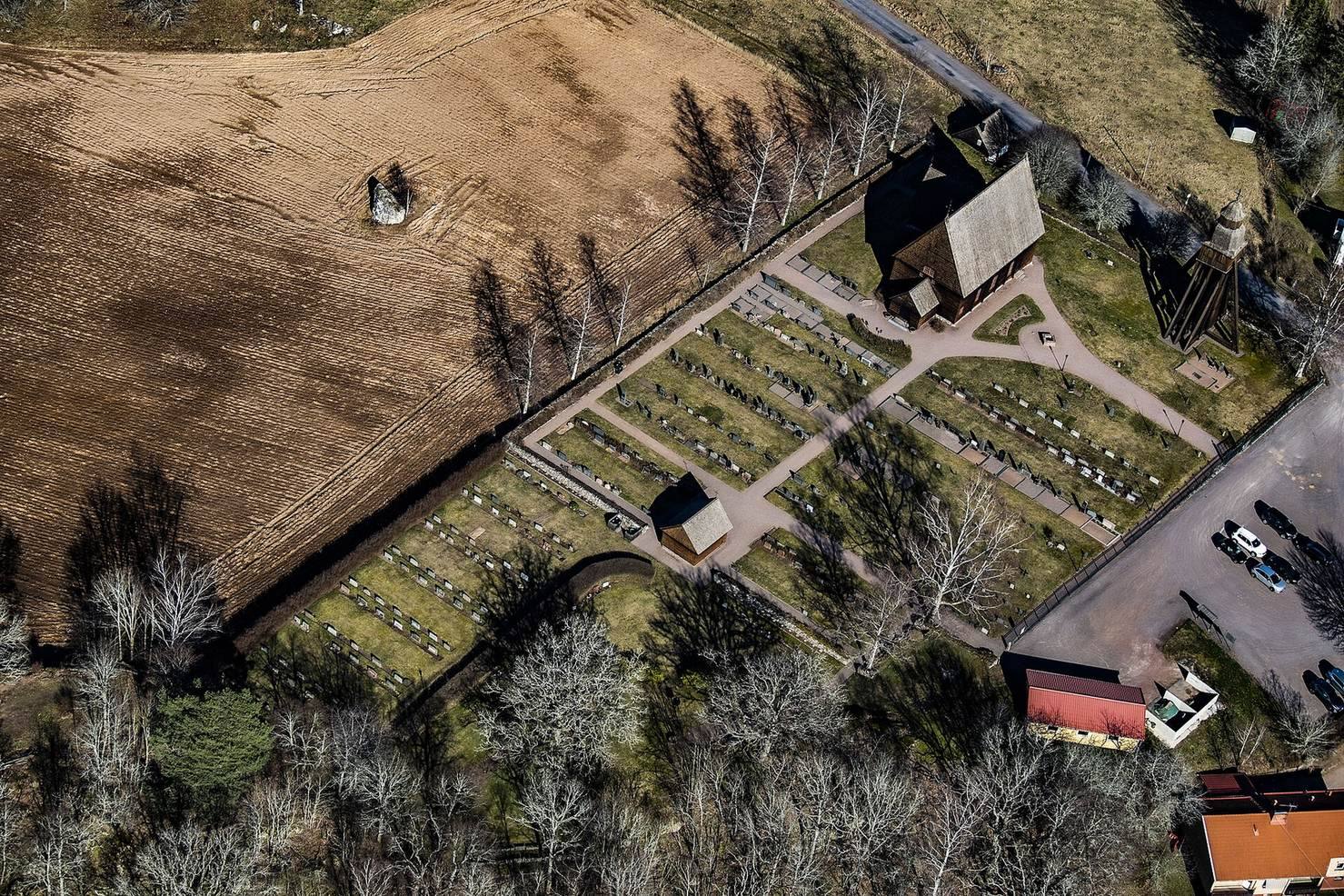
The church and its cemetery occupy the highest hill in the surrounding area, overlooking Lake Juttern about 10 kilometres north of Vimmerby. The building consists of a rectangular nave, a sacristy on its north side, and a porch at the west end. Horizontal logs form its walls, which are clad in shingles, and the structure rests on a base of mortared natural stone. The nave, porch, and sacristy each have a shingled gable roof. The main entrance is through the porch, with another doorway on the nave’s south side. Cross-shaped roof turrets, each topped with a weather vane, stand at the eastern and western ends of the nave roof.
Belfry and bells
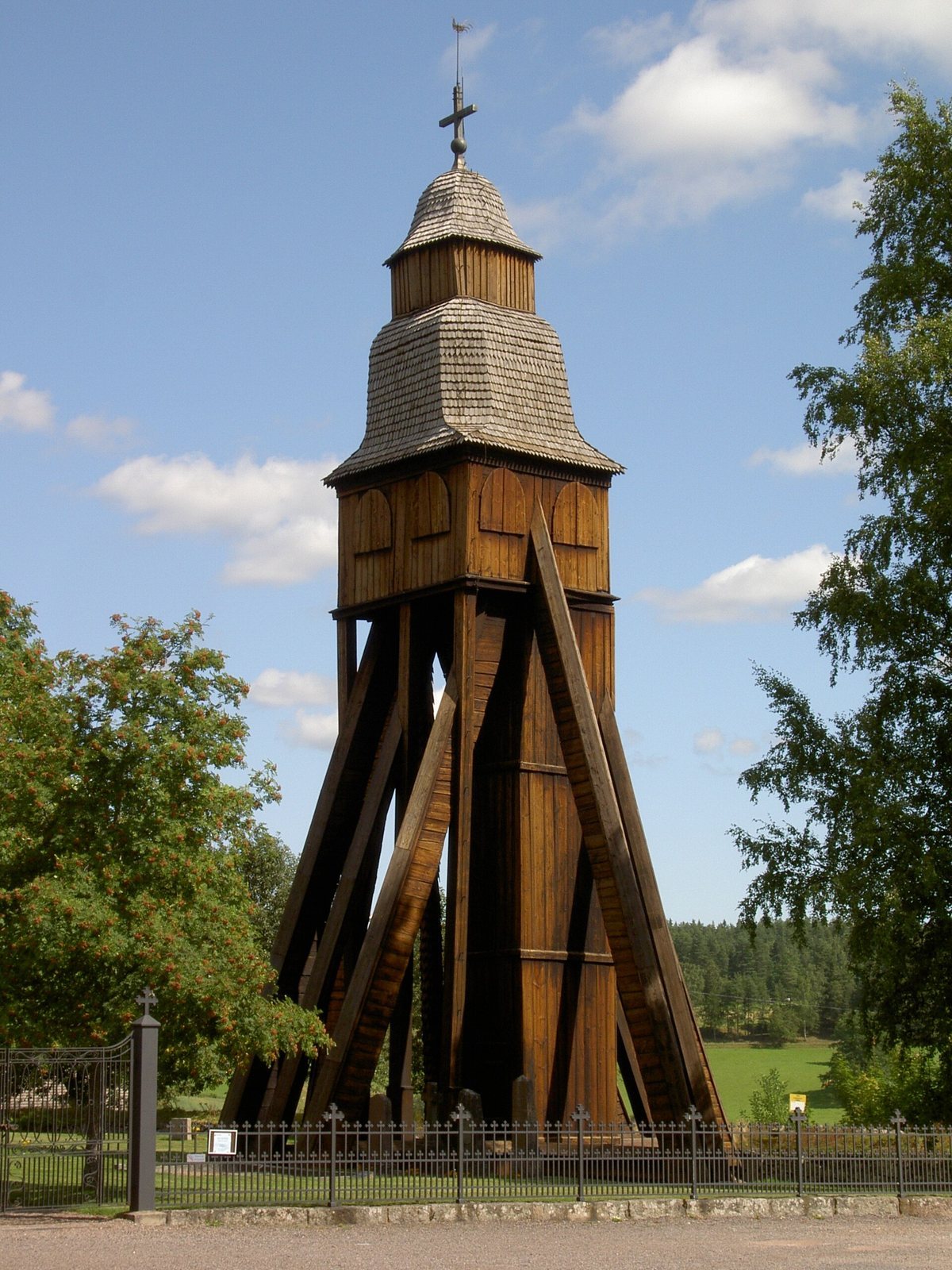
The present belfry was probably erected in 1698. It holds two bells that have been recast over time. The small bell was most recently recast in 1820, while the large bell was cast in 1850.
Interior and furnishings
Painted decoration
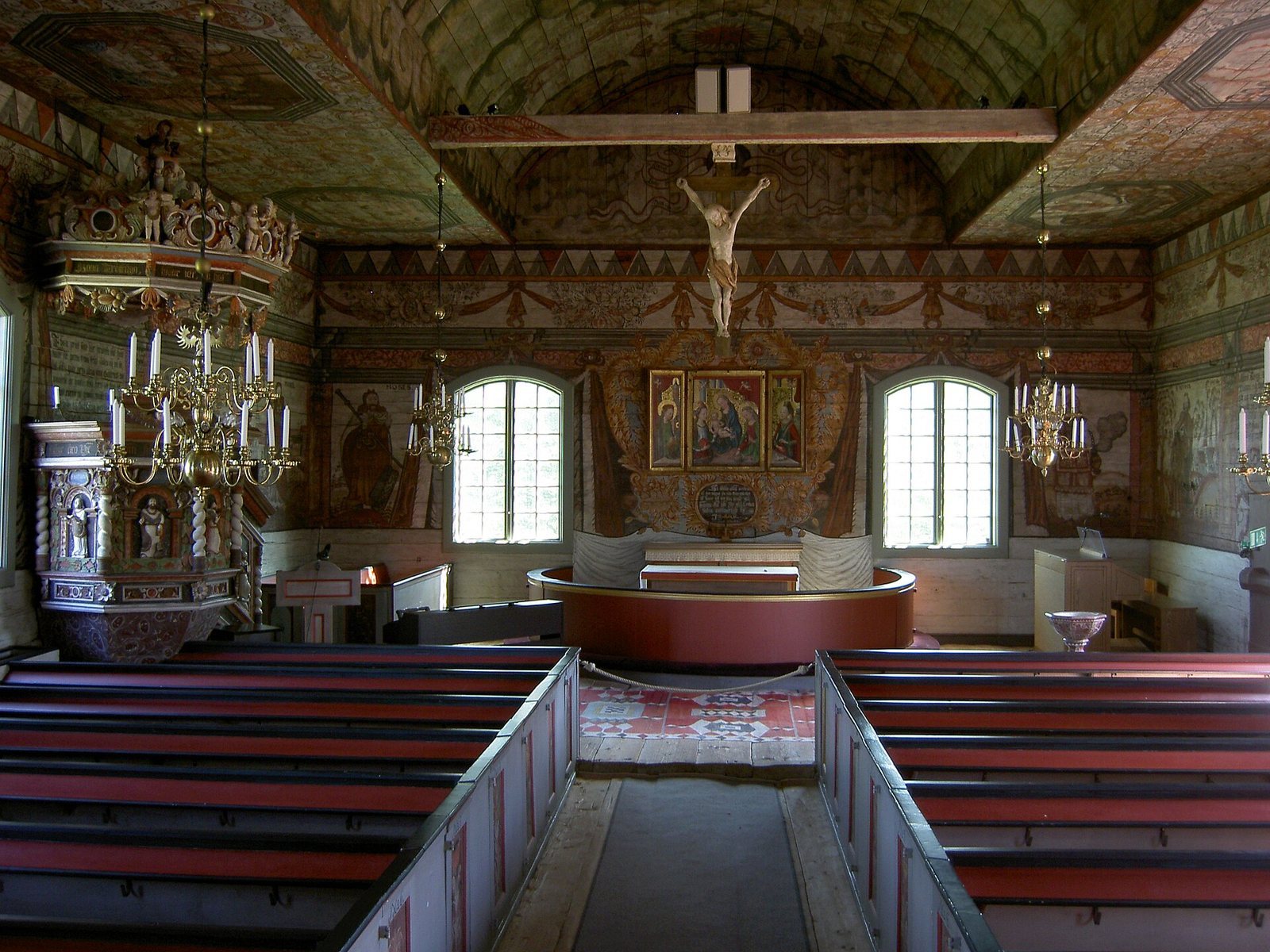
Decorative paintings cover the interior walls and ceiling, depicting events from the Old and New Testaments.
Altarpiece and altar
The altar has a late-fifteenth-century triptych, an artwork with a central panel and two side panels, made by the workshop of Bernt Notke, a prominent late-medieval Northern European sculptor and painter. The work survived the fire that ravaged the earlier church. The present arrangement includes a predella, a raised base associated with an altar or altarpiece, and a separate altar table.
Pulpit and baptismal font
The richly carved pulpit is dated to 1698, although it may be older than the church. It was painted in 1708, and its sculptures depict Christ and the four Evangelists. The baptismal font, made in the seventeenth century from polished gray limestone, came from the workshop of Michael Hacke, a master stoneworker in Skänninge.
Organs and chandeliers
Anders Jonsson, a bell-ringer and organ builder in Ringarum, built the main organ in 1841. It has nine stops, which select sets of pipes, on one manual, the keyboard played by hand, with an attached pedal played by foot. An independent pedal stop and a swell box were added in 1939; the swell box was removed in 1965 and the pedal stop in 1972. Nils-Olof Berg of Nye restored the organ to its original condition in 1988. Berg also built the mechanical choir organ in 1981; it was moved to the church in 1988 from the parish hall at Gullringen in Södra Vi. Chandeliers at the front date from the eighteenth century, while those at the rear were installed in 1976.