Stegeholm: A Medieval Castle Ruin in Västervik, Sweden
Site at a Glance
- Rating
- 4.2
- Popularity
- Low
- Country
- Sweden
- Primary era
- Medieval
- Eras represented
- Medieval
- Civilizations
- Holy Roman Empire, Swedish
- Site type
- Military
- Remains
- Castle
On this page8 sections
History
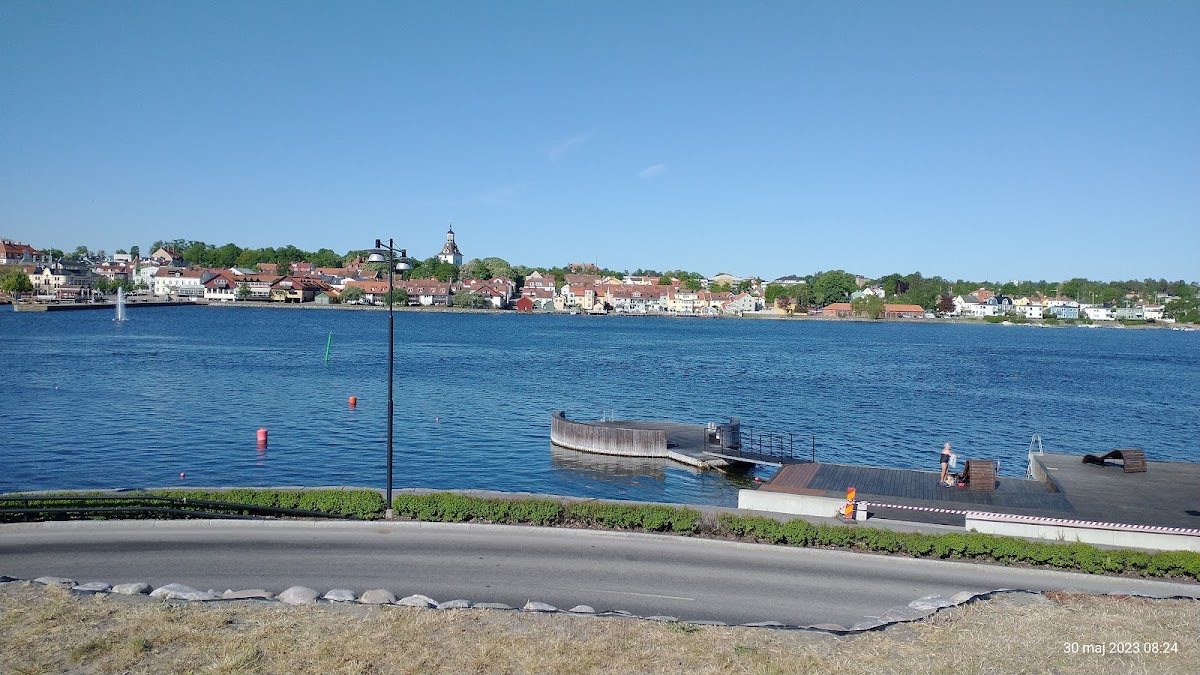
Stegeholm is a medieval fortified castle ruin on Slottsholmen in Västervik, Sweden. Established before 1370, probably by Duke Albrecht the Great of Mecklenburg, it stood at the shallow, narrow waterway where Gamlebyviken extends inland from the Baltic Sea toward Gamleby, the old Västervik. The castle was intended to protect the town and its approach.
Foundation and medieval control
Stegeholm was also known as Stäkeholm or Stäkahus. Duke Albrecht granted the castle to German knights, but Swedish control later passed to Bo Jonsson Grip, a leading Swedish magnate and regent. His heirs retained it until 1419, after which the castle came under Erik of Pomerania, a king of the Scandinavian realms during the Kalmar Union. That union brought Denmark, Norway, and Sweden under a common monarch, although political authority within it remained contested.
The castle became involved in the conflicts of the fifteenth century. On 21 September 1434, Jösse Nilsson, a commander serving the Swedish rebel leader Engelbrekt, made an unsuccessful attempt to storm Stegeholm. In 1436, inhabitants of Tjust besieged the castle under Bo Knutsson Grip. Stegeholm later surrendered to Karl Knutsson Bonde, a Swedish king and regent. It subsequently passed between commanders aligned with Swedish separatist interests and those supporting the union or Denmark.
County administration and military conflict
During the Kalmar Union, Stegeholm County included Kinda, Ydre, and Tjust, and from 1485 it also included Northern Vedbo. A county in this setting was a territorial administrative and jurisdictional unit that could be granted to a noble family or officeholder as a privileged possession. During the Vasa period, the era of Swedish rule under the Vasa dynasty beginning with Gustav Vasa, the county generally consisted of Tjust and sometimes included the newly created district of Tunalän. It also had a degree of dependence on Kalmar County.
Västervik had been relocated to the area of Stegeholm in 1433. In 1517, Christian II’s Danish fleet burned both the castle and the town. Sweden retook and rebuilt Stegeholm in 1521, but Danish forces occupied it again for part of 1612. These repeated changes of control reflected the castle’s position within the military and political struggles surrounding Sweden and Denmark.
Sture and Königsmarck ownership
In 1562, Stegeholm, Västervik, and their associated estates were granted to the Sture family as the County of Västervik. In 1570, King Johan III enlarged the county for the benefit of his maternal aunt, the widow of Svante Sture. It was then known as Stegeholm and Västervik.
After the male line of the Sture family ended in 1616, Västervik and Stegeholm were granted in 1651 as a county to Field Marshal Hans Christoff von Königsmarck, a Swedish field marshal and nobleman. The Swedish Crown later revoked the grant during the Great Reduction, its seventeenth-century recovery of estates and revenues previously granted to the nobility.
Destruction, decline, and preservation
The Königsmarck family replaced the old, deteriorating castle with a grand palace. A Danish-Dutch fleet destroyed the palace and the town on 1 and 2 September 1677. After this destruction, Stegeholm Castle and Slottsholmen fell into decay. In 1734, townspeople received permission to quarry stone from the ruin. A tar-boiling works, where wood tar was produced, and a smithy, a workshop for forging and repairing metal objects, were established within the surviving castle walls.
Preservation began in the nineteenth century. From 1881, the Society for the Beautification of Westervik restored parts of the ruin and laid out plantings. The city of Västervik assumed responsibility for the park and ruin in 1903. The Västervik Vis Festival has been held annually in the castle ruin since 1966. Archaeological excavations in 2016 examined medieval refuse layers along the shoreline beside the ruin, adding evidence from discarded household and other materials to the understanding of the site.
Remains
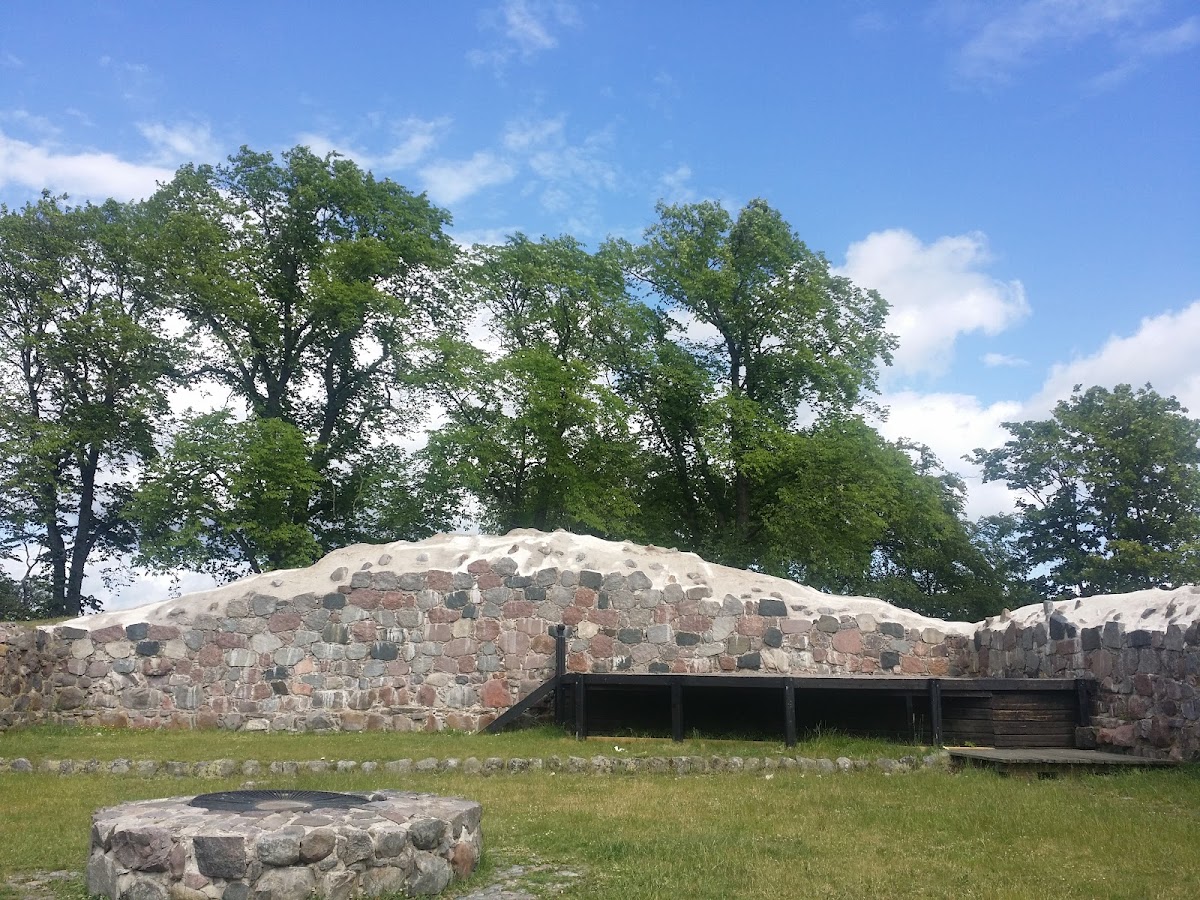
Stegeholm survives as the ruin of a fortified medieval castle on Slottsholmen. Its position beside the narrow waterway of Gamlebyviken explains the castle’s relationship to Västervik and the route inland toward Gamleby. The surviving walls also preserve evidence of later industrial reuse, while a restored park and planted areas occupy parts of the surrounding site.
Castle walls and later reuse
The principal physical remains are the walls of the medieval castle. The castle was later replaced by a grand palace built for the Königsmarck family, and that palace was destroyed in September 1677 along with Västervik. The surviving castle fabric subsequently enclosed a tar-boiling works and a smithy. Permission to quarry stone from the ruin in 1734 contributed to the site’s later history as a fragmentary architectural survival rather than an intact residence.
Park and archaeological shoreline
Plantings and a park were developed around the ruin from 1881 as restoration work began. The city of Västervik has been responsible for the park and ruin since 1903, linking the preserved remains with a managed landscape on Slottsholmen.
In 2016, excavations in the shoreline zone beside the castle uncovered medieval refuse layers. These archaeological deposits, formed from discarded household or other material, provide physical evidence connected with activity at the medieval castle and its waterfront setting.