Bjärka-Säby Castle: A Swedish Manor Estate and Ecumenical Community


Site at a Glance
- Rating
- 4.3
- Popularity
- Low
- Country
- Sweden
- Primary era
- Early Modern
- External website
- Open
- Eras represented
- Early Modern, Modern
- Civilizations
- Swedish
- Site type
- Domestic
- Remains
- Manor House
On this page9 sections
History
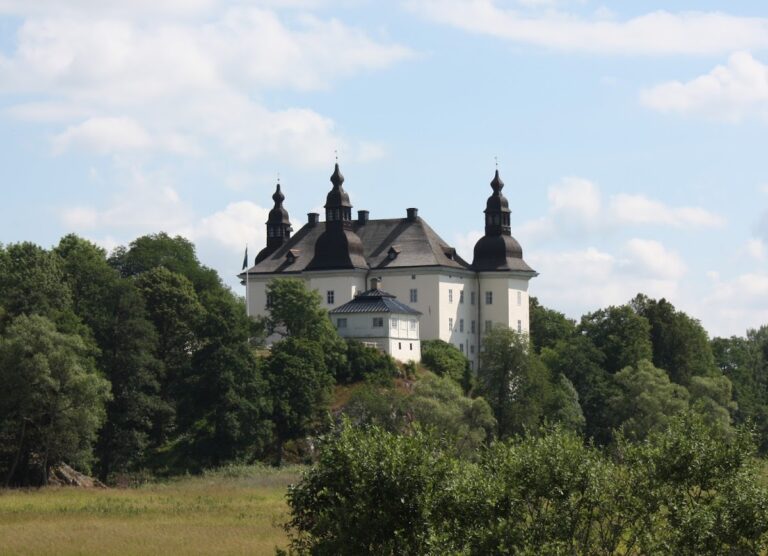
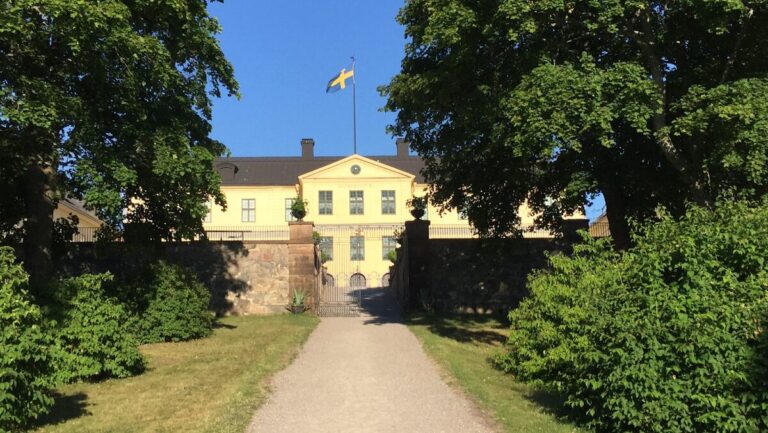
Bjärka-Säby Castle is a historic manor complex in Sweden, near Lake Stora Rängen in Östergötland, comprising an old château and a newer residence. The present new château was built between 1791 and around 1800 in the Baroque style for the nobleman and diplomat Germund Louis Cederhielm. Its grounds were arranged as an English park, while the estate’s history reaches back to a fourteenth-century château built farther north.
Medieval and Early Modern Origins
About 1.5 kilometres north of the present château, Bo Jonsson Grip built an earlier residence in the fourteenth century. Grip was a Swedish seneschal, a senior royal official, and one of the country’s major landowners. The building later became ruined. The old château at Bjärka-Säby dates from 1632 and forms a separate phase in the estate’s development.
The New Château and Its Alterations
Construction of the new château began in 1791 for Germund Louis Cederhielm and was completed around 1800. The design is associated with Fredrik Magnus Piper, a Swedish landscape architect known for formal and picturesque estate landscapes. The residence and its grounds were conceived together, with the surrounding estate laid out as a traditional English park.
Oscar Ekman, a consul, purchased the château in 1872. Under the Ekman family, the estate acquired a retirement home, a school, and buildings for agricultural workers. Between 1894 and 1898, the architect Agi Lindegren renovated the château. He departed from Piper’s design and gave the exterior its later Baroque or Neo-Baroque character.
The interiors were restored in 1920 and 1921 on the initiative of Sigurd Curman, secretary of the Swedish National Heritage Board, with the architect Erik Fant of the Nordic Museum. This work recreated interiors that reflected the manor’s late-eighteenth-century origins, while Lindegren’s exterior appearance was retained.
Religious Use and the Ecumenical Community
In 1980, the Ekman family donated the château to Sionförsamlingen i Linköping, a Pentecostal Christian congregation. Pentecostalism is a Protestant movement that emphasizes personal conversion, prayer, and the gifts of the Holy Spirit. The congregation has used the château for activities including biblical training.
Since 1996, Christians from different denominations have lived a shared religious life at the château, praying, working, and studying according to a simple rule. Retreats and seminars held there helped give rise to the independent Ecumenical Community of Bjärka-Säby. Its members live across Sweden and other Scandinavian countries but regularly gather at the château. The community is ecumenical rather than monastic. Peter Halldorf served as its spiritual leader, or preces, from its beginning, and Jonas Eveborn took that role in 2017.
A side chapel was created in the eighteenth century through the devotion of Hedvig Ekman, a devout Pietist Lutheran. Pietism emphasized personal devotion, disciplined religious practice, prayer, and Bible study. The château’s religious life also includes traditions associated with Russian Orthodox, Greek Orthodox, and Coptic Orthodox Christianity. Bjärka-Säby Castle is protected as a Byggnadsminne, the Swedish legal designation for a historically significant protected building or built environment.
Remains
The New Château
The new château stands beside Lake Stora Rängen as a Baroque-style manor. Its construction began in 1791 and reached completion around 1800. The exterior visible today derives from Agi Lindegren’s renovation of 1894 to 1898, which replaced the character of Fredrik Magnus Piper’s original design with a Baroque or Neo-Baroque appearance.
The Old Château and Earlier Ruins
The old château is a Carolingian-style building with two wings and dates from 1632. Farther north, the earlier fourteenth-century château associated with Bo Jonsson Grip survives in ruined form, preserving the site’s medieval phase as a distinct part of the wider estate.
Chapel and Interiors
The château contains an eighteenth-century side chapel connected with Hedvig Ekman’s religious devotion, as well as a patristic library. Portraits of Hedvig Ekman, Gustaf Aulén, and Nathan Söderblom hang inside. The interior also includes an icon of Bridget of Sweden, traditional icons from Russian Orthodox, Greek Orthodox, and Coptic Orthodox traditions, and icons painted by members of the ecumenical community.
Estate Landscape
The estate grounds were designed as an English park. Their layout forms part of the architectural conception associated with the new château and reflects the landscape design developed for the residence around the turn of the nineteenth century.