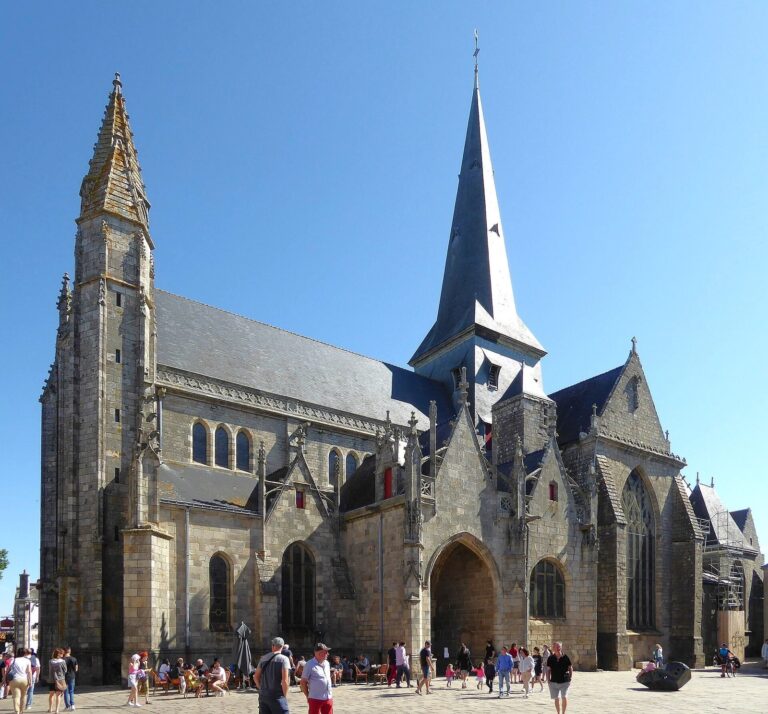
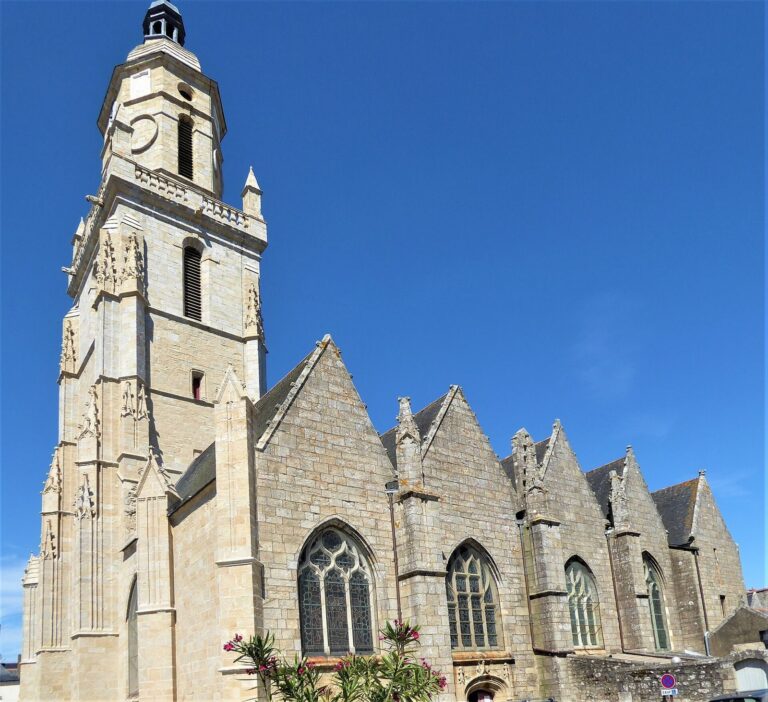
Dissignac Tumulus: A Prehistoric Burial Monument in France
Site at a Glance
- Popularity
- Medium
- Country
- France
- Primary era
- Stone Age
- Eras represented
- Stone Age
- Civilizations
- Unclassified
- Site type
- Burial
- Remains
- Burial Mound
On this page8 sections
History
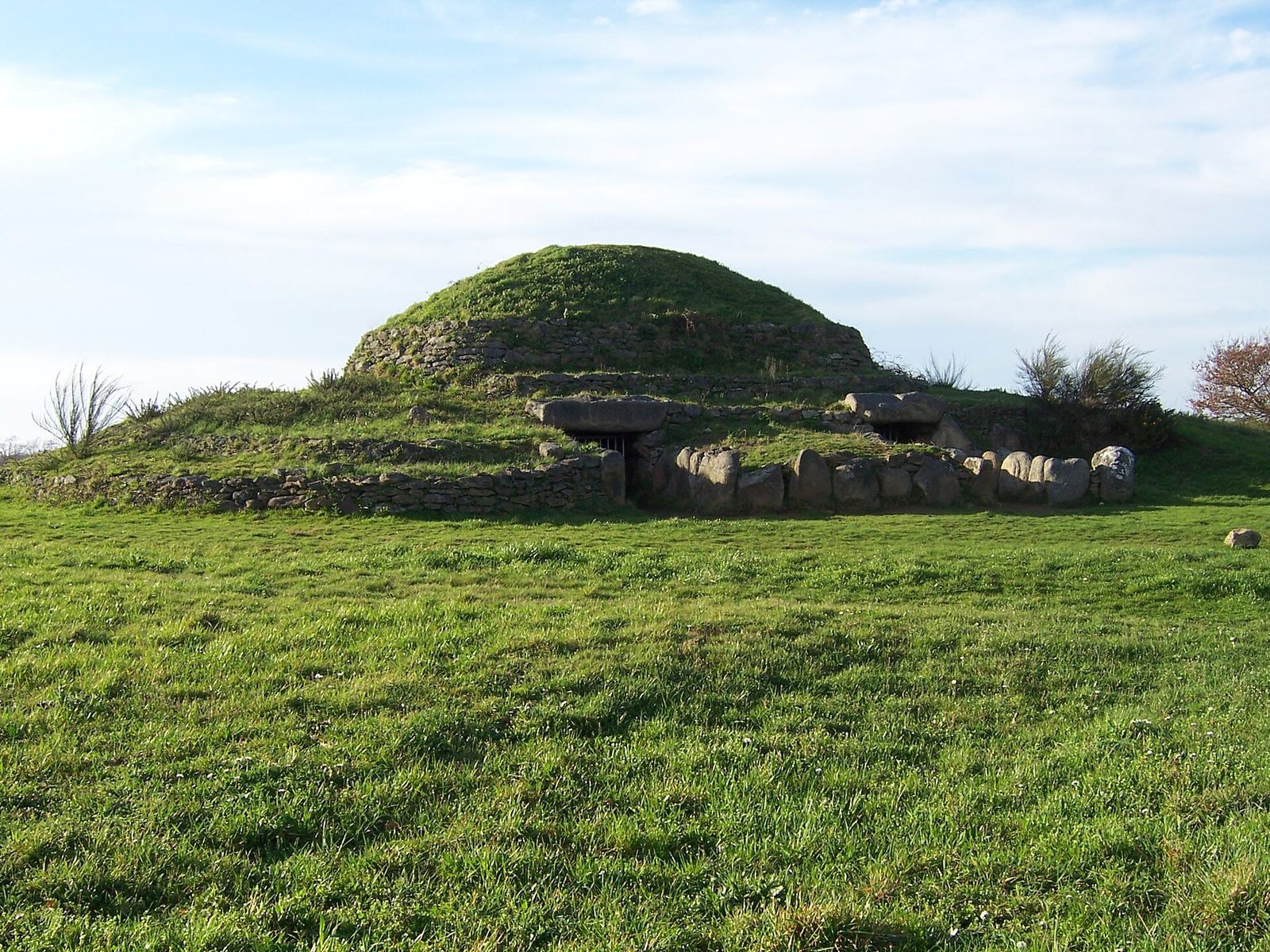
The Dissignac Tumulus is a large-stone burial mound on a hill in Saint-Nazaire, France, dated to about 4700–4500 BCE. It is regarded as the oldest megalithic structure in Loire-Atlantique. The monument was contemporary with the Great Broken Menhir of Er Grah, a large upright stone at Locmariaquer, and predates the step pyramid at Saqqara associated with the early Egyptian king Djoser by about 2,000 years.
Its construction took place in two phases, with an enlargement following soon after the initial work. Ceramic finds suggest that the surrounding area remained occupied from about 4500 to 2500 BCE.
A. Martin and R. Kerviler excavated the monument hastily in 1873, and no archaeological material from that work was retained. Excavations in the 1970s and 1980s, including those led by French archaeologist and prehistorian Jean L’Helgouach, examined the structure and established its two-phase development. The state owns the monument, which has held French historic-monument protection, a national heritage designation, since 1889.
Remains
The monument combines two burial chambers and their passageways with three surrounding stone enclosures, all covered by a mound of pebbles and vegetated earth. The mound rises about 3.2 m; most of the large stones are concealed, though they can be seen at the entrances and inside the chambers.
Setting and Enclosures
Set on Prayer Hill, the monument lies about 6 km west of central Saint-Nazaire and roughly 3 km northwest of the nearest coast, near the boundary between the Loire estuary and the Atlantic. The mound now measures 21 m across. Its innermost enclosure, built from local gneiss (a type of rock), rises about 2 m. The second has upright granite and quartz blocks at its base, topped with pebbles, while the outermost is a low rubble wall. Compacted clay slopes of about 45 degrees support the bases of the inner two enclosures, and rubble fills the spaces between them. In the first phase, the innermost enclosure formed the mound’s outer face, and the mound was no more than 17 m across. The later enlargement added the two outer enclosures, extended each passageway by 4 m, and brought the mound to its present size. A modest stone facing was also placed between the entrances.
Passages and Burial Chambers
Passageways
Two parallel passageways lead to the chambers. Each is about 11 m long, and both entrances face southeast.
Larger Chamber
The larger chamber is semicircular, with alternating granite and amphibolite (a type of rock) slabs forming its walls. The slabs were brought from the coast: granite came from Saint-Marc-sur-Mer and amphibolite-pyroxenite, another type of rock, from Ville-ès-Martin. The journey was at least 4 km, and no slab weighs more than five tonnes. Blocks above the wall slabs even out differences in their height and provide level support for the roof stones. Some project inward, helping reduce the span that the roof slabs cover. The alternating stone has been interpreted as a deliberate visual arrangement.
Smaller Chamber
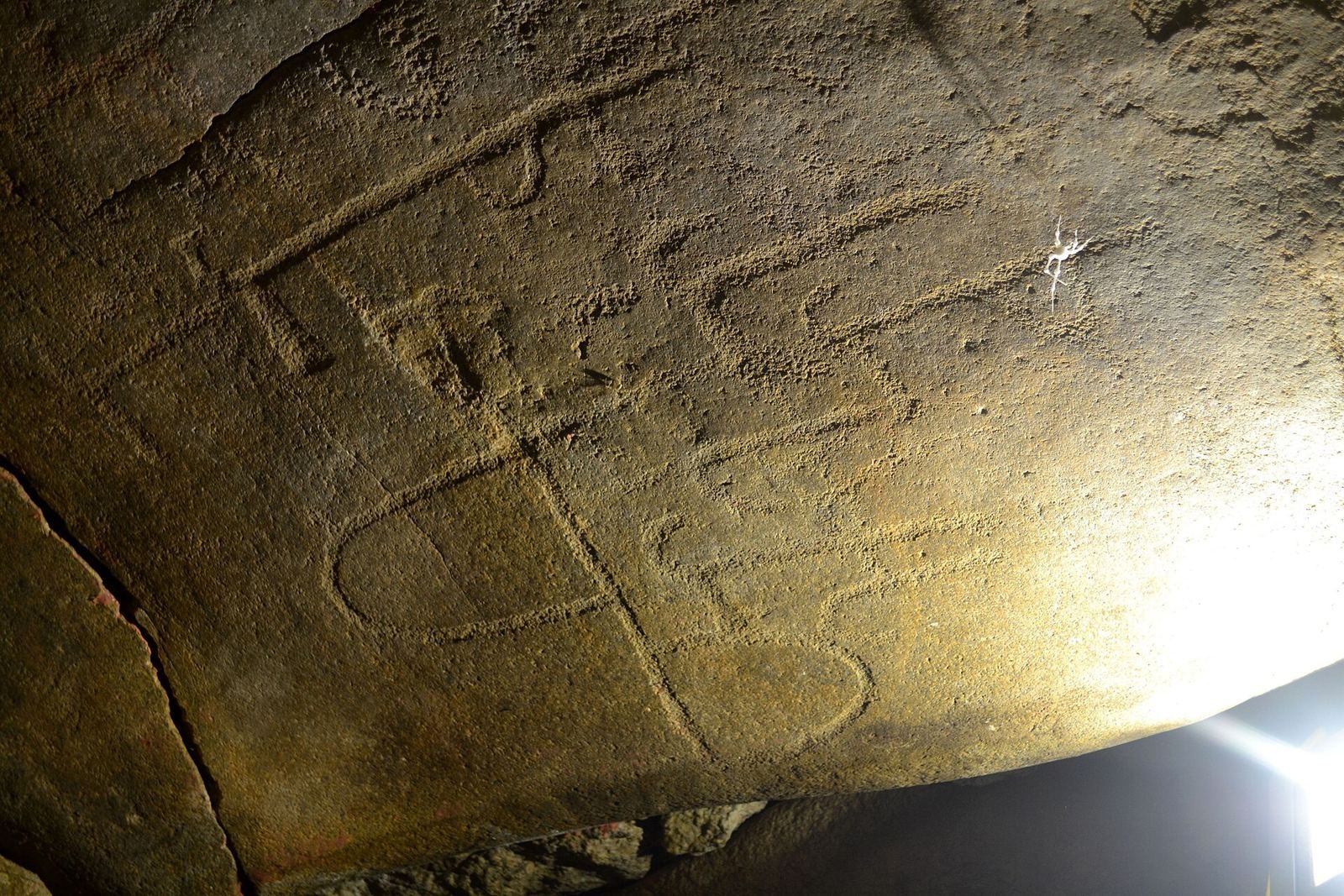
The smaller chamber is rectangular. Its roof includes a coastal granite slab whose marine-erosion marks were levelled by hammering and polishing. Pecked engravings on it include triangular axes comparable to those at the Table des Marchands in Locmariaquer, crook-shaped designs like those on the Kermarquer menhir at Moustoir-Ac, and a large axe-plough motif also found at Penhap, Kercado, and Mane-Rutual. One axe design began as a crook, then was altered by pecking to add a blade.
Excavated Finds
Excavations recovered pottery dated to the fourth millennium BCE, including bowls, cups, bottles, plates, dishes, vases, and incense burners. Other finds included axes made from dolerite or jadeite, two kinds of stone, as well as scrapers, arrowheads, and beads made from sericite or variscite, two minerals.