Notre-Dame-de-Pitié, Le Croisic: A Flamboyant Gothic Church in France
Site at a Glance
- Popularity
- Medium
- Country
- France
- Primary era
- Early Modern
- Eras represented
- Medieval, Early Modern, Modern
- Civilizations
- Duchy of Brittany, French
- Site type
- Religious
- Remains
- Church
On this page19 sections
History
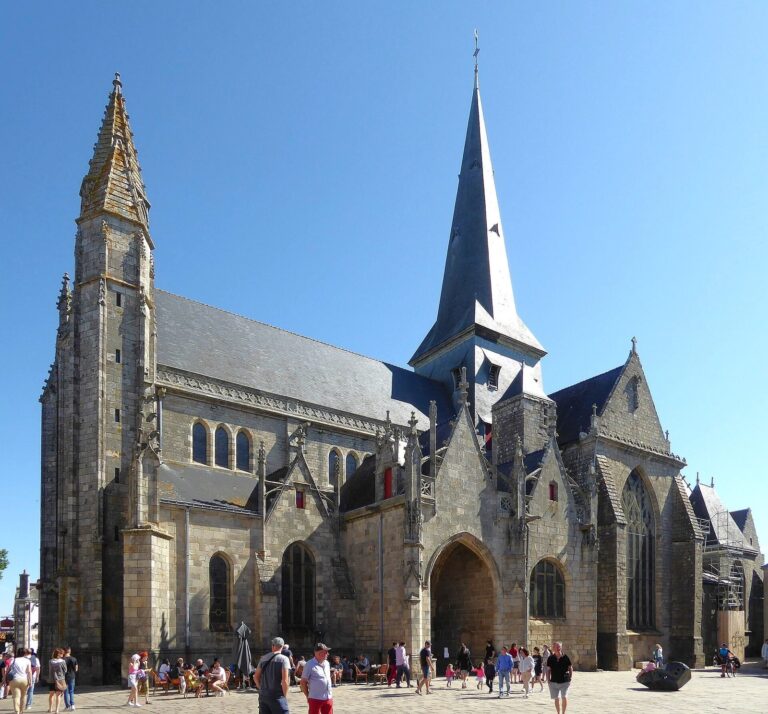
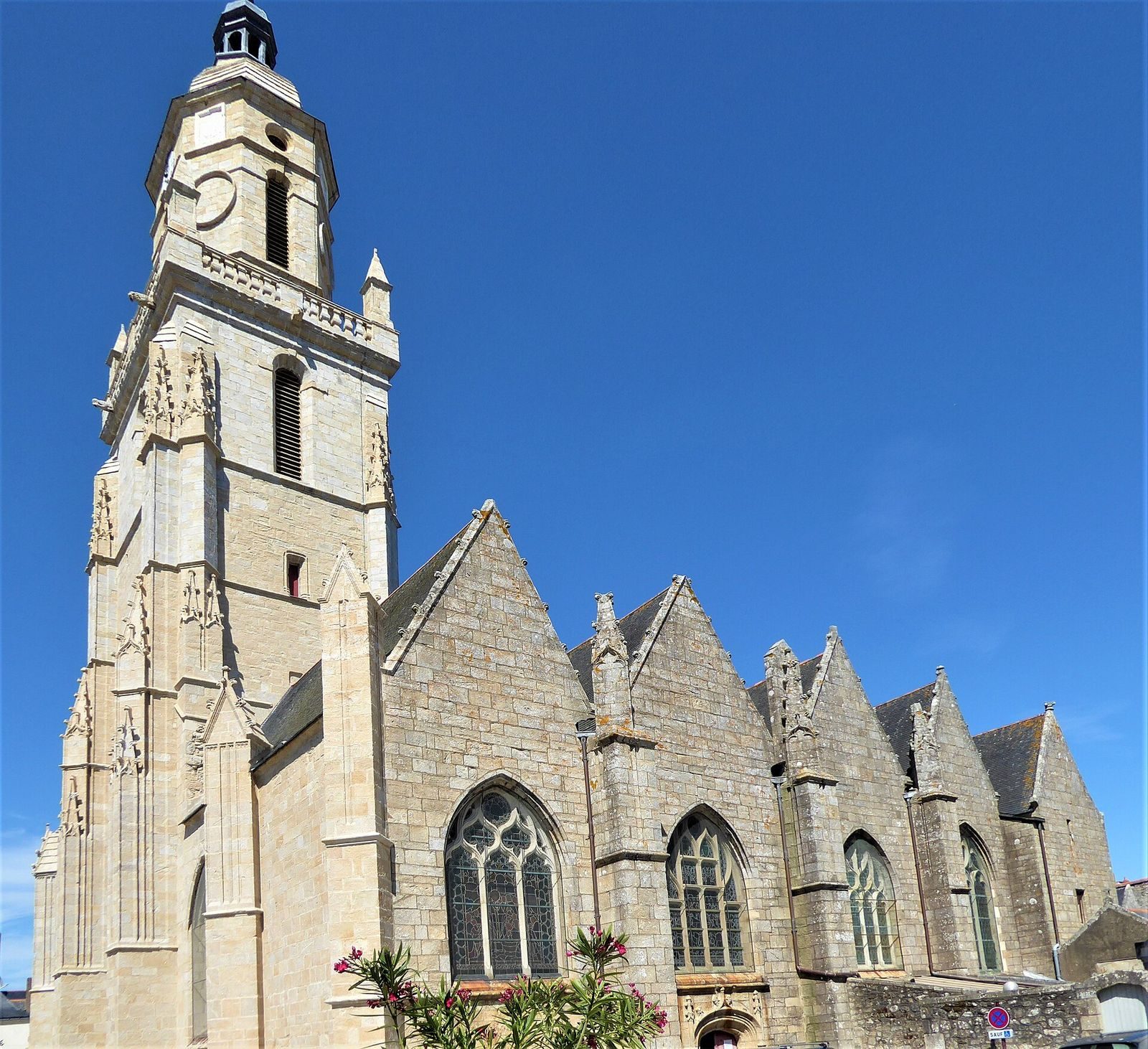
Notre-Dame-de-Pitié is a Roman Catholic church in Le Croisic, France, whose construction began in 1494 in the Flamboyant Gothic style, a late Gothic form marked by flame-like tracery. Dedicated to Our Lady of Pity, it is affiliated with the Diocese of Nantes, a Catholic administrative area. Le Croisic also had a hospice dedicated to Julian the Hospitaller, known as Julian the Poor, which welcomed pilgrims travelling from Brittany or northern Europe to Spain.
Construction and consecration
On 4 December 1494, Jacques Penfaut, the local official responsible for managing funds, laid the church’s first stone. On 15 October 1501, the pope authorized the people of Le Croisic to have the church blessed and consecrated, install a baptismal font, and celebrate the sacraments there. Mathieu de Pledran, bishop of Dol-de-Bretagne, consecrated it on 25 March 1507. The church was blessed in 1525, when it was still barely complete, and construction appears to have continued until 1528.
The plan changed during construction. It grew from three principal aisles to four with the addition of a second aisle on the south side. The north door, known as the Baptistery, was completed on 23 August 1528 by Robin, while Jean Leroy served as the local financial officer.
The tower and changing uses
Work on the tower began on 6 April 1526, but it was completed only around 1700. From the late seventeenth century, a stone bell tower replaced a wooden spire. Its design followed that of the recently built tower at Saint-Guénolé church in Batz-sur-Mer.
During the French Revolution, the church was used in turn as a republican temple, an artillery store, and a stable.
Restoration and later changes
By the mid-nineteenth century, the church needed extensive repairs to its roofs and stained-glass windows. Work also included building a residence for the parish priest. Abbé Bigaré, a Catholic priest who served the parish from 1840 to 1879, organized a complete restoration with architect Henri Gilée. On 4 August 1898, the main altar was consecrated anew by Legal, auxiliary bishop of Saint Albert in Canada.
The church was classified as a Historic Monument in 1906. That year, its four stained-glass windows made by the Lorin workshops were also classified in the immovable-property category of historic monuments and entered in the General Inventory of Cultural Heritage. Twentieth-century restoration addressed the window openings, stained glass, tower, and roofs. On 13 June 1963, the large fifteenth-century choir window collapsed, destroying the main altar and parquet floor. A replacement window was installed in January 1967. In 1980, the present altar, a large cross, and a candlestick designed by architect M. Bué were installed. Work for the church’s 500th anniversary included major repairs to the south roofs and the small bell tower on the main roof ridge. The west window and organ gallery were restored toward the end of the century.
Remains
The church has an asymmetrical, nearly square plan, with four aisles and a sanctuary that ends in a flat wall. Its construction combines granite with limestone vaulted ceilings. Sixteen large pointed windows punctuate the building.
The north porch
The north porch has a central Pietà, a sculpture of Mary mourning Christ’s dead body, and plant ornament on the moulded bands framing its arch. Pale limestone panels appear low on either side of the porch and along the outer arch. A niche with a canopy and decorated base is characteristic of Breton Gothic architecture of the period.
Painted vaults
Six painted vaults date from the sixteenth century. The best-preserved painting, at the end of the nave, represents the Holy Trinity, the Christian doctrine of God as Father, Son, and Holy Spirit. Each figure occupies a separate section: God the Father wears a tiara and raises his right hand in blessing; Christ carries the Cross and displays a wound on one hand; and the Holy Spirit, shown as a bird, turns toward the other two figures.
Altars and furnishings
The Capuchin altar
An altar from the Capuchin chapel was installed in the church in 1788. The Capuchins are a branch of the Franciscan religious order. Small panels beside the altar’s tabernacle, the container for the consecrated Eucharist, show Franciscan imagery. One depicts the crossed arms of Jesus and Saint Francis of Assisi, signifying the disciple’s conformity to his master. The other shows a cross surrounded by the Crown of Thorns. The church also has altars in the north chapel, the Rosary chapel, and the south chapel.
Votive offerings and other furnishings
Two nineteenth-century boats serve as votive offerings, objects given in fulfilment of a vow or in thanksgiving. Four funerary slabs came from the former cemetery south of the church, and two processional banners are also present. A pulpit made by a cabinetmaker from Le Croisic has a sounding board, the canopy above the speaker, topped by an angel blowing a trumpet.
Paintings and devotional images
Narrative paintings
A painting by Élie Delaunay depicts Jesus healing ten lepers, with one of the healed men returning to give thanks. L. Desjardin’s painting shows Moses extending his staff over the Red Sea as the Hebrews cross and the pursuing Egyptians drown.
The stoup and other devotional images
Above the holy-water stoup, a nineteenth-century painting by an unknown artist depicts the crowning of Saint John the Baptist. The octagonal stoup, a basin for holy water used in devotion, may be an earlier fifteenth-century baptismal font. Another painting, an ex-voto offered in thanksgiving or fulfilment of a vow, shows Mary holding the infant Jesus and offering a rosary to a boat’s crew in danger on a rough sea. An anonymous eighteenth-century painting depicts the education of the Virgin, with an altar tomb recess, a recessed funerary space associated with a tomb, nearby. Ferdinand du Puigaudeau also painted the church.
Wooden statues
The wooden statues date from the seventeenth and eighteenth centuries. They include Saint James the Greater, shown with a pilgrim’s broad hat, scallop shell, food bag, and walking staff; Saint Julian of Brioude; Ecce Homo, Christ presented before his crucifixion; Our Lady of Pity; and Our Lady of the Winds, set on a pillar. Saint Julian of Brioude, described as a fourth-century Roman soldier martyred for his faith, is associated with the spread of Christianity along the Loire.
Stained glass
Windows in bays 9 and 10
Four windows in bays 9 to 12 were made between 1900 and 1901 by the Lorin workshops of Chartres, directed by Charles Lorin. The window in bay 9 depicts the glorification of Saint Anthony of Padua and the founding of the Capuchins at Le Croisic on 19 August 1617. Bay 10 shows Saint Yves, a medieval Breton priest and judge, administering justice and giving charity.
Window in bay 11
Bay 11 portrays Saint Christopher as a ferryman. The image recalls the former crossing at low tide of the Traict du Croisic, a tidal inlet, on the route toward Guérande, as well as refuge associated with the Traict cross. Saint Christopher is venerated as a protector of travellers.
Window in bay 12
The window in bay 12 depicts the conversion and baptism of people from Le Croisic by Félix of Nantes, a Christian bishop, in the sixth century. Its upper part shows the Gothic chapel of the Crucifix at the town entrance. The arms of Nantes appear on the right and those of Le Croisic on the left. The scene refers to Félix baptizing the peninsula’s first Christians at the site of the present chapel.
Other stained-glass scenes
Other windows show Saint Peter, one of Jesus’s twelve apostles, in the Gospel scene of the calmed storm, and Saint Goustan, a Benedictine monk associated with evangelizing the people of Le Croisic in the tenth century. More broadly, the nineteenth-century stained glass evokes saints, holy people, and the Christian community of Le Croisic.