Diktynaion: A Cretan Sanctuary of Diktynna
Site at a Glance
- Popularity
- Very Low
- Country
- Greece
- Primary era
- Classical
- Eras represented
- Iron Age, Classical
- Civilizations
- Ancient Greek, Roman
- Site type
- Religious
- Remains
- Sanctuary
On this page14 sections
History
Diktynaion was a Greek sanctuary beside Ménies Cove on the northeast coast of the Rodopós Peninsula in Greece. Dedicated to the Cretan goddess Diktynna, also called Britomartis, it became the most important cult site on ancient Crete. Its temple followed the Doric order, an ancient Greek architectural style, and was first built in the late seventh century BCE.
Origins and early temple
Cretan myth placed Diktynna’s leap into the sea here as she fled Minos, the legendary king of Crete. Over time, she came to be identified with Artemis, a Greek goddess associated with hunting and the natural world. Around 524–519 BCE, a replacement temple was built on the same site. Herodotus credited the work to the Samians, a people from the island of Samos, whose colony was Kydonia.
Contested control
Control of the sanctuary passed among rival Cretan city-states. Kydonia appears to have held it first, before Polyrrhenia gained control in the early third century BCE. Kydonia took it again during the second and early first centuries BCE. After Rome conquered Crete, the sanctuary apparently passed permanently to Polyrrhenia. Some interpretations have treated Diktynaion as a city that issued its own coins.
The Roman period
Plans to rebuild the temple may have been made under Augustus, Rome’s first emperor, but the work seems to have remained unfinished. The sanctuary flourished especially under Hadrian and his successors. Worshippers reportedly went barefoot when making offerings, and the income from those offerings helped finance public works in different parts of Crete. Archaeological excavations took place at the site in 1942.
Remains
The remains occupy a terrace beside the sandy shore at Ménies Cove. The temple stood within a larger precinct, while water installations, buildings, and part of a road toward Polyrrhenia survive in the surrounding area.
Temple precinct
Temple
The Doric temple measured about 14 by 33.5 metres and had a colonnade surrounding its main structure, a design known as peripteral. It is the only known temple of this type on Crete. The surviving remains belong to the temple’s final building phase, carried out around AD 123 during Hadrian’s reign.
Terrace and entrance
The temple stood on a terrace about 55 by 50 metres in size. Covered colonnades, or stoas, bordered three sides facing the sea. The altar was southwest of the temple, and a monumental entrance, or propylon, provided access to the precinct.
Water supply and valley buildings
Water supply
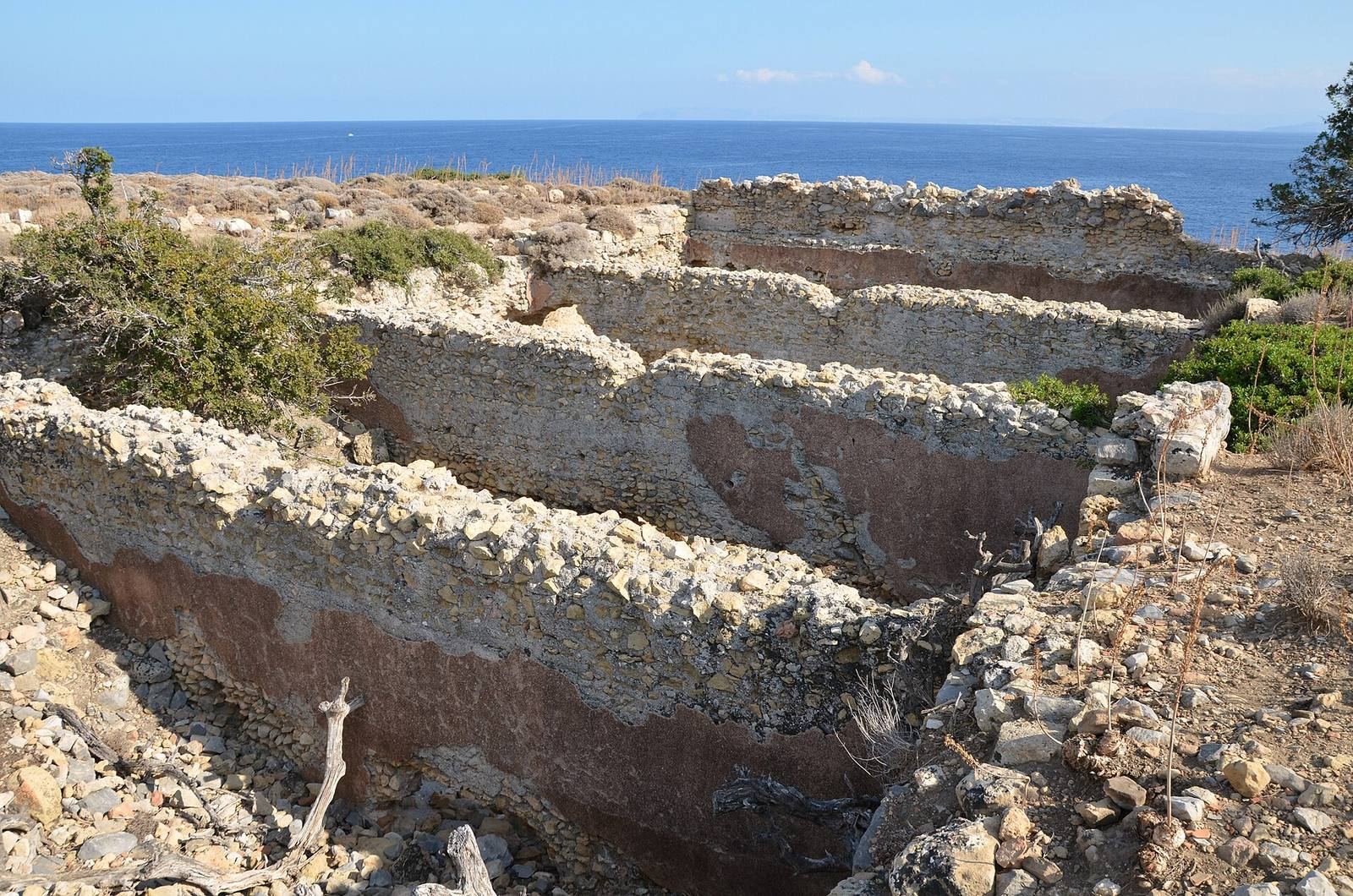
Remains of an aqueduct and four large cisterns have been found at the sanctuary.
Buildings in the western valley
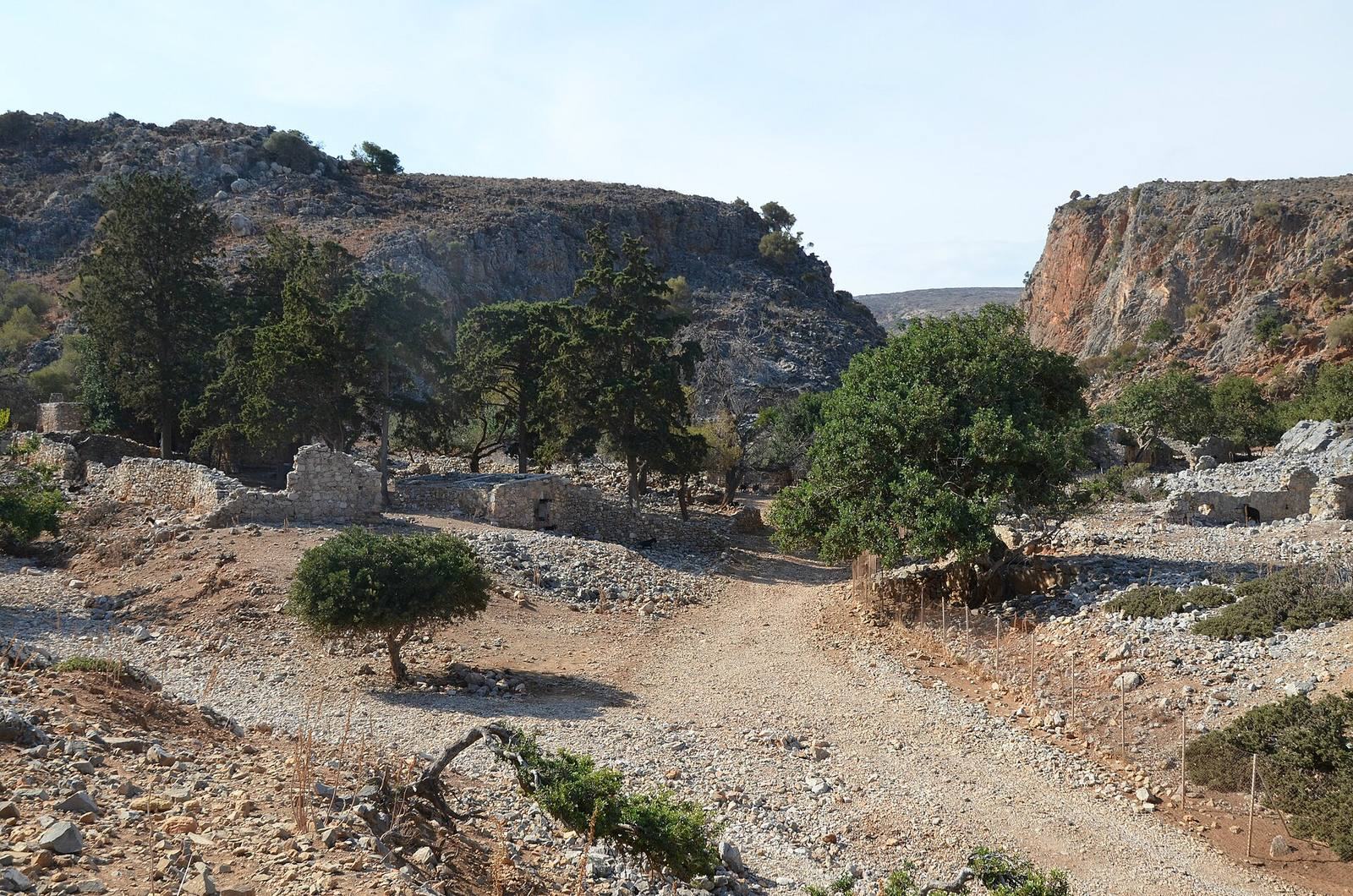
In the valley west of the temple are accommodation buildings intended for pilgrims, other houses, and the remains of what appears to have been an agora, a public gathering place. A further building resembles an odeion, a hall associated with musical performance.
Road and recovered statues
Road to Polyrrhenia
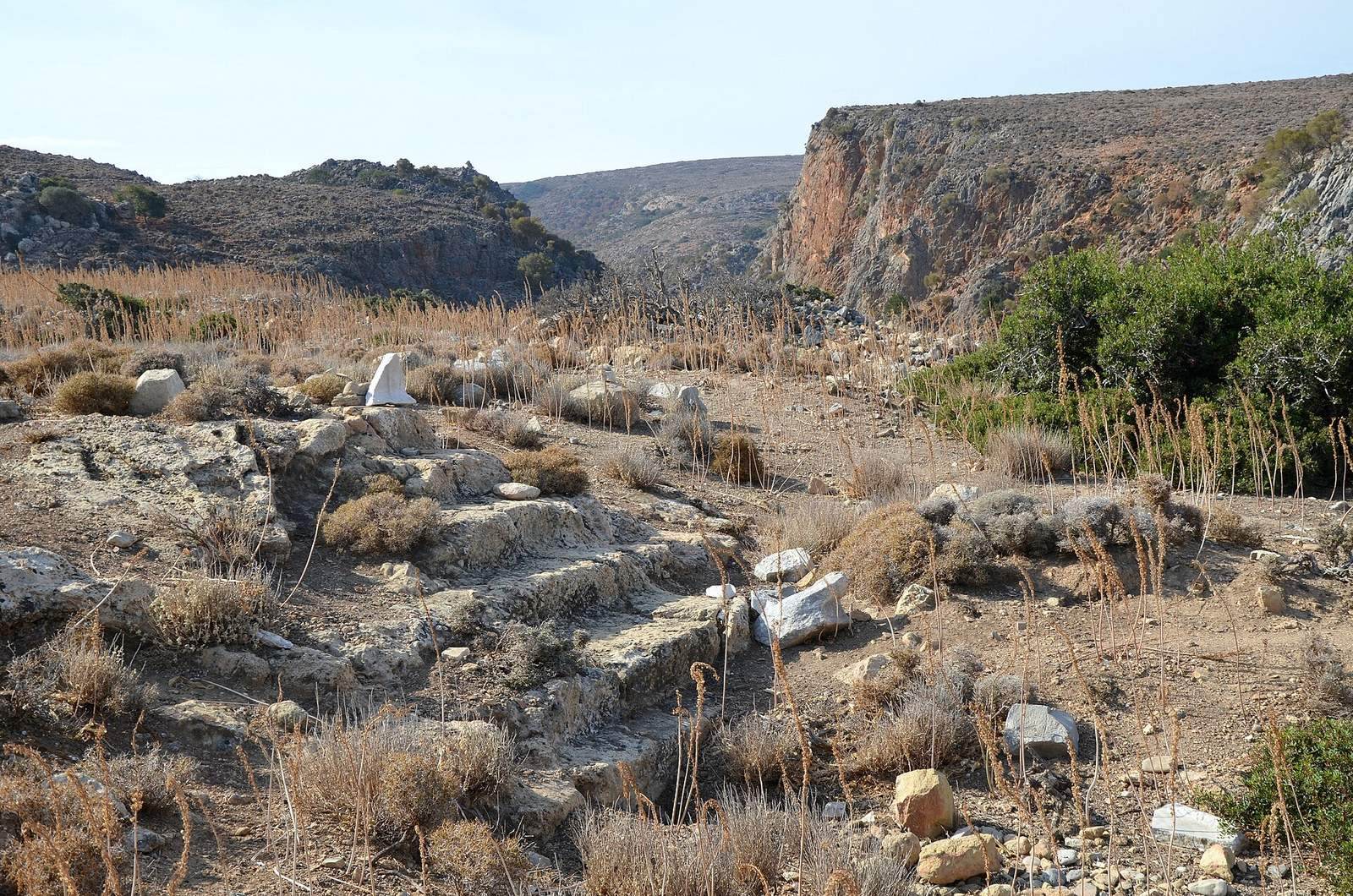
Parts of the Roman-period road connecting the sanctuary with Polyrrhenia have been found. It was about six metres wide. Its stated ancient length was 11 Roman miles, or more than 16 kilometres, although the distance between the temple and the city was greater.
Statues
Finds from the excavations include a statue of Artemis and the head of a statue of Hadrian. Both are now held at the Archaeological Museum of Chaniá.