Küçük Hasan Pasha Mosque: An Ottoman Mosque in Chania, Greece


Site at a Glance
- Rating
- 4.5
- Popularity
- Medium
- Country
- Greece
- Primary era
- Early Modern
- Eras represented
- Early Modern, Modern
- Civilizations
- Ottoman
- Site type
- Religious
- Remains
- Mosque
On this page7 sections
History
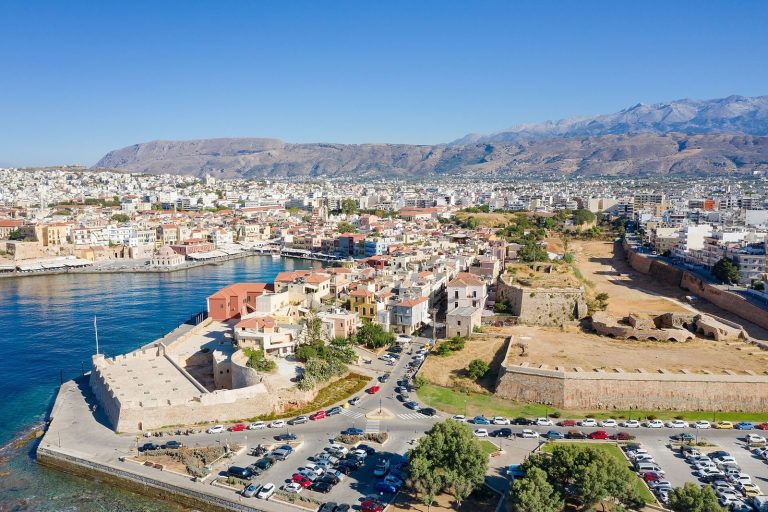
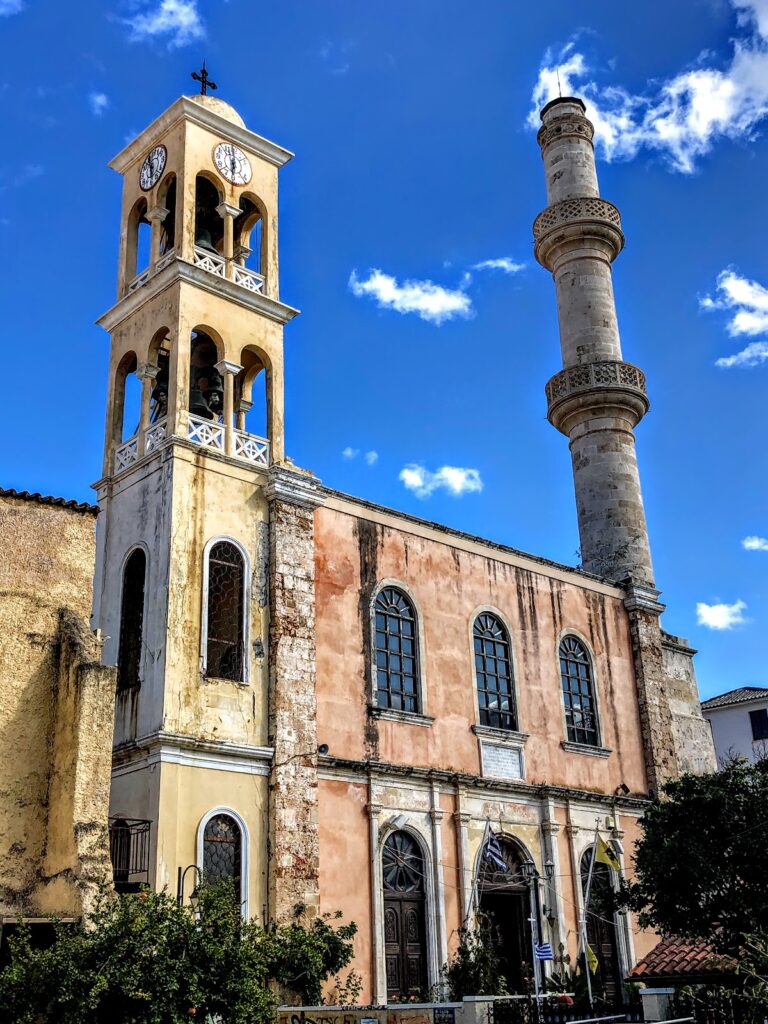
Küçük Hasan Pasha Mosque is an Ottoman mosque in Chania, Greece, built shortly after the Ottoman conquest of the city in 1645. Dedicated to Küçük Hasan Pasha, the first commander of the Ottoman garrison, it is described as the first mosque erected in Crete. The building is also known as the Yalı Mosque, meaning “Shore Mosque,” and the Janissaries’ Mosque.
Construction under Ottoman rule
The mosque’s construction belongs to the second half of the seventeenth century, with 1645 given as its completion date. It may have occupied the site of a small Byzantine church, and an Armenian architect may have designed it. Küçük Hasan Pasha was an Ottoman military commander whose title, pasha, denoted high rank in the empire’s administrative and military hierarchy. The mosque’s association with the Janissaries, elite Ottoman infantry troops, is linked to the cemetery that formed part of its former complex.
Religious use and later changes
Küçük Hasan Pasha Mosque served Muslim worshippers until 1923. In that year, the population exchange between Greece and Turkey led to the departure of Crete’s Turkish population and ended the building’s use as a mosque.
After its desacralization, the building was used successively as a storehouse, a folklore museum, a tourist information centre, an annex of the archaeological museum, and an exhibition space. During the Second World War, it housed the Archaeological Museum of Chania and suffered severe damage from wartime bombing. The mosque was extended in 1880 and restored during the 1960s and again in 1998. Its minaret was demolished in the early twentieth century, probably in 1920 or 1939, and later restoration did not rebuild it. The former mosque is now an exhibition centre affiliated with Greece’s Ministry of Culture and Sports.
Remains
Main building and dome
The building has a cubic body crowned by a large hemispherical dome without a drum, the architectural base that can support a dome above a building’s main body. Four stone arches support the dome, while four external arches provide counterbuttressing. The mosque is built entirely of stone, an Ottoman construction form described as surviving in only a few examples in Crete and Rhodes.
Portico and courtyard complex
A portico formerly ran along the western and northern sides of the mosque. Its seven small domes each had an opening at the crown. Around 1880, a new Neoclassical arcade concealed the original arcade. Neoclassical architecture draws on forms associated with ancient Greek and Roman buildings.
The former complex also included a courtyard and a garden planted with palm trees. A cemetery contained the graves of pashas and Janissaries, giving the building its alternative association with the Janissaries.
Interior and ablution fountain
The prayer hall, now used as an exhibition room, contains a mihrab, the niche that marks the direction of prayer toward Mecca. An ablution fountain is framed by a Neoclassical arch. Its inscription gives the Hijri date 1311, corresponding to 1893 in the Gregorian calendar.