Sengenyama-kofun (Takasaki): A Keyhole-Shaped Kofun Burial Mound
Site at a Glance
- Rating
- 3.2
- Popularity
- Very Low
- Country
- Japan
- Primary era
- Classical
- External website
- Open
- Eras represented
- Classical
- Civilizations
- Unclassified
- Site type
- Burial
- Remains
- Burial Mound
On this page7 sections
History
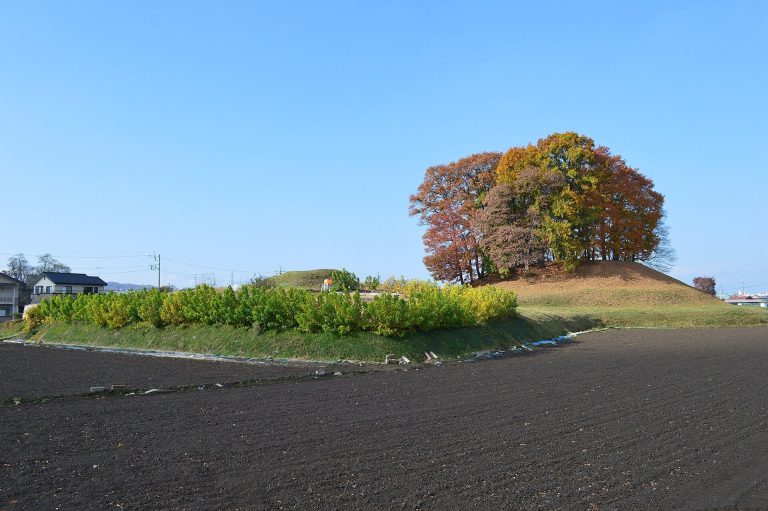
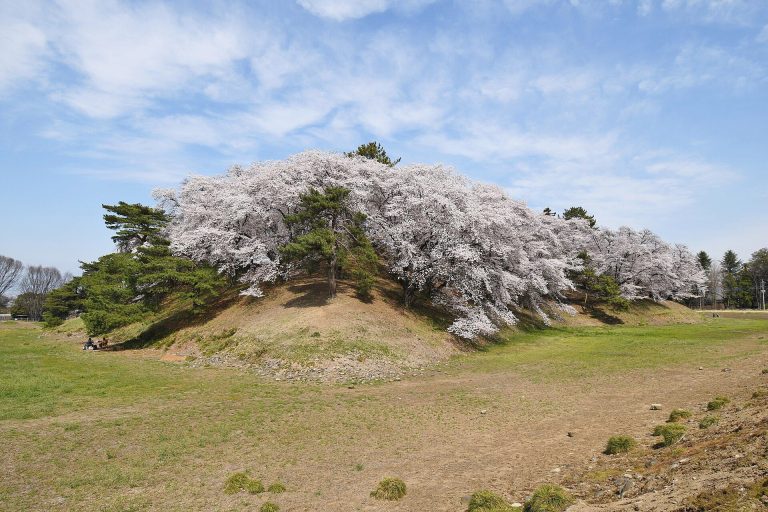
Sengenyama-kofun (Takasaki) is a large Kofun-period burial mound in Japan, located in Takasaki, Gunma Prefecture. It was probably built between the late fourth and early fifth centuries, during an era when powerful regional and court-linked authorities constructed monumental earthen tombs. The buried individual is unknown. At the time of its construction, the mound was probably the largest tumulus in eastern Japan. It is the second-largest kofun in Gunma Prefecture and the third-largest in the Kanto region.
Construction and political setting
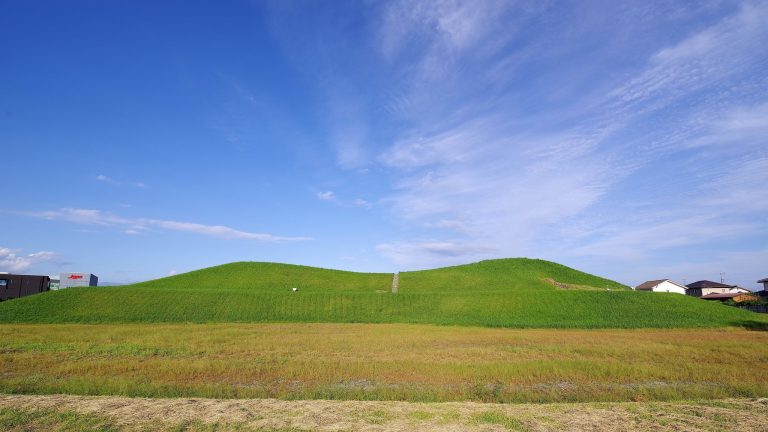
Sengenyama-kofun belongs to the Kuragano Kofun Cluster, a group of 13 burial mounds around Kuraganomachi that range from the early to the late Kofun period. Its form is a zenpo-koen-fun, a keyhole-shaped mound with a circular rear section and a rectangular front section. The monument is regarded as one of the major keyhole-shaped tumuli of its period, alongside Bessho Chausuyama Kofun in Ota, which is approximately 168 metres long.
The design closely follows Sakimisasagiyama Kofun in Nara at approximately four-fifths of its scale. This similarity suggests a close relationship between the person buried at Sengenyama-kofun and the Yamato kingdom, the central polity whose influence expanded across much of the Japanese archipelago during the Kofun period. The Saki area was then a political centre.
Burial evidence and protection
During a search by local residents in the Meiji period, gathered stones were found near the summit of the circular rear section, along with fragments of stone and clay painted vermilion. No grave goods were found. The burial facility therefore remains uncertain. Interpretations have included a pit-shaped chamber lined with clay, a form of underground funerary facility reinforced with compacted clay, and a pit stone chamber.
Sengenyama-kofun was designated a National Historic Site of Japan in 1927. Its unknown burial facility and the limited evidence recovered from the mound leave the identity of the buried person unresolved, while its scale and design continue to indicate the high status associated with the monument.
Remains
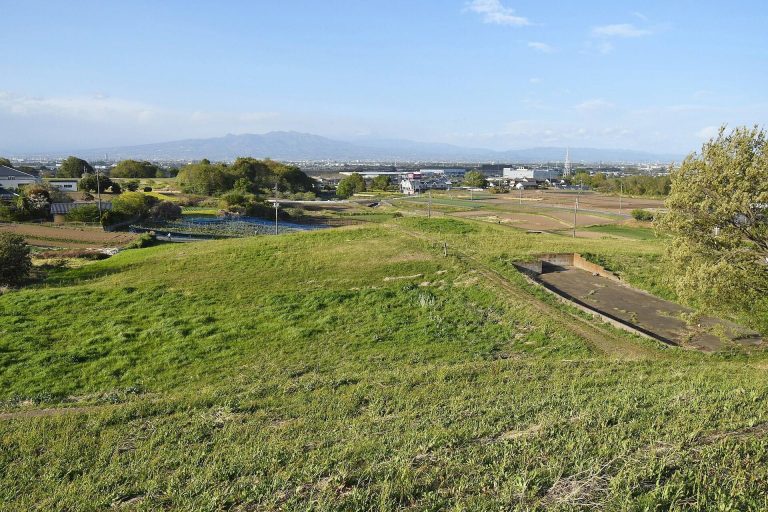
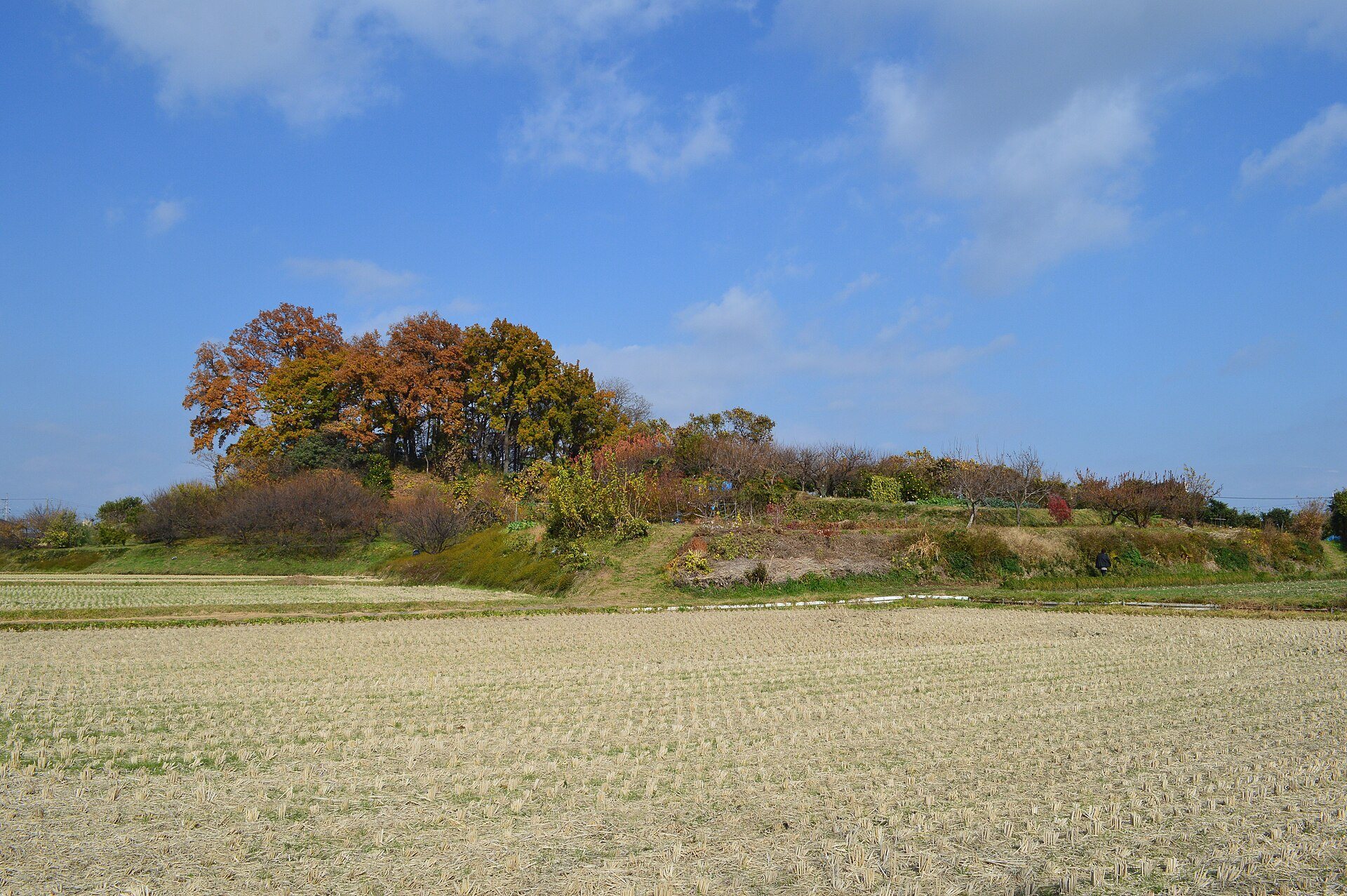
Sengenyama-kofun stands on the plain southeast of central Takasaki, on the left bank of the Karasu River near its confluence with the Kabura River. Its square front section faces southeast. The mound is approximately 171.5 metres long and 14.1 metres high. Including the surrounding earthworks and moats, the monument occupied an area about 250 metres long and 170 metres wide.
Keyhole-shaped mound
The circular rear section was constructed in three tiers. It measures approximately 105 metres in diameter and reaches 14.1 metres in height. The rectangular front section was built in two tiers, extending about 66.3 metres in length, 74.8 metres in width, and 5.5 metres in height. Together, these sections create the characteristic keyhole plan of a zenpo-koen-fun.
Surface features and surrounding earthworks
Stones known as fukiishi, or stone revetment used to protect and reinforce earthen slopes, covered the mound surface. Cylindrical haniwa, ceramic objects placed on and around burial mounds, stood with figurine examples representing implements and houses. Both cylindrical and figurine haniwa have been recovered.
A moat approximately 30 metres wide encircled the mound. Beyond it lay a middle bank measuring 20 to 30 metres wide, followed by an outer moat between 56 and 65 metres wide. These connected earthworks and water-filled boundaries formed the wider monument around the central mound.
Possible burial chamber
The stones and vermilion-painted fragments discovered near the summit may relate to the burial facility. They have been associated with the possibility of a clay-lined pit or a pit stone chamber, but the chamber itself has not been identified. The recovered material provides evidence for a possible funerary installation without establishing its exact form.