D19: A Funnel Beaker Megalithic Tomb in Drenthe
Site at a Glance
- Popularity
- Low
- Country
- Netherlands
- Primary era
- Stone Age
- Eras represented
- Stone Age
- Civilizations
- Unclassified
- Site type
- Burial
- Remains
- Tomb
On this page7 sections
History
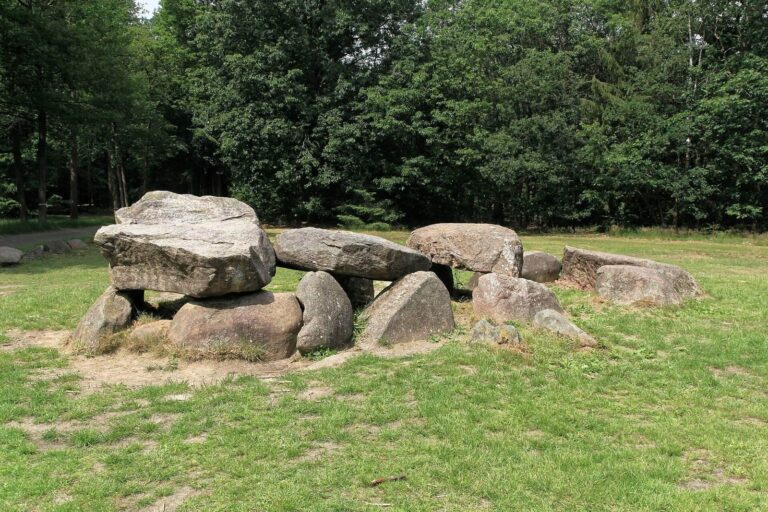
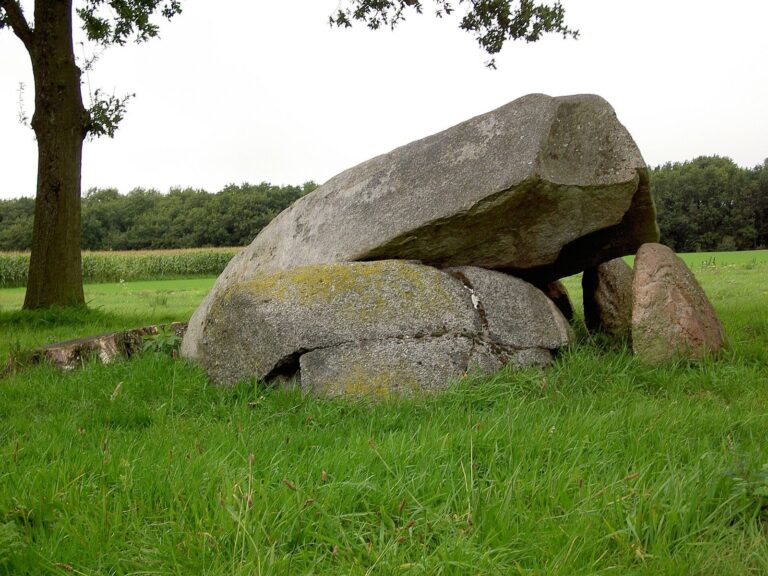
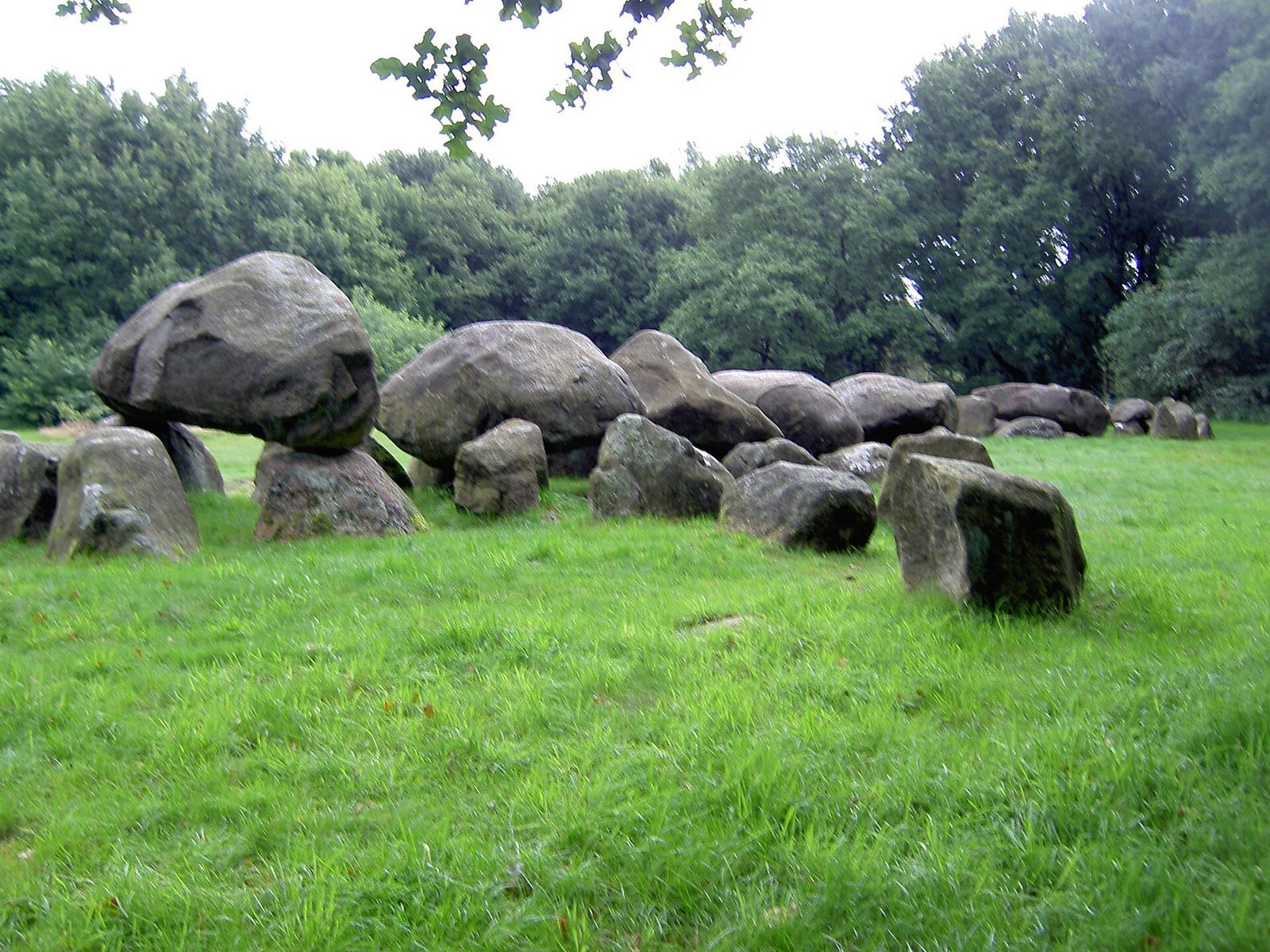
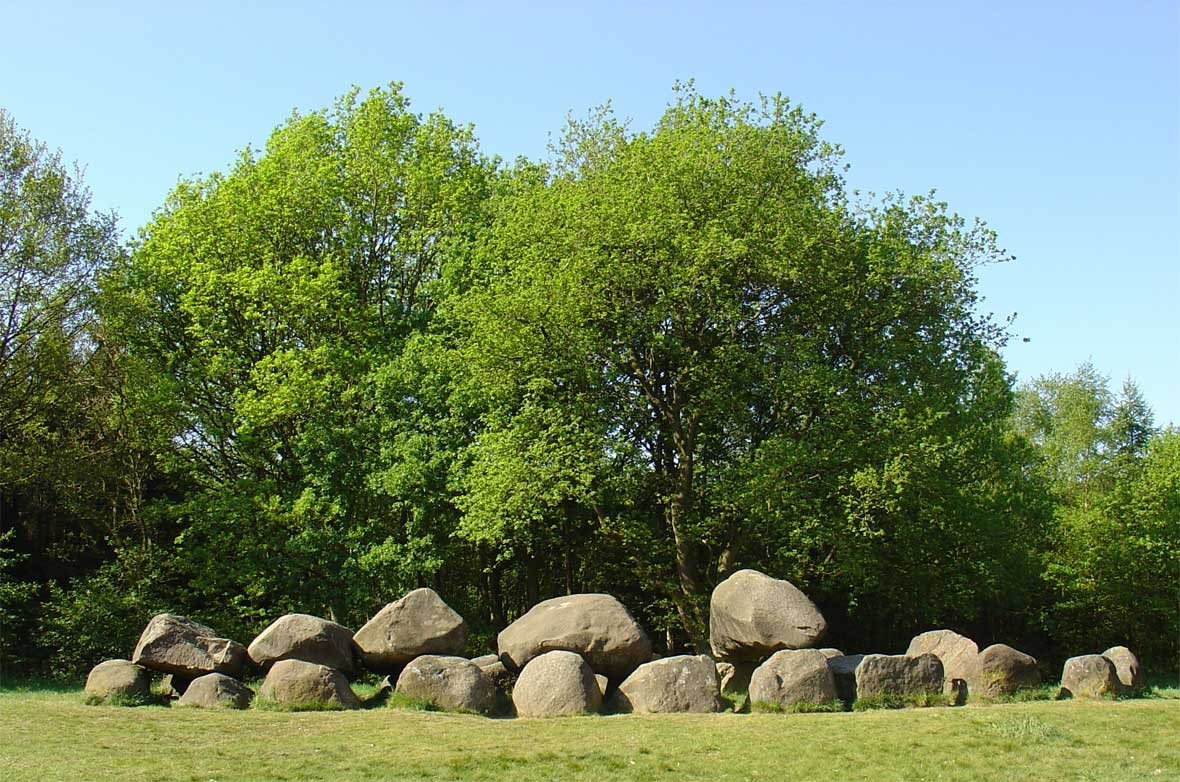
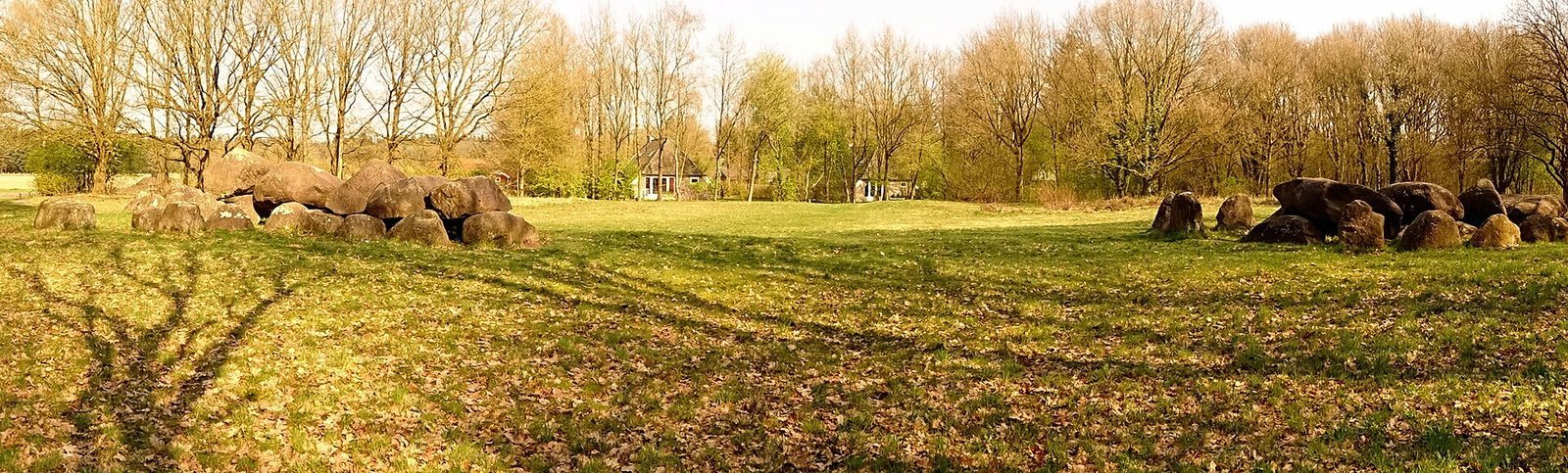
D19 is a hunebed, a megalithic chamber tomb, near Drouwen in Drenthe, Netherlands. It is attributed to the Funnel Beaker culture, a Neolithic culture named for its distinctive funnel-shaped pottery.
Protection and nineteenth-century records
In 1847, the communal land board of Rolde sought to sell D19 and nearby D20. Public protest followed, and the Dutch government bought both monuments for 150 guilders.
During the 1870s, concern in England that Dutch restoration work was altering hunebeds led the Society of Antiquaries of London, a learned society concerned with antiquities and history, to commission a survey. In July 1878, British antiquaries William Collings Lukis and Sir Henry Dryden recorded and mapped 40 hunebeds on the Hondsrug. Their documentation of D19, including measurements, descriptions, and watercolours, appeared as Plan XIV; the tomb was then state-owned. J. Craandijk described D19 in 1879 alongside D20 and D26.
The survey report was not published at the time. Its materials were kept by the Society of Antiquaries, Guernsey Museum & Art Gallery, and Drents Museum, with copies at the Ashmolean Museum in Oxford. In 2015, archaeologist Wijnand van der Sanden published the work with an account of hunebed research through that year and judged the nineteenth-century records to be of high quality.
Excavation and restoration
The first modern archaeological investigation of hunebeds in the Netherlands began at D19 and D20 in 1912. Archaeologist Jan Hendrik Holwerda excavated both tombs and raised their capstones to examine the burial chambers. Dutch archaeologist Van Giffen later described D19 as disordered, while noting that traces of its covering mound could still be recognized.
D19 was restored in 1998. A stone placed as a capstone over the entrance was later thrown from its supporting stones by unknown people, and it was not put back.
Remains
Tomb structure
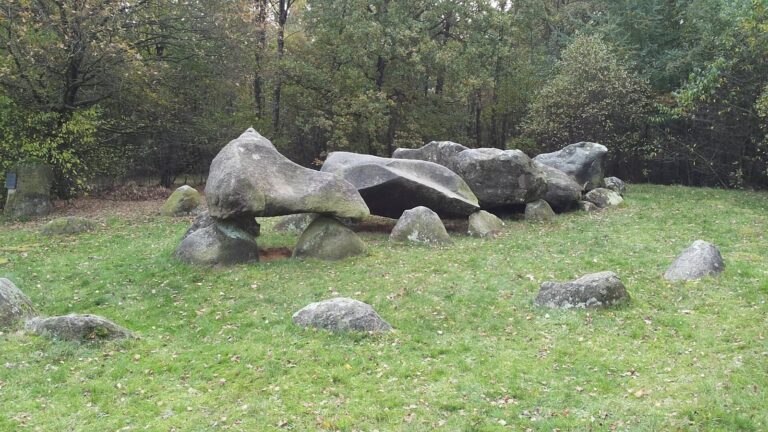
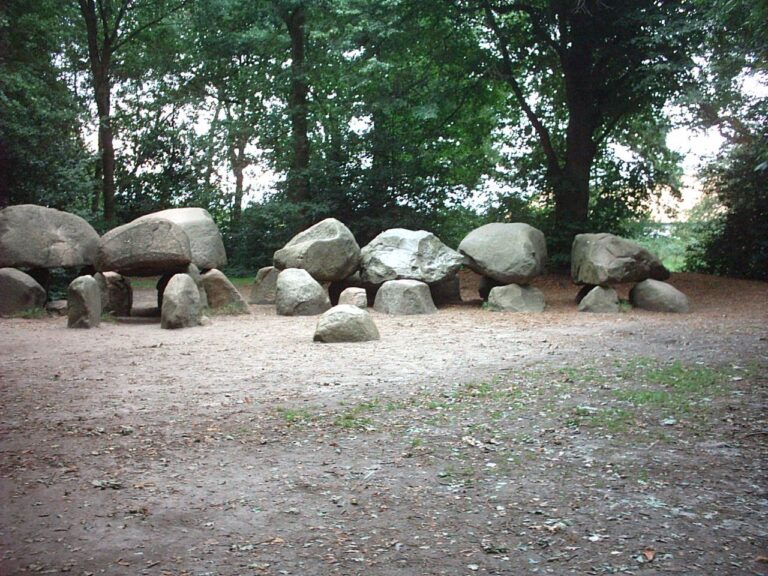
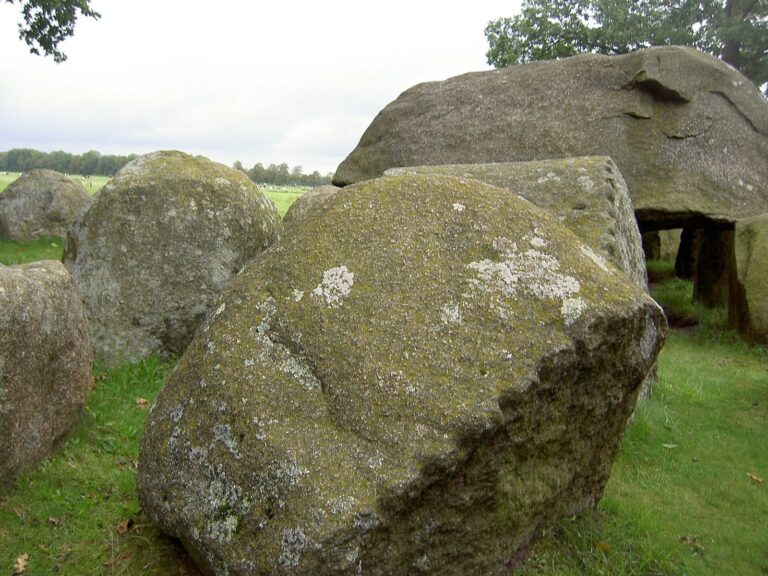
The tomb measures 15.5 metres long and 3.5 metres wide. Upright stones support its chamber, which Holwerda measured at 1.5 metres high. The original arrangement included eight capstones; a capstone and remains of two others now lie within the chamber. Four portal stones frame the entrance, and another stone lies beside the tomb. Three stones once stood upright in the western wing to form a compartment, an arrangement not found in another Dutch hunebed. Lukis and Dryden’s 1878 plan shows 20 supporting stones and six capstones, one of them broken, with a fragment outside the line of supports. The plan also depicts four portal stones and a portal capstone near the entrance.
Covering mound and setting
A remnant of the covering mound measured 27.5 by 18 metres on the 1878 plan. D19 and D20 stand together west of Drouwen beside Steenhopenweg. D19 lies just before the viaduct carrying the N34 beneath it, built in 2006. An old cart track near the tombs is identified as the course of a prehistoric road.
Excavated finds
A hole dug to determine the depth of the chamber floor, measuring 60 by 46 centimetres, yielded four flint arrowheads and pottery fragments from at least 25 urns. Many other fragments were found around the monument. Finds from the tomb include sherds from 400 pottery vessels, 13 flint axes, nine amber beads, strips of copper regarded as the oldest jewellery in the Netherlands, fragments of human bone, molar crowns, and a small bottle with a collared neck. The pottery vessels are held by the National Museum of Antiquities in Leiden.