Cynus: The Ancient Seaport of the Opuntian Locrians
Site at a Glance
- Popularity
- Medium
- Country
- Greece
- Primary era
- Bronze Age
- Eras represented
- Bronze Age, Iron Age, Classical, Medieval
- Civilizations
- Ancient Greek, Byzantine, Kingdom of Macedon, Mycenaean, Roman
- Site type
- City
On this page14 sections
History
Cynus was the principal seaport of the Opuntian Locrians at Livanates, Greece, serving the nearby city of Opus and controlling important land and sea routes into the North Euboean Gulf. The settlement was occupied from the Neolithic period until about 500–600 CE, in the early Byzantine era, and remained inhabited through the transition from Mycenaean palatial society to the Early Iron Age.
Ancient traditions and the port
Cynus lay on a cape opposite Aedepsus on the island of Euboea. Strabo placed it 60 stadia, about 11 kilometres, from Opus, and also gave distances of 90 stadia from Daphnus, 50 from Mount Knemis, and 160 from Aedepsus. A stadion was an ancient Greek measure of roughly 185 metres. Livy’s description of Cynus as only one mile from Opus does not match these distances.
The town appears in the Catalogue of Ships in the Iliad and in other ancient writings. Greek tradition connected Cynus with Deucalion and Pyrrha, figures associated with a flood story, and placed Pyrrha’s tomb there. Another account said that Lokros, remembered as an ancestor of the Locrians, lived at Cynus, and that the town was named for Kynos, son of Opus and grandson of Lokros. Tradition also linked its people to the Trojan War, saying they fought under Ajax the Locrian, and credited them with founding Autocane in Aeolis, opposite Lesbos.
Classical and Hellenistic periods
Cynus was damaged by the tsunami that followed the earthquake of 426 BCE. In 207 BCE, during the First Macedonian War, a conflict between Rome and Macedon, the fleet of the Roman commander Publius Sulpicius Galba Maximus withdrew to Cynus after its unsuccessful attack on Chalcis.
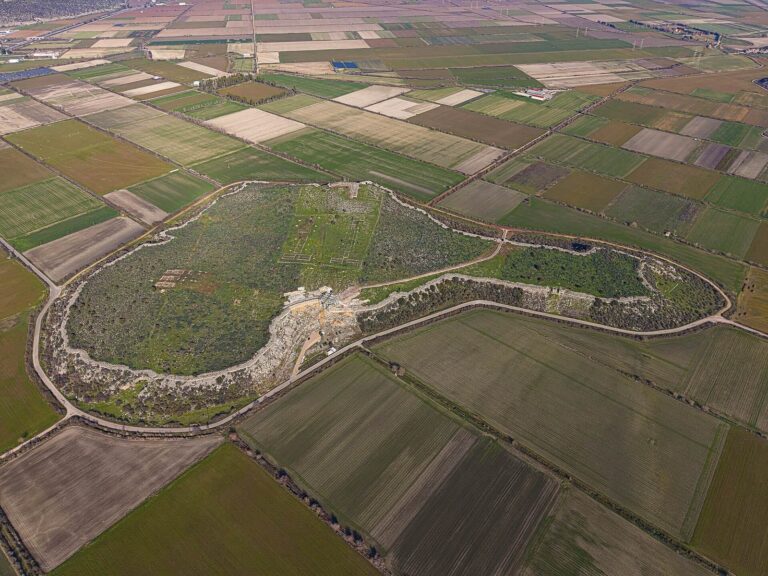
The hill was enclosed by fortifications in the Hellenistic period, the era following Alexander the Great’s conquests and preceding Roman rule in the eastern Mediterranean. Their construction is thought to have taken place under Demetrius I Poliorcetes, a Macedonian king and military leader.
Roman period and modern identification
During the Roman period, the hill was levelled to make room for new buildings over the Mycenaean settlement. Occupation continued into the early Byzantine period, ending around 500–600 CE.
In the early nineteenth century, the English scholar and archaeologist William Martin Leake identified the mound at Livanates as Cynus. Excavations conducted from 1985 to 1995 by the regional archaeological service based in Lamia were directed by archaeologist Fanouria Dakoronia.
Remains
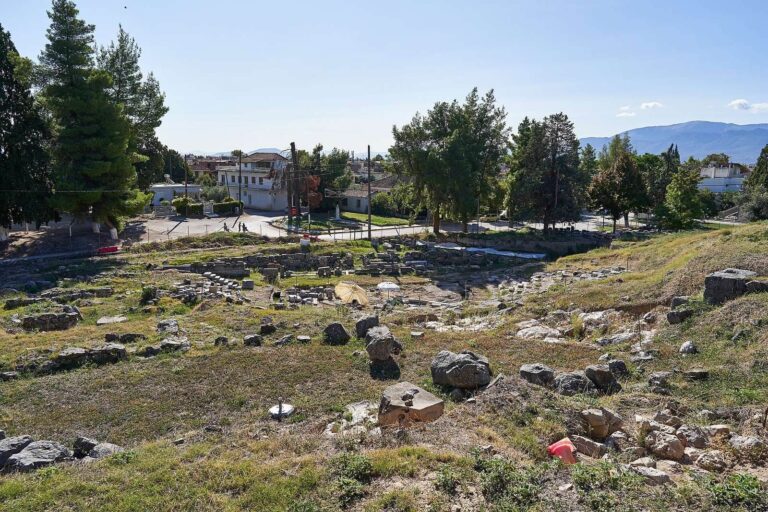
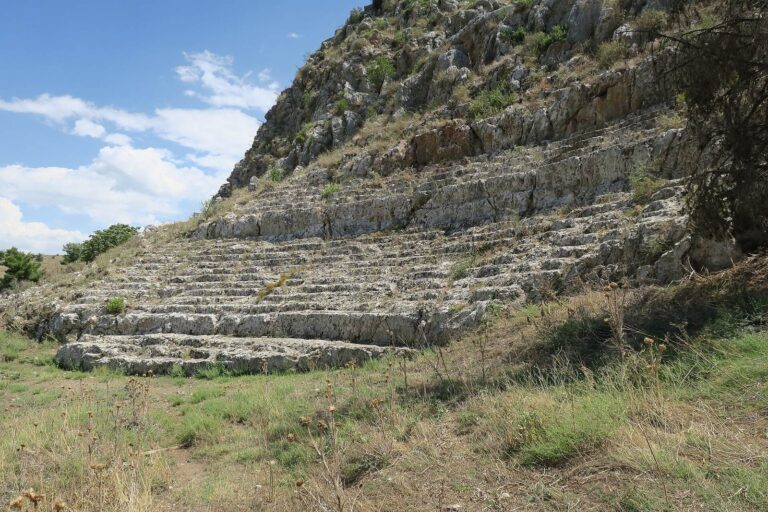
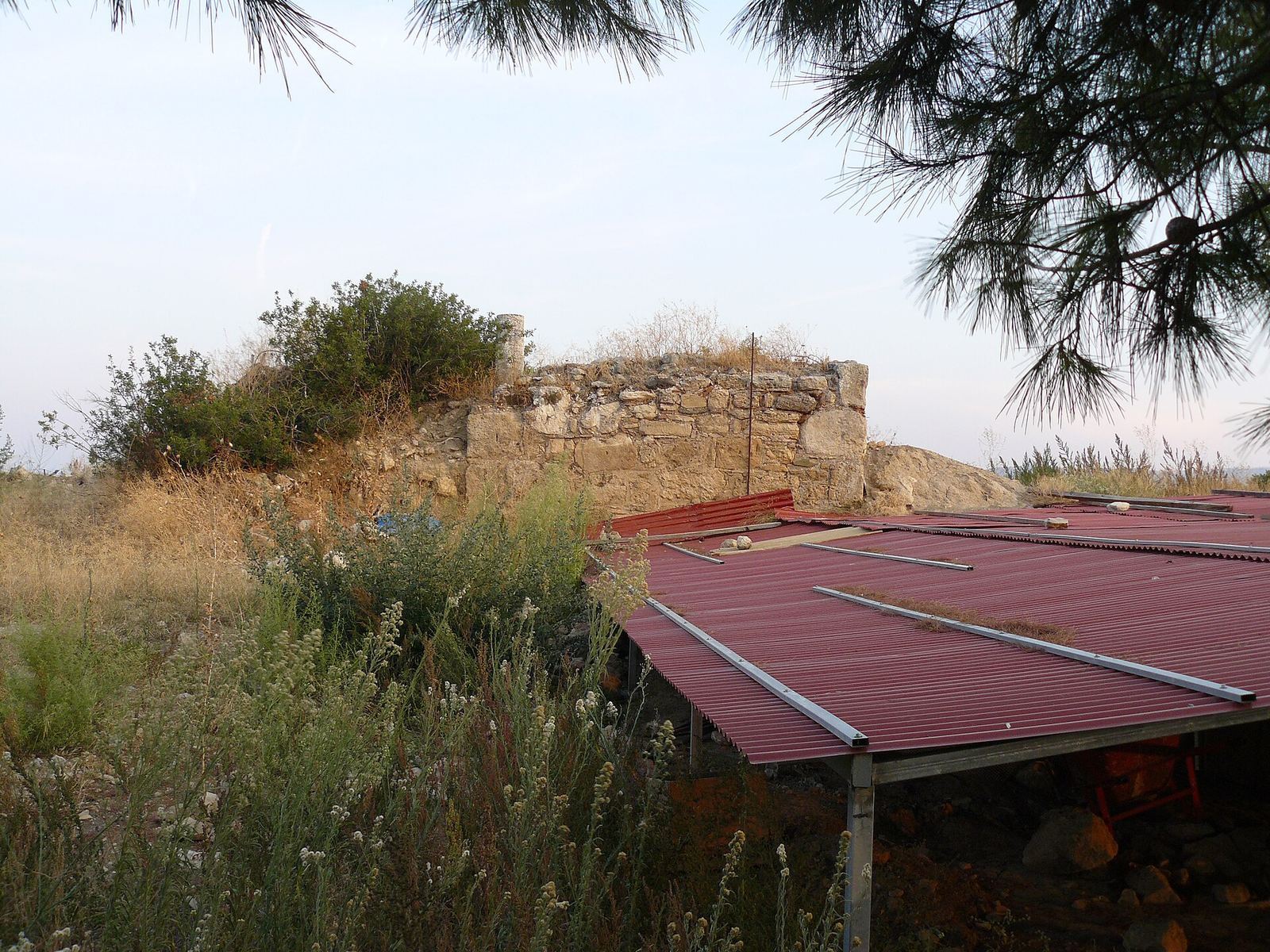
The archaeological site occupies a low coastal hill at Livanates, known as Palaipyrgos. Its remains span prehistoric settlement layers, later buildings and fortifications, and the ancient harbor beside the sea.
Prehistoric settlement
The earliest occupation dates to the late Neolithic period, about 4300–3200 BCE. Evidence also points to Early Bronze Age activity around 3000–2800 BCE, as well as further Early Helladic use.
Middle Helladic graves
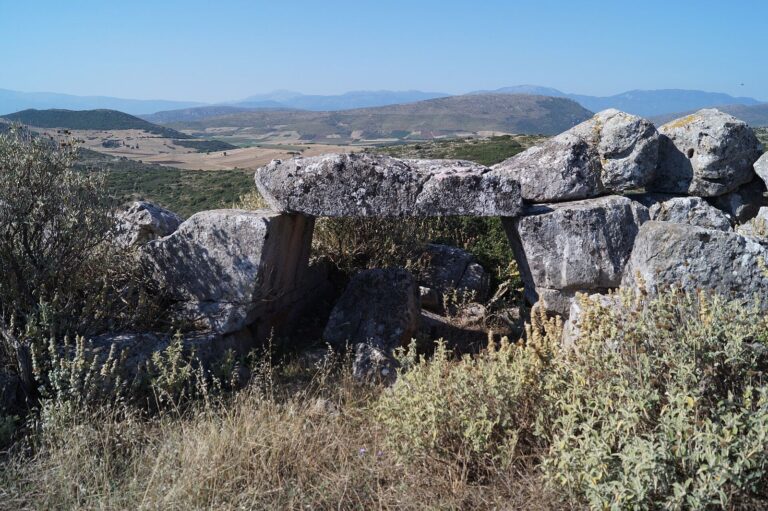
Six stone cist graves, burials formed within stone-lined chambers, were investigated at deeper levels of the site, representing Middle Helladic activity.
Late Bronze Age houses and workshops
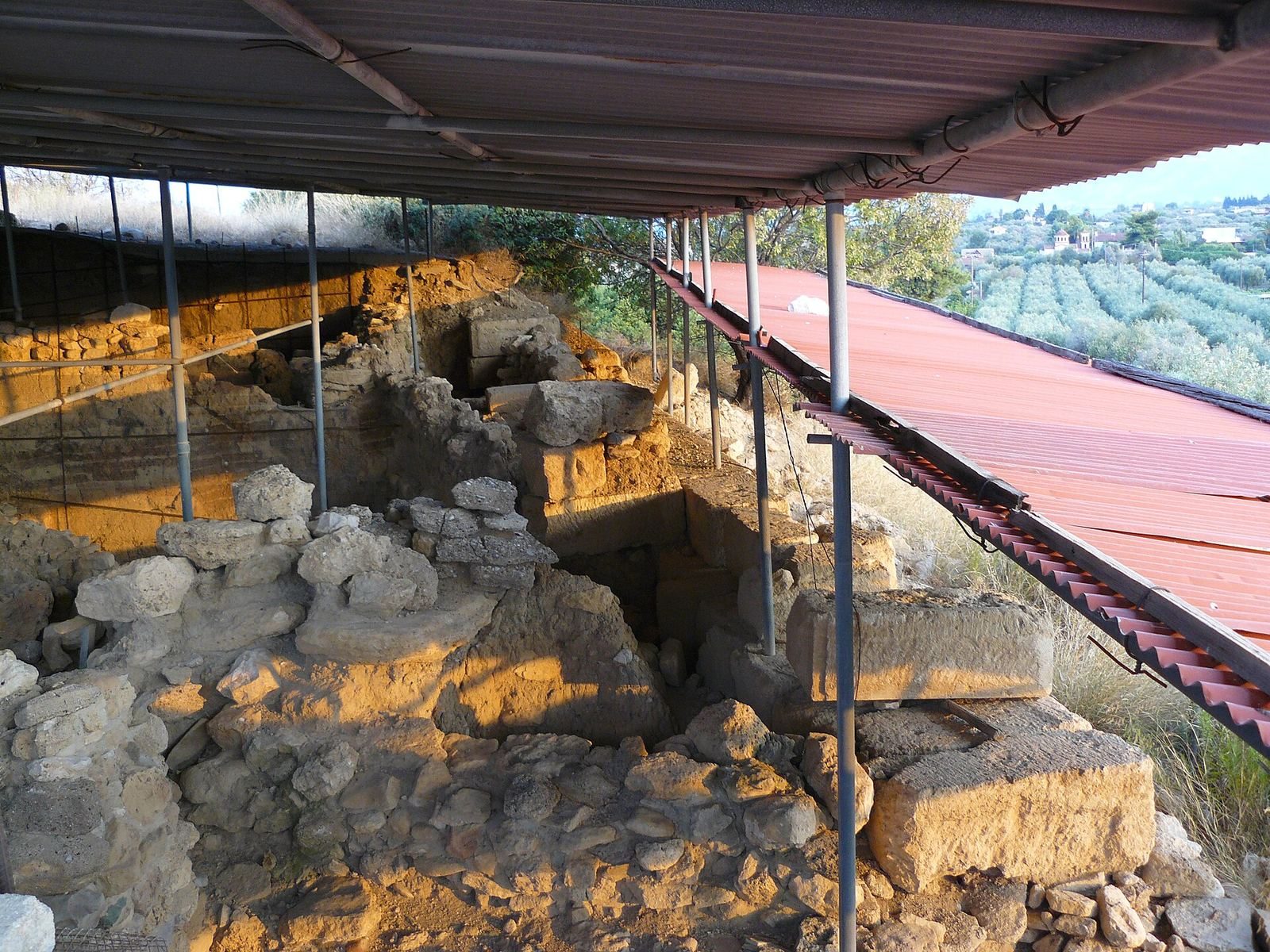
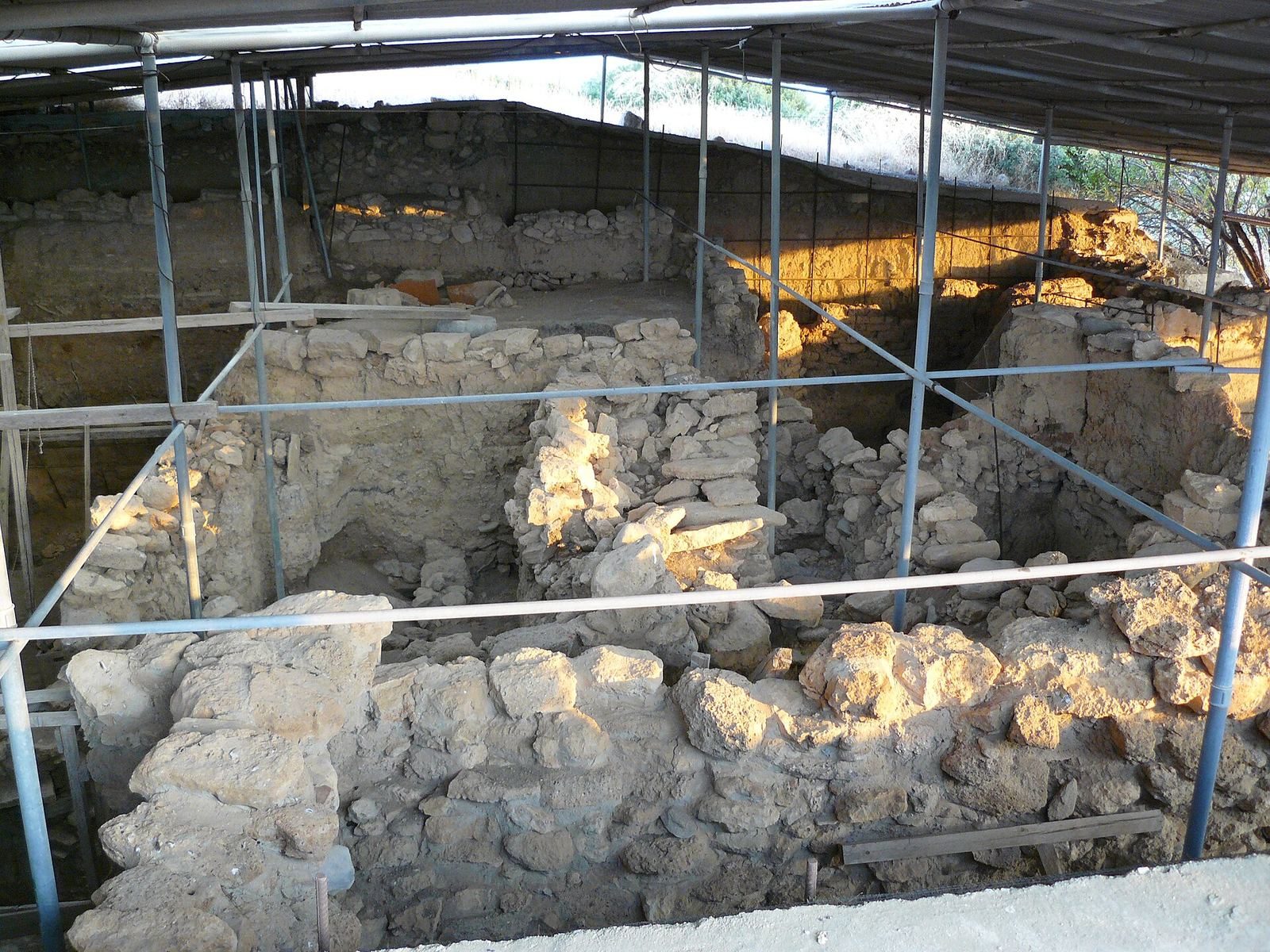
Wall and floor fragments, alongside pottery, date to the fourteenth and thirteenth centuries BCE. The best-preserved buildings belong to Late Helladic III C, mainly the twelfth century BCE. Houses had mud-brick walls resting on rough-stone foundations and formed domestic groups that included storerooms and workshops. Some rooms held unbaked-clay bins for crops. After an earthquake destroyed the buildings in the mid-twelfth century BCE, people repaired or rebuilt them, replacing the bins with large pits.
Craft production is reflected in part of a pottery-kiln floor, misfired pottery, and metalworking slag. Loom weights, spindle whorls, and shells used to produce purple dye point to textile work and dyeing. Plant remains include einkorn and emmer wheat, lentils, beans, barley, grass peas, and olives. Mycenaean-period grape growing remains uncertain; ancient writing and grape imagery on Opuntian coins instead support cultivation in the Classical period.
Animal bones include sheep, goats, pigs, horses, small cattle, and numerous donkeys used for transport. Wild-animal remains indicate hunting for food and for materials used in crafts and shipbuilding. Skins, hair, bones, and horns supplied materials for footwear, clothing, armor, yarn, tools, jewelry, and other fittings. Woodworking tools and the range of wild-animal bones point to dense woodland around Cynus.
Destruction layers and ship imagery
Fragments of kraters, vessels for mixing wine and water, depict warships in the layer left by the mid-twelfth-century earthquake. Pieces of clay ship models were also found there, providing evidence for Late Bronze Age vessels and naval combat. A second destruction by fire occurred late in the twelfth century BCE. An earthquake may have caused it, while scattered debris and marine deposits suggest a possible tsunami.
Early Iron Age settlement
After the later destruction, smaller buildings were erected, with small stone cist graves for children set into their floors. A building and a house containing a pottery workshop date to the tenth century BCE, in the Protogeometric period, an early phase of the Greek Iron Age.
Fortifications and later remains
Early Hellenistic wall
A wall of large, dressed stone blocks enclosed the hill. Its blocks are arranged in regular courses of equal height, a construction style known as isodomic masonry.
Later occupation and buildings
Pottery represents occupation in the Geometric, Archaic, and Classical periods. Foundations from Roman and Byzantine buildings also survive. A tower marks the site, though its identification is uncertain.
Ancient harbor
Remains of Cynus’s ancient harbor are visible beside the sea, reflecting the settlement’s role as the port of Opus.