Monastery of St. George in Phthiotis: An Orthodox Monastic Complex in Greece


Site at a Glance
- Rating
- 4.9
- Popularity
- Very Low
- Country
- Greece
- Primary era
- Medieval
- Eras represented
- Medieval, Early Modern, Modern
- Civilizations
- Byzantine, Greek, Ottoman
- Site type
- Religious
- Remains
- Monastery
On this page6 sections
History
The Monastery of St. George in Phthiotis is an Orthodox monastery in Greece, located about 1 kilometre northeast of Malesina on the Aetolimni Peninsula. Tradition attributes its foundation in the 11th century to two monks from Mount Athos, the major Orthodox monastic centre in northern Greece. The monastery was originally dedicated to the Virgin Mary and was rededicated to Saint George after the 17th century.
Earthquake and rebuilding
The 1894 earthquake destroyed most of the original monastery, although part of its principal church, the katholikon, survived with rich wall paintings. A new monastery was constructed nearby, separate from the old remains, and its ceremonial opening took place on 23 April 1920. An ecclesiastical school operated there from 1923 to 1925 before moving to Lamia.
Changes in the twentieth century
The monastery formerly held a library of 42 manuscript books, which it ceded to the National Library. Its extensive property was expropriated by the state in 1931. Nuns took charge in 1988, after which the institution functioned as a women’s monastery. Its religious celebrations are held on 23 April and 2 June. The monastery is protected as a building in Greece.
In 1992, the Cultural Association for the Preservation of the Byzantine Church of the Monastery of Saint George in Malesina was established. Under the supervision of the Seventh Ephorate of Byzantine Antiquities, a Greek archaeological authority responsible for Byzantine monuments and antiquities, the association supported conservation at the old monastery. The work included repairing the buildings and church roof, removing rubble from the church, and clearing shrubs from the surrounding area.
Remains
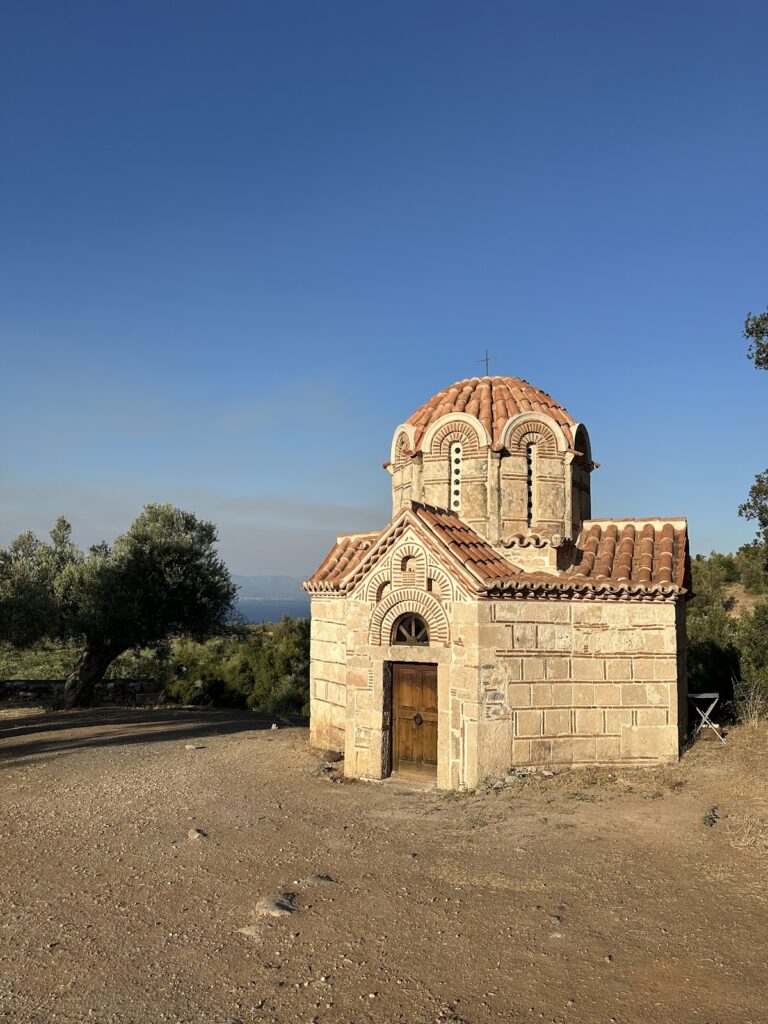
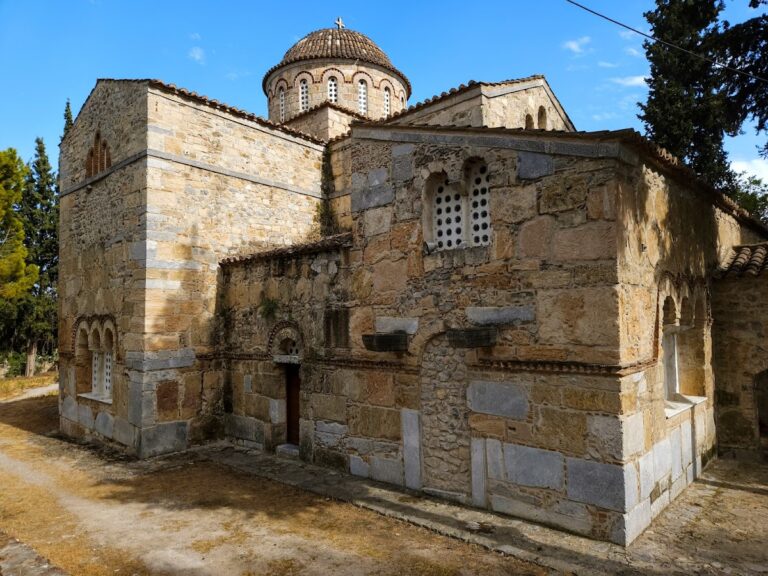
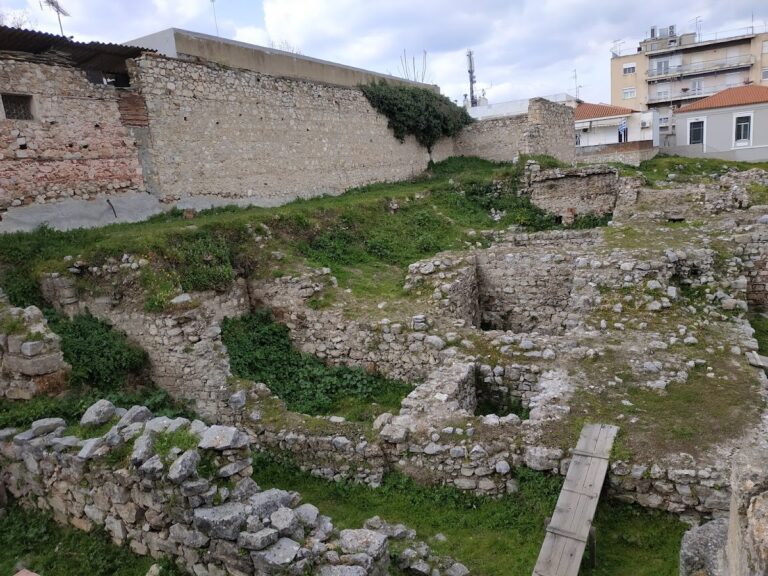
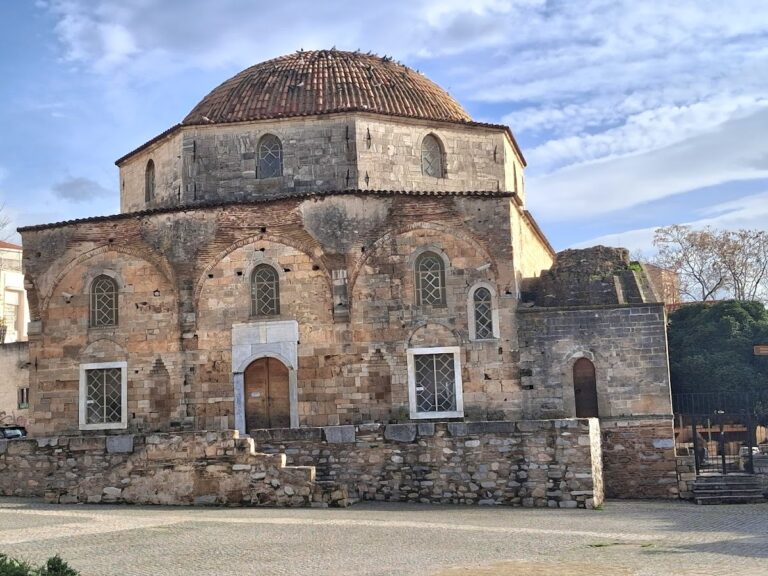
The surviving remains consist of part of the original monastery complex, centred on the section of the katholikon that endured the 1894 earthquake. The later monastery stands nearby as a separate complex, while the old buildings and church form the focus of conservation work.
Surviving katholikon
The surviving portion of the katholikon, the principal church of an Orthodox monastery, retains rich wall paintings belonging to three periods. The earliest paintings date to the Palaiologan period, the era of the Byzantine Empire’s Palaiologan dynasty from 1261 to 1453. Later layers belong to the late 16th century and the early 17th century. Repairs to the church roof and the removal of accumulated rubble have helped preserve and clarify the surviving structure and its painted interior.
Post-earthquake monastery
The monastery built after the earthquake occupies a nearby location rather than forming part of the surviving old complex. Its ceremonial opening on 23 April 1920 marked the continuation of the monastery’s religious life after the destruction of most of the earlier buildings.