Cyaneae: An Ancient Lycian Town and Regional Center
Site at a Glance
- Popularity
- Medium
- Country
- Turkey
- Primary era
- Classical
- Eras represented
- Classical, Medieval
- Civilizations
- Lycian, Roman
- Site type
- City
On this page15 sections
History
Cyaneae was an ancient Lycian town, or possibly a group of settlements known collectively by that name, near Gökçeyazı in Türkiye. Occupied during the Archaic and Classical periods, it became a regional center and the leading settlement in the mountainous Yavu area.
From local seat to regional center
Cyaneae may first have been a dynast’s seat, a regional ruler’s base, with a castle. It probably depended on a nearby settlement at Avşar Tepesi, possibly Zagaba. Zagaba may have held the region’s central role before declining in the first half of the fourth century BC amid political and military conflict between the ruling families of Xanthos and Limyra. Cyaneae then emerged as the area’s principal center.
The Lycian League and Roman rule
After 168 BC, Cyaneae belonged to the Lycian League, a federation of Lycian cities. Under Roman rule, it formed part of the province of Lycia and Pamphylia. The city minted coins from the League period through the reign of Gordian III (AD 238–244). Though ancient texts mention it rarely, its coins, inscriptions, and archaeological remains point to an important polis, a Greek-style city and civic community.
Pausanias, a Greek writer of the second century AD, associated Cyaneae with an oracle of Apollo Thyrxeus. Apollo was a major Greek god linked with prophecy, and Thyrxeus was an epithet used for him.
Late Antiquity and later identification
In Late Antiquity and the Byzantine period, Cyaneae was a bishopric under the metropolitan bishop of Myra, the senior bishop in the region. It later ceased to be a residential bishopric. The Catholic Church retains the former diocese as a titular see, a title for a diocese without a resident bishop. The settlement probably continued into the early thirteenth century.
Early investigations placed Cyaneae west of Andriake and identified it near the head of Port Tristomo through an inscription. Later fieldwork considered Yarvu (Yavu), Tousa (Tüse), and Ghiouristan (Körüsten) as possible locations associated with the name. Yarvu seemed to be the principal settlement, while the other two may have been dependent places or had names of their own. Their relationship remains uncertain. From 1989 to 2001, Frank Kolb led an intensive international and interdisciplinary survey of the area.
Remains
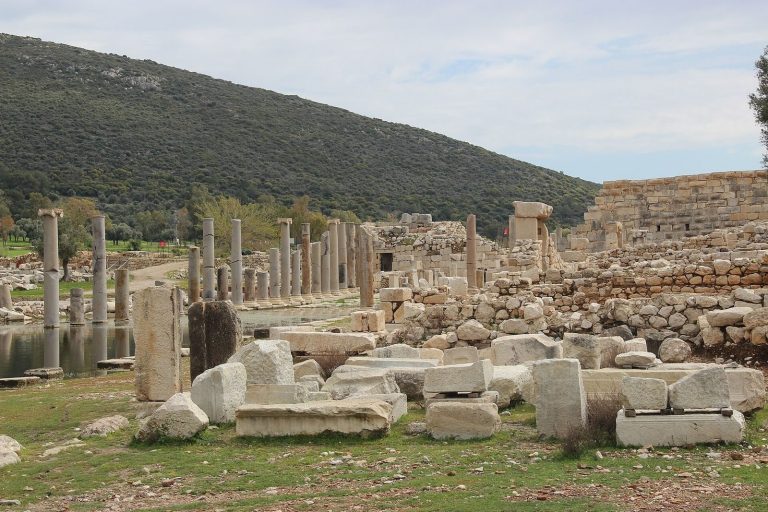
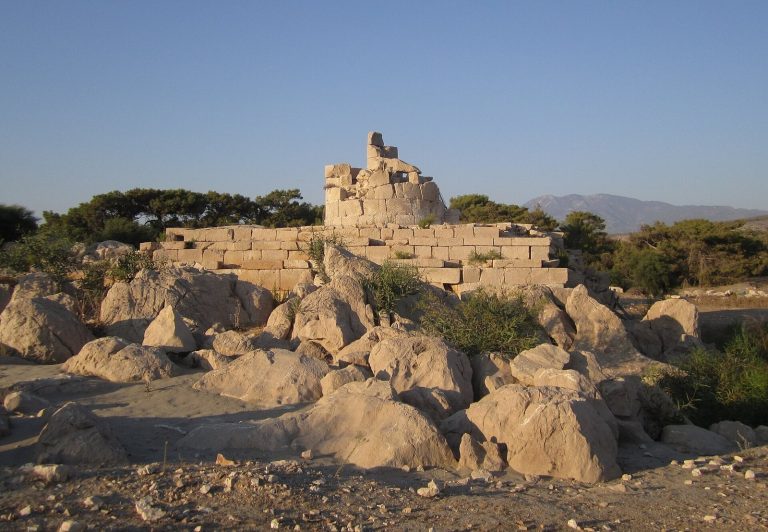
The remains extend across several settlements around Yavu. Yarvu, the principal site, occupies a ridge above Yavu village on high ground between Port Tristomo and the inland Kassabar valley, north of the harbor’s head. Ghiouristan lies about five kilometres north of Yarvu, while Tousa is farther west-northwest. The area includes Early Hellenistic fortifications and a theatre, Roman public buildings, cemeteries, and remains assigned to Roman and medieval construction, as well as some of uncertain date.
Yarvu: the main settlement
Walls and theatre
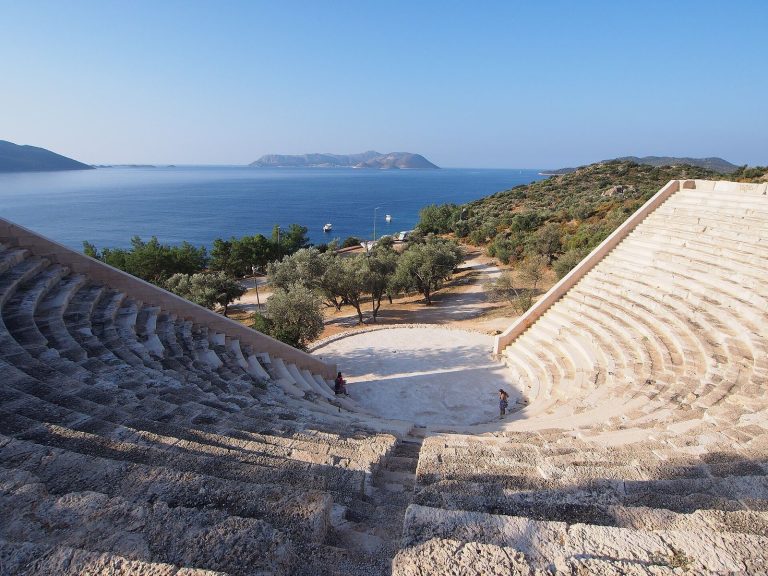
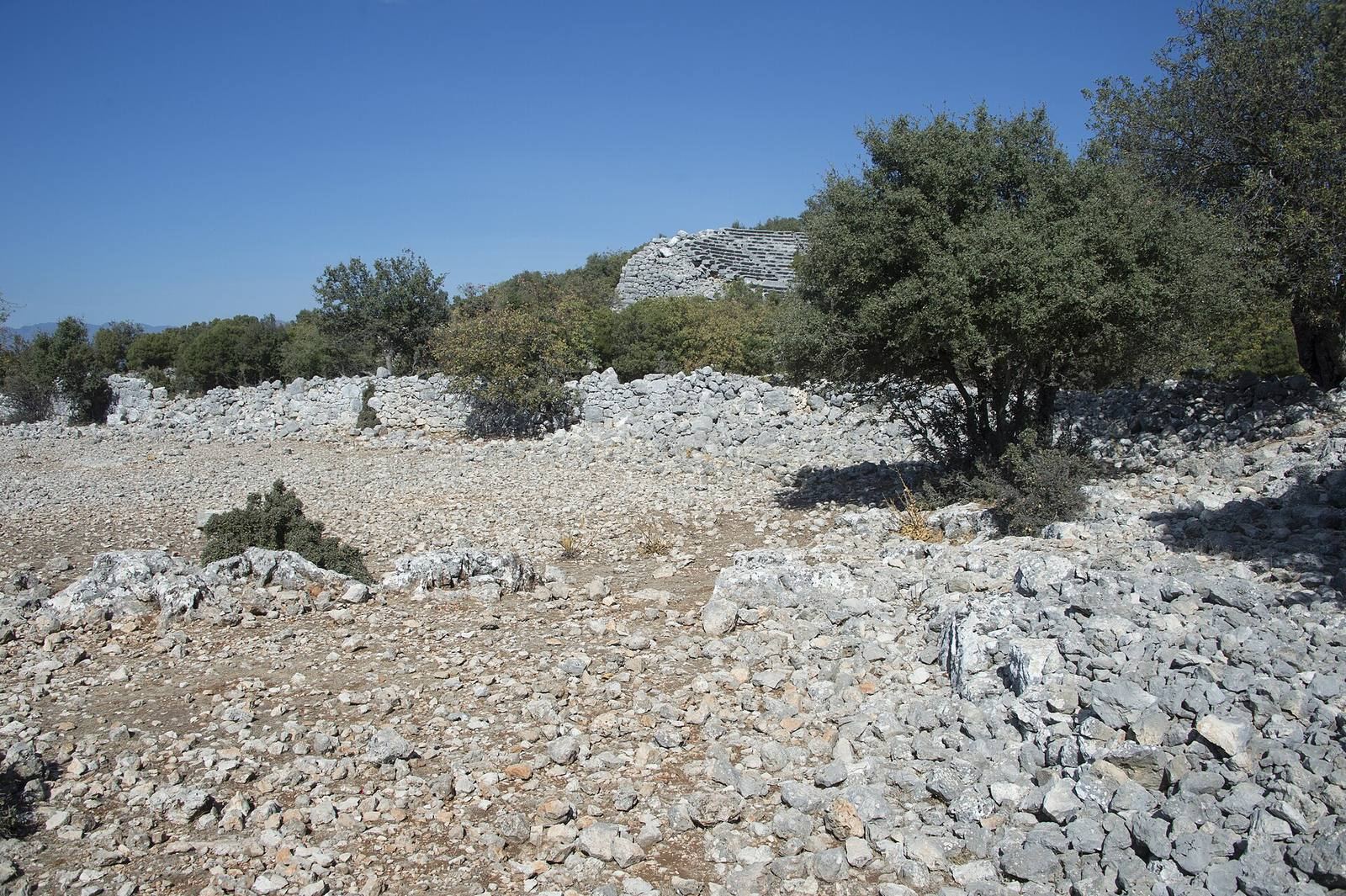
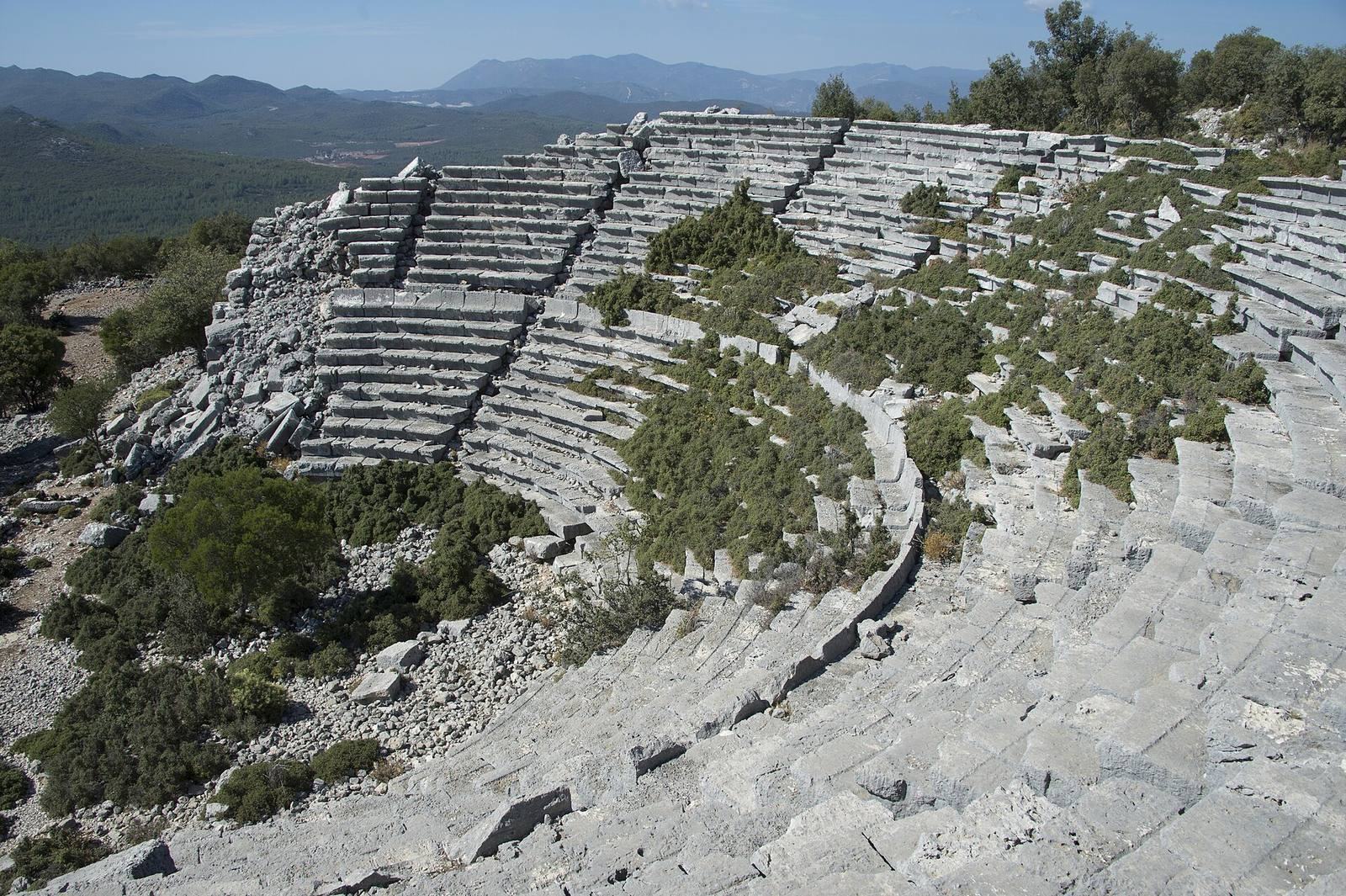
At Yarvu, the settlement covered a high platform with steep drops on two sides. Its well-preserved walls stand about 1.5 to 4.5 metres high. Both the walls and the theatre date to the Early Hellenistic period, which followed Alexander the Great’s conquests and the breakup of his empire. The theatre measures about 50 metres across.
Roman civic and upper-town remains
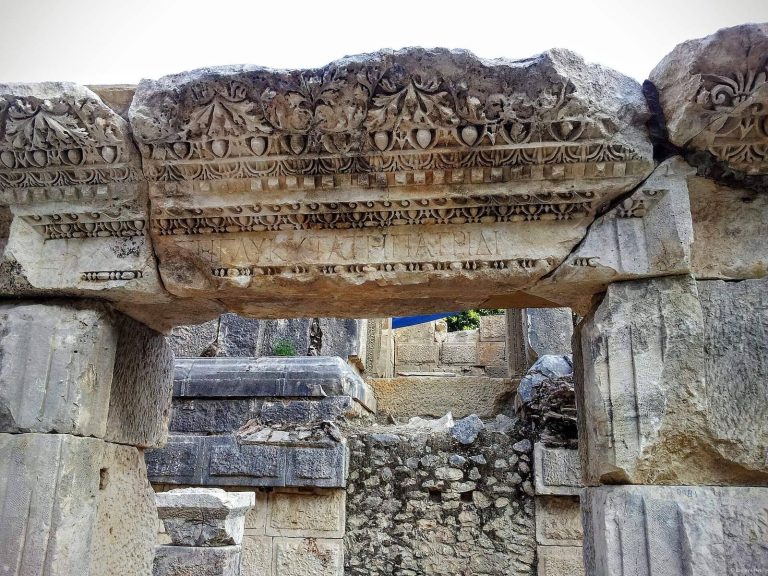
Roman imperial-period remains at the main site include baths and a covered market. In the upper town, or acropolis (the elevated central area of a city), chambers were cut into the rock. A pedestal at Yarvu bears a Roman-period Greek inscription naming the Council and People of the Cyaneans in a formal civic wording.
Tombs and sarcophagi
Sarcophagus cemeteries
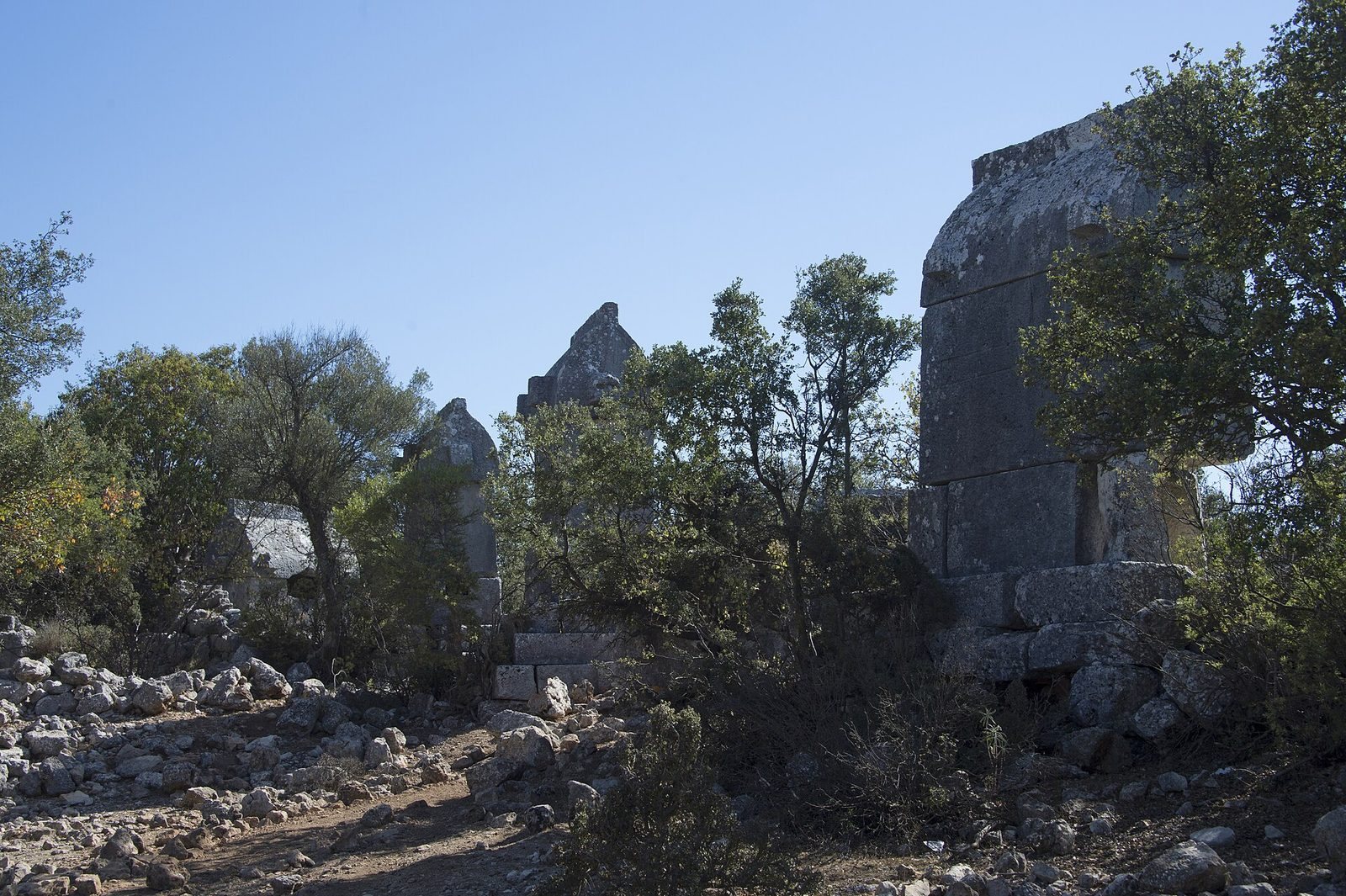
Cyaneae has more than 380 sarcophagi, forming the largest sarcophagus necropolis in Lycia. Most have lids shaped with pointed arches. Groups of sarcophagi occur at Yarvu, and a western necropolis is also identified.
The tomb of Khudalijẽ
A notable sarcophagus dates to the first half of the fourth century BC. Its reliefs and Lycian inscription identify it as the burial place of Khudalijẽ, one of Cyaneae’s dynasts.
Rock-cut tombs
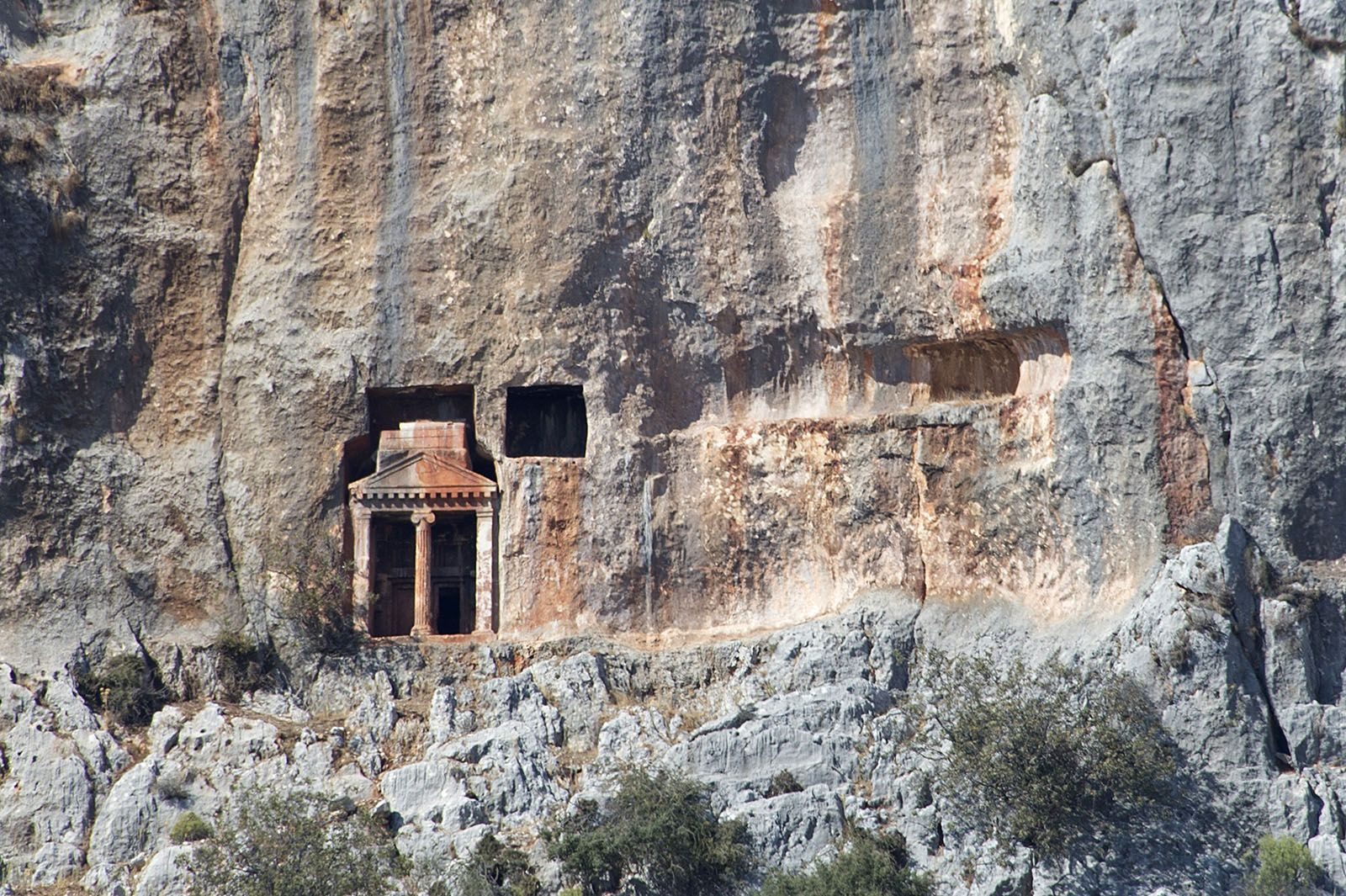
Plain rock-cut tombs occur at Yarvu. Ghiouristan has three Lycian rock-cut tombs, one bearing an inscription in both Lycian and Greek, as well as numerous other tombs and sarcophagi.
Ghiouristan and Tousa
Ghiouristan
An inscription at Ghiouristan uses a form meaning “of the Cyaneans.” A sarcophagus there carries wording that refers to a council of elders.
Tousa
Tousa’s small settlement was enclosed by a roughly built ancient Greek wall, well preserved in some sections. Its construction combines irregular polygon-shaped stones with exceptionally large blocks. Tousa lies farther west-northwest and nearly five hours from the sea. A Lycian inscription was found there. An inscription on a sarcophagus may identify a female inhabitant of Cyaneae, if its transcription is accurate.