Couvent des Cordelières: A Poor Clare Convent in Paris
Site at a Glance
- Rating
- 4
- Popularity
- Very Low
- Country
- France
- Primary era
- Medieval
- Eras represented
- Medieval
- Civilizations
- French
- Site type
- Religious
- Remains
- Monastery
On this page11 sections
History
Foundation and relocation
The Couvent des Cordelières was a Poor Clare convent in Paris, France. Its community was founded at Troyes in 1270 and moved to a site outside Paris in 1289. The Poor Clares are a Catholic women’s order following the rule of Clare of Assisi, who founded the order in 1212 with Francis of Assisi’s assistance. In 1255, Isabella of France, sister of Louis IX, founded a Poor Clare convent at Longchamp near Paris. The name Cordelières refers to the cord girdles worn over the nuns’ habits.
Theobald II of Navarre, also known as Theobald V as Count of Champagne, founded the community at Troyes. After receiving three houses at Bourg Saint-Marcel, it relocated there in 1289. The Paris foundation is attributed to Gallien de Poix, acting at the request of Margaret of Provence; Margaret and her daughter Blanche are also credited with founding roles.
Royal residents and burials
Margaret, the widow of Louis IX, had a manor beside the convent from 1290. After being widowed, she and her daughter Blanche made the convent their residence. Blanche was the widow of Ferdinand de la Cerda, a prince of the Castilian royal house. Margaret died in 1295 and was buried at Saint-Denis. Blanche died at the convent on 17 June 1320 and was buried in its church.
Mathilde of Châtillon, third wife of Charles I of Valois, was buried in the convent church after her death on 3 October 1358. Isabella of Valois, a half-sister of Philip VI, entered the convent after being widowed in 1356. She died there on 28 July 1383 and was buried in the church.
Later medieval and early modern convent
The convent was also known as Saint-Marcel and as the convent of the Urbanists, a branch of the Poor Clares that followed a rule associated with Pope Urban IV. Medieval references to an Abbey of Saint-Marcel refer to the Cordelières convent, but the date of its elevation to abbey status is unclear. The idea of a separate abbey there before 1289 probably arose from confusion with the clergy attached to the collegiate church of Saint-Marcel.
Flooding from the Bièvre threatened the convent, and its buildings were heavily damaged during Henry IV’s siege of Paris in 1589-1590. A branch known as the Petites-Cordelières was established in the Marais on Rue Payenne before moving to Rue de Grenelle. Its Marais residence dates to 1632-1687, and a royal authorization followed in 1693. After the branch was suppressed, its community reunited with the convent of Lourcine in 1749.
Suppression and later uses
The convent was suppressed in 1790. Six years later, its property was confiscated and sold to tanning businesses, while its gardens were divided into building plots. Streets were laid through the former enclosure: Rue Julienne in 1805, Rue des Cordelières in 1825, and Rue Pascal in 1827.
From 1825 to 1833, the abandoned buildings served as a refuge and workhouse for beggars. Later uses included a hospice for women with venereal diseases, an orphanage for children whose parents had died in the 1832 cholera epidemic, and factories and workshops. The buildings were converted to hospital use in the 1830s. Hôpital de Lourcine is dated to 1863 and was renamed Hôpital Broca in 1892, after the French physician Paul Broca. The old hospital buildings were progressively demolished in 1972-1973.
Remains
Site layout and surviving fabric
Enclosure
The convent occupied an enclosure of about eight hectares along Rue de Lourcine and beside the Bièvre. Its former grounds now lie within Hôpital Broca and include areas occupied by Rue Julienne, Rue Pascal, and Rue des Cordelières.
Church
The convent church was called Sainte-Claire de l’Oursine, also known as Lourcine, and was dedicated to Clare of Assisi.
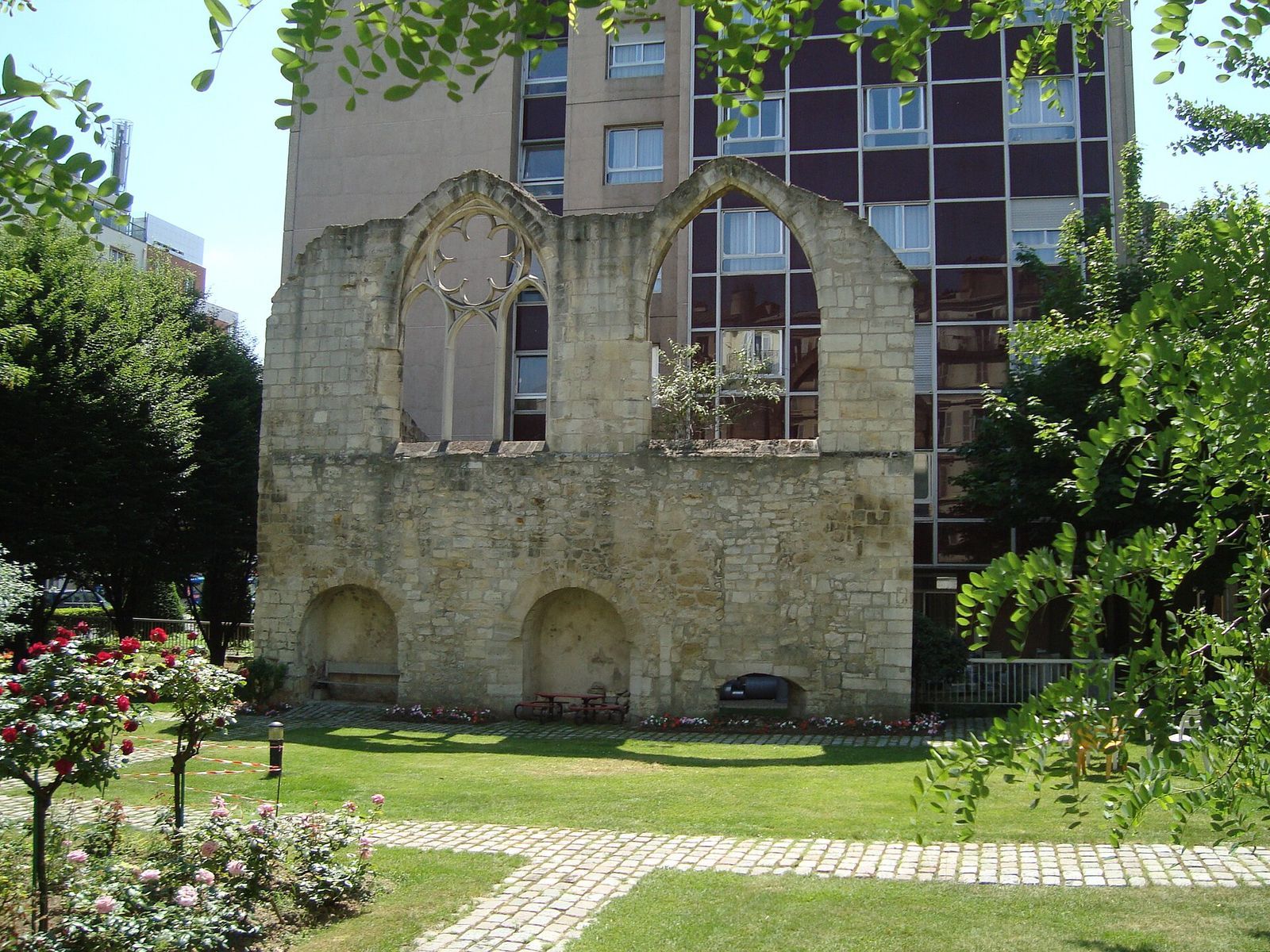
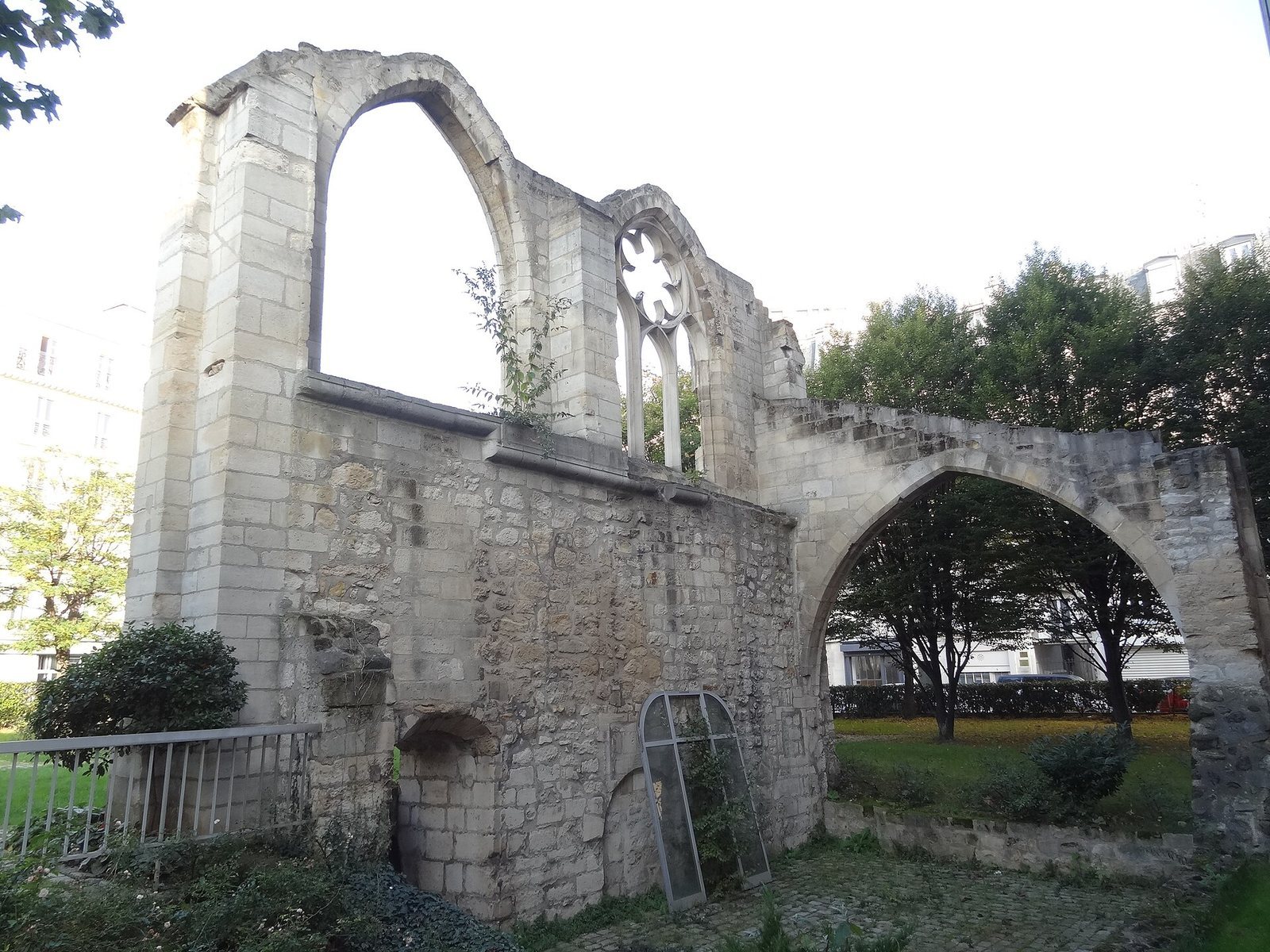
Gothic refectory
The convent’s communal dining room, or refectory, had Gothic architecture, a medieval style. Its remains were uncovered during later development and are visible from Rue Julienne in the hospital garden.
Convent wall
A fragment of the convent wall survives as a remnant of the enclosure.