County Palace in Osijek: A Seat of County Government
Site at a Glance
- Popularity
- Low
- Country
- Croatia
- Primary era
- Modern
- Eras represented
- Modern
- Civilizations
- Austrian Empire, Habsburg
- Site type
- Civic
- Remains
- Palace
On this page4 sections
History
County administration and construction
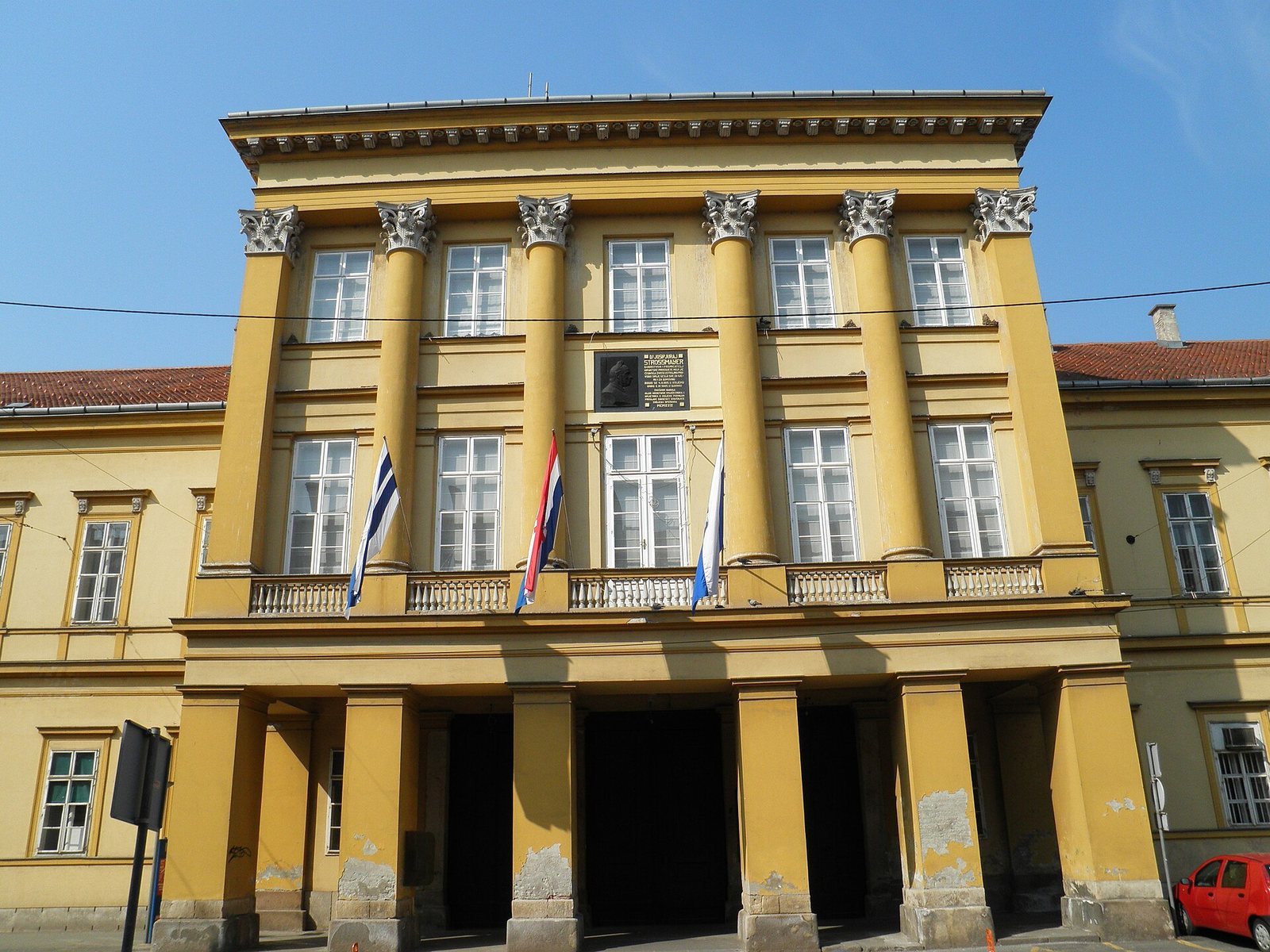
The County Palace in Osijek is a Neoclassical public building in Gornji Grad, Osijek, Croatia, built from 1840 to 1846 to house the institutions of Virovitica County. The county had moved its administrative centre from Virovitica to Osijek in 1755, but its offices were scattered across inadequate premises around the city.
An initial design by a French architect was rejected because of its cost and scale. The county commissioned a replacement from an architect based in Pest, then a major city in the Kingdom of Hungary, and accepted the design later in 1837. Construction began in 1840, the cornerstone was laid in 1842, and the palace was completed in 1846. Its construction took place while Hungarian influence was shaping architecture in the Kingdom of Slavonia, a historical territory in the Habsburg lands.
Public and administrative role
On 31 January 1861, crowds from all social classes gathered outside the palace to welcome Josip Juraj Strossmayer as he travelled from Đakovo to Osijek for the opening session of the Virovitica County assembly, the county’s representative governing body. Strossmayer had been appointed Grand Prefect, the county’s chief administrative official, and was Bishop of Bosnia and Syrmia, based in Đakovo.
The palace later served as the seat of the Osijek-Baranja County assembly. It now houses the Office of Public Administration of Osijek-Baranja County.
Remains
The preserved palace’s design draws on the forms and proportions of ancient Greek and Roman architecture. It is regarded as one of Croatia’s most monumental examples of public architecture from the first half of the nineteenth century.