Eltz Manor: A Baroque Noble Estate in Vukovar, Croatia


Site at a Glance
- Rating
- 4.8
- Popularity
- Medium
- Country
- Croatia
- Primary era
- Early Modern
- External website
- Open
- Eras represented
- Early Modern
- Civilizations
- Habsburg
- Site type
- Domestic
- Remains
- Palace
On this page8 sections
History
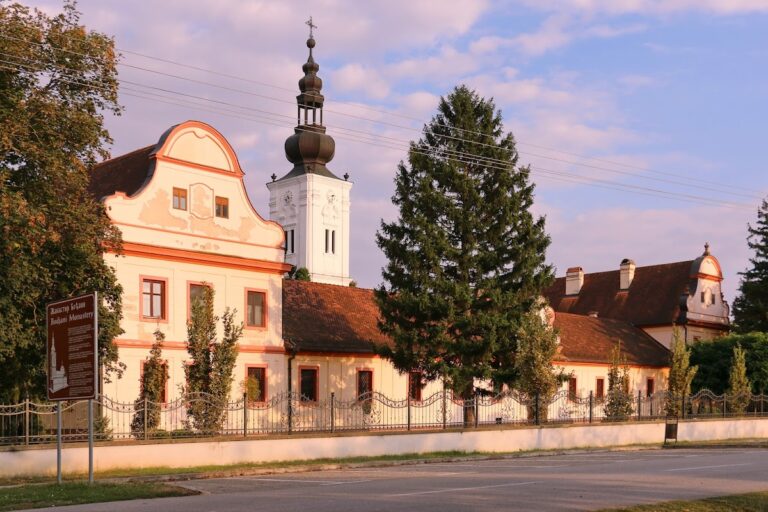
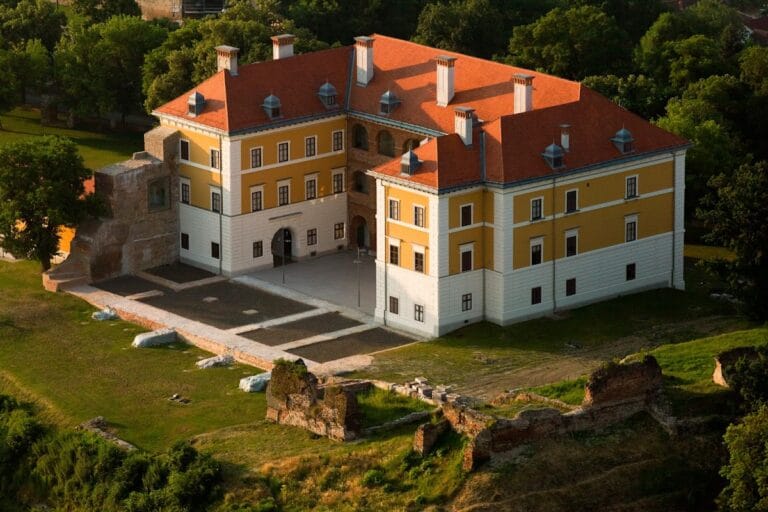
Eltz Manor is a Baroque palace and manor complex in Vukovar, Croatia, built by descendants of the German Catholic noble House of Eltz between 1749 and 1751. Philipp Karl von Eltz-Kempenich, Prince-Archbishop of Mainz and Archchancellor of the Holy Roman Empire, purchased the Vukovar manor in 1736, when the area belonged to Syrmia in the eastern Kingdom of Slavonia and formed part of the Habsburg monarchy ruled by Emperor Charles VI.
Eltz ownership and expansion
The estate was gradually enlarged after the palace was built. It became the principal residence of the Eltz family during the existence of the Lordship of Vukovar, a feudal territory centered on the town. Because the estate lay near the Habsburg Military Frontier, a fortified border zone organized against the Ottoman Empire, it was exposed to raids by Ottoman troops and local Hajduk irregular armed groups.
Confiscation and wartime destruction
After Yugoslav Partisans gained control in 1944, Yugoslavia’s communist administration confiscated the manor. Jakob Graf zu Eltz and his family were forced to leave Vukovar. Some possessions of the former Vukovar branch, including Vienna porcelain services, were exempted from confiscation and remained in the manor’s treasury.
During the Croatian War of Independence, the Yugoslav People’s Army bombarded the manor during the Battle of Vukovar. The attack caused substantial damage and destroyed parts of the complex. Jakob Graf zu Eltz returned from Eltville, a town in the German state of Hesse, to the newly established Republic of Croatia in 1990 and became a member of the Sabor, Croatia’s national parliament. After his death in 2006, his heir Georg Graf von und zu Eltz-Vukovar continued the restitution process, seeking the return of property confiscated by the state.
Restoration and museum use
Restoration took place from 2008 to 2011 and returned the palace to its pre-war appearance by October 2011. The 18th-century manor now houses the Vukovar City Museum. Its former appearance also appeared on the reverse of Croatian 20-kuna banknotes issued in 1993 and 2001.
Remains
Eltz Manor survives as an enlarged Baroque estate whose buildings were added over time around a courtyard and garden. The complex includes the main palace, an orangery for sheltering citrus and other tender plants during cold weather, St. Roch Church, the Bauer Gallery, and an old water tower. Restoration addressed major wartime damage to the principal buildings and re-established the palace’s earlier appearance.
Palace and estate grounds
The main Baroque palace forms the central architectural element of the estate. Before restoration, damage affected its main facade, the right part of the palace, and a tower, while another Baroque building had been destroyed. Angel statues arranged in a heraldic setting are associated with the manor grounds, adding a formal sculptural element to the estate.
Associated buildings
The wider complex incorporates the courtyard and garden with several related structures. These include the orangery, St. Roch Church, the Bauer Gallery, and the old water tower. Their inclusion within the manor complex reflects the gradual expansion of the estate beyond the original palace.
Treasury
The manor’s treasury contains Vienna porcelain services that formerly belonged to the Vukovar branch of the Eltz family. Because these possessions escaped the postwar confiscation, they preserve a material connection with the household that owned and developed the estate.
Nearby sites