Tvrđa: A Baroque Fortress and Historic Urban Center in Osijek, Croatia
Site at a Glance
- Popularity
- High
- Country
- Croatia
- Primary era
- Early Modern
- Eras represented
- Medieval, Early Modern, Modern
- Civilizations
- Austria-Hungary, Habsburg, Hungarian, Kingdom of Croatia, Ottoman
- Site type
- Military
- Remains
- Citadel
On this page20 sections
History
Medieval and Ottoman Settlement
Tvrđa is a Baroque fortress and historic urban center in Osijek, Croatia. The medieval center of Osijek stood on this site, which developed into a trading and port settlement in the early twelfth century on a route linking Pécs and Buda. The town belonged to the Kingdom of Hungary until 1526, when Ottoman rule began and lasted until 1687. Ottoman-era places of worship changed the settlement’s appearance, but its underlying layout remained largely intact.
Habsburg Fortress and Urban Life
After Habsburg forces retook Osijek from Ottoman rule in 1687 during the Great Turkish War, they began developing Tvrđa as a military settlement because of the town’s strategic position. Louis William, Margrave of Baden-Baden, urged repairs to the walls and proposed a new fort. A document from 1690 described the settlement as ruinous. On 29 October that year, an Ottoman attack was repelled, and the besieging force withdrew on 6 November, strengthening the case for new defenses.
Mathias von Kaiserfeld prepared an initial fortification plan in 1691, focused on strengthening the existing walls. Maximilian Gosseau de Henef later drew up a plan for a new fort on the Drava’s right bank. Construction began on 1 August 1712 under Austrian engineers supervised by fort commander Johann Stephan von Beckers. The inner town was completed in 1733, with further construction continuing through 1735. Tvrđa’s political administration also shifted over time. From 1691 to 1744 it belonged to the Kingdom of Croatia under the Habsburg monarchy; from 1744 to 1804 it was within the Kingdom of Slavonia under Habsburg rule; from 1804 to 1867 that kingdom was part of the Austrian Empire; and from 1867 to 1918 Tvrđa lay within the Kingdom of Croatia-Slavonia in Austria-Hungary.
Churches and monasteries became part of the settlement’s life as its religious institutions changed. Converted mosques initially served as churches, before Franciscan and Jesuit communities established their own churches and monasteries within Tvrđa. The first school in Osijek was founded here, and its first scholarly curriculum began in 1707. A printing press started operating in 1735. As Tvrđa’s military role diminished, it developed into a center of administrative, educational, cultural, and scholarly activity for Osijek and the surrounding region.
By the mid-eighteenth century, more than 35 inns operated in Tvrđa, estimated to account for about a third of its buildings. Crown Prince Joseph stayed at one during a visit to Osijek. Street lighting was in place by 1717; a public water-supply system opened in 1751, the first in Croatia, and a sewer system followed in 1760.
Civic Change and the Loss of Military Importance
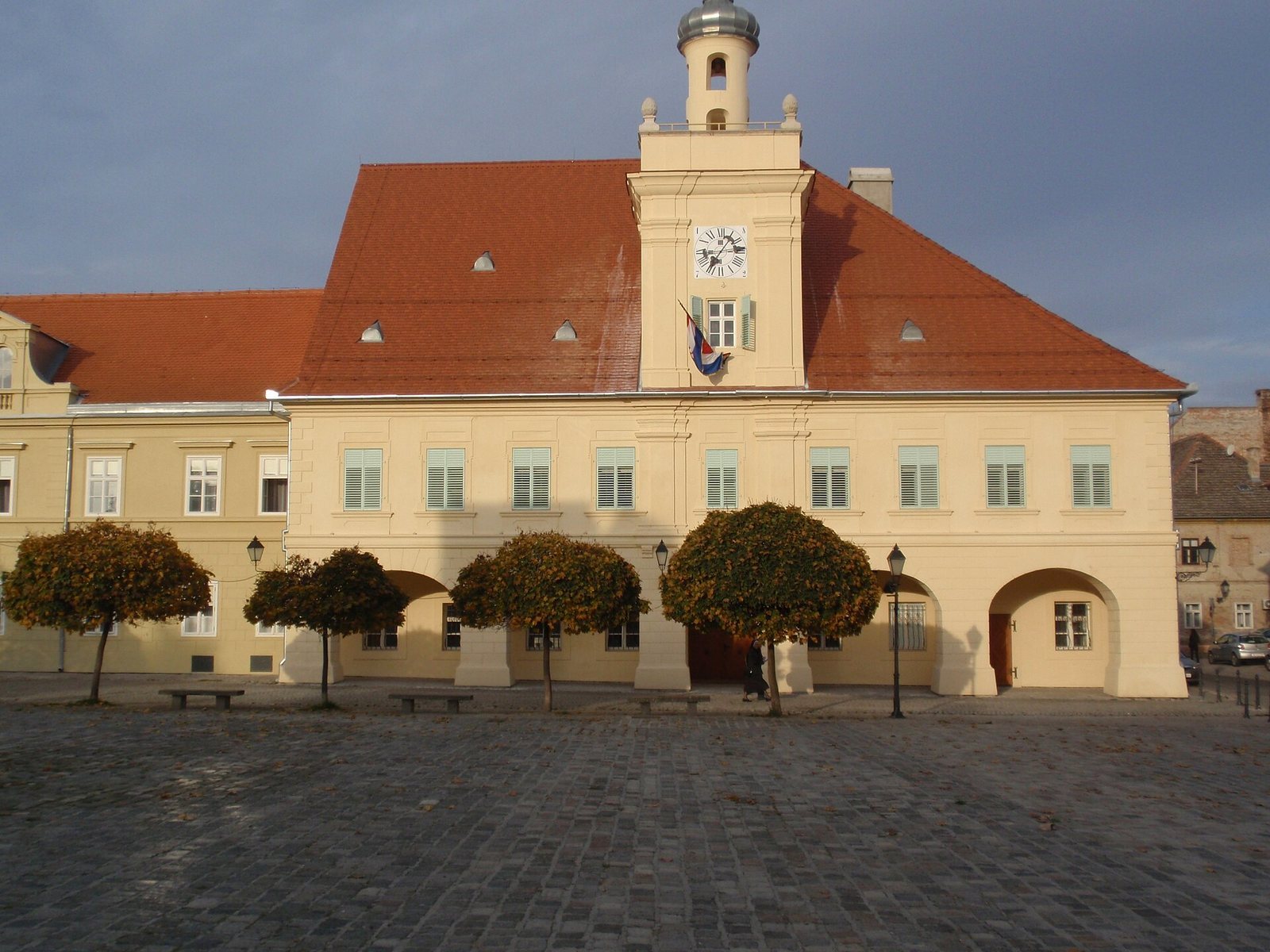
In 1786, Joseph II decreed that the Upper Town, Lower Town, and Tvrđa should be joined under a single town council. Construction in the fortress had largely stalled by the second half of the eighteenth century, and its upkeep had become a burden. Osijek received free royal town status in 1809, and the town council was housed at the southeastern corner of Tvrđa’s main square.
Tvrđa’s military importance declined as regional stability increased after the Congress of Berlin in 1878. Two northwestern bastions were demolished in the 1870s to make way for Ambrose’s Park. New buildings within the walls during the last three decades of the nineteenth century included the Royal Grammar School, whose construction began in 1881, the Royal General Secondary School, completed in 1890, and an episcopal seminary, built in 1898.
Osijek’s growth made the fortifications an obstacle to urban development. Most of the walls were demolished between 1923 and 1926 to make way for an electric tramway, and the last powder magazine, behind St. Michael’s Church, was removed in 1958.
War, Damage, and Conservation
The Yugoslav People’s Army maintained a garrison and military hospital at Tvrđa. These facilities were gradually abandoned in the 1980s and adapted as studios for local painters and sculptors. During the Croatian War of Independence, fought from 1991 to 1995, about 90 percent of the buildings sustained some degree of damage.
After the war, Tvrđa appeared on the World Monuments Fund’s 1996 list of most endangered sites. Croatia submitted it in 2005 for consideration on the country’s tentative list, an inventory of places being considered for possible World Heritage nomination. The World Monuments Fund has described Tvrđa as an eighteenth-century Baroque center with military, administrative, and commercial functions. The Agency for the Restoration of Osijek Tvrđa was established in 1999 to protect, restore, and revitalize the site while preserving its historic character and continuing uses. Saint Michael is Tvrđa’s patron saint, and the saint’s feast day, 29 September, is observed as the day of the Tvrđa district.
Remains
Fortifications and Urban Layout
Main Ring and Gates
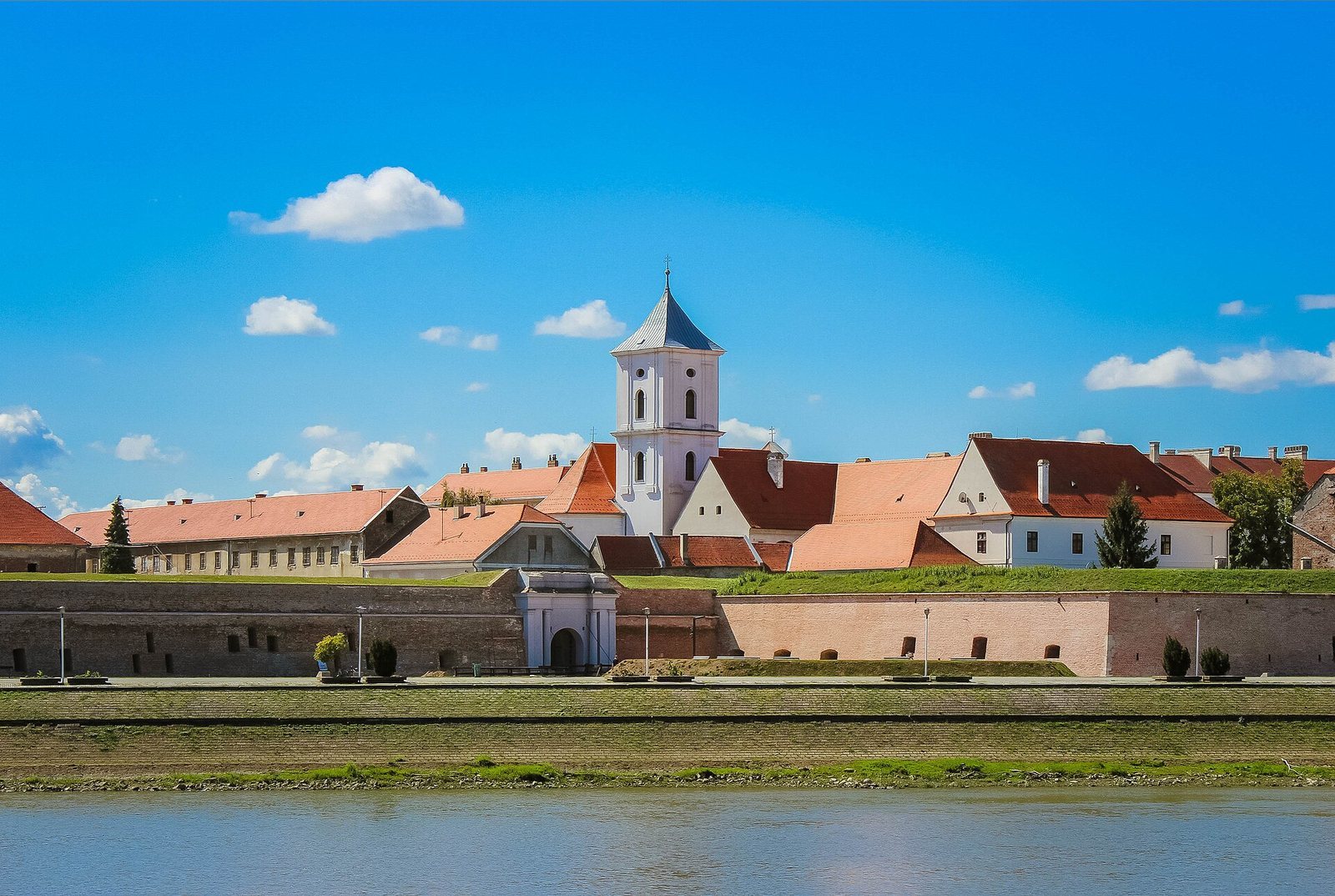
Tvrđa occupies about 80 hectares on the Drava’s right bank. Its Baroque plan formed a ring of defenses based on a lowland Dutch military design. Limestone and brick were used in the construction. The completed fort had eight bastions, projecting defensive works, together with moats, gun positions, walls, and palisades. Within the defenses stood two armories, two major depots, seven barracks, a military hospital, officers’ apartments, and buildings for the garrison headquarters, court, construction office, physician, and guardhouse.
The four main gates stood on the cardinal sides of the fort. Two were completed by 1715; a western gate leading toward the Upper Town followed in 1716, and the gate leading to the Lower Town was added in 1783. The northern entrance, known as the Water Gate, survives with the northern wall and parts of the first and eighth bastions. The historic interior core also survived the removal of much of the fortification system.
Drava Outwork and Ottoman Wall
An outwork, a separate fortification beyond the main defenses, was built on the opposite bank of the Drava to protect Tvrđa from the north and serve as a bridgehead. It was completed in 1721. Beside the access road to Tvrđa, a remnant of the former Ottoman fortress wall is known as the Turkish Wall or Filibey’s Fort.
Religious Buildings and Monuments
Earlier Places of Worship
The medieval settlement included a church of the Holy Trinity in the Romanesque tradition, a medieval architectural style associated with rounded arches and massive forms. Ottoman-era mosques also served as places of worship in the settlement, and some were later converted for Christian use.
Franciscan Church and Monastery
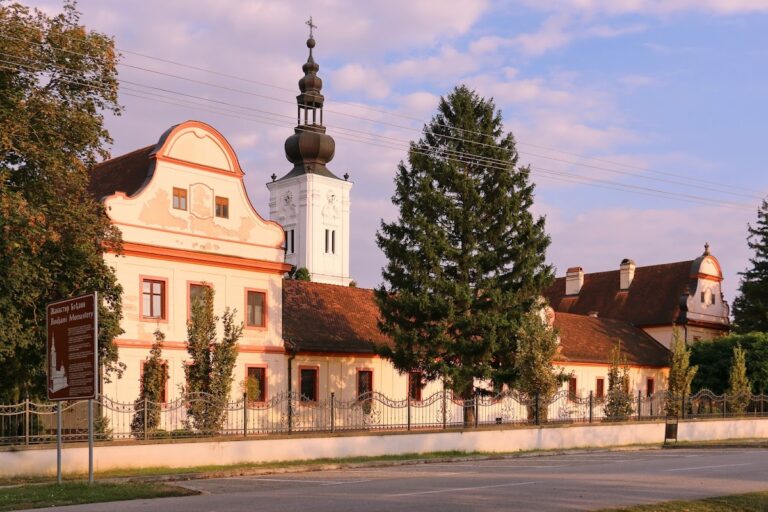
The Franciscans, a Catholic religious order, built their monastery between 1699 and 1705. A new wing was added from 1731 to 1733 and became a separate monastery in 1761. Work on their Baroque church began in 1709, and it was consecrated in 1732.
Jesuit Church and Monastery
The Jesuits, another Catholic religious order, built a monastery before beginning work on the parish church of St. Michael in 1725. The church was in use from 1734, although construction was not yet complete.
Holy Trinity Column
A column commemorating the plague was erected in the main square in 1730. Its design included curving, scroll-shaped supports and pedestals with figures of four protectors against the plague. In 1784, four further pedestals, each bearing a saint’s statue, were added.
Institutional Buildings and Later Uses
General Headquarters
The general headquarters building dates to 1726. From 1995, the former headquarters housed the Faculty of Agriculture after the faculty’s previous location was destroyed during the Croatian War of Independence. The Croatian 200-kuna banknotes issued in 1993 and 2002 depicted the headquarters, the fortress plan, and the Holy Trinity column on their reverse.
Schools and Barracks
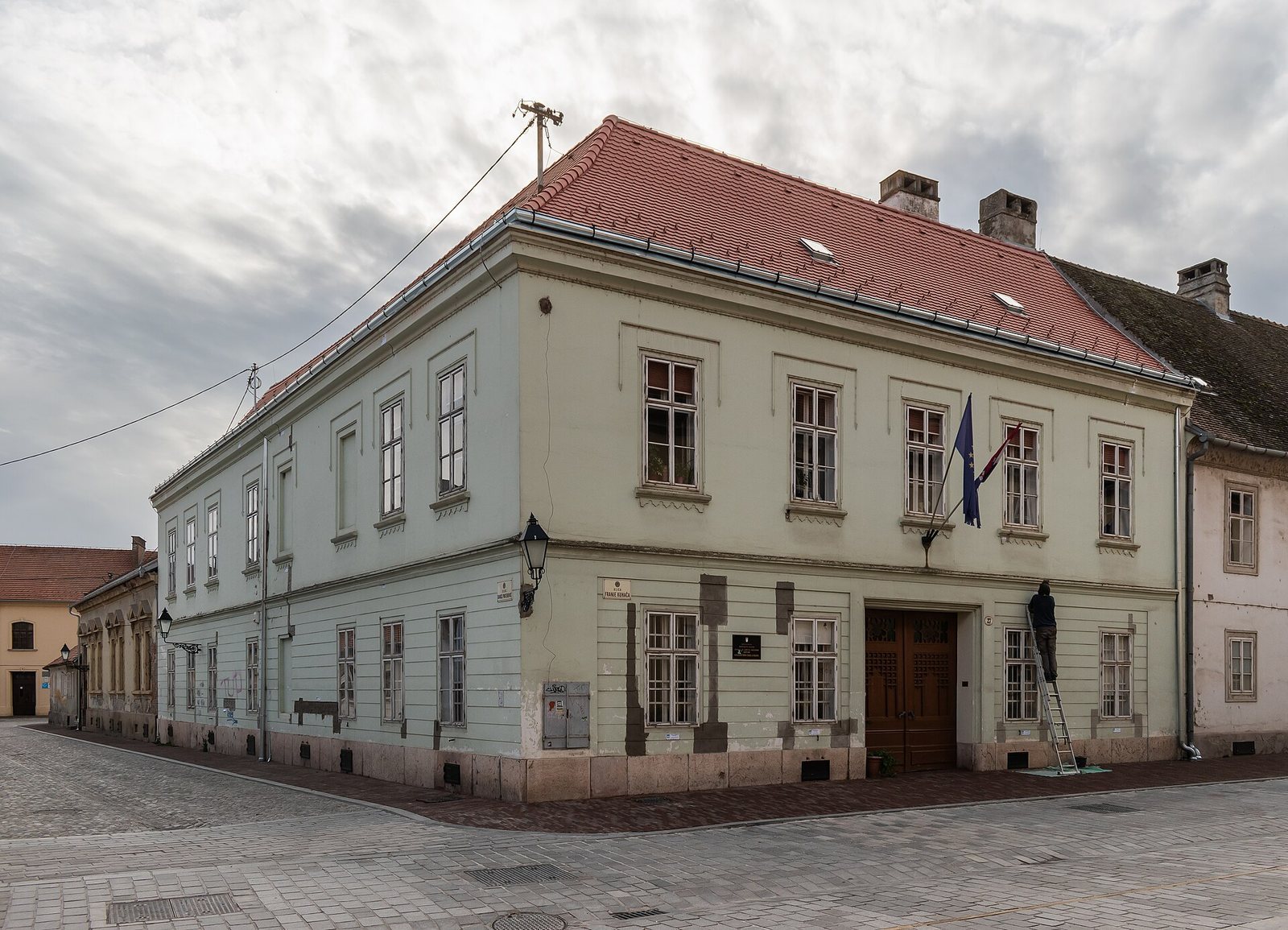
The Royal Grammar School, Royal General Secondary School, and episcopal seminary were built within the fortifications in the late nineteenth century. The former Roman Catholic seminary later housed the Franjo Kuhač Music School. A former mid-eighteenth-century logistics barracks now houses the Jesuit Classical Gymnasium, while a former girls’ grammar school is used by the Secondary School of Economics.
Military Hospital Building
One building served as Osijek’s first military hospital from the mid-seventeenth century until the early 1990s. It later housed the Faculty of Food Technology.
Museum and Public Buildings
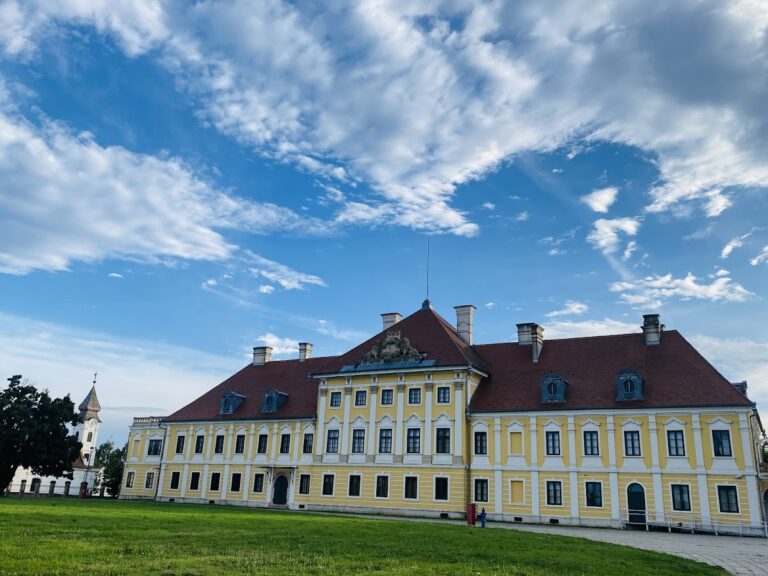
The Museum of Slavonia has been located in Tvrđa since 1946. The former town museum and archives building now houses the State Directorate for Monument Protection. The buildings in Tvrđa continue to accommodate schools, churches, museums, and public offices.
War Damage to the Historic Fabric
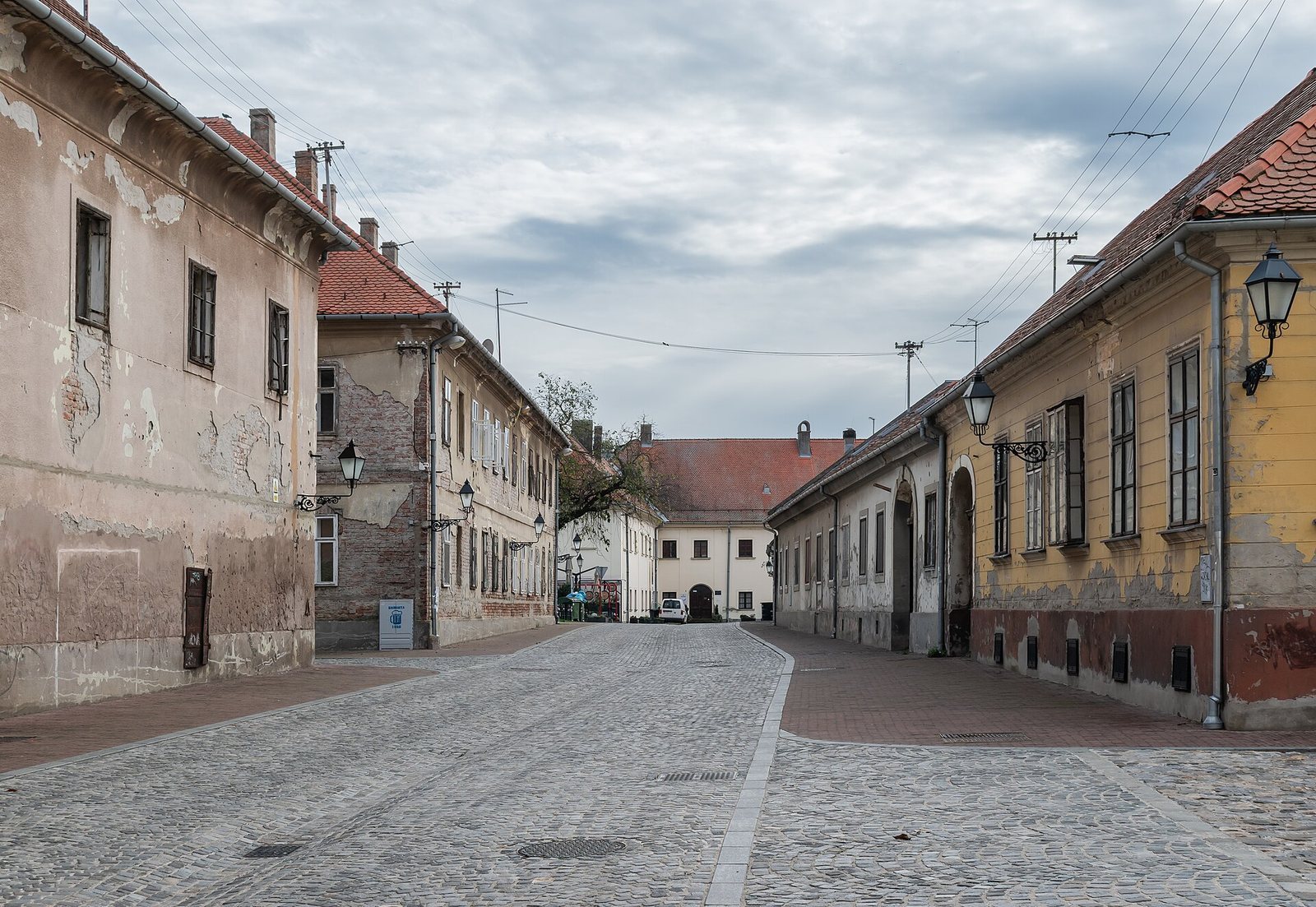
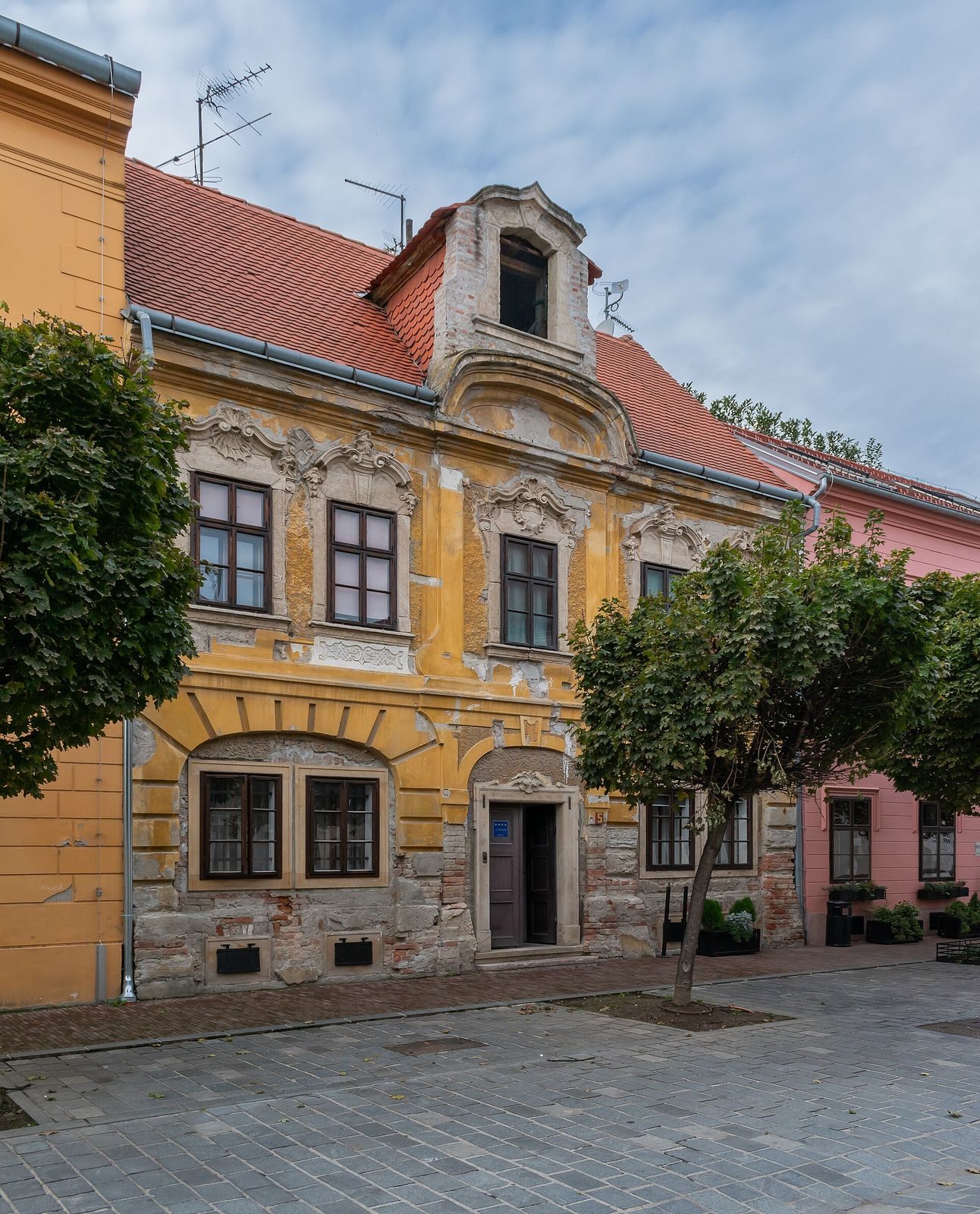
Damage sustained during the 1991–1995 war included collapsing roofs, walls, and floors. Plasterwork, sculpture, and murals were also left vulnerable to continuing decay.