Convento della Santissima Trinità: A Franciscan Convent in Baronissi, Italy


Site at a Glance
- Rating
- 4.7
- Popularity
- Low
- Country
- Italy
- Primary era
- Early Modern
- External website
- Open
- Eras represented
- Medieval, Early Modern, Modern
- Civilizations
- Italian, Kingdom of Naples, Spanish
- Site type
- Religious
- Remains
- Monastery
On this page17 sections
History
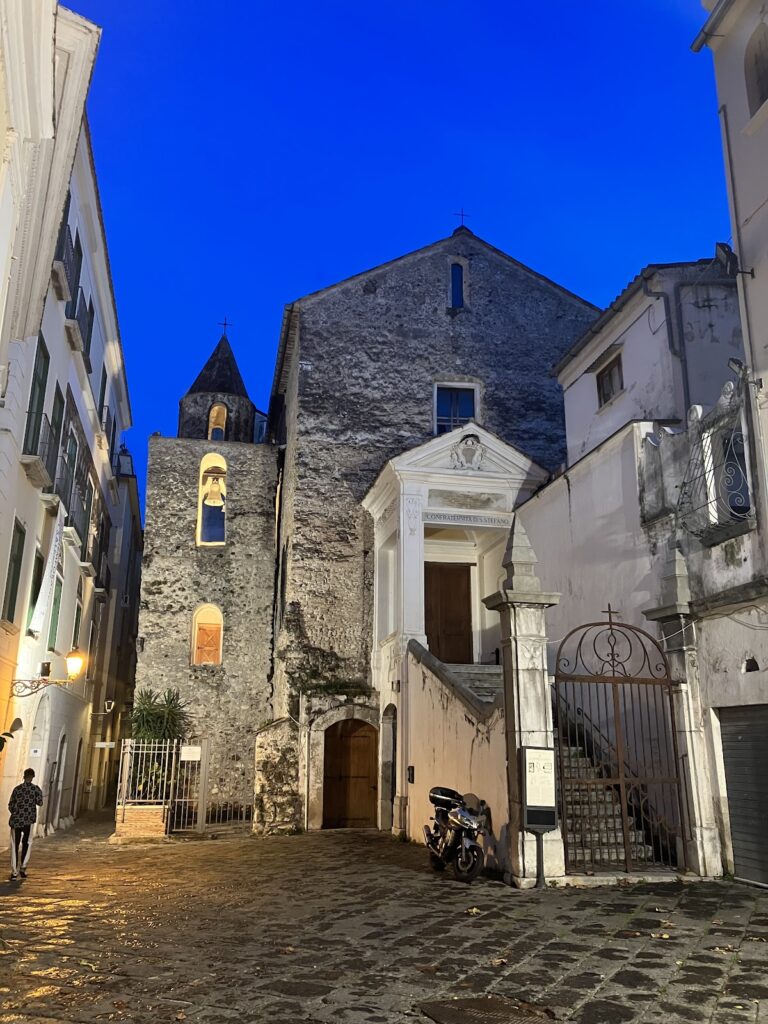
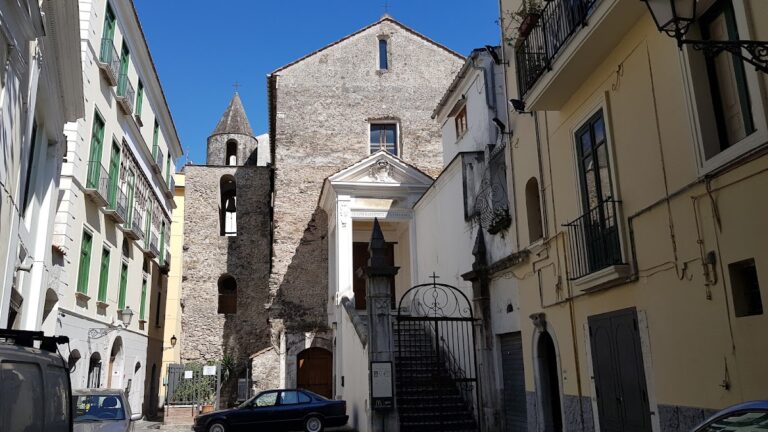
The Convento della Santissima Trinità is a Franciscan Friars Minor convent in Italy, located in the Sava district of Baronissi. Standing on a hill once known as Monticello, the complex probably originated during the first decades of the fifteenth century and was associated with the Observant reform of the Franciscan movement. Although tradition attributed its foundation around 1212 to Blessed Simone of Assisi, that claim is not supported by historical criticism. The convent and church certainly existed by the first half of the fifteenth century, when Observant Franciscans lived there in 1449.
Foundation and Observant Franciscans
The convent’s early history is closely connected with the expansion of the Observants, a reform branch within the Franciscan tradition. Its foundation probably took place during the first decades of the fifteenth century under the influence of Saint Bernardino of Siena and Saint John of Capestrano, two Franciscan reformers and preachers associated with the movement. As with several other Observant foundations of the period, no surviving foundation bull establishes the exact date.
The community had acquired a reputation for holiness by the middle of the century. Blessed Fra Paolo of Olevano sul Tusciano and Fra Bernardo of Capaccio both died at the convent in 1451 and were remembered for their sanctity. A tomb in the church commemorates the knight Giulio de S. Barbato, who died in 1462, providing another landmark for the complex’s fifteenth-century history.
Fire, Reform, and Expansion
A serious fire damaged the convent in 1532. The church appears to have suffered most severely in its ceiling and furnishings, while the convent buildings were probably affected more extensively. Much of the damage was repaired by the Observants, but the complex had still not been fully rebuilt in 1582. The consequences may also have contributed to structural difficulties that later required reinforcement along the eastern side.
On 12 November 1594, responsibility for the convent passed from the Observants to the Reformati, another reformed branch of the Franciscan tradition. The seventeenth and eighteenth centuries followed as a period of expansion and prosperity. Enlargement began around 1644 and continued beyond 1660, including the construction of the sacristy and refectory. Father Giammaria of Sanseverino commissioned carved and inlaid cupboards from Friar Innocenzo of Francavilla, while the sacristy was completed in 1648.
The refectory was completed in 1681. Its fresco of Christ served by angels in the desert was painted that year by Angelo and Francesco Solimena. A second fresco, showing the Wedding at Cana, dates from 1723 and bears the monogram of Michele Ricciardi. The convent also maintained an infirmary that eventually received friars from numerous other communities. A larger infirmary was built on the south side, with work beginning in 1719, advancing substantially by 1722, and completed by 1724.
Wool production formed part of the convent’s economic activity by 1621 and remained prosperous for centuries. Spinning and carding equipment was acquired in 1841 to improve the work, but the machinery was lost and production ended after the convent was suppressed in 1866. During the later eighteenth century, parts of the complex threatened to collapse. Verandas were added along the southern and eastern façades as reinforcement.
Religious and Artistic Centre
At the height of its prosperity, the convent served as an important religious and artistic centre. Its associations included Father Diego Campanile of Sanseverino, who became Custodian of the Holy Land, and Friar Felice de Felice of Sanseverino, a missionary and martyr in Ethiopia. The complex was also connected with painters and sculptors active in southern Italy, including Angelo and Francesco Solimena, Niccolò Fumo, Luigi Rodriguez, Michele Ricciardi, and Teodoro d’Errico.
Suppression legislation at the beginning of the nineteenth century threatened the community, but the convent was initially spared because the number of resident friars exceeded the legal minimum. Suppression finally took place in 1866, when ownership passed to the Municipality of Baronissi. The municipality sold the property to the Salerno lyceum, which later resold it to Baronissi. The Franciscans recovered the convent in 1892, after the municipality sold it to them for 18,000 lire.
After its reopening, the convent housed philosophical and theological studies for about ten years, until the establishment of the Seraphic College. During the First World War, military authorities occupied the buildings for prisoners of war. In the Second World War, German soldiers sheltered there, and the convent consequently became a target of an American attack. The attack caused no serious damage.
Twentieth-Century Changes and Present Functions
Work to add upper storeys began in 1947 and ended several years later. After the 1980 earthquake, the new rooms temporarily accommodated the Municipality of Baronissi. The complex now combines religious and artistic functions with civic and cultural uses. It houses the Museum of the Convent’s Works, the municipal Peppino Impastato library-media centre, the Regional Fund for Contemporary Art, Casa della poesia, and a conference hall.
The convent library contains more than 10,000 volumes. The collection was almost entirely dispersed after the suppression of 1866, with valuable books transferred to the Provincial Library of Salerno, where a group is identified internally with the convent’s name. The surviving holdings include nine parchment liturgical choir books written in 1717 by Fathers Bernardino of Borgo San Lorenzo and Giovanni Pietro of Radicoforo and illuminated by Father Bernardo of Rometta. They also include 50 incunabula, meaning books printed in Europe before 1501, about 350 sixteenth- and seventeenth-century works printed by Aldo and Paolo Manuzio, the Giunta family of Florence, and Venetian publishers, and 25 manuscripts.
The choir books were exhibited in 1961 at a manuscript exhibition with Christmas themes in the Royal Palace of Naples. The library also received books from the suppressed Seraphic College, collected by Friar Generoso of Muro during the difficult years after the Second World War. Further old collections from Franciscan libraries in the province have since joined the holdings, and cataloguing continues.
Remains
The complex combines a Latin-cross church, a fifteenth-century cloister, convent rooms, and later additions. The church measures 52 metres in length and approximately 13 metres in width. Its surviving decoration reflects several centuries of work, from fifteenth-century paintings and burials to the large seventeenth- and eighteenth-century fresco cycles associated with Michele Ricciardi and the Solimena circle.
The Church Interior
Nave and Entrance Vestibule
The rectangular entrance vestibule has a vault divided into four sail-vault sections. Each section carries an allegorical fresco representing Music, Grace, the Soul, or Harmony. At the beginning of the nave, two further sail vaults between the first chapels carry allegories of the Eight Beatitudes, painted in 1699 as part of Michele Ricciardi’s extensive work at the convent.
A painted wooden ceiling commissioned by Decio and Benedetto Farina dates from 1695. It incorporates three large seventeenth-century canvases. The central painting shows the Glory of Saint Francis and is attributed either to Angelo Solimena’s circle or to Solimena himself. The lateral canvases depict Saint John of Capestrano at the Battle of Belgrade and Saint Francis, both painted by Andrea Miglionico.
Madonna dell’Arco and High Altar
On the left intrados of the triumphal arch, the curved underside between nave and transept, is a fresco of the Madonna dell’Arco painted in 1652 by Father Diego Campanile of Sanseverino the Younger. The miraculous image is enclosed in a carved and gilded wooden frame and protected by glass. Its popularity among worshippers from neighbouring regions led to the construction of an altar for Mass. Stucco decoration and jewels once surrounded the image, but the altar and stucco were removed during the 1919 restoration to improve the interior’s overall symmetry.
The high altar, made entirely with inlaid work, dates from 1708, and its frontal repeats the pattern of the nave ceiling. A marble balustrade made in 1723 at the expense of the Campanile family encloses the presbytery, the area around the main altar reserved for the clergy. The family’s arms appear on the small pillars of the gate. Behind the altar is a walnut choir, carved and inlaid in 1710.
Presbytery and Fresco Cycles
Michele Ricciardi painted the presbytery walls in 1708 and 1709. The scenes show Saint Francis of Paola meeting Louis XI and Saint Francis of Assisi at the Sultan’s court. The barrel vault carries the Glory of the Immaculate Conception. The upper zone of the nave walls contains allegories of Religion, Faith, Justice, Patience, Weeping, and Fortitude, which belong to the same decorative phase.
Ricciardi also decorated the transept with scenes including the Assumption of the Virgin, dated 1721, the Glory of the Dominican Order, the Glory of the Franciscan Order, the Visions of Saint Dominic and Blessed John Duns Scotus, Jacob’s Dream, and the Sacrifice of Isaac. In 1731 he produced the fourteen paintings of the Via Crucis, or Stations of the Cross. The original paintings are now in the museum, while photographic reproductions printed on canvas remain in the church.
Later Alterations
Twentieth-century work substantially changed the church’s interior. In 1953, the eighteenth-century maiolica floor was replaced with cement tiles, and the raised transept floor was removed, leaving the altars reached by unusually high steps. Tombs and epitaphs were removed or repositioned, the stained-glass window that illuminated the choir was bricked up, and the organ pipes were moved from the gallery to the choir. The pipes covered parts of Ricciardi’s frescoes. The transept ceiling was also replaced, destroying its boards and Andrea Miglionico’s large canvas of the death of Saint Francis.
Teodoro d’Errico’s altarpiece of the Immaculate Conception between Saint Francis and Saint Anthony was later moved from the chapel of the Immaculate Conception to the high altar. This relocation changed the original arrangement and proportions of the chapel.
Noble Chapels and Funerary Monuments
Right Side of the Nave
Twenty chapels line the nave and transept. In earlier centuries, local noble families controlled these patronage chapels and exercised burial rights in them. Most contain wooden works by Niccolò Fumo. The first chapel on the right contains the former altarpiece of the Nativity of Jesus, now preserved in the museum. The painting shows the Virgin and Saint Joseph on one side and several saints on the other, including Saint Charles Borromeo in cardinal’s dress and a Dominican saint. A 1462 tomb slab lies at the foot of the pier between the first and second chapels.
The second chapel is dedicated to Saint Peter of Alcantara and contains a wooden statue by Nicola Fumo, beneath a Franciscan coat of arms. It formerly belonged to the Pastore family of Capriglia. The third chapel contains Fumo’s wooden crucifix and bears the Donato family arms of Baronissi. The fourth is dedicated to Saint Joseph and has a wooden sculpture by Fumo. Formerly under the patronage of the Pennini family of Sava, it was remade by the Barra family in 1935.
The fifth chapel is dedicated to Saint Michael the Archangel. Its statue is by Fumo, and its coat of arms recalls the Scalea family of Sava, which later transferred its burial rights to the Mutarelli family of Saragnano. The sixth chapel is dedicated to Our Lady of Mount Carmel and bears the arms of the Mari family of Saragnano. The seventh contains a Ricciardo family tomb slab from Saragnano and a Franciscan coat of arms. A fifteenth-century fresco shows Saint Francis presenting elected souls to the Virgin, with traces indicating that the painted scene extends beyond the exposed area.
Left Side of the Nave
The first chapel on the left was dedicated to Saint John the Baptist and is associated with an altarpiece of the Nativity of Saint John, which was stolen. The second chapel, dedicated to Our Lady of Grace, bears the Farina family arms and contains an altarpiece from the school of Andrea Sabatini depicting the Virgin.
The third chapel is dedicated to Saint Rose of Viterbo and bears the shield of the Siniscalchi family of Baronissi. Its statue is by Nicola Fumo. The fourth, dedicated to Saint Bonaventure, carries the Mutarelli arms and contains another wooden sculpture by Fumo. The fifth chapel is dedicated to Our Lady of Sorrows and contains a statue by Niccolò Fumo. Its arms belong to the d’Avossa family, originally from Bergara in the Kingdom of Spain, while the chapel was connected with the Petrone and Pagliara families.
The sixth chapel is now dedicated to Saint Clare of Assisi but was formerly dedicated to Saint Diego. It belonged to the Barone family and contains a recently made statue of Saint Clare. The seventh bears the Scalea family arms, and very old frescoes can be seen through scraped areas of paint.
Transept and Choir Chapels
The first chapel on the right side of the transept is dedicated to Saint Anne. It formerly belonged to the Barbariti family of Sava and now bears the Rocco family arms. Its altar was remade in 1949, when a papier-mâché statue of the Madonna was placed in the niche. The second is dedicated to Our Lady of Montevergine. Nicolò Fumo carved its wooden statue of the Madonna holding the Child, whose figure is preserved in the museum. The Alemagna family arms surmount the chapel.
The first chapel on the left side of the transept is dedicated to Saint Paschal Baylon. Until 1718 it was dedicated to the Holy Spirit and belonged to the de Durante family of Sava; it later passed to the Saggese family. It retains its original seventeenth-century stucco altar, unlike the other transept chapels whose marble altars were reconstructed during the 1930s. The second chapel is dedicated to Saint Francis, patron of Baronissi, and bears the arms of the Campanile family of Sava, which held its patronage and burial rights.
The chapel to the right of the choir is dedicated to the Immaculate Conception. Its seventeenth-century carved and gilded wooden altar was originally integrated with d’Errico’s painting of the Immaculate Conception between Saint Francis and Saint Anthony. A fifteenth-century fresco cycle showing scenes from the life of the Virgin was discovered there during the second half of the twentieth century. The chapel to the left of the choir is dedicated to Saint Anthony and bears the arms of the Gaiano family of Sava. Its eighteenth-century maiolica floor survives as part of the earlier flooring, while a Gaiano tomb slab remains in the floor. The right wall contains the Renaissance funerary monument of the jurist Giacomo de Gayano, who died on 12 July 1512.
Cloister and Bell Tower
The fifteenth-century cloister has a square plan, a central well, and a broad covered ambulatory around an open courtyard. Sixteen round arches rest on sixteen reused Roman-medieval columns with composite capitals. The inner-wall lunettes contain a first-half seventeenth-century cycle of scenes from the life of Saint Francis, with medallions of Franciscan saints below.
Two large lunettes are attributed to Michele Ricciardi. One depicts the Immaculate Virgin, while the other shows the martyrdom of Friar Felice de Felice of Sanseverino, Father Antonio de Martino of Pescopagano, and Friar Giuseppe of Atina. The three Franciscan missionaries were martyred at Suakin in Ethiopia on 25 March 1648. Another major work is a sixteenth-century Deposition set within an arcosolium, an arched recess often used for a tomb or funerary monument.
The convent’s bell tower ends in a cusp with an arabesque character. Restoration in 2002 recovered a more purely Franciscan appearance after earlier changes had altered the original arrangement of the cloister.
Museum and Artistic Collections
The Museum of the Convent’s Works occupies restored rooms overlooking the fifteenth-century cloister. Its collection includes Angelo Solimena’s painting of Saint Bernardino of Siena; Ricciardi’s fourteen-part Via Crucis and his large 1701 paintings of the Lamentation and Christ at the Column; a guardian angel from the Flemish school; fifteenth-century panels of Saint Michael the Archangel and Saint Anthony of Padua; and a seventeenth-century wax Christ Child from Sicily.
The museum also preserves a large Nativity scene by an accomplished eighteenth-century Neapolitan presepio artist, around 30 eighteenth-century Neapolitan Nativity figures, relics of Franciscan saints, precious chalices, liturgical vestments, and several Roman-period cinerary urns. Together with the church and library, these collections preserve the artistic and religious history that developed within the convent over many centuries.
Nearby sites