Compesières Commandry: A Hospitaller Headquarters in Switzerland
Site at a Glance
- Rating
- 4.5
- Popularity
- Very Low
- Country
- Switzerland
- Primary era
- Medieval
- Eras represented
- Classical, Medieval, Early Modern
- Civilizations
- Knights Hospitaller, Roman
- Site type
- Military
- Remains
- Castle
On this page11 sections
History
Compesières Commandry is a former Hospitaller religious and administrative center in Bardonnex, Switzerland, developed by the Order of Saint John of Jerusalem from the thirteenth century. Its history began with the donation of the village’s Romanesque church in 1270 and continued through the construction of a fortified house, Reformation-era seizure, later restoration, and municipal use. The Order, later known as the Order of Malta, made Compesières the headquarters of its Genevois commandry, an administrative and economic center governed by a commander, within the Auvergne langue, one of its regional divisions.
Foundation and Hospitaller development
Compesières is mentioned from the twelfth century, when the name was also associated with a local noble family. In 1270, Aymon de Cruseilles, Bishop of Geneva, gave the village’s Romanesque church to the Order of Saint John of Jerusalem. The Hospitallers established a hospice there and used the site as the administrative center of their Genevois commandry.
The Order also maintained a hospital at Hautevillette, in Hauteville-sur-Fier in the County of Geneva, from the thirteenth century. Its two-storey house and tower continued to serve the institution until 1576, when the hospital was converted into a farm. At Compesières, a fortified house was built beside the church between the late fourteenth and early fifteenth centuries. The fifteenth-century complex combined religious and hospitable purposes, providing accommodation for pilgrims as well as a hospital.
Reformation, conflict, and contested possession
The Reformation, the sixteenth-century religious movement that produced Protestant churches and transformed political institutions in Geneva and the surrounding region, brought major changes to Compesières. During the conflicts involving Geneva, Bern, and Savoy, the commandry was taken from the Order in 1536. The castle became the residence of the Bernese bailiff, a senior administrative and military official, from 1536 to 1567.
Control of the property remained disputed during the sixteenth century, although the Order had regained possession by 1617. During the late sixteenth-century wars between Savoy under Charles Emmanuel I and Geneva, Henry IV, king of France, intervened to protect the commandry from destruction by the opposing forces. The Knights’ Hall preserves a heraldic ceiling associated with this period of conflict.
Expansion and civic transformation
From 1617 until the French Revolution, the Order enlarged the fortified house and church several times. In 1792, during the French occupation, the commandry became national property. Its towers and the church bell tower were destroyed, the Order’s arms and symbols were removed, and the building was converted into a saltpeter factory. Saltpeter, or potassium nitrate, was used historically in the manufacture of gunpowder.
The property was later sold to private owners and subsequently transferred to the municipality. From 1822, the complex accommodated the town hall, a school, and the parish priest’s residence. It passed to the municipality of Bardonnex in 1882. The church was almost entirely rebuilt in 1834 and 1835, while the surrounding enclosure was demolished in the early twentieth century to allow construction of a new school. The castle was renovated in 1954 and 1955 and again in 1971.
Since 1955, a room in the castle has housed the Museum of the Order of Malta. Compesières remains the principal commandry of the Order of Malta in the Canton of Geneva and is recognized as a nationally important cultural property. The castle continues to accommodate the Bardonnex municipal administration and the parish priest’s residence.
Remains
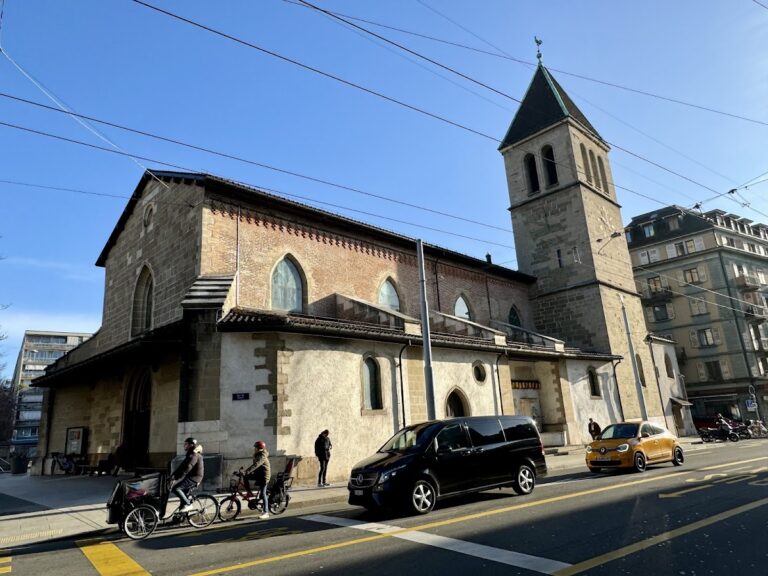
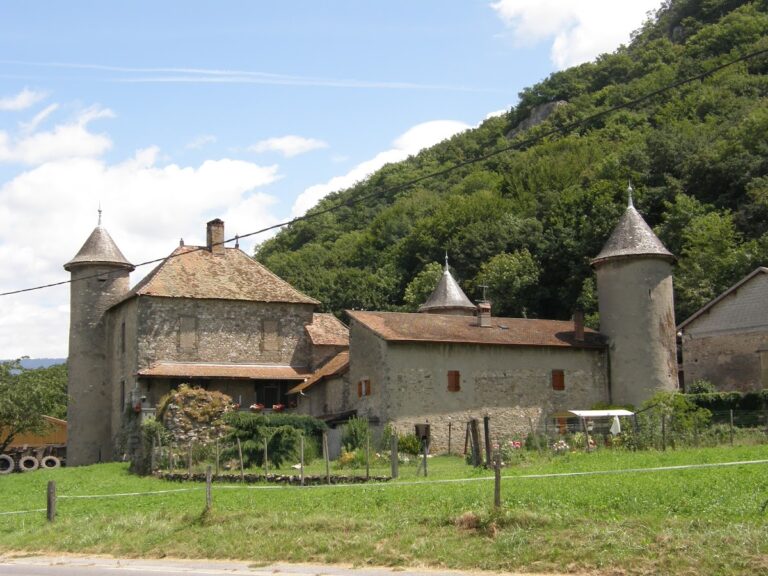
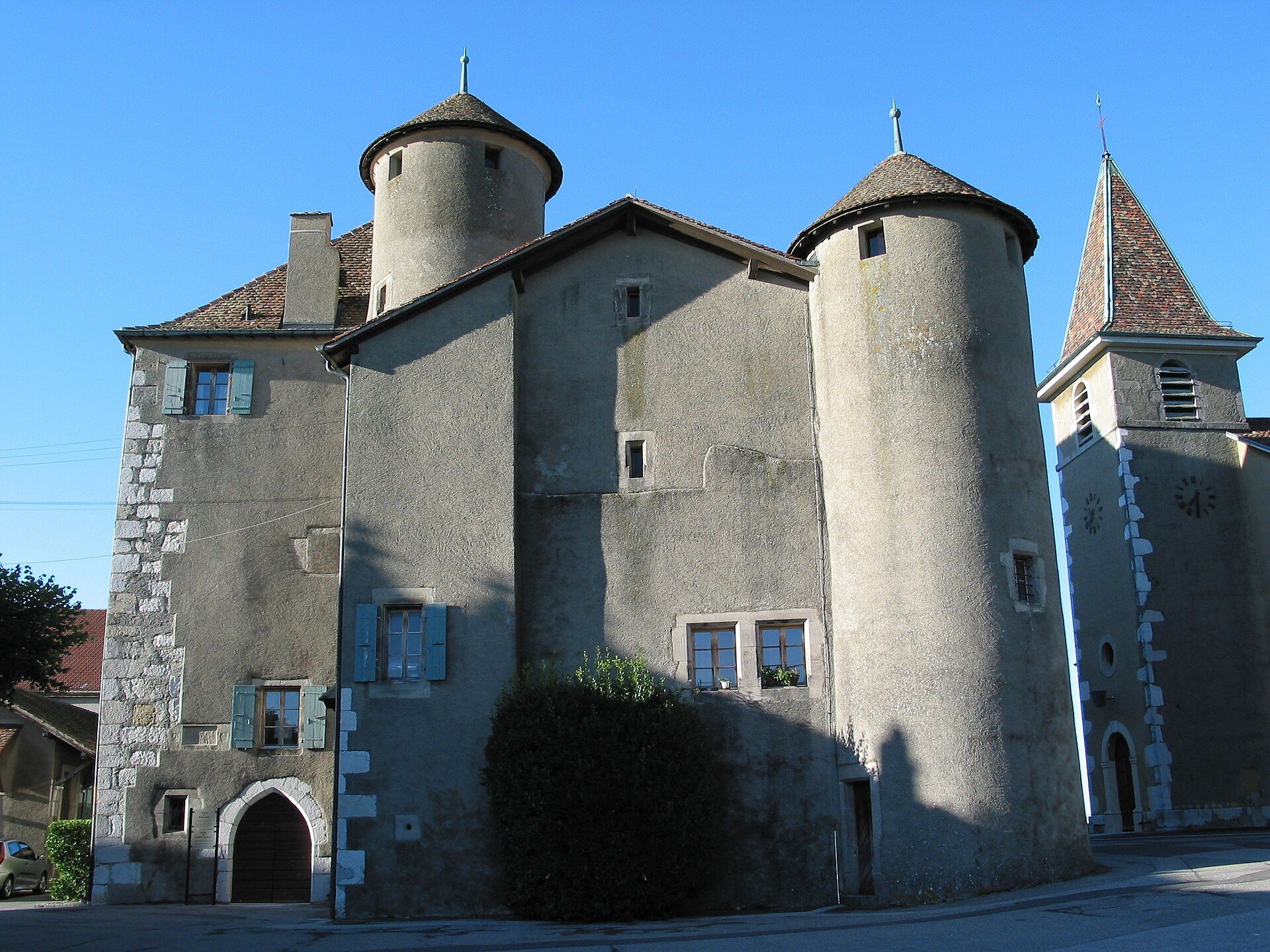
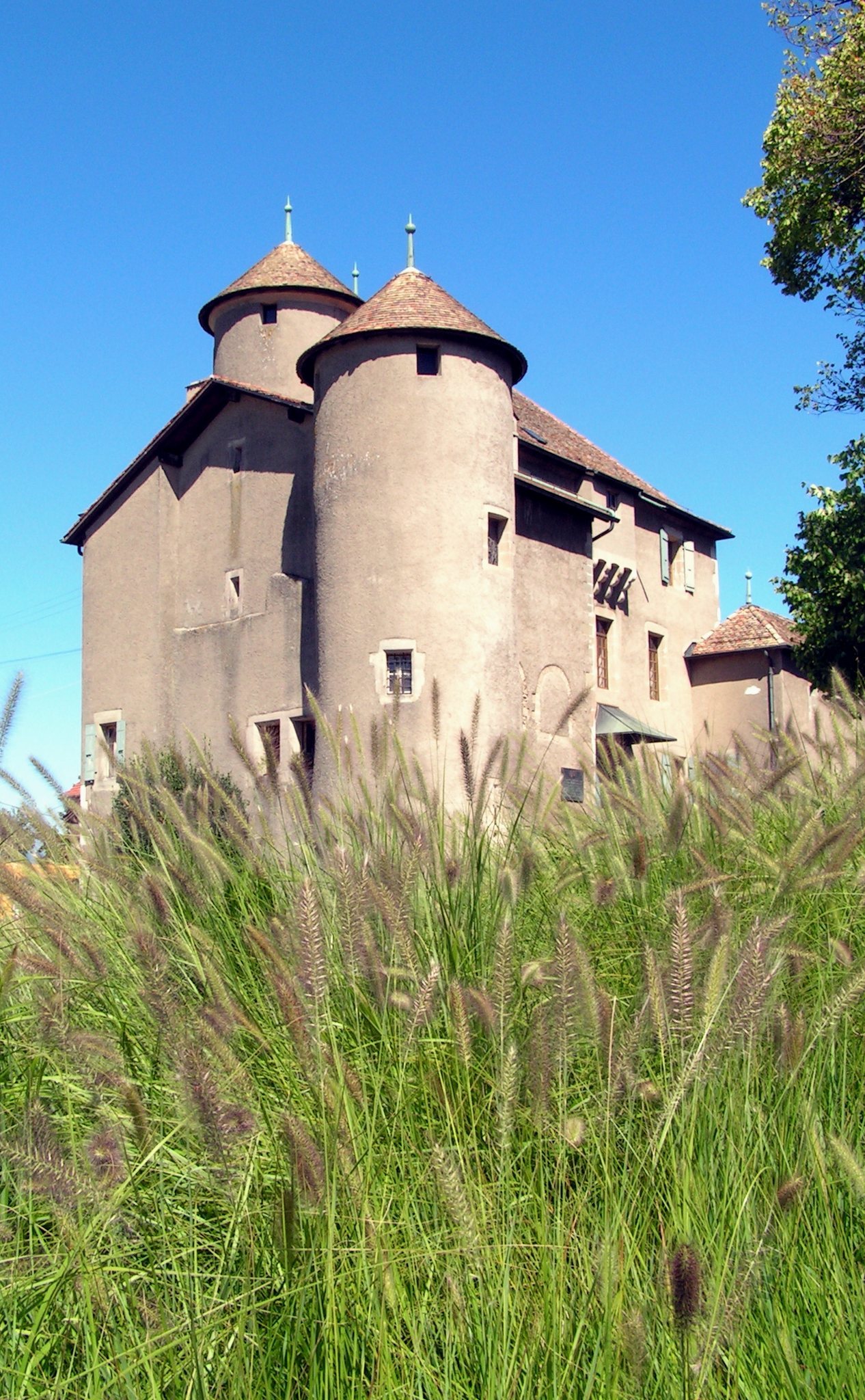
Compesières consists of a fortified house or castle standing beside an attached church in the hamlet of Compesières. The oldest parts of the castle may belong to the period following the church’s transfer to the Hospitallers in 1270, while the present principal castle building dates from the fifteenth century. The complex retains evidence of its religious, hospitable, defensive, and later civic functions, although major parts of its earlier enclosure and church were altered or destroyed.
Castle and church complex
Fortified house
The original fortified house had two storeys and a tower. Later building campaigns extended the property around the house and church, creating an enclosure with round towers. That enclosure was demolished in the early twentieth century, leaving the castle and attached church as the principal surviving elements of the former commandry. The castle’s present use includes Bardonnex’s municipal administration and the parish priest’s residence.
Church of Saint Sylvester
The church was originally a Romanesque building raised on Roman foundations and dedicated to Saint Sylvester. Its bell tower was destroyed in 1792 during the conversion of the commandry into national property. The church was almost completely rebuilt in 1834 and 1835, giving the present building a form shaped largely by nineteenth-century reconstruction rather than by its original medieval fabric.
Interior features and museum collection
Knights’ Hall ceiling
The Knights’ Hall contains a heraldic ceiling dating from the period of the late sixteenth-century wars. Its 165 painted coffers bear religious and heraldic symbols. The coffers are arranged in five bays separated by the main beams of the nave, preserving an important decorative feature of the castle’s period as a Hospitaller commandry.
Museum of the Order of Malta
A room in the castle houses the Museum of the Order of Malta. Among its objects is a fifteenth-century painted cross that formerly decorated the chapel at Mouxy. The cross connects the museum collection with the wider religious network of the Order and with the devotional functions once carried out in its commandries.