Commandry of Nemerow: A Knights Hospitaller Center in Germany
Site at a Glance
- Popularity
- Medium
- Country
- Germany
- Primary era
- Modern
- Eras represented
- Modern
- Civilizations
- German
- Site type
- Domestic
- Remains
- Manor House
On this page9 sections
History
The Commandry of Nemerow was a local administrative and economic center of the Knights Hospitaller at Nemerow in Germany. The Hospitallers, also known as the Order of St John, were a religious and military order; a commandry was one of its local administrative and economic units. First mentioned in 1285, Nemerow belonged to the Brandenburg Bailiwick, the order’s regional province, and remained a commandry until 1648.
Origins and growth
The lands around Nemerow belonged to Broda Monastery in the twelfth century. Under the Treaty of Kremmen on 20 June 1236, the Pomeranian duke Wartislaw III ceded Stargard, Beseritz, and Wustrow to the jointly ruling Brandenburg margraves John I and Otto III. In 1273, the margraves Otto and Albrecht granted Klein Nemerow to Broda Monastery.
The commandry was first established at Gardow and was initially known by that name. On 13 March 1285, Brandenburg margrave Albrecht III granted the Hospitallers rights to Gnewitz for the commandry of Gardow. Its commander, Ulrich Schwabe, also bought estates in Klein and Groß Nemerow from Hermann von Warburg. Albrecht confirmed the order’s possession of those estates on 15 May 1298. As the Hospitallers’ holdings around Nemerow expanded, Gardow lost importance and was later abandoned.
After Stargard came under Mecklenburg rule, Prince Henry II granted the commandry patronage rights over Lychen’s St John’s parish church on 30 January 1302. Such rights gave a landholder recognized influence over a parish’s clergy and appointments. Brandenburg margrave Hermann confirmed the grant that year, when Gardow was identified as part of Nemerow. The commandry’s original endowment bordered the lands of Wanzka Monastery.
A community of priest brothers responsible for the order’s religious duties was established alongside the commandry, as at Mirow. In the early fourteenth century, its lands included Nemerow, Groß and Klein Nemerow, Rowa, Staven, and territory around Gardow, including Dabelow, Wokuhl, Gnewitz, Gudendorf, and the Dreffin field. The commandry expanded substantially during the century. At its economic height it held eight villages and about 100 farmers and cottagers. Territorial rulers repeatedly required lodging and deliveries of produce, while commanders such as Ulrich Schwabe and Adolf von Schwalenberg served as respected witnesses to important charters and political acts. Adolf was still head of the commandry in 1355.
Ducal influence and the end of Hospitaller control
During the sixteenth century, disputes with the order’s regional leaders at Sonnenburg coincided with growing Mecklenburg influence over appointments. In 1552, Duke John Albert I installed his vassal and court and war councillor Joachim von Holstein of Ankershagen as commander. Joachim took the order’s habit, while the dukes treated the commandry as secularized, meaning brought under secular control. A 1556 inheritance settlement between John Albert I and Duke Ulrich, issued by Brandenburg elector Joachim II, initially excluded the Nemerow and Mirow commandries from secularization.
In 1563, a duke assigned the commandry’s town house in Neubrandenburg to Superintendent Joachim Nossiophagus for use as his residence and the seat of his office. Military and political upheaval soon disrupted the commandry itself. In 1628, the Bohemian nobleman and imperial commander Wallenstein took control of it. After his rule in Mecklenburg ended two and a half years later, Sweden’s King Gustav II Adolf granted the commandry in 1630 to his colonel Melchior Wurmbrand. Wurmbrand relinquished it in 1634, by which time its buildings and property had been devastated. The last stable evidence of Hospitaller possession dates to 1646.
The Peace of Westphalia assigned the commandry in 1648 to Mecklenburg’s Güstrow ruling line. After that line died out, the 1701 Hamburg inheritance settlement transferred it to the newly formed partial duchy of Mecklenburg-Strelitz. In 1775, a dispute within the Hospitaller order touched on Nemerow, whose institutional tradition had continued within the commandry of Lagow. Friedrich Georg zu Wied-Runkel, an artillery general and order member, intended to convert to Catholicism; his name was removed from the order’s lists only after his death.
Later administration and estate
Nemerow remained a separate territorial administrative district until 1794. Its last leaseholder was district administrator Adolph Friedrich Quinckardt; afterward, Nemerow became a domain within the district of Stargard. The remains of the commandry church were demolished in the early eighteenth century.
Before the land reform, tenant Georg Griebel suffered financial failure following the Great Depression and a major fire in 1930. The German Settlement Bank divided the estate in 1932, and Bruno Thamm’s family was among the new settler owners. After the Second World War, the Thamm family was expropriated under land reform in the Soviet occupation zone, and the Haidehof was divided into two new-farmer holdings.
Remains
Very little of the commandry complex survives. Its economic core stood beside Lake Tollense, with buildings along the lake’s edge and a brick barn on the steep bank, north of the convent house. The stone-built commandry church stood elsewhere. The surviving features belong to different phases of the site’s history.
Surviving buildings and commemorative stone
Medieval farm barn
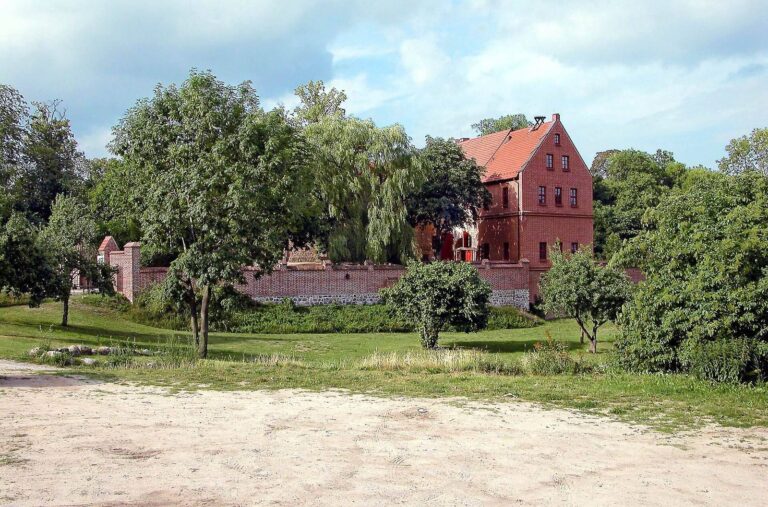
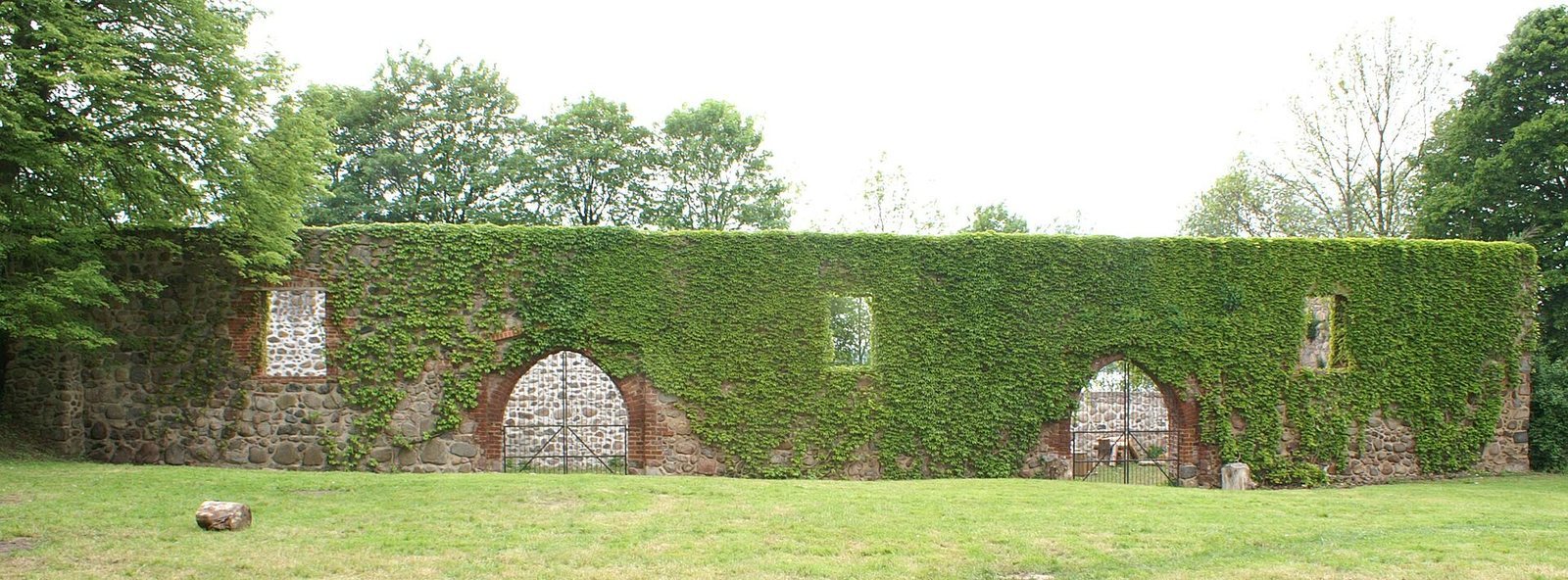
The enclosing walls of the medieval brick barn remain on the steep bank of Lake Tollense. The building probably dates to the fourteenth century. Its construction shows that it was a farm building, rather than the church it was once mistakenly thought to be. The barn burned out completely in the early 1960s.
Commander’s funerary stone
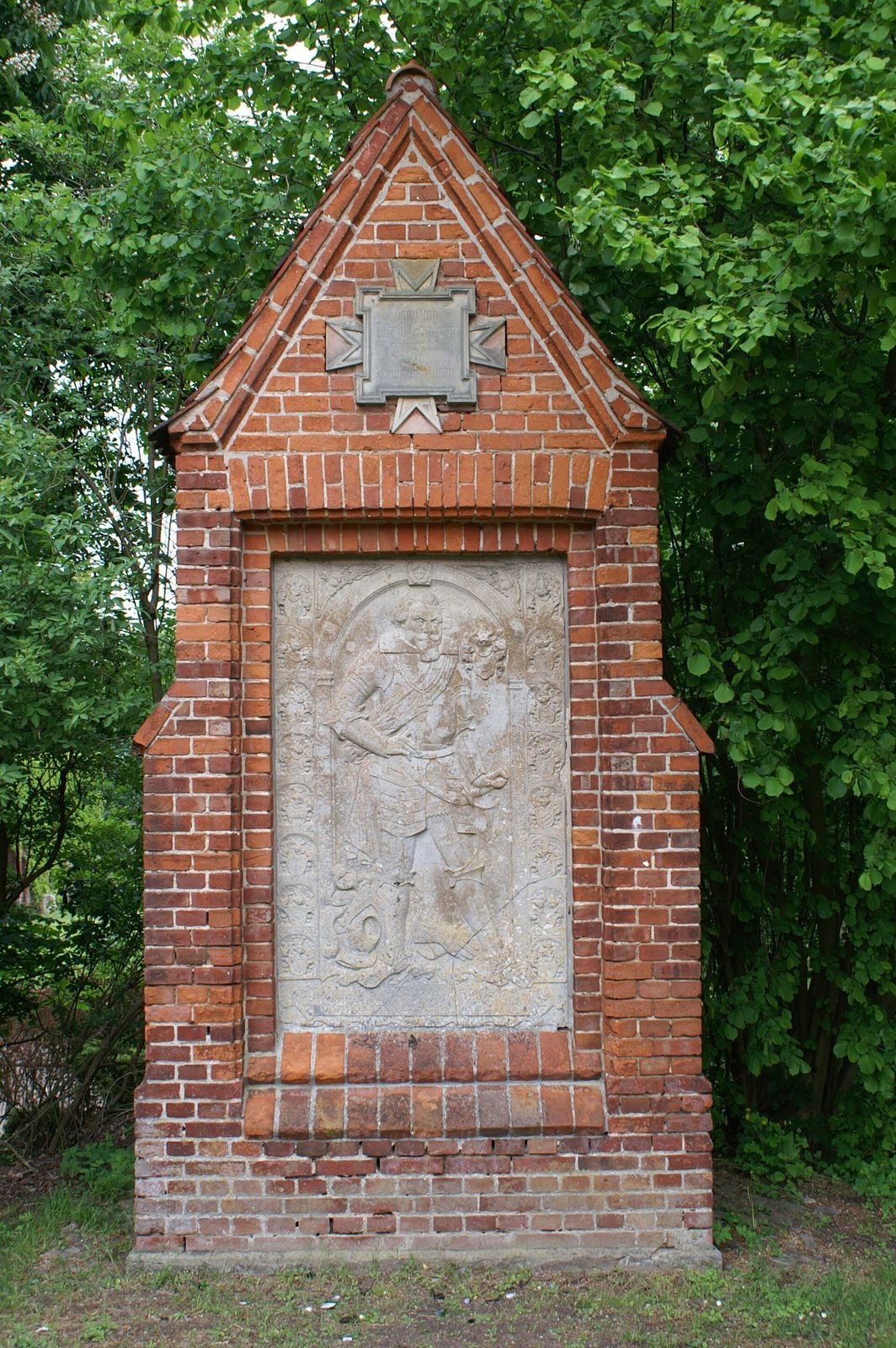
A sandstone slab commemorating Commander Ludwig von der Groeben is set in a brick surround in the former farmyard, in front of the former tenant’s house in Klein Nemerow. It depicts a knight in elaborate armor within a round-arched frame. A Hospitaller cross hangs from the chain on his sash, and another appears on his coat of arms. The inscription names von der Groeben as commander at Nemerow and says that he died on 20 August 1620, between six and seven in the morning, in his 42nd year. It also states that he was buried in a vault.
Manor house and cellar vaults
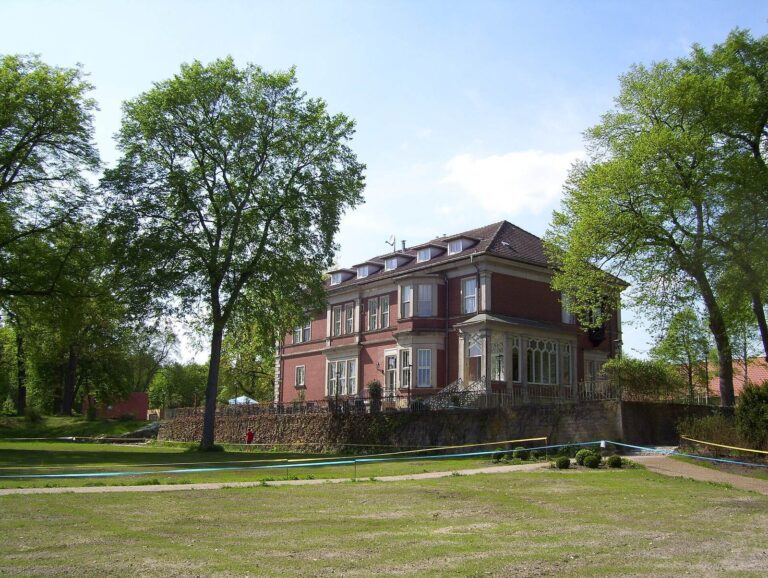
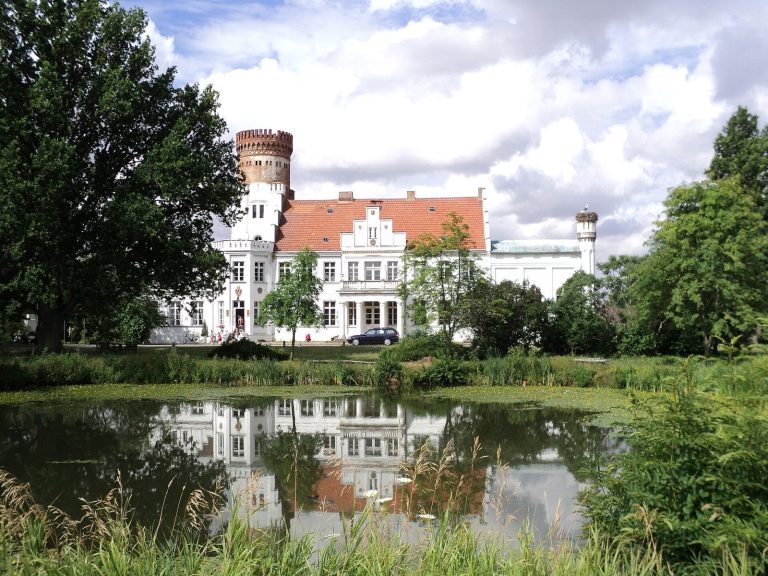
Tenant Ernst Siemerling built the manor house in 1886 over older cellar vaults that may have originated with the commandry. The historic structure of the house has largely been preserved.