Citadelle de Saint-Florent: A Genoese Fortress in France


Site at a Glance
- Rating
- 3.8
- Popularity
- Very Low
- Country
- France
- Primary era
- Early Modern
- Eras represented
- Medieval, Early Modern, Modern
- Civilizations
- French, Genoese
- Site type
- Military
- Remains
- Citadel
On this page5 sections
History
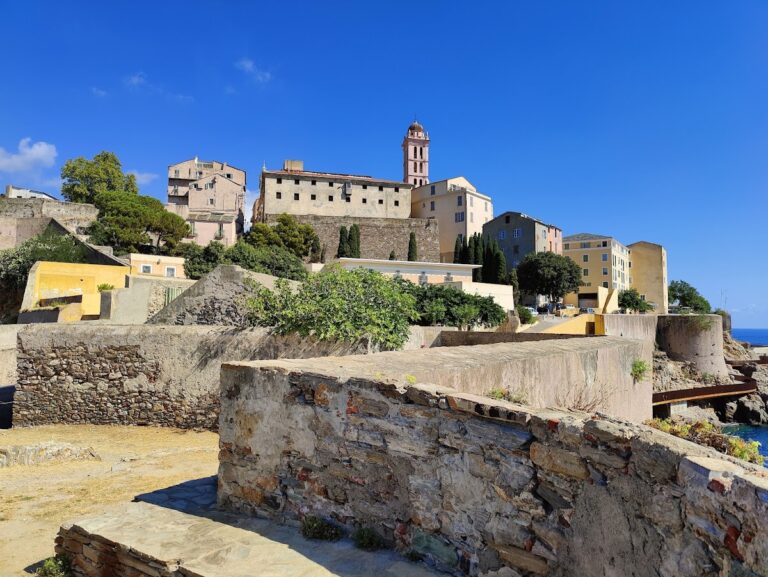
Citadelle de Saint-Florent is a Genoese fortress in France, built in 1440 by Giano I di Campofregoso, the elected head of state of Genoa and its territories. Its position allowed it to guard the Gulf of Saint-Florent, protect the port, and secure the rear approaches to Bastia. The town of Saint-Florent developed around the citadel during the sixteenth century.
Genoese Expansion
Genoese authorities strengthened and improved the citadel several times during the sixteenth century. Further works took place in 1553 under General Paul de La Barthe de Thermes. In the eighteenth century, the town consolidated its wider fortifications, reinforcing the defensive role of the settlement and its stronghold.
Revolutionary and Later History
The citadel became known as Fort Gentili after its construction by General Gentili, a Corsican military commander. He defended it in 1794, when it surrendered only after General Dundas, a British military commander, placed artillery on the crest and among the rocks of Mount Stolli.
Pascal Paoli, the Corsican political and military leader associated with the island’s struggle for self-government, left Corsica for exile in England from the citadel in 1795. The complex was transformed again during the late nineteenth and early twentieth centuries. The citadel and its enclosing defensive walls were listed as French historical monuments on 12 February 1991, while the keep, the principal stronghold within the fortified complex, was classified on 18 October 1994. It is described as Saint-Florent’s most emblematic monument.
Remains
Fortified Complex
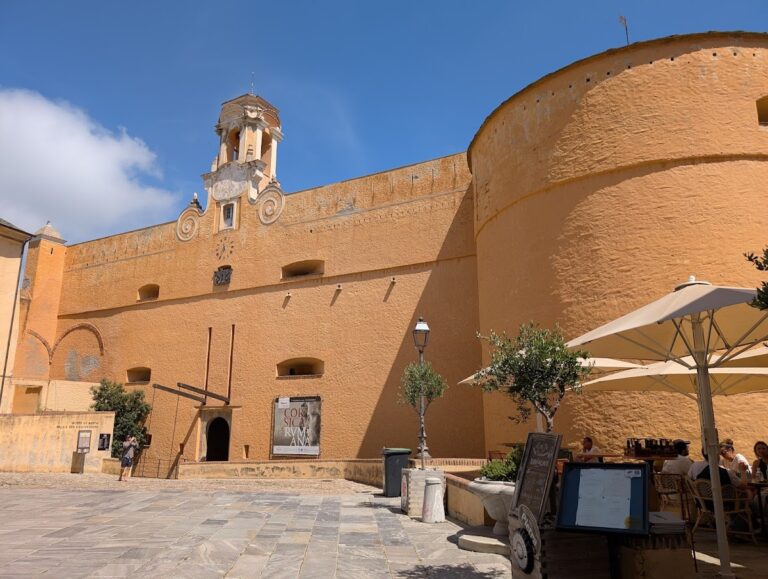
The citadel survives as a fortified complex with an enclosing defensive circuit, two round towers, one square tower, and a keep. These elements occupy the position that enabled the stronghold to control the Gulf of Saint-Florent, the port, and the approaches toward Bastia. During Antoine Claude Valery’s visit in 1837, the landward side was considered weak, and the garrison consisted of twenty-five men.
Nearby sites