Bastia Cathedral: A Genoese Baroque Cathedral in Corsica


Site at a Glance
- Rating
- 4.5
- Popularity
- Low
- Country
- France
- Primary era
- Early Modern
- External website
- Open
- Eras represented
- Early Modern, Modern
- Civilizations
- French, Genoese
- Site type
- Religious
- Remains
- Cathedral
On this page20 sections
History
Bastia Cathedral, also known as Sainte-Marie or Santa Maria, is a Roman Catholic church in Bastia, France, built under Genoese rule in the Baroque period between 1604 and 1625. Dedicated to the Virgin Mary, it became the cathedral of the united Diocese of Mariana and Accia in 1570 and has served as a parish church since that diocese was suppressed in 1802.
The rise of Genoese Bastia
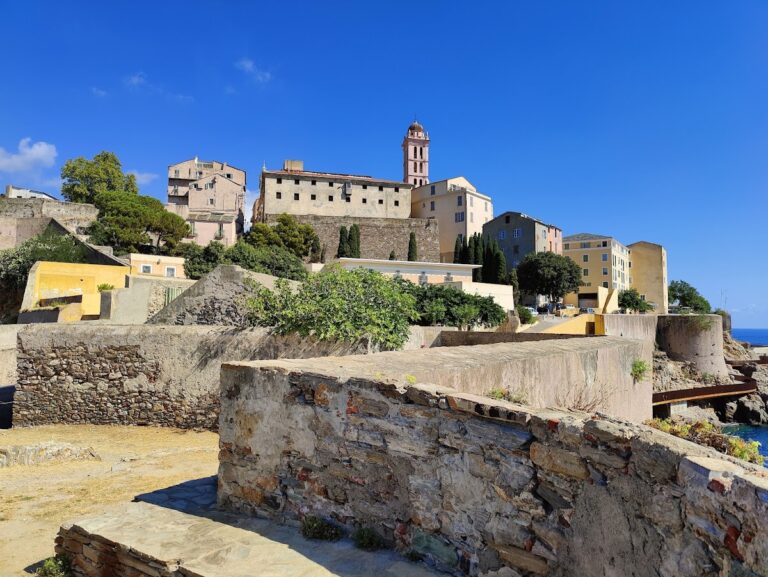
In 1380, the Genoese governor Leonello Lomellini built a fortified castle on a promontory above a natural inlet, securing a landing place for ships. The fortification was known as La Bastia and encouraged the growth of the town. Houses appeared around it from 1476, and the first walls of the citadel were built in 1481.
During the Genoese period, the settlement was divided between two parishes. Sainte-Marie served Terra Nova, the upper town within the citadel, while Saint John the Baptist served Terra Vechja, the lower town. A parish church was planned inside the citadel in 1488, and construction began the following year.
The first Santa Maria and the episcopal seat
The earlier church was built against the rock and was known as Santa Maria della Consolazione or Santa Maria del Soccorso. Its position also gave it the name Santa Maria l’Arrimbata. The building was completed around 1510. In 1496, before the church was finished, the bishop of Mariana, de Fornari, intended to make it his residence and cathedral. Later bishops chose to live in Bastia rather than Viscuvatu.
The first church was partly damaged by the wars with France, during which French forces invaded Corsica between 1553 and 1559. By 1563, the building was considered at risk of collapse. That year, the smaller Diocese of Accia was joined to the Diocese of Mariana, creating the united Diocese of Mariana and Accia. In 1570, the pope appointed Bishop Centurione to the united diocese. He reached Corsica in May 1571, and the episcopal seat was subsequently transferred to Bastia.
Construction of the present cathedral
The earlier church was scheduled for demolition in 1604, when work began on a larger cathedral. Bishop Geronimo del Pozzo laid the first stone, an event commemorated by an inscription on the exterior north wall. The construction campaign lasted fifteen years, but the vaults over the three naves collapsed in 1611, placing the whole building in danger.
Reconstruction was supported by a major bequest from Giovanni Pasquale Corso, a wealthy naval captain who had made his fortune trading spices between America and Spain and died in Seville in 1612. The structural work was completed by 1619. An inscription commemorating the work was placed above the entrance and later moved to the inside of the façade. Bishop Giulio del Pozzo, Geronimo’s nephew, consecrated the completed cathedral on 17 July 1625. The side chapels were furnished gradually, and the forecourt was arranged in 1666 during the governorship of Giorgio Zoagli.
A cathedral of Genoese government
During the Genoese period, Sainte-Marie hosted the formal transfer of authority between outgoing and incoming governors every two years. The outgoing governor presented the keys and sceptre of the Kingdom of Corsica on a silver tray. The governor and bishop sat on facing thrones in the choir, in a ceremony regarded as exceptionally prestigious and influenced by the Spanish court.
After a cholera epidemic in 1866, which was believed to have spared Bastia, parishioners organised public prayers and vowed to embellish the cathedral. A public subscription financed new flooring directed by the Bastia architect Paul-Augustin Viale. The cathedral was inscribed as a historic monument in 1929 and classified in the same heritage category on 3 February 2000. Its façade was restored in 1937 and 1998.
Sainte-Marie remains the principal setting of Bastia’s annual celebration of the Assumption on 15 August. During the ceremony, the silver Madonna is carried in a religious procession, while the citadel and Santa Maria Street are decorated in the Virgin’s blue and white colours.
Remains
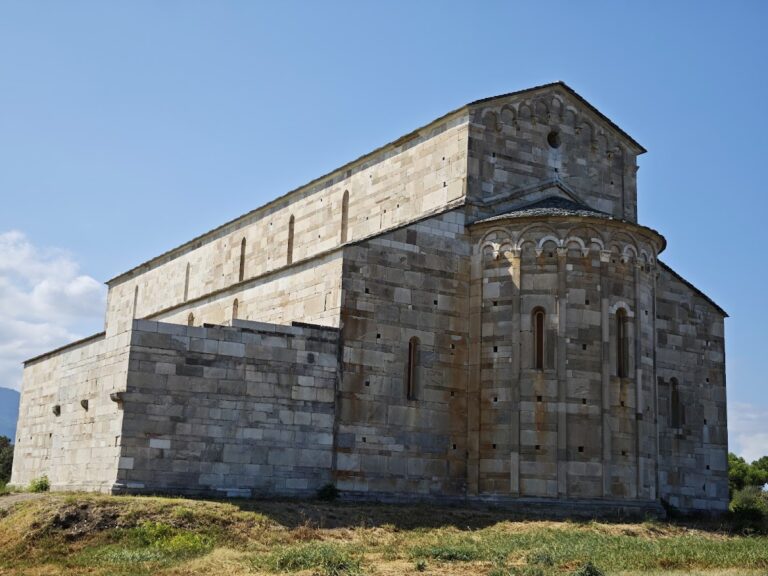
The present cathedral follows the plan of the former cathedral of La Canonica at Lucciana. Its Baroque design uses three parallel naves, a rounded apse, a deep choir, and richly ornamented surfaces of gold and marble. The building is approximately 44.70 metres long, 23.35 metres wide, and 17.10 metres high internally.
Structure and exterior
Naves and choir
The central nave is 8.31 metres wide and carries a barrel vault. Rows of cruciform pillars divide it into four bays, or sections between structural supports, while the lateral naves are narrower. The deep choir was designed for choir stalls and the bishop’s throne. Because the church also served as the principal church of Genoese Bastia, it included space for the governor’s throne, contributing to the building’s spacious layout.
Bell tower and façade
The bell tower stands against the southern side of the apse. Completed in 1620, it rises 38 metres. The original façade belonged to the principal construction campaign and had two levels crowned by three pediments. Its Baroque appearance is known from a drawing preserved in the Genoa archives. In the eighteenth century, the lateral scrolls were removed, triangular pediments were added, and niches for statues were introduced. The present front combines these changes with later restoration and neoclassical features.
Interior decoration and furnishings
Marble, stucco, and ceiling paintings
The three naves are decorated with gold and marble. The original floor was made from cipolin stone brought from Brandu. It was completely replaced in the nineteenth century, and the earlier slabs were acquired for Saint Joseph’s Church in Bastia. The replacement pavement combines white Carrara marble, blue-grey marble from Corte, and red marble from Levanto. Green marble from Bevincu covers the lower parts of the pillars. A large white-marble slab carries a Latin inscription commemorating the embellishment work.
Francesco Marengo of La Spezia made the gilded stucco reliefs on the capitals, friezes, and cornices in 1621. Stucco is a moulded plaster-like material used for architectural decoration. The visible ceiling paintings cover an earlier decorative scheme. Carlo Tuticci painted the illusionistic ornament, while Geronimo Sari painted the large central medallion. Their work was completed in 1835.
Assumption altar and organ
The altar on the right is dedicated to the Assumption of the Virgin, the cathedral’s patronal dedication. It contains a silver Madonna made by the Sienese goldsmith Gaetano Macchi from solid repoussé and hammered silver. Repoussé raises a design by hammering the reverse of a metal sheet. The statue replaced a polychrome wooden processional image dated 1677 and was formed from silver objects donated by Bastia residents. Weighing 300 kilograms, it is carried through the town on 15 August.
The nineteenth-century organ was made by the Serassi brothers of Bergamo. It replaced earlier organs that were sold to the church of Pedicroce in Orezza. Seven bishops’ hats hang high on either side of the ante-choir. They commemorate seven bishops who died during their episcopates in Bastia and were buried in the cathedral crypt.
Chapels and paintings
Blessed Sacrament chapel
The Chapel of the Blessed Sacrament contains an Assumption of the Virgin by Leonoro d’Aquila, dated 1512 and described as the oldest painting in Bastia. It also holds a 1901 painting by Hortense De Luri-Flach showing Saint Anthony of Padua at the feet of the Virgin and Child, based on a work by Van Dyck. Another painting, from the Fesch collection and dated to the beginning of the seventeenth century, depicts Pope Pius V presenting Don Juan of Austria with the title of viceroy of Sicily after the victory at Lepanto. The work is attributed to Francesco Brizzi.
Rosary chapel
The Rosary chapel occupies the head of the right aisle. Its large early seventeenth-century painting, made by an unidentified painter of the Corsican school, shows the governor, his wife, Bastia’s notables, and a red-haired bishop kneeling before Our Lady of the Rosary. The bishop is probably Geronimo del Pozzo.
Purgatory chapel
The third chapel on the left is dedicated to Purgatory. Its painting by the Genoese artist Giuseppe Badaracco, who lived from 1588 to 1657, shows the Virgin Mary and Saint Joseph appealing to the Trinity for the souls in Purgatory. Damned souls appear in flames, while Saint Michael the Archangel holds the scales of judgement and angels assist the saved.
Baptismal fonts
The baptismal fonts stand in the first altar on the right. Dating from the eighteenth century, they are accompanied by a wall niche containing a sculptural group of Saint John the Baptist baptising Christ. One of the two entrance holy-water basins dates from the sixteenth century and probably came from the earlier Santa Maria della Consolazione. Made of white marble, it has decoration of scales and pearls that evokes water and is described as the only example of its style in Corsica.
Chapels of the left aisle
The first chapel on the left belongs to the Congregation of Gardeners and Winegrowers. Its 1806 painting by the Bastia artist Anton Benedetto Rostino shows Saint Martin on horseback sharing his cloak with a poor man, Saint Isidore with a spade, and the Virgin and Child with Saint Zita of Lucca in the upper register.
The second chapel is dedicated to Saint Anne. Tradition attributes its altar to the deconsecrated Sant’Angelo convent in Bastia. Its Baroque painting, signed by the Bastia painter Luigi Varese, depicts Saint Charles Borromeo appealing to the Virgin and Child for the poor and infirm. Saint Anne and Saint Joachim appear behind them.
The altar of Saint Augustine contains a painting by Ottavio Cambiaso from the first half of the seventeenth century. It shows Saint Francis de Sales, Saint Anthony Abbot, Saint Augustine, and Saint Mary Magdalene de Pazzi at the feet of Christ on the Cross, with Saint Augustine and Saint Mary Magdalene in the foreground.
Chapel behind the cathedral
Chapel of Sainte-Croix
The Chapel of Sainte-Croix stands behind the cathedral. Its richly decorated interior includes the figure known as the Christ of Miracles, which is venerated by the people of Bastia. Catholic tradition holds that two fishermen discovered the figure floating in the Mediterranean in 1428.
Nearby sites