Çifte Minareli Madrasa: An Ilkhanid Islamic School in Sivas


Site at a Glance
- Rating
- 4.8
- Popularity
- Medium
- Country
- Turkey
- Primary era
- Medieval
- External website
- Open
- Eras represented
- Medieval
- Civilizations
- Ilkhanate, Seljuk
- Site type
- Religious
- Remains
- Madrasa
History
Çifte Minareli Madrasa is a former Islamic school in Sivas, Türkiye, built in 1271–1272 under Ilkhanid rule in the Iranian-Islamic-Seljuk architectural tradition. The Ilkhanids were a Mongol ruling dynasty that governed much of Iran and parts of Anatolia during the thirteenth and fourteenth centuries. The institution was used as a religious school in 1271.
Construction was commissioned by Shams al-Din Juvayni, an Ilkhanid vizier, meaning a senior minister and chief administrative adviser. A foundation inscription dates the project to AH 670, corresponding to 1271–1272, and identifies Shams al-Din Muhammad ibn Muhammad as the holder of the state administrative bureau, or dīwān. It also gives him the honorific “king of the viziers” and describes him as a great statesman. Juvayni died in 1284. The madrasa is now regarded as an archaeological site in Turkey, following the collapse of most of its interior structure.
Remains
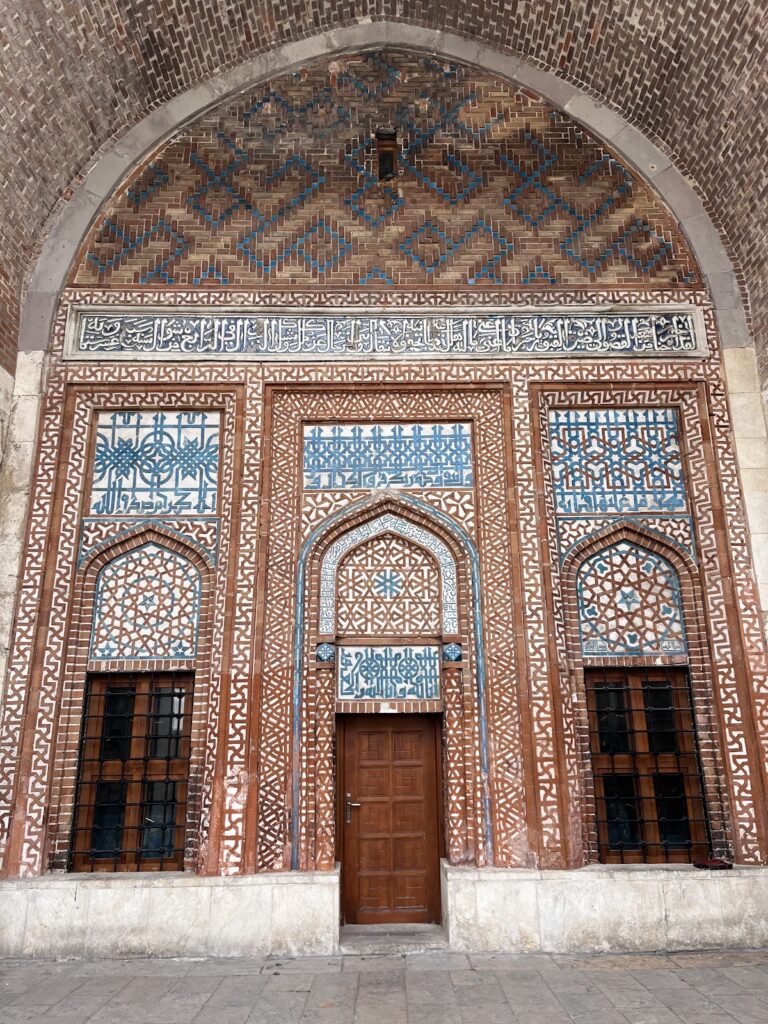
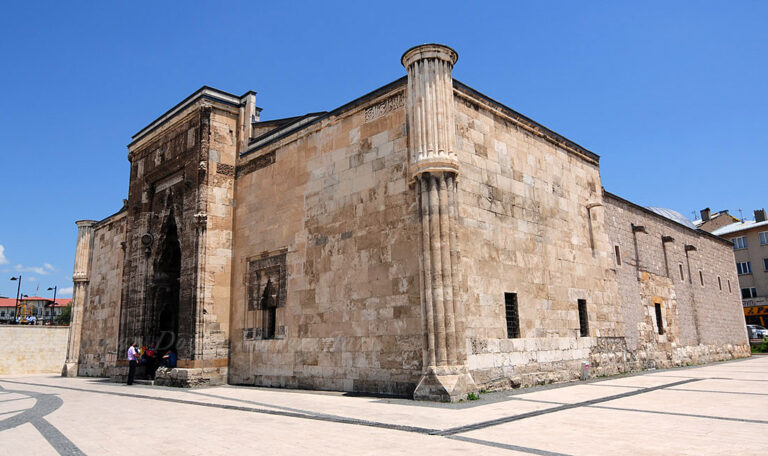
The surviving remains are centered on a finely decorated stone facade, which forms the principal visible part of the madrasa. The building represents Islamic and Seljuk architectural styles within the period of Ilkhanid rule. Its name, Çifte Minareli Madrasa, means “Double Minaret Madrasa” and refers to the two similar minarets that rise above and project from the facade.
The twin minarets are the facade’s defining vertical elements and have been described as among the finest examples of the architecture of their period. Most of the interior has collapsed, leaving the decorated facade and its paired minarets as the principal surviving architectural features.